
Cannabis Truths – A Gardner Magazine Report
Voters on November 3rd will decide whether to continue the legal use of cannabis in Massachusetts. Voters should know that studies show people who use cannabis and drive will do so whether it’s legal or not. Here’s a debate on the issue, CLICK PLAY.
The apparent real issue is education. Specifically, the issue is that some drivers don’t understand or ignore the dangers of cannabis use prior to driving a vehicle and people are dying. To its credit, the Gardner Police Department has made outreach efforts a priority to educate students and prevent deaths in the community.
Gardner Magazine is publishing this article to save lives. The infographics in this article have a printable version available. Just click on the link in the caption below each graphic.
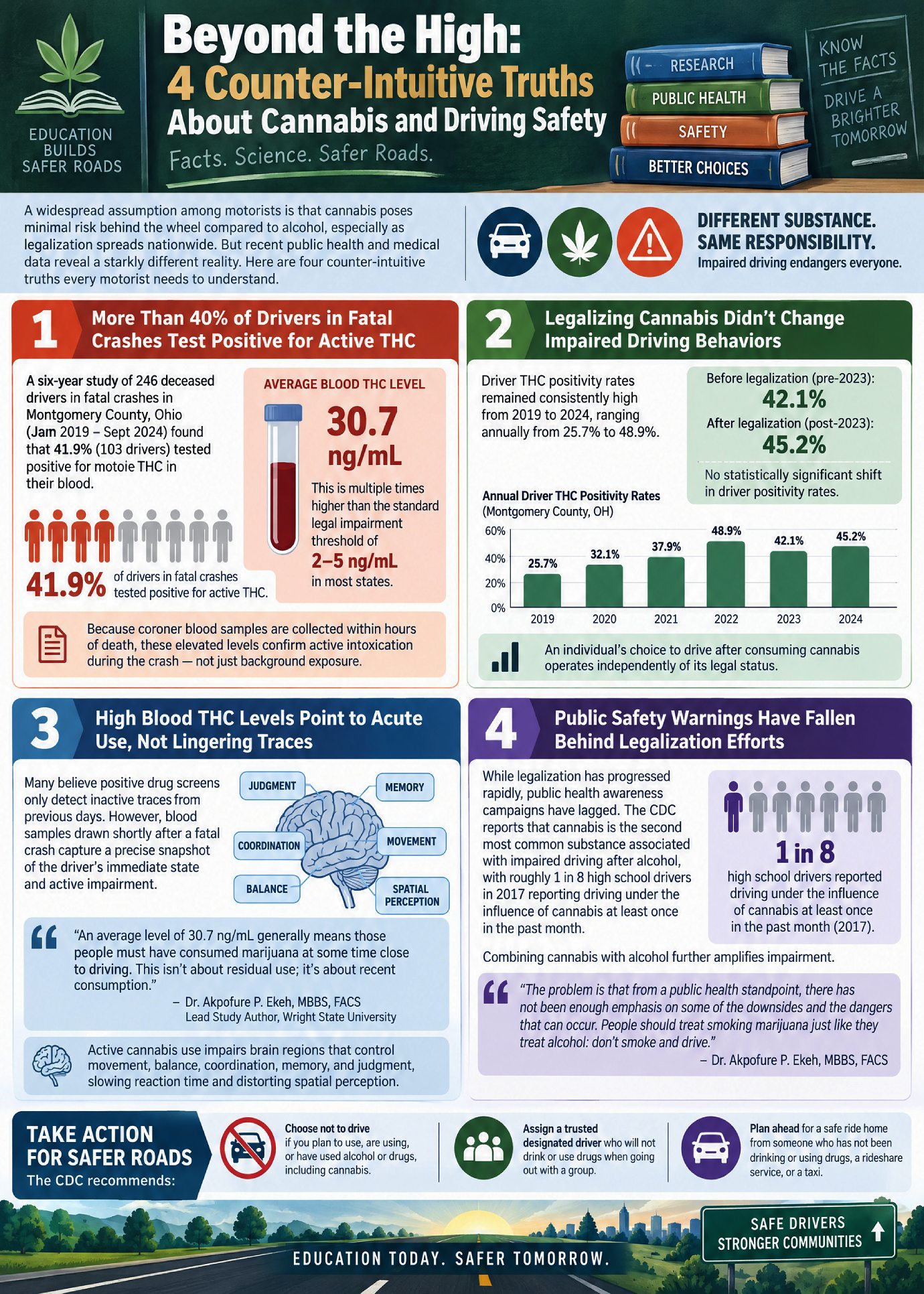
Beyond the High: 4 Counter-Intuitive Truths About Cannabis and Driving Safety: A widespread assumption among motorists is that cannabis poses minimal risk behind the wheel compared to alcohol, especially as sweeping legalization spreads nationwide. Public conversation has centered heavily on policy reform, legal access, and personal choice.
However, recent public health and medical data reveal a starkly different reality about what is happening on American roads. Beyond legislative debates, objective research uncovers critical, counter-intuitive truths about cannabis-impaired driving that every motorist needs to understand.
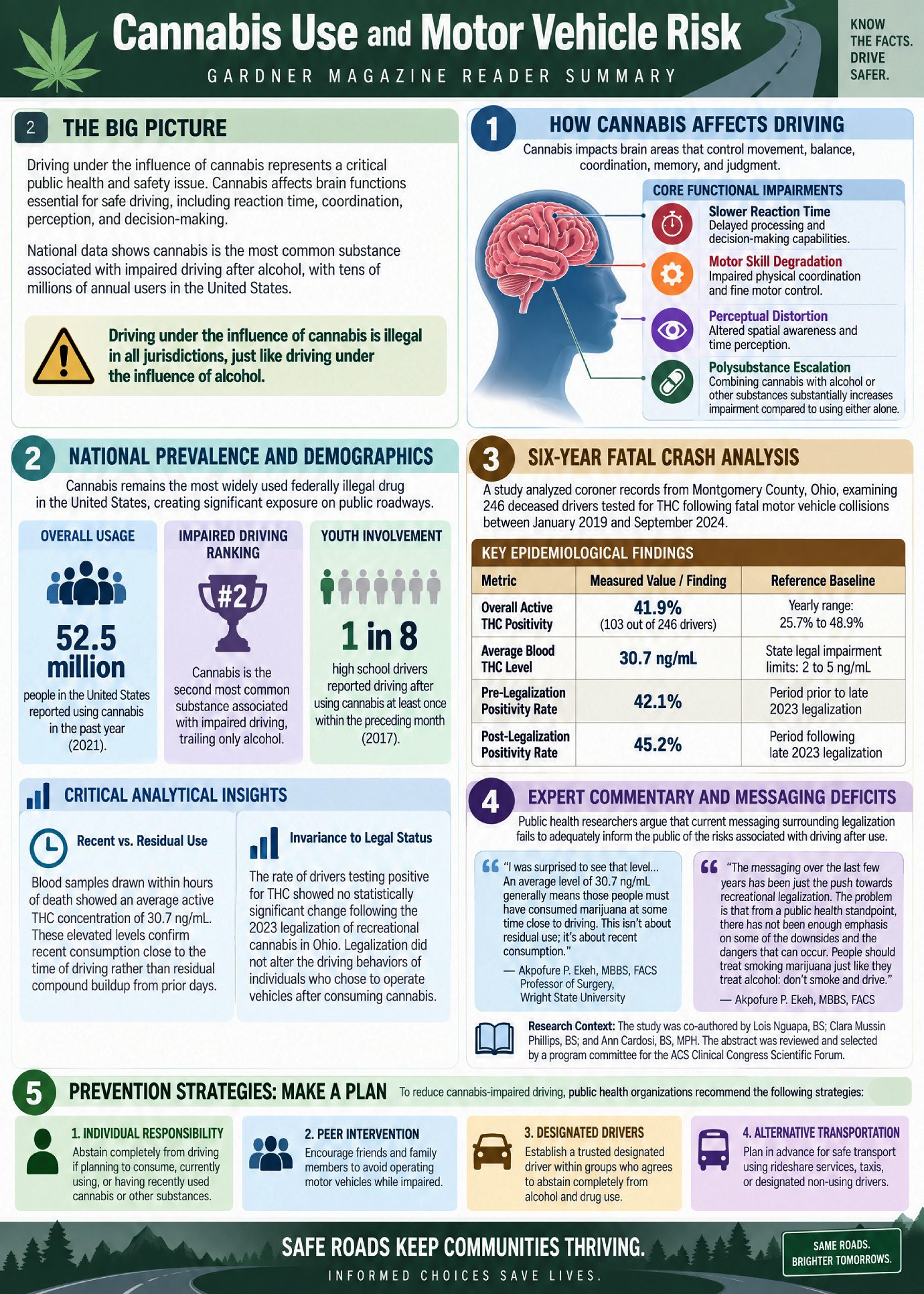
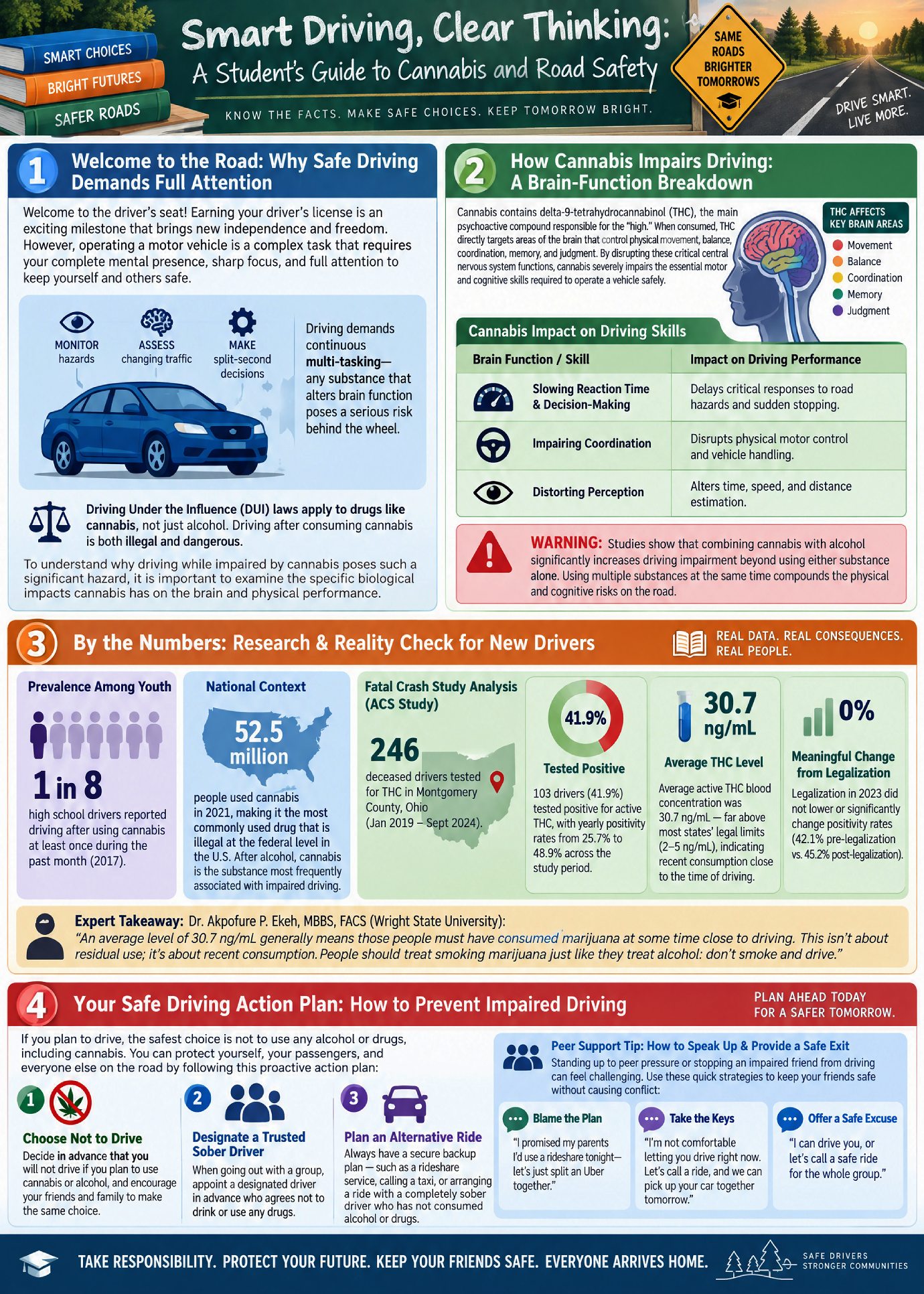
Point 1: More Than 40% of Drivers in Fatal Crashes Test Positive for Active THC: A six-year study analyzing coroner records of 246 deceased drivers involved in fatal crashes in Montgomery County, Ohio, between January 2019 and September 2024 uncovered alarming positivity rates. Findings presented at the American College of Surgeons (ACS) Clinical Congress 2025 Scientific Forum revealed that 41.9% (103 drivers) tested positive for active delta-9-tetrahydrocannabinol (THC) in their blood. (Note: These preliminary abstract data were reviewed and selected by a program committee and are awaiting formal peer review.) The concentration of active THC detected in these motorists was remarkably severe. The average blood level reached 30.7 ng/mL—a figure that drastically exceeds the standard legal impairment threshold of 2 to 5 ng/mL set by most states. Because coroner blood samples are collected within hours of death, these elevated concentrations confirm active intoxication during the crash. Rather than edge cases involving minor background exposure, these drivers were operating vehicles with active THC levels multiple times higher than legal safety boundaries.
Point 2: Legalizing Cannabis Didn’t Change Impaired Driving Behaviors: Advocates and opponents alike often assume that statutory policy changes directly trigger sudden spikes or shifts in impaired driving habits. Yet data from the ACS study demonstrated that driver THC positivity remained consistently high across the six-year observation period, ranging annually from 25.7% to 48.9%. When Ohio officially legalized recreational cannabis in 2023, driver positivity rates before and after the law changed showed no statistically significant shift. The positivity rate stood at 42.1% prior to legalization and 45.2% following the statutory change. This stability indicates that an individual’s choice to drive after consuming cannabis operates independently of its legal status. If statutory shifts do not dictate driving habits, the next critical question is whether these positive blood tests reflect recent, acute consumption or merely lingering traces from previous days.
Point 3: High Blood THC Levels Point to Acute Use, Not Lingering Traces: A pervasive myth among consumers is that positive drug screens simply detect inactive, residual traces lingering in the body days after consumption. However, toxicological blood samples drawn by coroners shortly after a fatal crash capture a precise biological snapshot of immediate state and active impairment.
Medical research from the Centers for Disease Control and Prevention (CDC) warns that active cannabis use targets brain regions controlling movement, balance, coordination, memory, and judgment. Consequently, acute consumption slows reaction time and decision-making, impairs physical coordination, and distorts spatial perception. Dr. Akpofure P. Ekeh, MBBS, FACS, lead study author and professor of surgery at Wright State University in Dayton, Ohio, emphasized that these elevated blood concentrations point directly to recent consumption: “I was surprised to see that level,” said lead author Akpofure P. Ekeh, MBBS, FACS. “An average level of 30.7 ng/mL generally means those people must have consumed marijuana at some time close to driving. This isn’t about residual use; it’s about recent consumption.”
Point 4: Public Safety Warnings Have Fallen Behind Legalization Efforts: While legislative advocacy for cannabis legalization has moved rapidly across the country, public health awareness campaigns regarding driving risks have lagged behind. CDC data highlights that cannabis is the second most common substance associated with impaired driving after alcohol, with roughly 1 in 8 high school drivers in 2017 reporting driving under the influence of cannabis at least once in the past month. Public health research also warns that combining substances—such as using cannabis and alcohol simultaneously—further amplifies overall neurological impairment. Dr. Ekeh emphasized this growing divide between public policy momentum and public safety education: “The messaging over the last few years has been just the push towards recreational legalization,” Dr. Ekeh noted. “The problem is that from a public health standpoint, there has not been enough emphasis on some of the downsides and the dangers that can occur. People should treat smoking marijuana just like they treat alcohol: don’t smoke and drive.”
To bridge this educational gap and prevent impaired driving, the CDC outlines actionable prevention steps:
- Choose not to drive if you plan to use, are using, or have used alcohol or drugs, including cannabis, and remind friends and family to do the same.
- Assign a trusted designated driver who will not drink or use drugs when going out with a group of people you know.
- Plan on getting a ride home from someone who has not been drinking alcohol and/or using drugs, using a rideshare service, or calling a taxi.
Just as landmark public awareness campaigns historically transformed societal attitudes toward drunk driving and established norms like designated drivers, cannabis messaging must now evolve. Addressing roadway safety requires elevating cannabis-impaired driving to the same level of cultural seriousness, educational focus, and personal accountability long applied to alcohol. Should cannabis still be legal in Massachusetts? Voters will decide on November 3rd. However, one thing is true. Just like alcohol, cannabis causes dangerous impairment. Don’t drive after consumption of either and you’ll live a longer life.