Music in America – Past, Present, and Future
Jump to a section: Bands, Vocalists and Groups by decade 1910s,1920s, 1930s, 1940s, Big Bands ,1950s,1960s,1970s,1980s,1990s, 2000s, 2010s, 2020s, — Projected 2030s — From Playlists to Neural Streams —Music of the Future – Century of Music Evolution – Images of the music of the 1500s, 1600s — Images of the music of the 1700s, 1800s
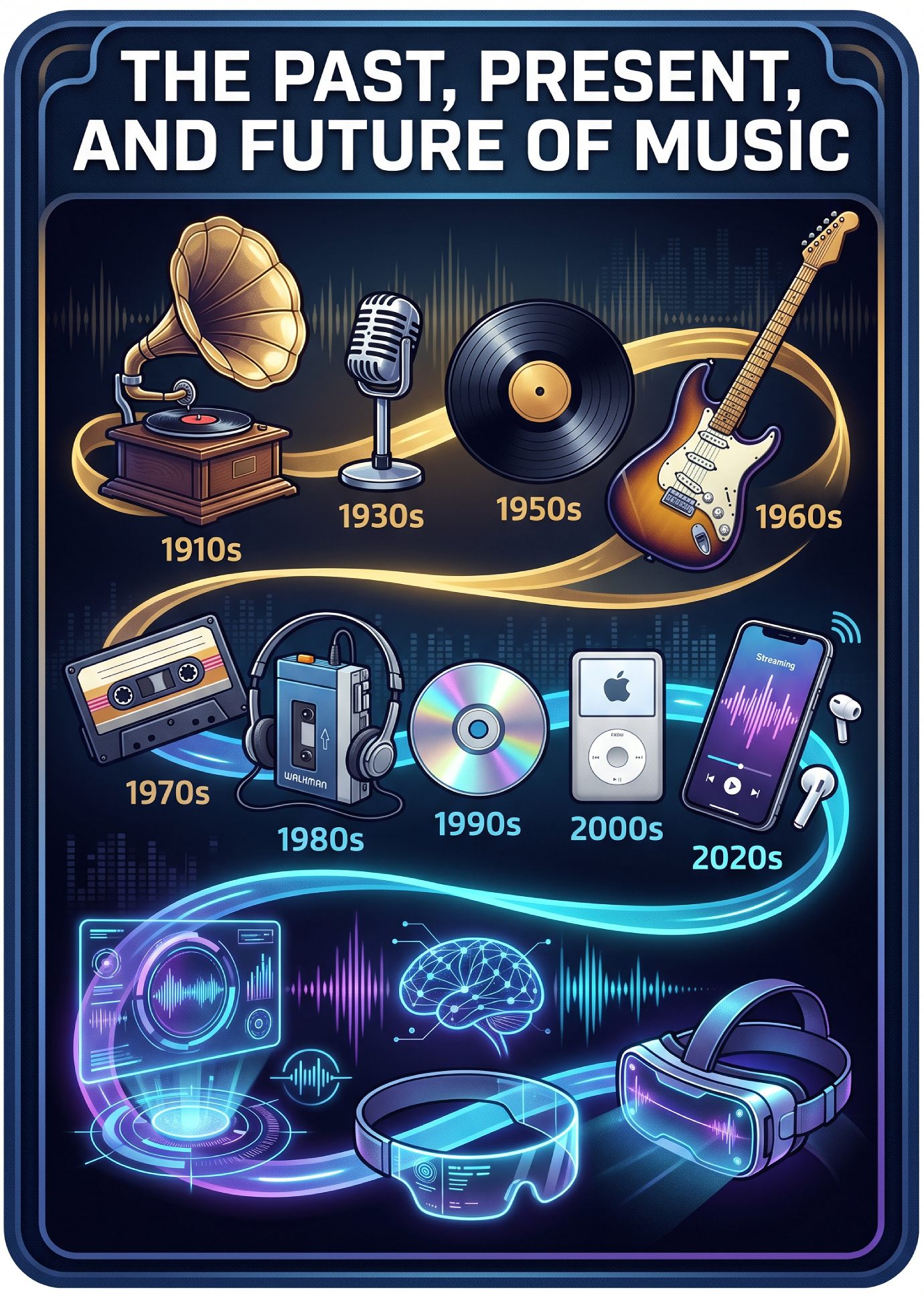
What you’ll find on this page: Gardner Magazine is chronicling Music in America from its earliest beginnings to the present day with an emphasis from 1910 onward.
Listen to this extensive podcast on American Music featuring the Chair Man and the Chair Lady on any device, CLICK PLAY.
Listen to this debate on the future of music in America with Max and Maxine Rogers on any device, CLICK PLAY.
Watch this excellent video about the History and Future of Music in America. Just click the play button.
Bands, Groups, and Singers of the 1910s
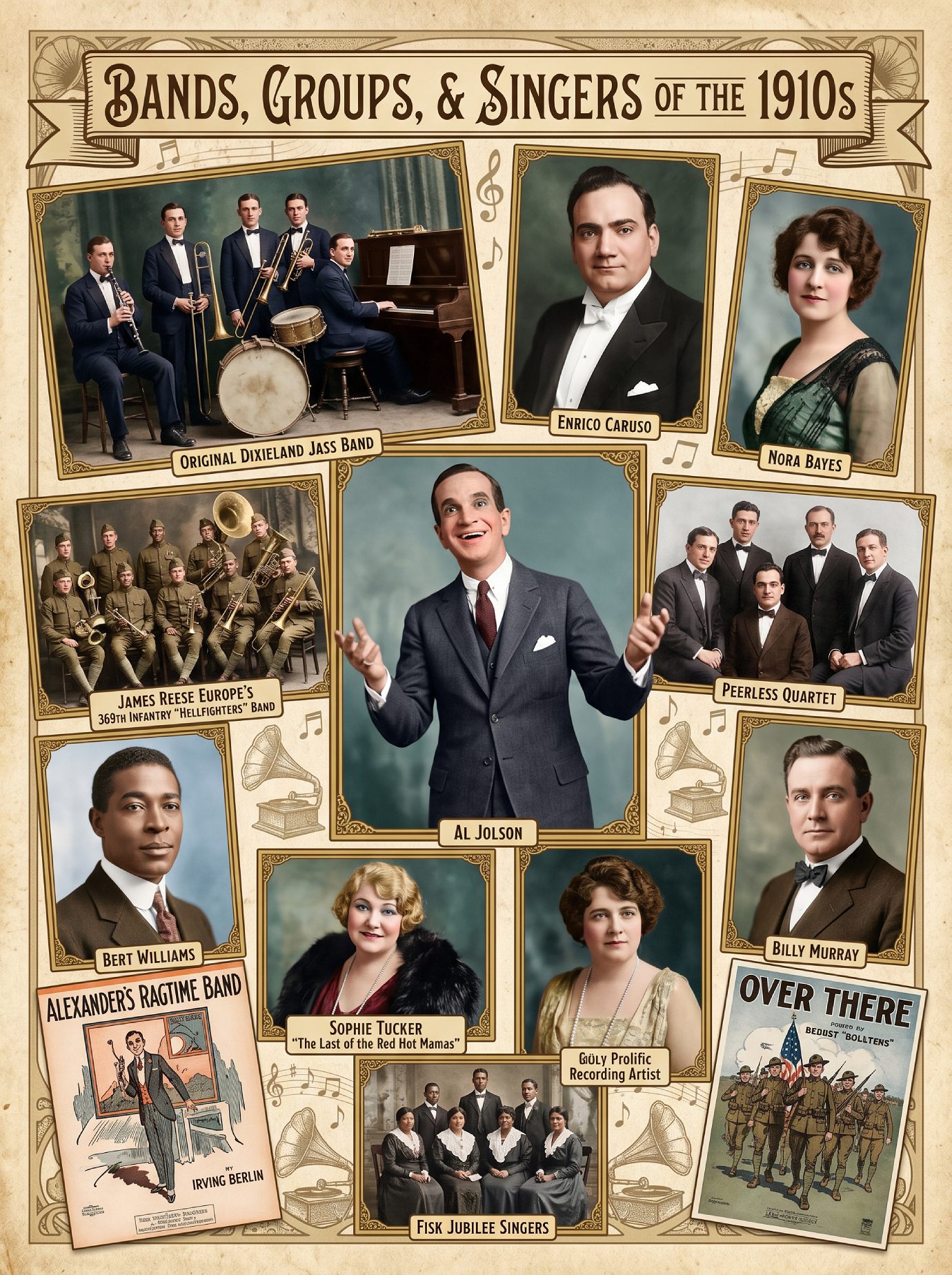
Key musical groups of the 1910s were defined by the rise of ragtime, early jazz, and vocal harmony ensembles, with the Original Dixieland Jass Band making history with the first jazz recording in 1917. Other major groups included the American Quartet, Peerless Quartet, and Prince’s Orchestra, which dominated the popular music scene and recordings during that decade.
Key Bands and Ensembles of the 1910s
- Original Dixieland Jass Band: Famous for “Livery Stable Blues” (1917) and popularizing “jass” (jazz) outside New Orleans.
- American Quartet: A highly popular vocal group known for hits like “Moonlight Bay” (1912) and “Over There” (1917).
- Peerless Quartet: Prominent vocal ensemble known for “Let Me Call You Sweetheart” (1911).
- Prince’s Orchestra: A versatile ensemble often recorded for popular ballroom dances of the era.
- Six Brown Brothers: A popular saxophone sextet that performed in vaudeville.
- Arthur Collins & Byron G. Harlan: Prolific ragtime performers often listed together as a “band” act, known for “Alexander’s Ragtime Band”.
- Southern Syncopated Orchestra: Featured clarinetist Sidney Bechet, notable for touring and spreading early jazz.
- Victor Military Band: Frequently recorded early dance music for the Victor label.
Influential Performers (Solo/with Groups)
- Al Jolson: A major star known for early hits and musical theater songs.
- Sophie Tucker: Famous for “Some of These Days” (1911).
- Billy Murray: A prolific singer who worked with various quartets.
- W.C. Handy: Popularized the blues, including “Memphis Blues”.
Musical Style Trends
- Jazz/Ragtime: The 1910s marked the emergence of jazz from ragtime and blues, characterized by improvisation, particularly in New Orleans.
- Vaudeville & Quartets: Vocal harmony groups were the most common format for popular music recordings.
- Wartime Music: Songs reflecting World War I (e.g., “Over There”) were extremely popular.
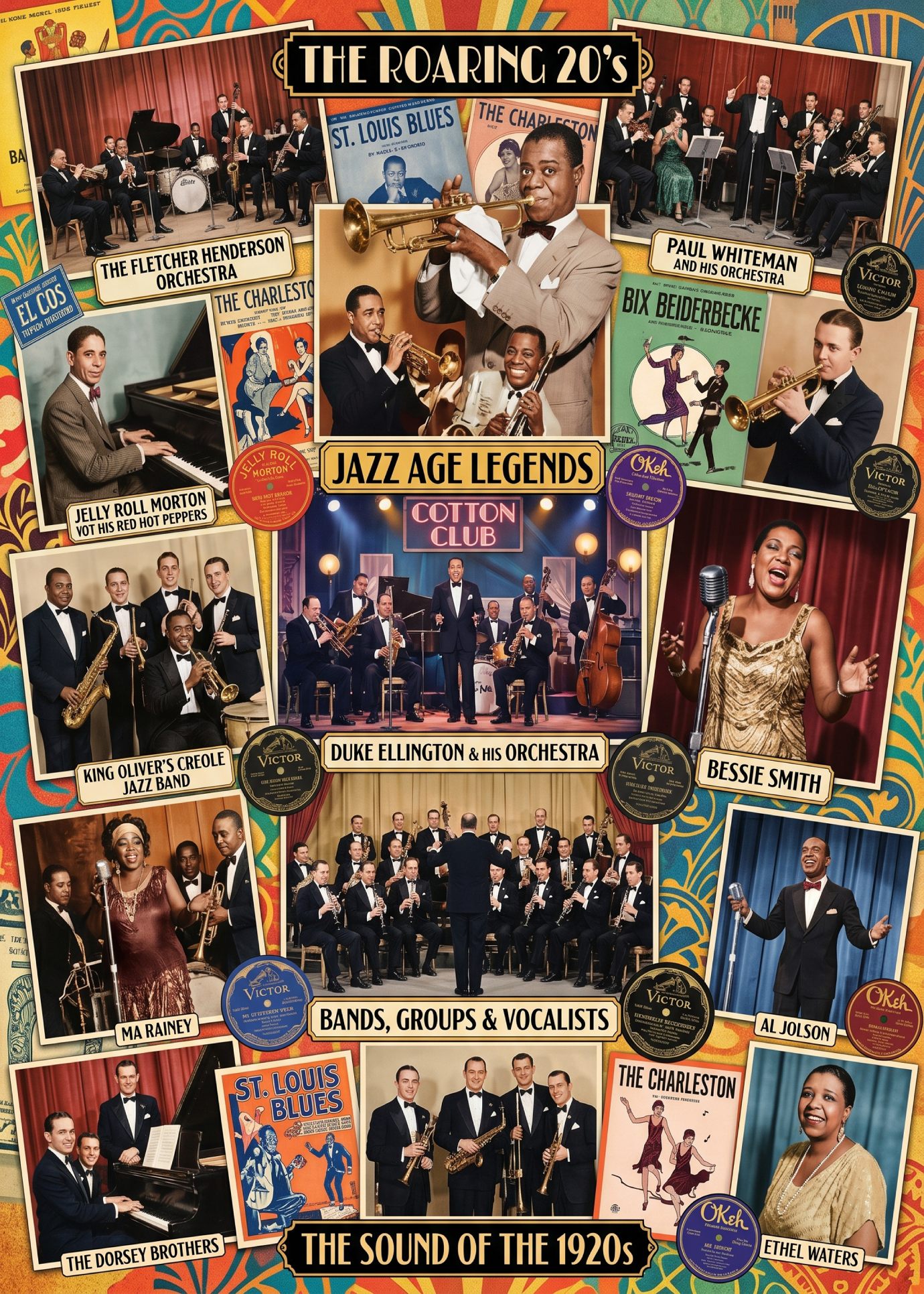
Bands, Groups, and Singers of the 1920’s
1920s bands defined the “Jazz Age,” shifting from New Orleans-style hot jazz to organized big band dance music. Key bands included King Oliver’s Creole Jazz Band, The California Ramblers, Duke Ellington Orchestra, Fletcher Henderson Orchestra, and Jean Goldkette Orchestra, featuring early stars like Louis Armstrong and Bix Beiderbecke.
Top 1920s Jazz Bands and Orchestras
- King Oliver’s Creole Jazz Band: Led by Joseph “King” Oliver, this was a premiere early 1920s group that brought New Orleans jazz to a national audience, featuring Louis Armstrong.
- The California Ramblers: A highly prolific dance band known for recording many hits of the era
Key Characteristics
- Evolution to Big Band: Bands shifted from smaller New Orleans setups to larger arrangements, incorporating brass and reed sections.
- Hot Jazz and Dance: Music was designed for dancing, blending ragtime, vaudeville, and early jazz.
- Improvisation: Bands featured soloists who would later define the swing era.
Top 1920s Band Leaders
- Louis Armstrong
- Duke Ellington
- King Oliver
- Fletcher Henderson
- Bix Beiderbecke
- Jelly Roll Morton
1920s Music Characteristics
1920s music was characterized by a high-energy, infectious rhythm, often featuring a driving beat from the drums and banjo. Brass instruments, particularly the trumpet and trombone, were prominent, often playing in harmony or taking turns with melodic solos. The clarinet added a melodic, often improvisational, counterpoint to the brass. Popular songs from the 1920s were often upbeat and catchy, with lyrics that reflected the carefree, party-like atmosphere of the Roaring Twenties.
*
*
*
*
*
*
*
*

*
*
*
*
The Big Bands of the 1930’s and 1940s
Bands of the 1930s
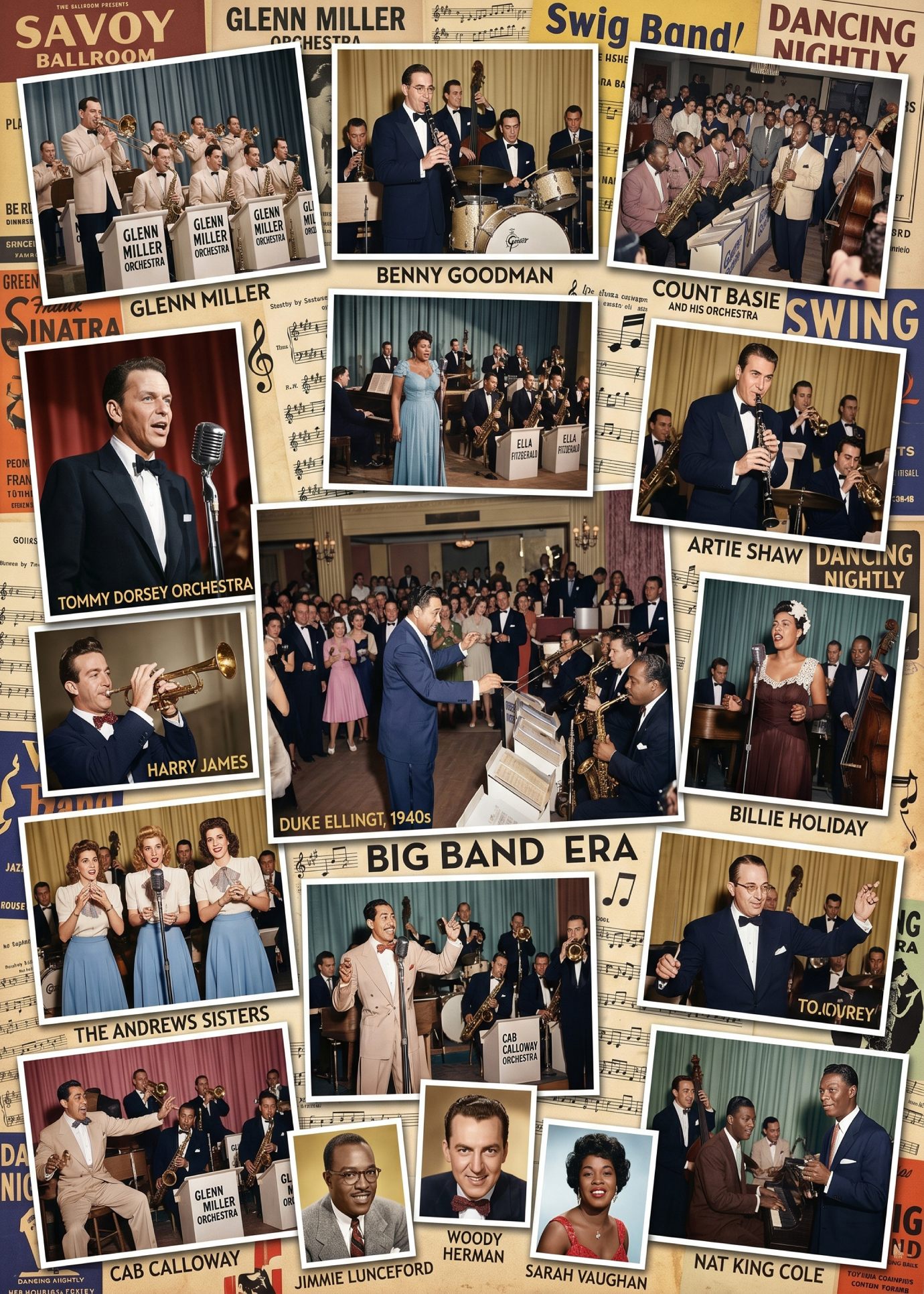
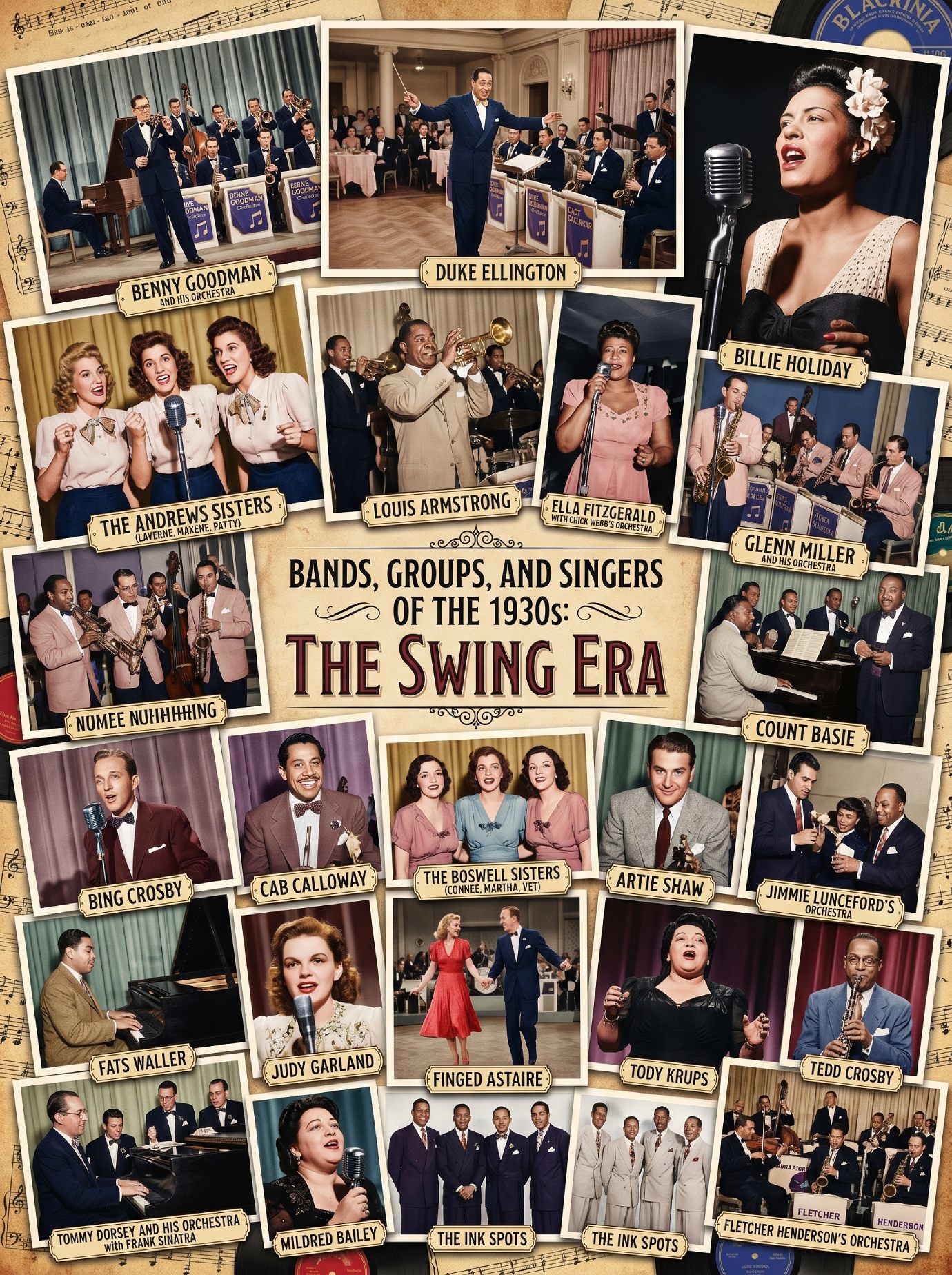
The 1930s were the golden era of Big Band and Swing music, transitioning from the improvised jazz of the 1920s to a more structured, orchestral sound that dominated radio and dance halls. This decade was defined by legendary bandleaders like Duke Ellington, Benny Goodman, and Count Basie, whose music provided a vital cultural escape during the Great Depression.
Iconic Big Bands & Leaders
Duke Ellington and His Orchestra: Known for sophisticated arrangements and long-term residency at Harlem’s Cotton Club.
Benny Goodman (“The King of Swing”): His 1935 performance at the Palomar Ballroom is credited with launching the Swing Era into the mainstream.
Count Basie and His Orchestra: Revolutionized jazz with a heavy emphasis on the “rhythm section” and Kansas City style riffs.
Glenn Miller Orchestra: One of the most commercially successful bands late in the decade, famous for hits like “In the Mood” and “Moonlight Serenade”.
Cab Calloway: A flamboyant showman and scat singer famous for “Minnie the Moocher”.
The Dorsey Brothers: Both Tommy (trombone) and Jimmy (saxophone/clarinet) led highly popular orchestras that often featured star vocalists.
Artie Shaw: A brilliant clarinetist and rival to Goodman, known for the hit version of “Begin the Beguine”.
Chick Webb: The “King of the Savoy,” a legendary drummer whose band at the Savoy Ballroom was the one to beat in “Battle of the Bands” contests.
Notable Small Groups & Global Trends
Quintette du Hot Club de France: Led by guitarist Django Reinhardt and violinist Stéphane Grappelli, they pioneered the “Gypsy Jazz” style in Europe.
Small Combos: Even large orchestras often had smaller groups within them, such as the Benny Goodman Trio/Quartet, which helped break racial barriers by featuring Black and white musicians together.
Popular Vocal Groups
The Boswell Sisters: Known for their intricate, experimental vocal harmonies and jazz influence.
The Andrews Sisters: A prolific trio that rose to fame late in the decade with a boogie-woogie swing style.
The Mills Brothers: A pioneering African American vocal quartet that mimicked the sound of instruments with their voices.
Cultural Impact
The Savoy Ballroom: Located in Harlem, it was the “Home of Happy Feet” where the Lindy Hop dance was invented and refined.
Radio Remotes: Live broadcasts from ballrooms allowed these bands to reach millions of listeners across the country.
Film Appearances: Many top bands were featured in Hollywood musicals like Alexander’s Ragtime Band (1938).
Bands, Groups and Singers of the 1940s
The 1940s were dominated by the Big Band era and the rise of the Solo Crooner. This decade bridged the gap between the complex, orchestral swing of World War II and the smaller, more intimate jazz and rhythm and blues groups that preceded rock and roll.
Iconic Big Bands
Big bands typically consisted of 10 to 25 members, featuring heavy brass sections and a rhythm section of piano, bass, and drums.
Glenn Miller Orchestra: Perhaps the most famous of the era; known for “In the Mood” and “Moonlight Serenade”.
Tommy Dorsey and His Orchestra: Featuring a young Frank Sinatra, they produced hits like “I’ll Never Smile Again”.
Duke Ellington and His Orchestra: A leader in sophisticated jazz and swing with masterpieces like “Take the ‘A’ Train”.
Count Basie Orchestra: Renowned for a hard-driving, blues-influenced swing sound.
Benny Goodman: Known as the “King of Swing,” he led one of the most influential integrated bands.
Harry James: A master trumpeter whose orchestra was famous for the hit “I’ve Heard That Song Before”.
Artie Shaw: A top clarinetist whose band’s recording of “Frenesi” was a massive #1 hit in 1940.
Leading Solo Singers
During the 1940s, many vocalists who started with big bands transitioned into massive solo careers.
Bing Crosby: The decade’s best-selling artist; his “White Christmas” remains one of the top-selling singles ever.
Frank Sinatra: Emerged from the Tommy Dorsey band to become a solo superstar and cultural icon.
Ella Fitzgerald: Known as the “First Lady of Song,” she dominated the jazz and swing charts with her incredible vocal agility.
Billie Holiday: A haunting and deeply influential jazz voice, legendary for songs like “God Bless the Child”.
Nat King Cole: Transitioned from a jazz pianist with the King Cole Trio to a beloved pop vocalist.
Doris Day: Began as a big band singer (notably with Les Brown) before becoming a major solo star and actress.
Peggy Lee: Famed for her sultry vocals and hits like “Mañana (Is Soon Enough for Me)”.
Vocal Groups & Harmonizers
Close-harmony singing groups were a staple of the 1940s radio and film scenes.
The Andrews Sisters: The most popular female group of the era, famous for “Boogie Woogie Bugle Boy”.
The Ink Spots: A pioneering Black vocal group known for high-tenor leads and “talking” bass bridges.
The Mills Brothers: Famous for their impeccable vocal harmonies and the massive hit “Paper Doll”.
The Pied Pipers: Often featured with the Tommy Dorsey Orchestra and noted for their smooth, blended sound.
Emerging Genres
Late in the decade, new sounds began to take root that would define the 1950s.
Bebop: A fast, complex style of jazz led by Charlie Parker and Dizzy Gillespie.
Country: Hank Williams and Eddy Arnold became national stars, blending traditional country with pop appeal.
Rhythm and Blues: Artists like Louis Jordan and Amos Milburn laid the rhythmic groundwork for rock and roll.

*
*
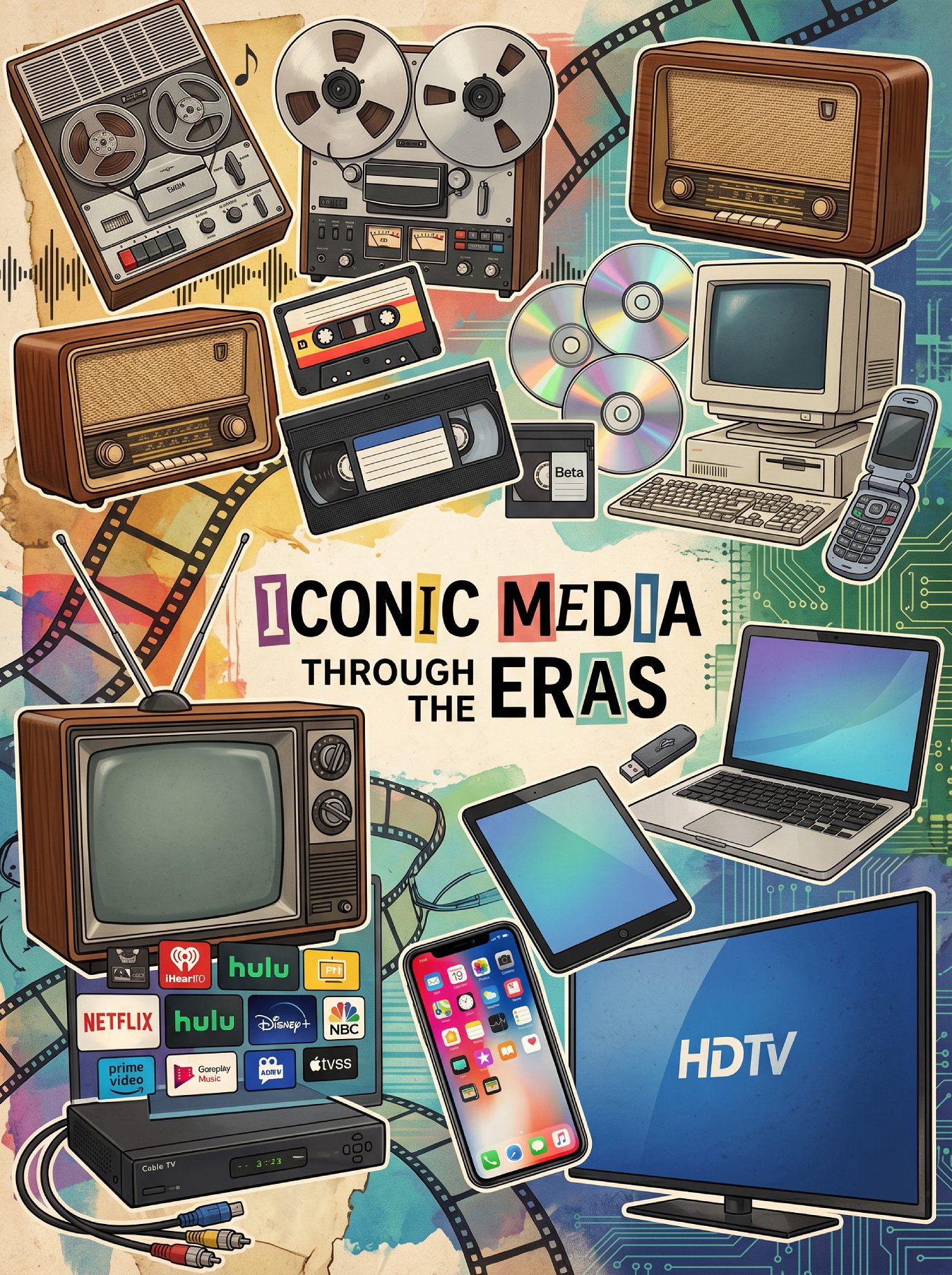
Bands, Groups, and Vocalists of the 1950s
Bands, Groups, and Singers of the 1950’s
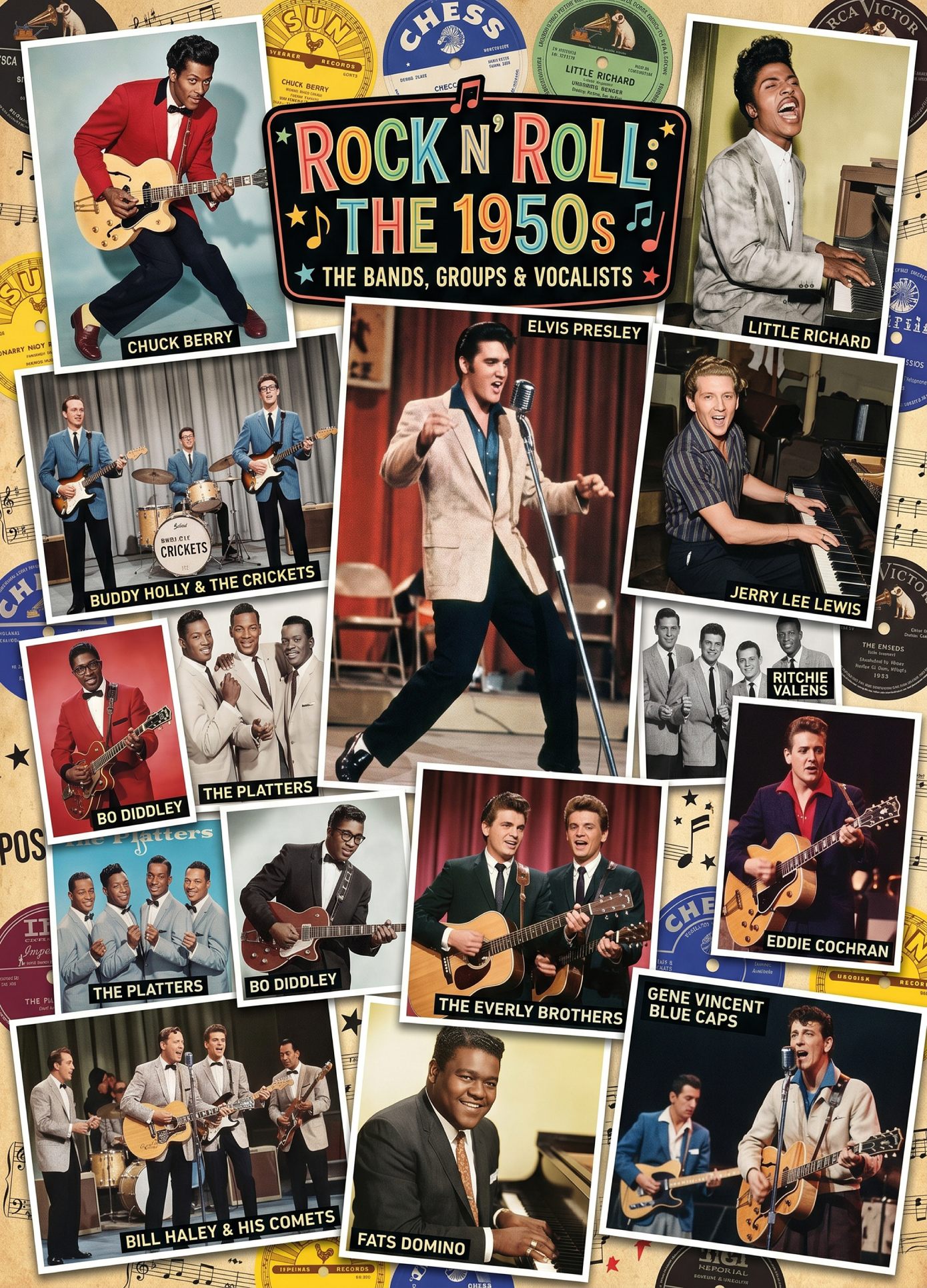
The 1950s was a decade of massive transformation, transitioning from the orchestral sounds of “Traditional Pop” to the high-energy birth of Rock and Roll and the harmonious rise of Doo-Wop.
Rock and Roll Pioneers
These artists broke away from smooth ballads to introduce the electric guitar and “dangerous” rhythms that defined teenage culture.
Elvis Presley: Known as “The King,” he popularized rockabilly and brought the genre into the mainstream with hits like “Heartbreak Hotel” and “Hound Dog”.
Chuck Berry: A foundational figure of rock guitar; he wrote anthems like “Maybellene” and “Johnny B. Goode”.
Little Richard: Introduced a wild, piano-pounding energy with hits like “Tutti Frutti” and “Long Tall Sally”.
Buddy Holly & The Crickets: Influential for their songwriting and the classic four-piece band setup.
Bill Haley & His Comets: Their song “Rock Around the Clock” (1955) is often cited as the spark that started the Rock and Roll revolution.
Jerry Lee Lewis: Nicknamed “The Killer,” he was famous for his volatile stage presence and hits like “Great Balls of Fire”.
Doo-Wop & Vocal Groups
Characterized by tight multi-part harmonies and nonsense background syllables, these groups dominated the charts in the mid-to-late ’50s.
The Platters: One of the most successful vocal groups, known for sophisticated ballads like “The Great Pretender” and “Only You”.
The Drifters: A pioneering R&B group that underwent many lineup changes, producing hits like “There Goes My Baby”.
The Coasters: Famous for their “storytelling” songs and humorous hits like “Yakety Yak” and “Charlie Brown”.
The Five Satins: Best remembered for the definitive doo-wop ballad “In the Still of the Night”.
The Chordettes: An all-female quartet that achieved massive success with “Mr. Sandman” and “Lollipop”.
Dion & The Belmonts: A popular teen group from the Bronx known for “A Teenager in Love”.
Traditional Pop & Solo Singers
In the early 1950s, music was led by “Crooners” and big-voiced singers who used orchestral backing.
Frank Sinatra: Successfully transitioned from the big band era to become a solo superstar throughout the decade.
Nat King Cole: A pianist turned legendary vocalist with timeless hits like “Unforgettable” and “Mona Lisa”.
Dean Martin: The “King of Cool” and a staple of the Las Vegas strip as part of the Rat Pack.
Patti Page: The top-charting female artist of the decade, famous for “Tennessee Waltz”.
Pat Boone: A “clean-cut” alternative to Elvis, he famously covered R&B hits to make them safer for mainstream radio.
Connie Francis: One of the most successful female pop singers, known for “Who’s Sorry Now?”.
Jazz, Blues, & Country
These genres provided the raw materials for Rock and Roll while continuing to evolve on their own.
Ray Charles: A pioneer of Soul music who blended gospel, blues, and jazz in the late ’50s.
Miles Davis: Revolutionized Jazz with the birth of “Cool Jazz” and the landmark album Kind of Blue (1959).
Fats Domino: A piano legend from New Orleans whose “boogie-woogie” style heavily influenced early rock.
Hank Williams: The “master” of honky-tonk country music before his untimely death in 1953.
Johnny Cash: Emerged in the mid-50s as a rockabilly and country star with “I Walk the Line”.
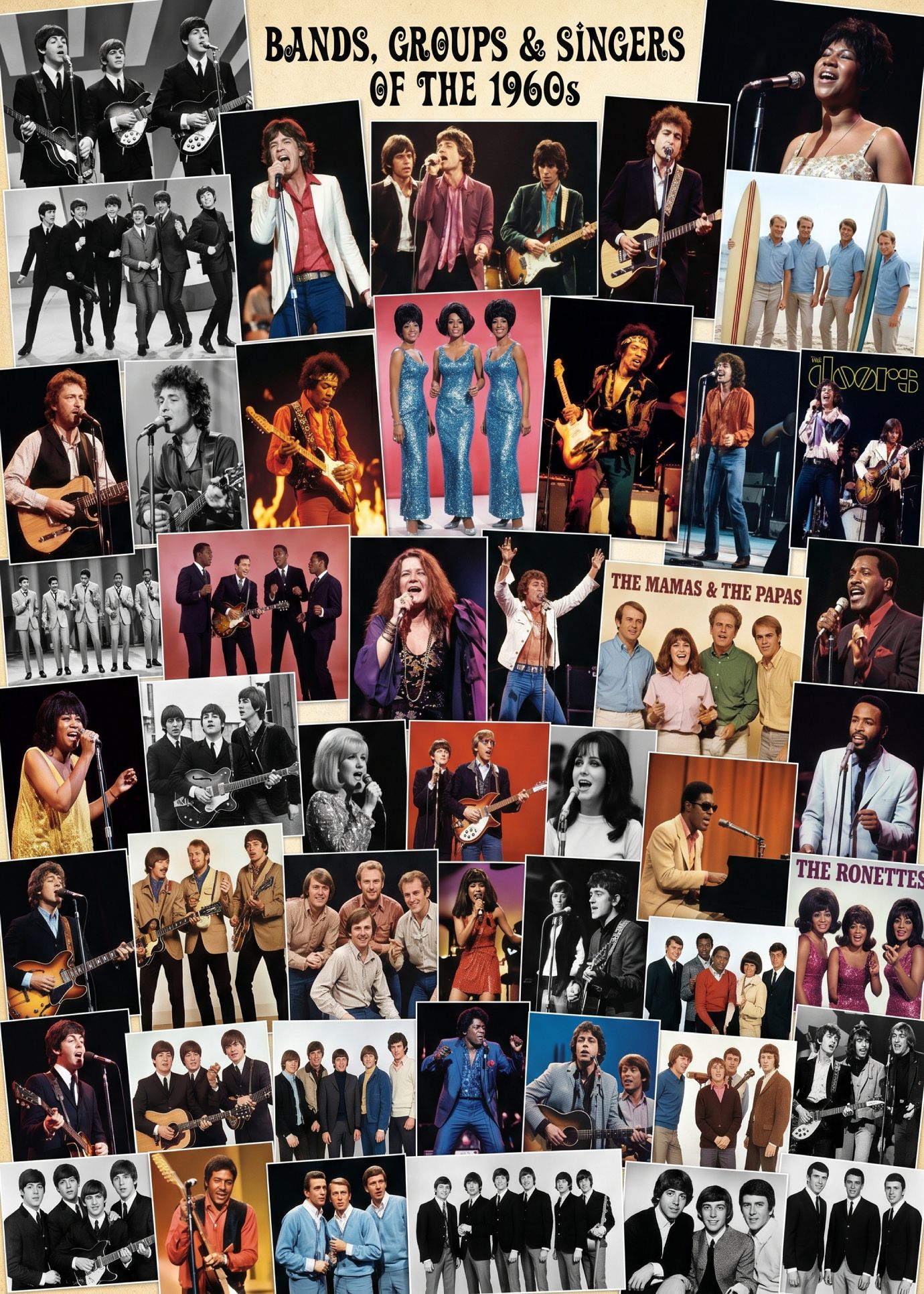
Bands, Groups, and Vocalists of the 1960s
Bands, Groups, and Singers of the 1960’s
The 1960s was a decade of massive cultural shifts that redefined music through the British Invasion, the rise of Motown, and the birth of psychedelic rock.
The British Invasion
This era was dominated by UK bands that took the world stage, beginning with The Beatles in 1964.
The Beatles: The most influential band of all time, evolving from pop hits like “She Loves You” to groundbreaking albums like Revolver and Sgt. Pepper.
The Rolling Stones: Known as the definitive rock ‘n’ roll band, with hits like “(I Can’t Get No) Satisfaction” and “Paint It, Black”.
The Who: Famous for their high-energy performances and the rock opera Tommy.
The Kinks: Innovative British rockers behind classics like “You Really Got Me” and “Waterloo Sunset”.
The Animals: Pioneers of a harder blues sound, best known for their #1 hit “House of the Rising Sun”.
American Rock & Folk
While British bands led the charts, American artists pioneered new genres like surf rock and folk-rock.
The Beach Boys: Harmonious leaders of the California “surf rock” sound, peaking with the experimental album Pet Sounds.
The Doors: Led by charismatic Jim Morrison, they defined psychedelic rock with “Light My Fire” and “The End”.
Bob Dylan: A transformative figure who shifted from acoustic folk to “electric” rock, influencing countless songwriters.
The Jimi Hendrix Experience: Led by Jimi Hendrix, widely considered the greatest rock guitarist, known for his virtuosity at festivals like Woodstock.
Creedence Clearwater Revival (CCR): Masters of “swamp rock” and hit singles like “Proud Mary” and “Fortunate Son”.
Motown & Soul
The “Motown Sound” from Detroit brought soul and R&B to mainstream audiences.
The Supremes: The most successful girl group of the decade, featuring Diana Ross, with hits like “Baby Love” and “Stop! In the Name of Love”.
The Temptations: A leading male vocal group known for tight choreography and hits like “My Girl”.
Aretha Franklin: The “Queen of Soul” whose 1967 recordings of “Respect” and “A Natural Woman” defined the genre.
James Brown: Known as the “Godfather of Soul,” he laid the groundwork for funk music with hits like “Papa’s Got a Brand New Bag”.
Marvin Gaye: A soul icon who released smooth early hits and later pioneered album-oriented soul.
Psychedelic & Supergroups
Cream: The first “supergroup,” featuring Eric Clapton, known for blues-rock improvisation.
Jefferson Airplane: A staple of the San Francisco psychedelic scene with hits like “White Rabbit”.
Pink Floyd: Formed in the late ’60s, they began their legend with psychedelic albums like The Piper at the Gates of Dawn.
Sly and the Family Stone: Pioneers of psychedelic soul and funk, notably performing at Woodstock.
Key Highlight: Many of these groups, like The Beatles and The Who, made their biggest US impact after appearing on The Ed Sullivan Show, which was the premier stage for musical artists during that decade.
*
*
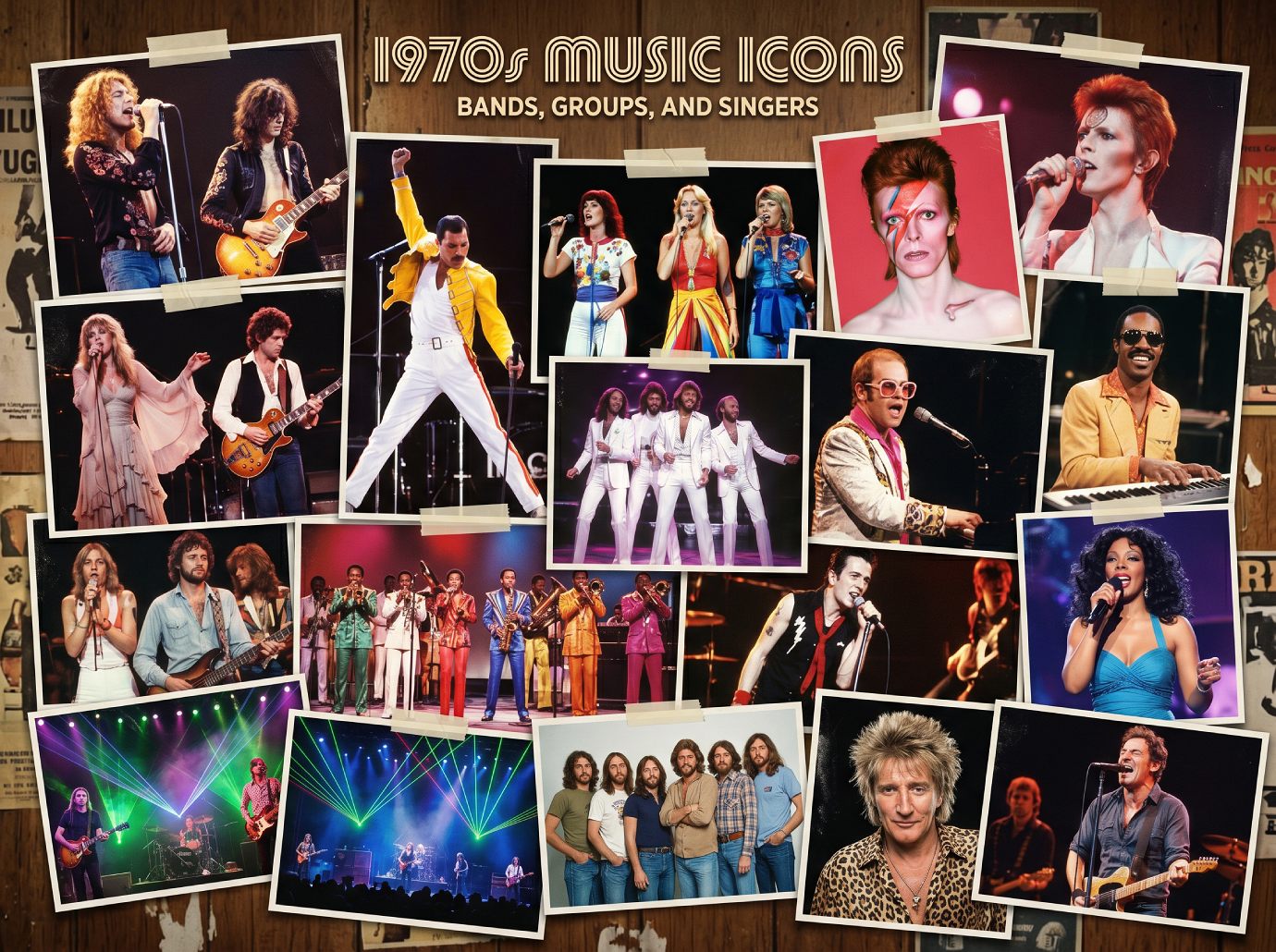
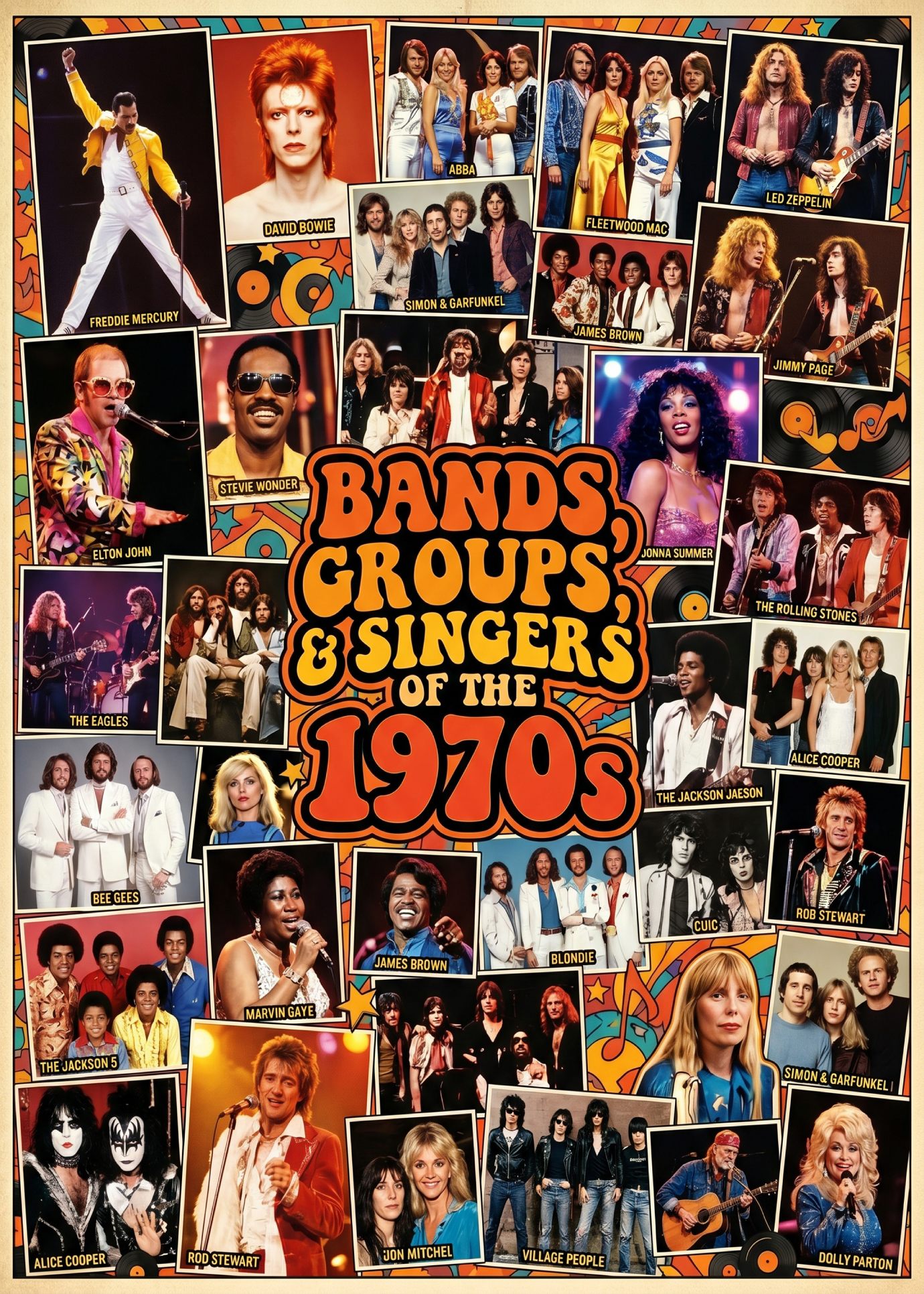
Bands, Groups, and Singers of the 1970s
Bands, Groups, and Singers of the 1970s
The 1970s was a monumental decade for music, defined by the rise of stadium-filling rock gods, the glitz of disco, and the raw rebellion of punk rock. The era saw the evolution of established legends and the birth of entirely new genres like heavy metal and progressive rock.
Iconic Rock Bands
Rock music dominated the decade, evolving from blues roots into diverse subgenres like hard rock, glam, and progressive rock.
Led Zeppelin: Often cited as the quintessential band of the 70s, known for their powerful blues-infused hard rock and hits like “Stairway to Heaven”.
Pink Floyd: Revolutionized the concept album with atmospheric soundscapes in masterpieces like The Dark Side of the Moon.
Queen: Blended opera, rock, and vaudeville into theatrical stadium anthems like “Bohemian Rhapsody”.
The Rolling Stones: Continued their 60s momentum with legendary 70s albums like Exile on Main St. and Sticky Fingers.
The Eagles: Defined the “California Sound,” merging country and rock in the best-selling album Hotel California.
Fleetwood Mac: Released Rumours (1977), one of the best-selling and most critically acclaimed albums of all time.
Black Sabbath: Pioneers who essentially invented heavy metal with dark, heavy riffs in songs like “Paranoid”.
Aerosmith: The “Bad Boys from Boston” brought a gritty, bluesy energy to the American rock scene.
Top Solo Singers
Solo artists shaped the decade’s sound through pop, soul, and the rise of the influential singer-songwriter movement.
Elton John: The decade’s biggest solo pop star, famous for flamboyant costumes and hits like “Rocket Man” and “Goodbye Yellow Brick Road”.
David Bowie: A musical “chameleon” who cycled through personas like Ziggy Stardust and the Thin White Duke while exploring glam rock and soul.
Stevie Wonder: Mastered R&B and funk with a string of classic albums, including the Grammy-winning Songs in the Key of Life.
Donna Summer: The “Queen of Disco” who dominated the charts in the late 70s with hits like “I Feel Love”.
Bruce Springsteen: Gained massive acclaim with his “Heartland Rock” sound and the breakthrough 1975 album Born to Run.
Marvin Gaye: Pivoted from Motown pop to socially conscious soul with his landmark 1971 album What’s Going On.
Dolly Parton: A country legend who successfully crossed over into pop stardom with hits like “Jolene” and “I Will Always Love You”.
Billy Joel: Achieved stardom with his piano-driven storytelling on albums like The Stranger.
Soul, Funk, and Disco Groups
Rhythm and melody took center stage with high-energy groups that defined the dance floors of the 1970s.
Bee Gees: Spearheaded the disco phenomenon with the massive success of the Saturday Night Fever soundtrack.
ABBA: A global Swedish pop sensation that produced perfectly crafted hits like “Dancing Queen” and “Waterloo”.
Earth, Wind & Fire: Blended funk, soul, and jazz with elaborate stage shows and hits like “September”.
The Jackson 5: A pop phenomenon featuring a young Michael Jackson, scoring four consecutive #1 hits at the decade’s start.
Parliament-Funkadelic: Led by George Clinton, they pioneered an eccentric, spacy “P-Funk” sound.
Punk and New Wave
By the late 70s, a new generation of musicians rejected the perceived “excess” of mainstream rock for a raw, high-energy sound.
The Ramones: Birthed punk rock with short, fast, three-chord songs like “Blitzkrieg Bop”.
The Sex Pistols: A short-lived but explosive UK band that challenged the music establishment in 1977.
The Clash: Known for experimenting with punk, ska, and reggae while maintaining a strong political message.
Blondie: A New York New Wave pioneer led by Debbie Harry, blending punk energy with pop sensibilities.

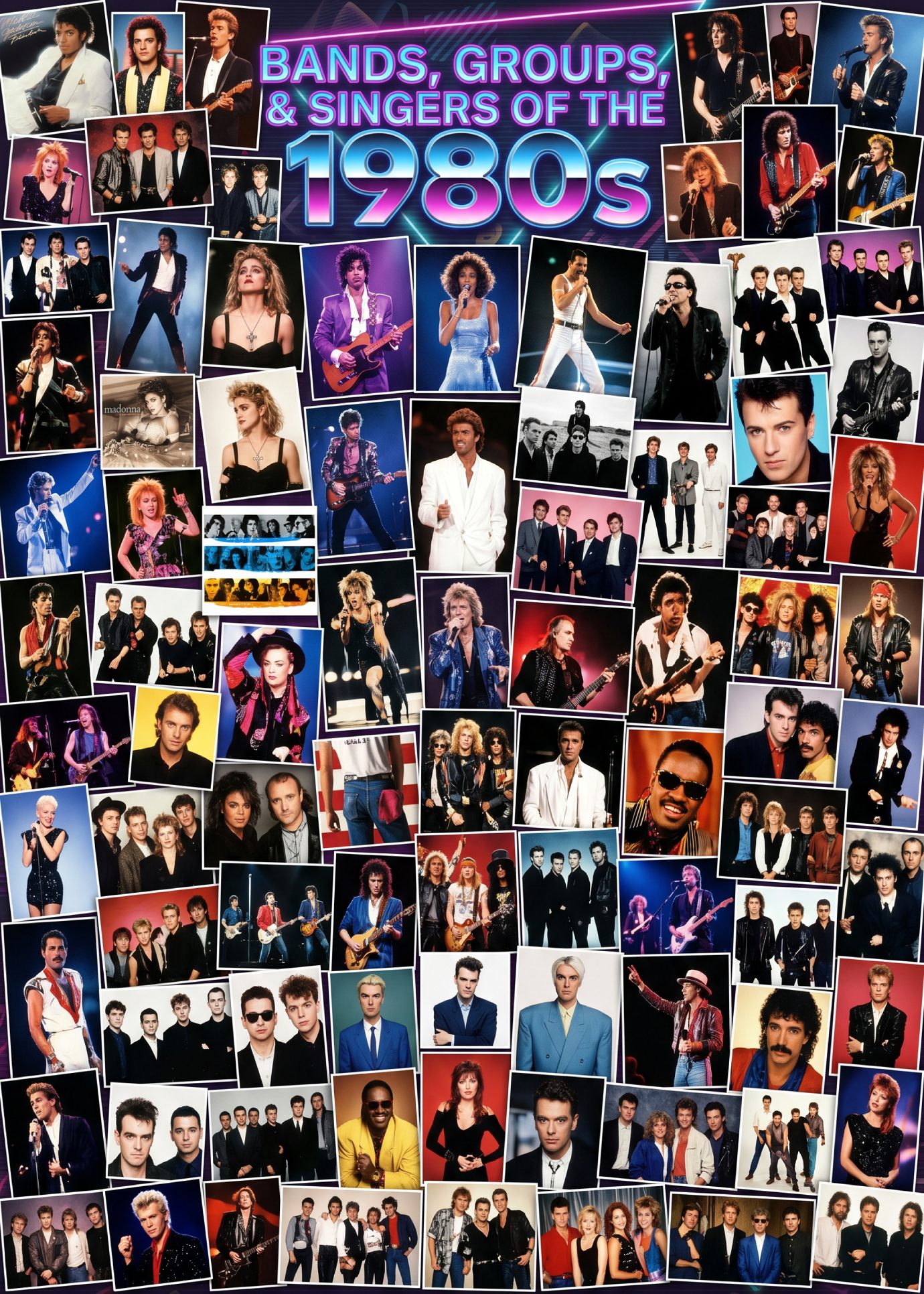

Bands, Groups, and Singers of the 1980s
Bands, Groups, and Singers of the 1980s
The 1980s was a decade of massive musical shifts, dominated by the rise of MTV, the polished sounds of synth-pop, and the explosion of hair metal and hip-hop.
Defining Pop Icons
Michael Jackson: The “King of Pop” whose album Thriller (1982) remains the best-selling of all time.
Madonna: Known for constant reinvention and hits like “Like a Virgin” and “Material Girl”.
Prince: A prolific multi-instrumentalist who blended funk, rock, and pop with hits like “Purple Rain”.
Whitney Houston: Defined the decade with her powerful vocals and consecutive number-one hits such as “I Wanna Dance with Somebody”.
George Michael / Wham!: Transitioned from the pop duo Wham! to a massive solo career with the album Faith.
Rock & Metal Giants
Guns N’ Roses: Burst onto the scene late in the decade with the raw energy of Appetite for Destruction.
U2: Evolved from post-punk into global stadium rock icons with The Joshua Tree.
Van Halen: Blended technical guitar mastery with pop sensibility, famously with the synth-driven hit “Jump”.
Bon Jovi: Bridged the gap between heavy metal and pop with anthems like “Livin’ on a Prayer”.
Metallica: Leading force of thrash metal, moving from the underground to mainstream dominance by the end of the decade.
Def Leppard: Defined the polished “hair metal” sound with the massive success of the album Hysteria.
New Wave & Synth-Pop
Duran Duran: Often called the “Fab Five,” they were the faces of the Second British Invasion.
Depeche Mode: Pioneers of electronic music whose darker synth-pop sound became globally influential.
The Police: Led by Sting, they blended rock, reggae, and jazz before disbanding at their peak in 1984.
Eurythmics: Featuring the striking imagery and vocals of Annie Lennox, known for “Sweet Dreams (Are Made of This)”.
Tears for Fears: Created thoughtful, anthemic pop like “Everybody Wants to Rule the World”.
Hip-Hop Pioneers
Run-D.M.C.: Brought hip-hop to the mainstream, notably with their rock-rap crossover “Walk This Way”.
Public Enemy: Pushed socially conscious lyrics and aggressive production to the forefront.
N.W.A: Revolutionized the genre with “gangsta rap” and the album Straight Outta Compton.
Beastie Boys: Blended punk roots with rap, achieving massive success with Licensed to Ill.
Alternative & College Rock
R.E.M.: The quintessential American college rock band, starting with the critically acclaimed Murmur.
The Cure: Led by Robert Smith, they were icons of the gothic and alternative scene.
The Smiths: Defined 80s British indie with Morrissey’s lyrics and Johnny Marr’s unique guitar style.
Talking Heads: Known for their avant-garde art-rock and high-energy live performances.
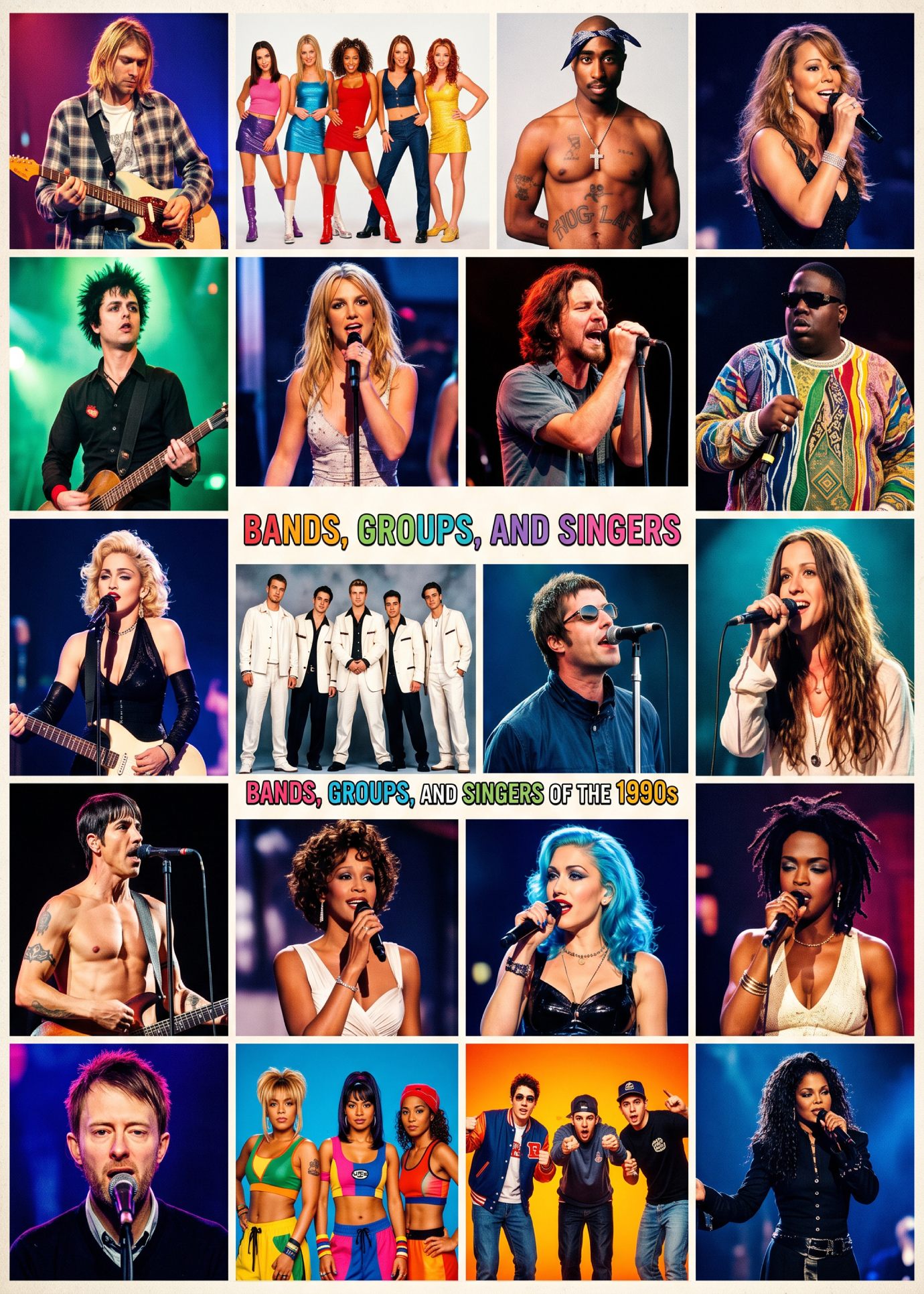
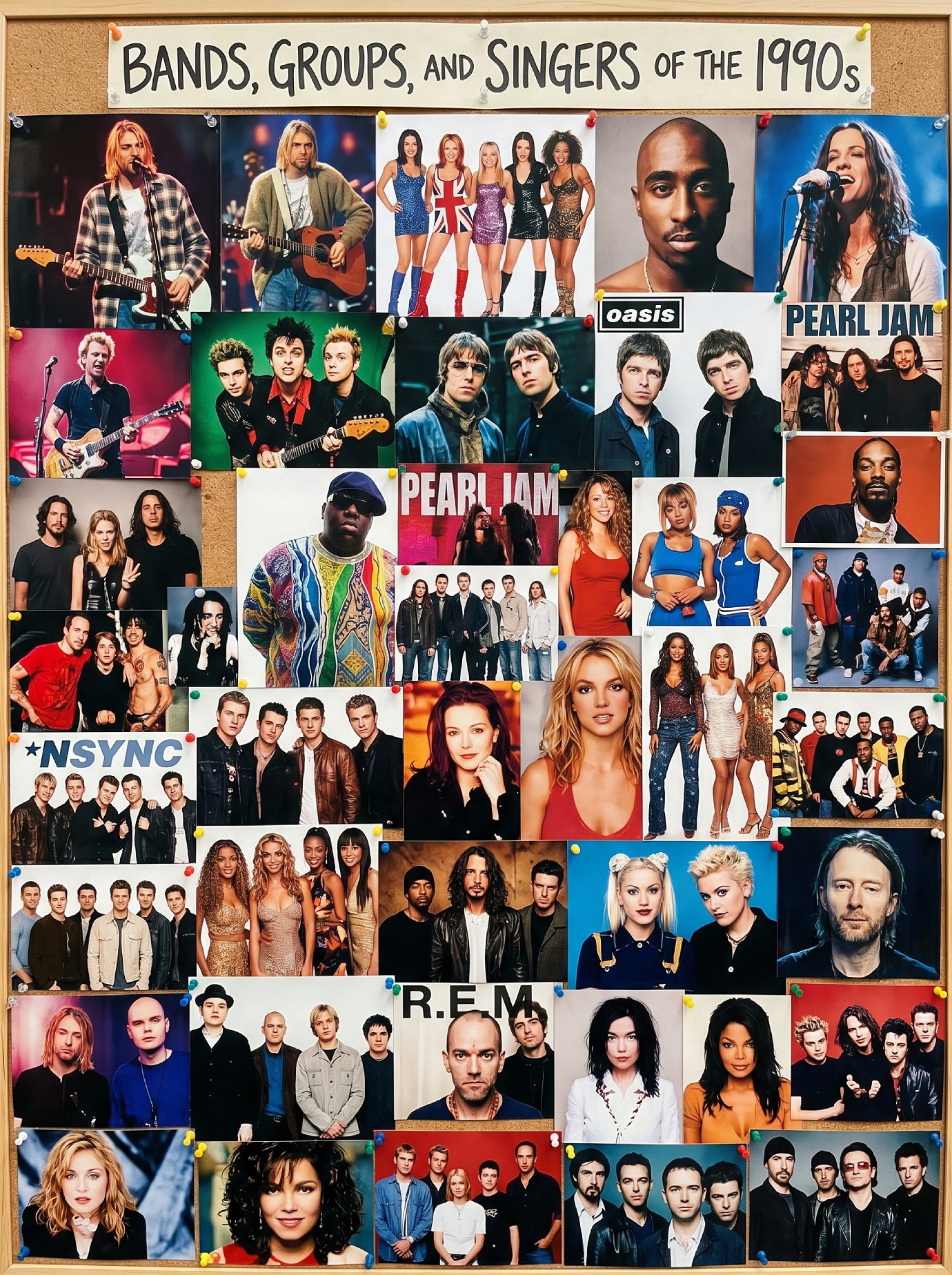
Bands, Groups, and Singers of the 1990s
Bands, Groups, and Singers of the 1990s
The 1990s was a transformative decade in music, defined by the raw energy of grunge, the global explosion of boy bands and girl groups, and the cultural dominance of hip-hop and R&B.
Rock & Grunge
The “Seattle Sound” revolutionized rock at the start of the decade, replacing the polished “hair metal” of the ’80s with gritty, emotional lyrics.
Nirvana: The definitive face of the grunge movement, led by Kurt Cobain.
Pearl Jam: Known for Eddie Vedder’s powerful vocals and the landmark album Ten.
Soundgarden: Fused heavy metal riffs with Chris Cornell’s operatic vocal range.
Alice in Chains: Brought a darker, sludge-metal influence to the grunge scene.
Green Day: Propelled pop-punk into the mainstream with their 1994 hit album Dookie.
Red Hot Chili Peppers: Fused funk, rap, and rock, peaking with Blood Sugar Sex Magik.
Radiohead: Evolved from alternative rock roots (The Bends) into experimental pioneers with OK Computer.
Pop, Boy Bands & Girl Groups
The mid-to-late ’90s saw a resurgence of polished pop production and choreographed vocal groups.
Spice Girls: A British phenomenon that launched a “girl power” movement and broke US markets.
Backstreet Boys: The quintessential late-’90s boy band with global hits like “I Want It That Way”.
NSYNC: Justin Timberlake’s breakout group, known for tight harmonies and high-energy dance routines.
Destiny’s Child: One of the most successful girl groups of the decade, led by Beyoncé Knowles.
Britney Spears & Christina Aguilera: The leading “teen pop” solo icons who dominated the charts by 1999.
Hanson: The sibling trio famous for the 1997 smash hit “MMMBop”.
Hip-Hop & R&B
The ’90s are often called the “Golden Age” of hip-hop, marked by iconic rivalries and the rise of G-funk and neo-soul.
Tupac Shakur & The Notorious B.I.G.: The most influential figures of the West Coast and East Coast rap scenes, respectively.
Dr. Dre & Snoop Dogg: Pioneers of the “G-funk” sound that defined early ’90s hip-hop.
Wu-Tang Clan: A massive rap collective that revolutionized hip-hop business and group dynamics.
Lauryn Hill: Her album The Miseducation of Lauryn Hill became a critical and commercial masterpiece of neo-soul.
TLC: Blended R&B, hip-hop, and pop with bold messages and hits like “Waterfalls” and “No Scrubs”.
Boyz II Men: Mastered soulful harmonies and dominated the charts with ballads like “End of the Road”.
–
The Britpop Invasion
While grunge ruled the US, the UK was dominated by a revitalized guitar-pop sound.
Oasis: Led by the Gallagher brothers, their album (What’s the Story) Morning Glory? was a global juggernaut.
Blur: The primary rivals to Oasis, central to the Britpop culture movement.
The Verve: Famous for the sweeping anthem “Bittersweet Symphony”.
The Cranberries: An Irish band that reached international stardom with Dolores O’Riordan’s unique vocals.
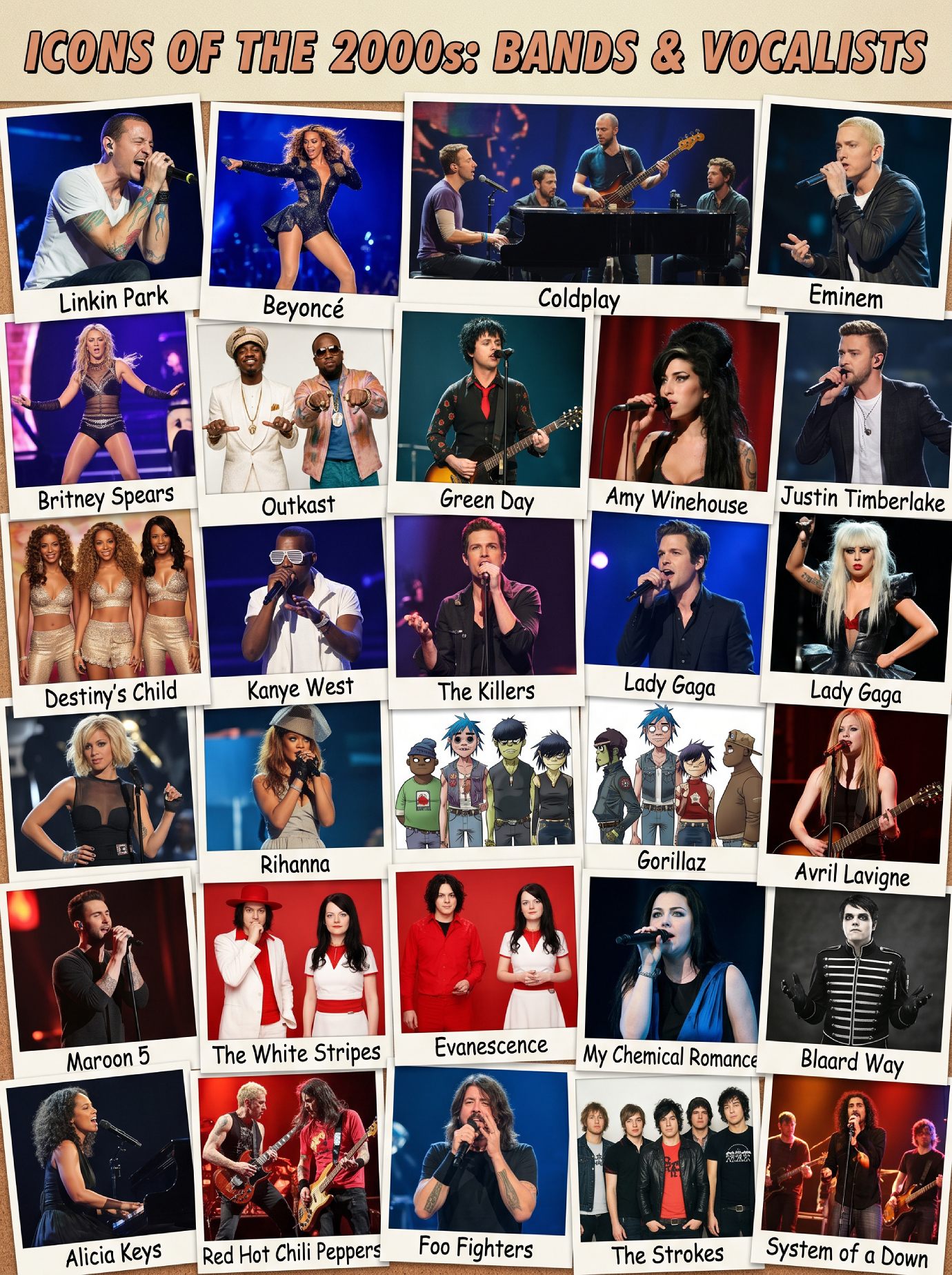
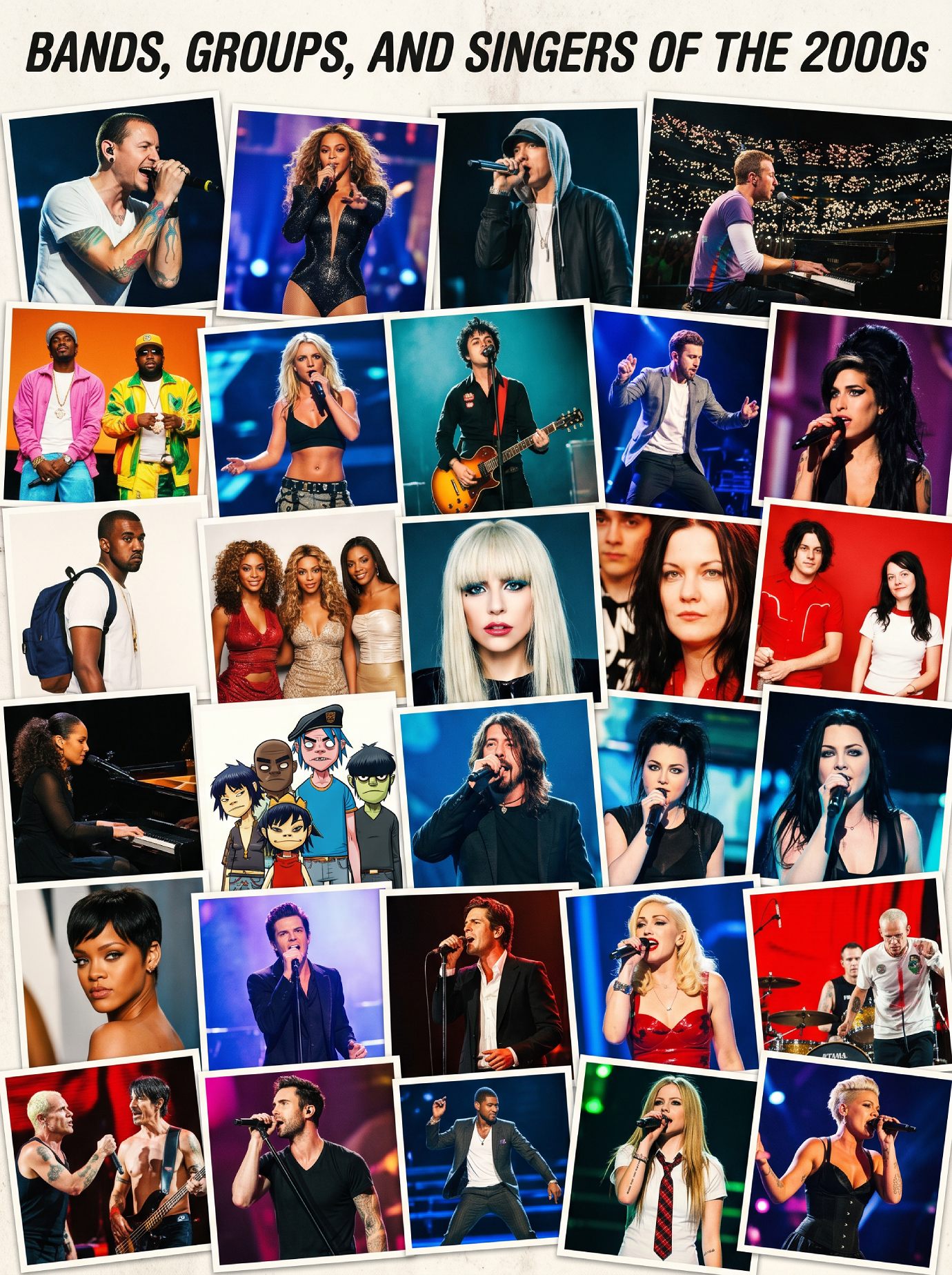
Icons of the 2000s: Bands, Groups, and Vocalists
Bands, Groups, and Singers of the 2000s
The 2000s saw a massive shift in the music industry, moving from the dominance of teen pop and nu-metal at the start of the decade to a global indie rock revival and the rise of hip-hop as the definitive sound of mainstream culture.
Rock & Alternative
The decade was defined by several high-profile movements, including the “The” bands of the garage rock revival and the emotional weight of the emo-pop explosion.
Linkin Park: One of the decade’s most successful acts, blending rap and heavy metal on their massive debut Hybrid Theory.
The Strokes: Revived garage rock with their 2001 album Is This It, influencing a generation of “The” bands.
Green Day: Reached new heights with their 2004 politically charged rock opera, American Idiot.
The Killers: Emerged from Las Vegas with hits like “Mr. Brightside” and a sound that blended indie rock with 80s synths.
Arctic Monkeys: Became the fastest-selling debut band in UK history with their 2006 album.
My Chemical Romance: Led the mid-2000s emo movement with the theatrical and grandiose The Black Parade.
Coldplay: Dominated global charts with melodic alternative rock hits like “Yellow,” “The Scientist,” and “Viva La Vida”.
Evanescence: Blended gothic rock with operatic vocals, led by singer Amy Lee, achieving massive success with “Bring Me to Life”.
Foo Fighters: Proved their staying power with consistent arena rock anthems like “Best of You” and “The Pretender”.
Pop & R&B
The early 2000s transitioned from late-90s boy band fever into an era dominated by powerhouse solo stars and influential girl groups.
Beyoncé: After her success with Destiny’s Child, she became a solo icon with the 2003 release of Dangerously in Love.
Britney Spears: Remained a fixture of pop culture with massive hits like “Oops!… I Did It Again” and “Toxic”.
Justin Timberlake: Transitioned from *NSYNC to solo stardom with the R&B-influenced albums Justified and FutureSex/LoveSounds.
Usher: Defined the mid-2000s R&B sound with his 2004 diamond-certified album, Confessions.
Rihanna: Rose from a pop newcomer to a global superstar with the 2007 smash hit “Umbrella”.
Amy Winehouse: Reinvigorated soul and jazz with her masterpiece Back to Black.
Alicia Keys: A piano prodigy who brought a classic soul feel to modern R&B with songs like “Fallin'”.
Hip-Hop & Rap
Hip-hop achieved unprecedented mainstream dominance during this decade, with several artists becoming cultural moguls.
Eminem: Often cited as the most influential artist of the 2000s, he dominated sales and charts with albums like The Marshall Mathers LP.
Kanye West: Reshaped the sound of hip-hop by moving away from “gangsta” tropes toward soulful production on The College Dropout.
OutKast: The Atlanta duo won Album of the Year at the Grammys for their double album Speakerboxxx/The Love Below, featuring the massive hit “Hey Ya!”.
Jay-Z: Solidified his status as a legendary lyricist and mogul with The Blueprint and The Black Album.
50 Cent: Became a global phenomenon with the 2003 release of Get Rich or Die Tryin’.
Missy Elliott: Pushed visual and sonic boundaries with innovative production on tracks like “Get Ur Freak On”.
Key Trend: The 2000s was the decade where digital distribution began to take over, with the rise of the iPod and the decline of physical CD sales forever changing how these artists reached their fans.
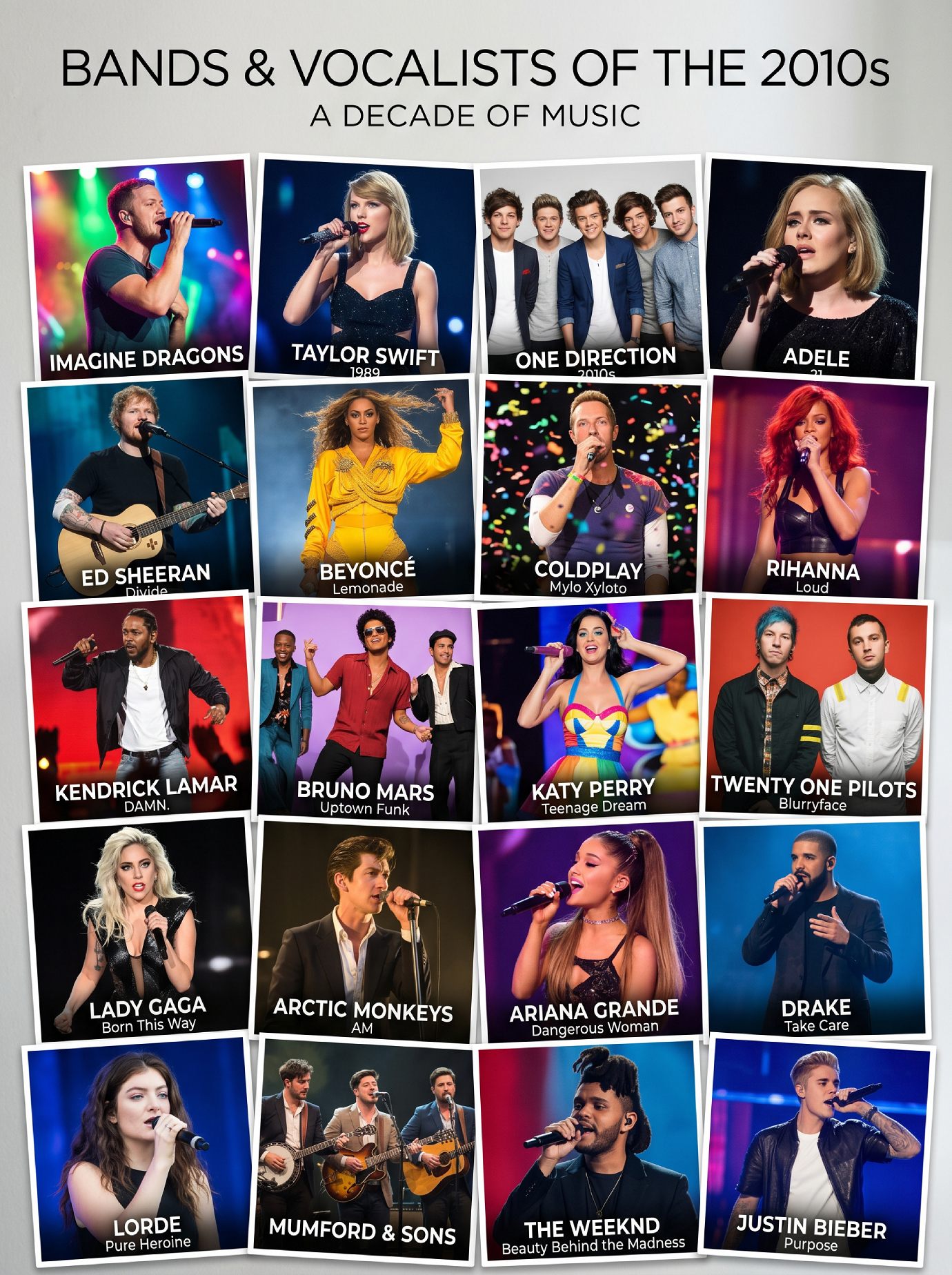
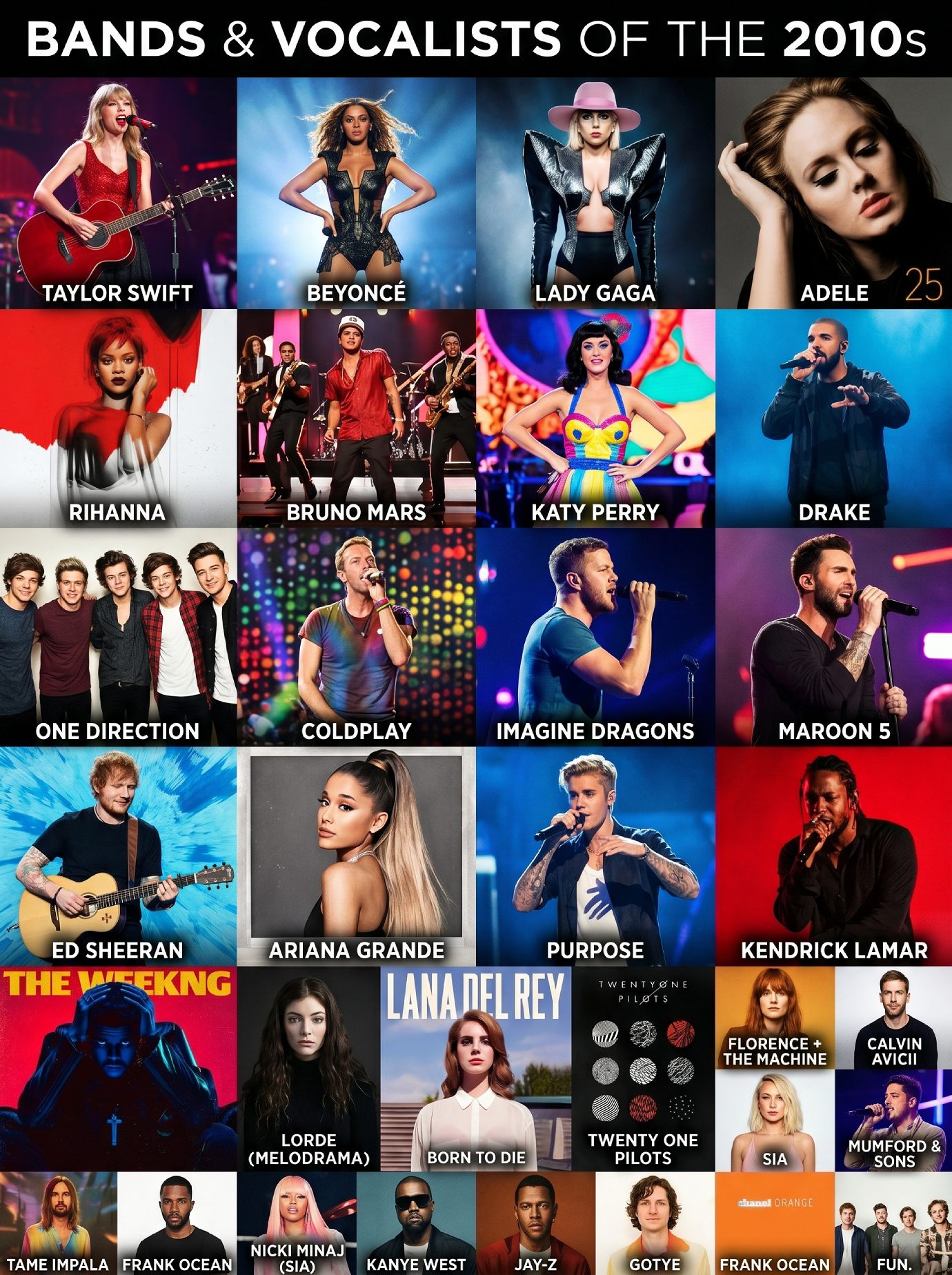
Bands, Vocalists, and Groups of the 2010s
Bands, Groups and Singers of the 2010s
The 2010s music scene was dominated by the rise of indie-folk-pop, mainstream pop-rock, and electronic-infused pop, defined by artists like Imagine Dragons, One Direction, Adele, and Taylor Swift. Key trends included the massive popularity of streaming-era pop stars, the comeback of early 2000s bands, and the rise of “scene” and alternative rock groups like Twenty One Pilots and Tame Impala.
Top Bands and Groups of the 2010s
Imagine Dragons: Defined the early 2010s sound with massive hits like “Radioactive” and “Demons”.
One Direction: Formed in 2010, they became one of the biggest pop acts globally, producing multiple hits.
Twenty One Pilots: Soared in popularity, bringing a blend of alternative, rock, and electronic to the mainstream.
Mumford & Sons: Led the indie-folk explosion at the start of the decade.
The Chainsmokers: Defined mid-2010s dance-pop and festival music.
Maroon 5: Maintained high popularity through the decade with pop-focused albums.
Tame Impala: Influenced 2010s pop and rock with their psychedelic sound.
Coldplay: Continued to be a dominant force, redefining their sound throughout the 2010s.
Arctic Monkeys: Remained a major international rock group.
Of Monsters and Men: Broke through in the early 2010s with an indie folk-pop style.
Foster the People: Known for their 2010/2011 hits like “Pumped Up Kicks”.
Paramore: Transitioned from pop-punk to a highly successful indie-pop sound.
The Lumineers: Key contributors to the folk-pop surge.
Prominent Singers of the 2010s
Adele: Released massive, chart-dominating albums 21 and 25.
Taylor Swift: Evolved from country to global pop domination during this decade.
Drake: A dominant presence in both hip-hop and pop-rock fusion.
Bruno Mars: Delivered multiple hits, blending pop, funk, and soul.
Katy Perry: A dominant force in early 2010s pop.
Ariana Grande: Rose to prominence with popular pop and R&B hits.
Lana Del Rey: Impacted the alternative pop scene.
Kendrick Lamar: Critically acclaimed, reshaping hip-hop.
Other Notable Mentions
Rock/Alternative: Cage The Elephant, Parquet Courts, Walk The Moon, The Black Keys, Fall Out Boy (comeback).
Pop/Electronic: Halsey, Dua Lipa, Lorde, Sia, Avicii, Calvin Harris.
Hip-Hop: Migos, Future, Young Thug, XXXTentacion
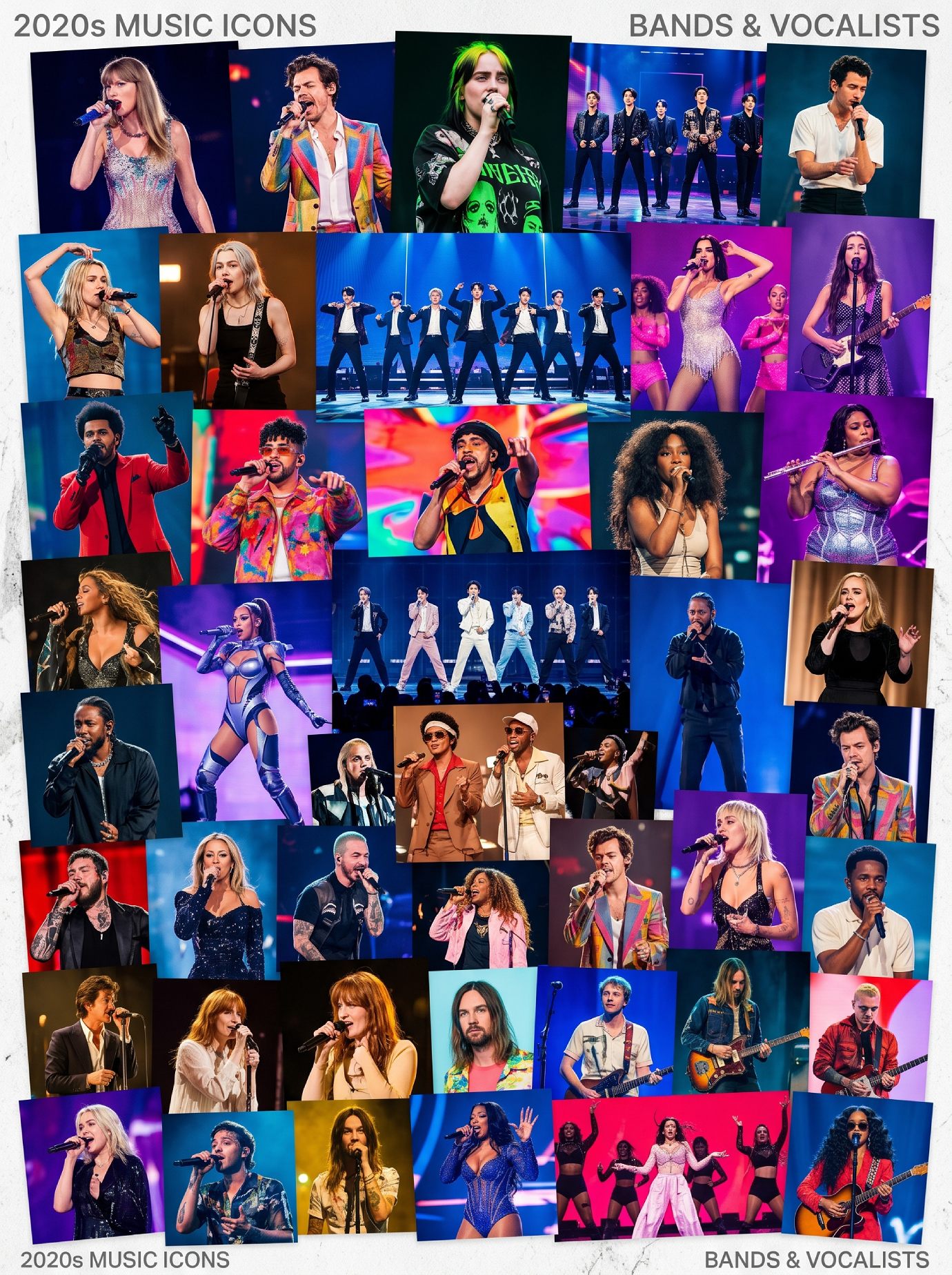
Bands, Groups, and Vocalists of the 2020s
Bands, Groups, and Singers of the 2020s
The 2020s music scene is defined by genre-blending pop stars like Dua Lipa, Olivia Rodrigo, and Bad Bunny, alongside dominant groups such as BTS and evolving rock acts like Dirty Honey and Bad Omens. This era has seen a massive surge in R&B/pop crossovers, with artists like The Weeknd, Doja Cat, and SZA dominating global charts.
Key Artists & Bands of the 2020s
Pop & Pop-Rock: Harry Styles, Olivia Rodrigo, Dua Lipa, Billie Eilish, Ed Sheeran, Ava Max.
Rap & Hip-Hop: Bad Bunny, Drake, Post Malone, Kendrick Lamar, Doja Cat.
Rock & Alternative: Idles, Fontaines D.C., Wet Leg, Boygenius, The Smile.
Metal & Hard Rock: Sleep Token, Bad Omens, Spiritbox, Dirty Honey.
Key Trends & Emerging Artists
The “New” Rock Scene: Bands like Wednesday, The Beths, and Alvvays have gained significant traction, representing a shift toward indie and post-punk revival.
Hyperpop/Alternative: 100 gecs are cited as a key, experimental sound for the early part of the decade.
International Explosion: Beyond BTS, artists like Seventeen have also dominated, particularly in the 2023, 2024, and 2025 landscape.
R&B Revival: SZA’s SOS and work by Victoria Monét have defined the R&B sound of the dec
Projected Bands, Groups, and Singers of the 2030’s

Projected Bands, Groups, and Singers of the 2030’s
Projected to dominate the 2030s are artists blending hyperpop, electronic, and global sounds, with many current 2024–2026 breakout acts—such as Sofia Isella, Snow Wife, Absolutely, and Feng—expected to mature into mainstream stars. The 2030s music scene is projected to feature Gen Alpha-driven, synth-heavy, and futuristic electronic pop, moving away from 2020s nostalgia.
Projected Artists & Bands to Watch (2030s Era)
Emerging Pop/Alternative (2025–2026 Breakthroughs):
Sofia Isella: Dark indie/pop, described as a “poetic” and “cult-like” following artist.
Snow Wife: Fearless, maximalist hyperpop.
Absolutely: Powerhouse vocalist combining R&B, pop, and EDM.
Feng: 19-year-old producer/rapper (Scouse rap/indie-pop).
Dove Ellis: Dreamy ’70s-era indie-rock singer-songwriter.
The Deep: K-pop singer/songwriter focusing on Y2K/UK garage.
Rock/Alternative/Metalcore (Thriving in 2030):
Sleep Theory: Projected to be headlining large shows by 2030.
Bad Omens / I Prevail / Spiritbox: Predicted to be in their prime and leading the pop-metalcore scene.
Evolving & Enduring Acts (Mid-2030s):
Taylor Swift / Phoebe Bridgers / Big Thief / Arctic Monkeys: Recognized by MOJO as enduring artists who will shape the next three decades.
Lana Del Rey: Predicted to maintain a steady, legendary status with strong fanbase engagement.
Trends and Sound of the 2030s
Genre Fusion & Tech: Increased reliance on AI-driven production tools (“consumer creators”).
Hyperpop & Electronic: Expected to become the dominant sound, particularly as a backlash against 2020s retrocore.
Experimental/Global: More diverse, synth-based sounds and increased global music trends.
Shoegaze/Nu-Metal Crossover: Potential for alternative subgenres to enter the mainstream.
Predicting the music stars of the 2030s involves looking at current rising talent, industry-shifting technology like AI, and the evolving tastes of Generation Alpha, who will reach their prime “trendsetter” years during that decade.
While the biggest stars of 2035 likely haven’t debuted yet, several groups and soloists are already being tracked by industry experts and fans as potential icons for that era.
Rising Artists and Groups to Watch
Current up-and-comers are expected to reach their professional prime by the turn of the decade.
The Linda Lindas: This all-female punk band is frequently cited as a group that will mature into headliners by 2030.
Sleep Theory: In the rock and metalcore scene, this band is projected to be headlining major shows by 2030.
Chino Pacas: A young artist who has already collaborated with Drake, he is seen as a frontrunner for the future of regional Mexican and global urban music.
Spiritbox & Bad Omens: Both are predicted to be in their commercial prime as they transition rock and metalcore into more mainstream pop-influenced styles.
Isaiah Dominguez: Mentioned as part of a wave of artists using high-tech tools to blend organic instrumentation with modern production.
The “Generation Alpha” Influence
Gen Alpha (born roughly 2010–2024) is expected to move away from “polished” pop stars toward independent, relatable, and interactive creators.
K-Pop Dominance: K-Pop is officially a favorite for one in four Gen Alpha kids, ensuring that groups from major labels like HYBE and SM Entertainment will remain dominant.
Genre Blurring: Expect to see “hyperpop” and electronic genres like Brazilian Funk and Jersey Club become mainstream as Gen Alpha rejects the 2020s nostalgia for more “futuristic” sounds.
The “New to Me” Trend: Younger listeners increasingly treat old songs as “new” through viral social media features, meaning classic acts like Kate Bush or Taylor Swift may remain “projected stars” indefinitely.
Industry and Tech Projections
The way stars are made will change fundamentally by 2030.
AI Creators: There are projected to be nearly 200 million music creators by 2030, many of whom will be “consumer creators” using AI tools like BandLab to produce high-quality music without a label.
Independent Empowerment: Social media and digital platforms like TikTok and YouTube will continue to allow independent artists to build massive fanbases without traditional industry backing.
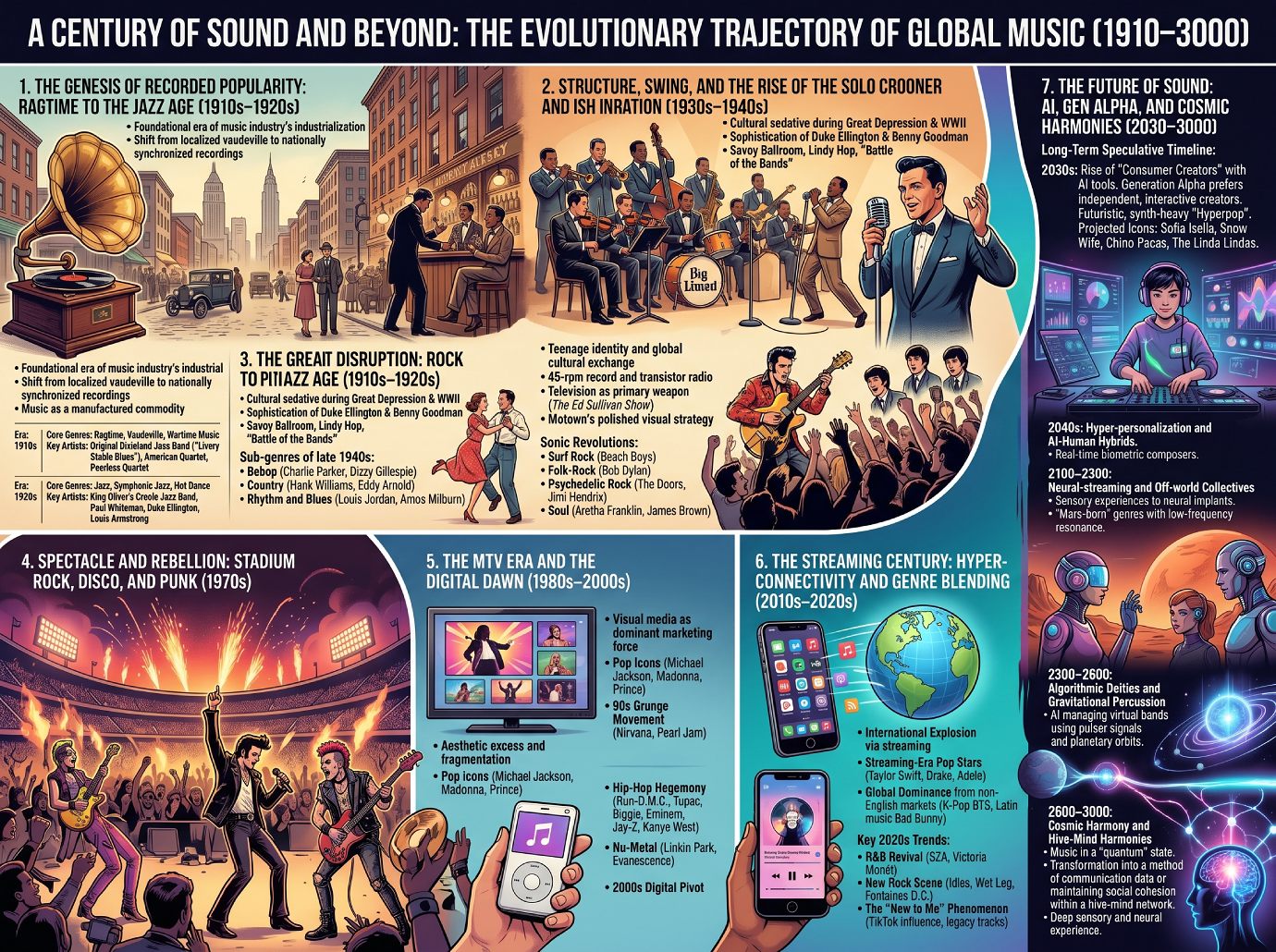
Projected Bands, Groups, and Singers of the 2040’s to the year 3000
Projected music trends for the 2040s and beyond suggest a move toward hyper-personalized, AI-collaborative, and highly diverse sounds. Mainstream consensus will likely decrease, with smaller, dedicated communities fostering artists, while global sounds like Afrobeats and Latin trap continue to dominate the airwaves.
Projected Trends and Future Music Landscape (2040–3000)
AI as Collaborator (2040s+): Artificial intelligence will shift from a composition tool to a “teammate,” allowing for rapid, personalized music generation and the blurring of human-machine boundaries.
Hyper-Personalization: Musical consumption will move away from huge global stars toward fragmented, niche fandoms that connect directly with artists.
Globalized Sounds: Continued growth in African (amapiano, afro house) and Latin music will dominate, likely setting the stage for new, fusion genres.
Virtual and Immersive Performance (2050s+): Live shows will evolve into immersive VR/AR experiences, allowing for virtual meet-and-greets and holograms.
Evolving Formats (Year 3000): As language drifts over centuries, the focus may shift from lyrics to pure “feeling” and rhythm, potentially making classical or ambient-style instrumental music timeless staples.
Indie-Dominance: The reliance on traditional labels will diminish, with artists building audiences through community-driven platforms, possibly bypassing traditional streaming entirely.
While specific artist names cannot be predicted for 1,000 years from now, experts predict that by 2030-2040, the industry will have shifted completely toward, decentralized, and tech-driven models.
Music of the Future
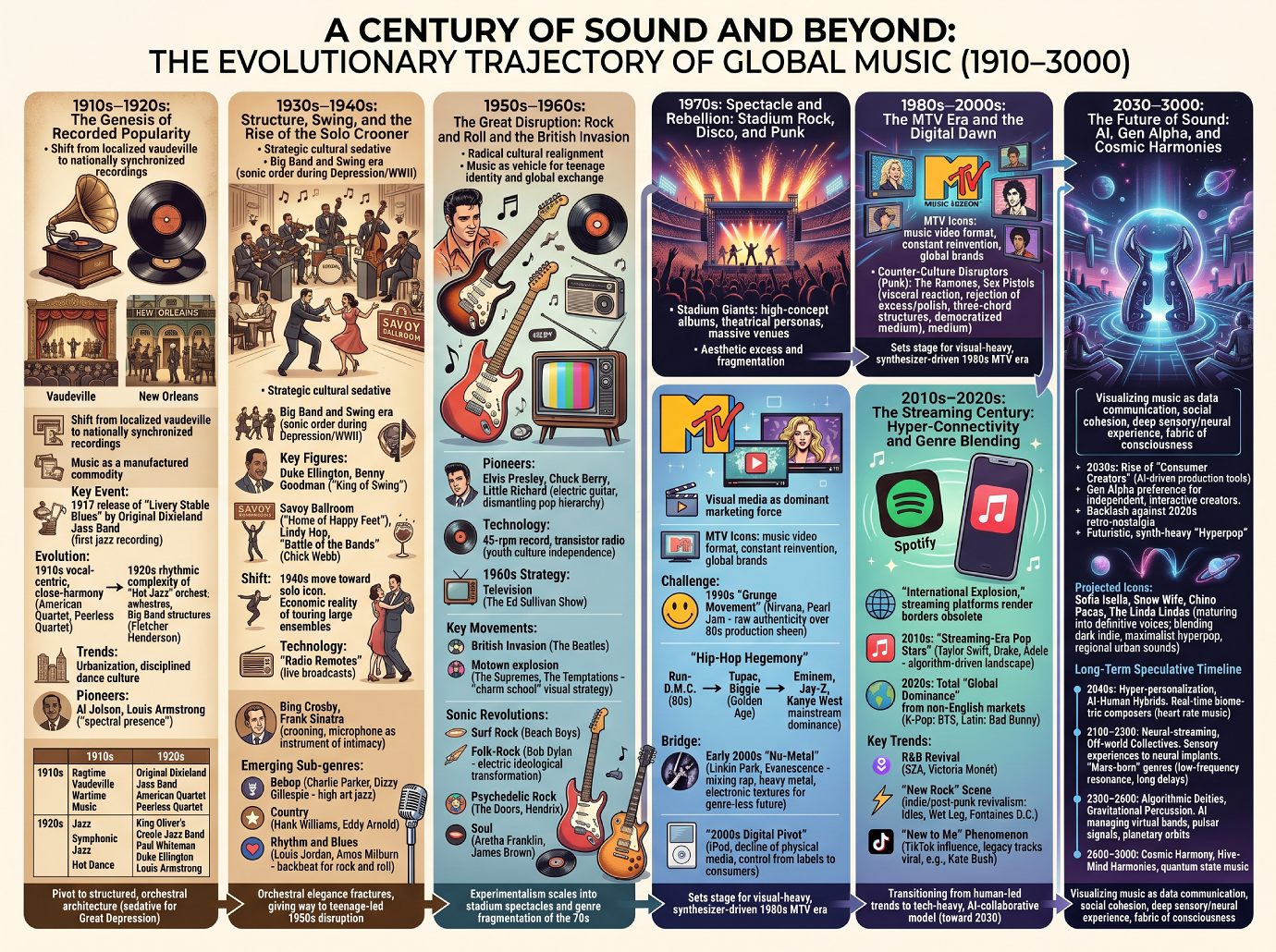
Music of the Future:
Predicting the music landscape for the next 976 years involves looking at current technological trajectories, cultural shifts, and the inevitable evolution of how humans (and perhaps non-humans) create art.
While specific names of people not yet born are impossible to provide, we can project the types of musical entities that will dominate these eras.
The 2040s: The Era of Hyper-Personalization
By the 2040s, the “superstar” model will likely shift toward niche, algorithmically generated idols.
AI-Human Hybrids: Groups where one “face” is human, but the voice and songwriting are handled by evolving AI.
Holographic Legacies: “New” music from deceased icons (like 20th-century legends) will be indistinguishable from their original work, leading to permanent residency tours.
Biometric Composers: Artists who create music that reacts in real-time to the listener’s heart rate or brain waves.
2100 – 2300: Post-National & Bio-Digital
As society becomes more integrated with technology, music will move beyond the “band” format.
Neural-Streamers: Artists who don’t release audio files, but “sensory experiences” streamed directly into neural implants.
Interspecies Collaborations: Music utilizing bio-sonification from plants, animals, or synthesized biological organisms.
Off-World Collectives: The first “Mars-born” genres will emerge, characterized by long delays, lower-frequency resonance, and themes of planetary isolation.
2300 – 2600: The Algorithmic Deities
In this era, the concept of a “singer” may become a historical curiosity.
Autonomous Labels: AI entities that manage thousands of virtual “bands” simultaneously, tailoring every note to the individual listener’s genetic makeup.
Gravitational Percussionists: Large-scale art installations in space that use planetary orbits or pulsar signals as rhythmic foundations.
Total Immersion Groups: Music that is “felt” as a change in the environment (temperature, light, gravity) rather than just heard.
2600 – 3000: Cosmic and Quantum Harmony
By the year 3000, music may transition into a fundamental way of communicating data or maintaining social cohesion.
Quantum Choirs: Entities that exist in multiple “states,” allowing listeners to hear different versions of a song simultaneously depending on their perspective.
Legacy Preservationists: Groups dedicated to recreating “Ancient Earth” sounds (2020s pop) as a form of high-culture historical reenactment.
Hive-Mind Harmonies: Entire populations participating in a single, synchronized “song” that lasts for decades
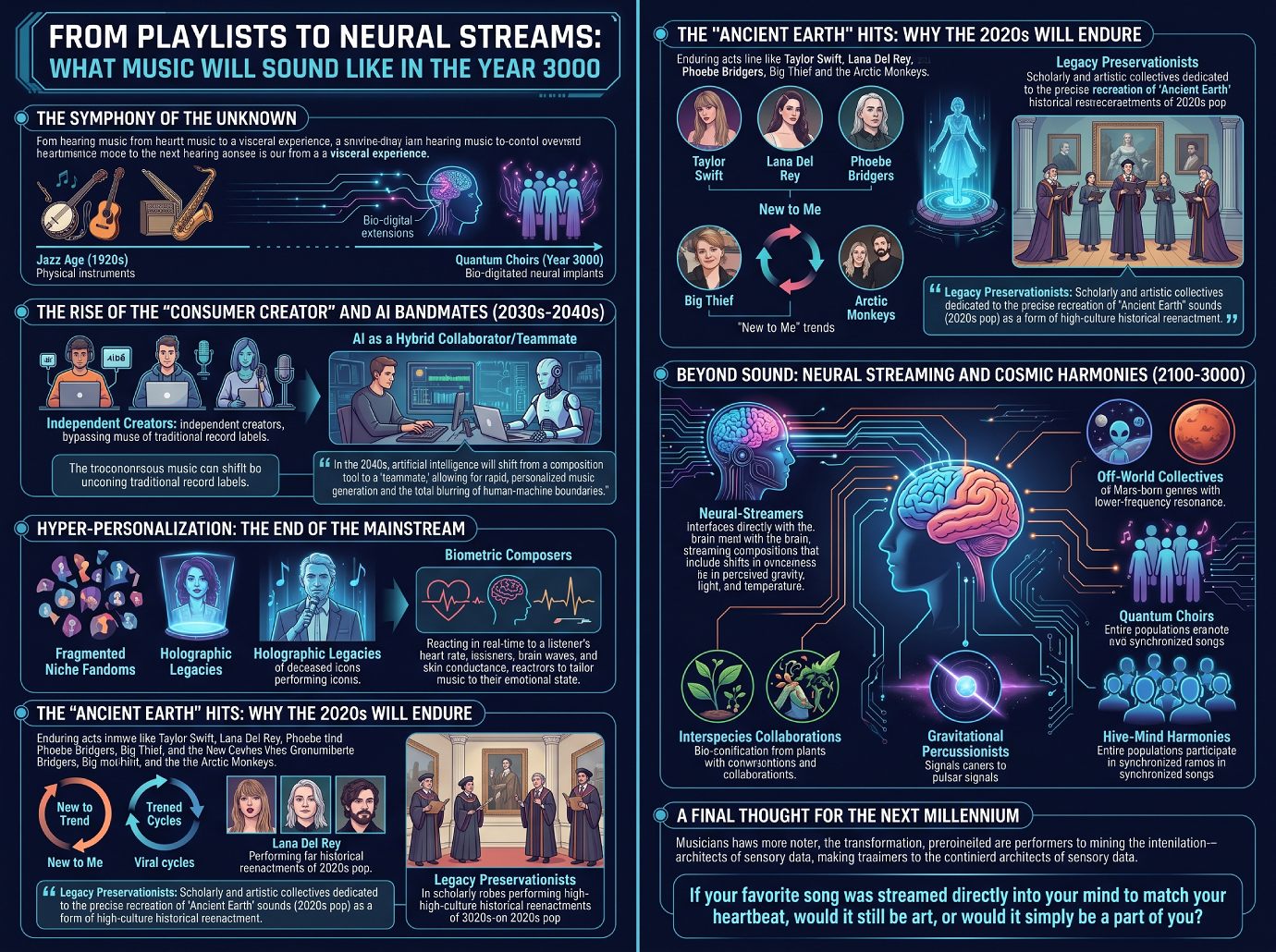
From Playlists to Neural Streams: What Music Will Sound Like in the Year 3000
Introduction: The Symphony of the Unknown
Imagine a world where music is no longer something you simply hear, but a visceral experience felt through direct neural implants. We have traveled a staggering distance from the “Jazz Age” of the 1920s to the projected “Quantum Choirs” of the next millennium. This evolution reveals a shift from physical instruments to a reality where sound is a bio-digital extension of the human soul.
The following projections outline the most impactful shifts in how music is created, consumed, and preserved over the next thousand years. Based on current technological and cultural trajectories, we are witnessing the dawn of a post-national auditory era.
The Rise of the “Consumer Creator” and AI Bandmates
By the 2030s and 2040s, the traditional record label model will crumble as the industry welcomes nearly 200 million independent music creators. This revolution is fueled by platforms like BandLab, TikTok, and YouTube, which allow “consumer creators” to bypass corporate gatekeepers entirely. In this decentralized landscape, the era of the singular, manufactured “global superstar” comes to an end.
Artificial Intelligence will transcend its current role as a mere composition tool to become a “hybrid” collaborator or teammate. This partnership allows humans to generate personalized, high-fidelity sounds that were once the exclusive domain of elite studios. As Algorithmic Deities begin to influence every melody, the boundary between human intent and machine execution will effectively vanish.
“In the 2040s, artificial intelligence will shift from a composition tool to a ‘teammate,’ allowing for rapid, personalized music generation and the total blurring of human-machine boundaries.”
Hyper-Personalization: The End of the Mainstream
As we progress deeper into the 21st century, global consensus will give way to fragmented, niche fandoms. Generation Alpha and their successors will reject “polished” pop icons in favor of interactive creators who align with their specific, local values. This shift is accelerated by “Holographic Legacies,” where digital ghosts of deceased icons maintain permanent residency tours, leaving little room for new living superstars.
The emergence of “Biometric Composers” will transform the listening experience into something entirely intimate yet profoundly isolated. These systems react in real-time to a listener’s heart rate, brain waves, and skin conductance to tailor the music to their current emotional state. In this future, no two individuals will ever hear the same version of a song, turning music into a private, biological dialogue.
The “Ancient Earth” Hits: Why the 2020s Will Endure
Remarkably, the sounds of the 2020s are projected to endure as a foundational cultural pillar for the next millennium. Artists like Taylor Swift, Lana Del Rey, Phoebe Bridgers, Big Thief, and the Arctic Monkeys are identified as “enduring acts” who will shape musical aesthetics for the next three decades. This is sustained by the “New to Me” trend, where viral cycles treat old songs as perpetual, brand-new releases.
By the year 3000, 2020s pop will be viewed with the same academic reverence we currently reserve for the Original Dixieland Jass Band or Duke Ellington. Culturally, these “Ancient Earth” hits will be preserved through high-culture historical reenactments. The pop anthems of our time will transition from the dance floor to the museum, studied as the peak of primitive melodic structure.
“Legacy Preservationists: Scholarly and artistic collectives dedicated to the precise recreation of ‘Ancient Earth’ sounds (2020s pop) as a form of high-culture historical reenactment.”
Beyond Sound: Neural Streaming and Cosmic Harmonies
Between 2100 and 3000, music will bypass the human ear entirely to interface directly with the brain. “Neural-Streamers” will become the primary architects of sensory data, streaming compositions that include shifts in perceived gravity, light, and temperature. As human language drifts over the centuries, lyrics will become obsolete, replaced by the communication of pure, raw “feeling.”
The reach of music will also extend beyond our planet through “Off-World Collectives” and “Mars-born genres” characterized by lower-frequency resonance and planetary delays. We will witness “Interspecies Collaborations” using bio-sonification from plants and “Gravitational Percussionists” who use pulsar signals as rhythmic foundations. Eventually, “Quantum Choirs” and “Hive-Mind Harmonies” will allow entire populations to participate in a single, synchronized song lasting decades.
Conclusion: A Final Thought for the Next Millennium
Over the next thousand years, the definition of a musician will complete its transformation from a performer with an instrument to an architect of sensory data. We are moving toward a future where music is not something we consume, but a fundamental layer of our biological and technological reality.
If your favorite song was streamed directly into your mind to match your heartbeat, would it still be art, or would it simply be a part of you?
A Century of Musical Evolution and Future Projections (1910–3000)
The evolution of popular music from 1910 to the present reflects a continuous cycle of technological innovation, cultural shifts, and genre hybridization. Starting with the transition from ragtime to the jazz-inflected recordings of the 1910s, the music industry has moved through eras of Big Band dominance, the birth of Rock and Roll, the rise of global pop icons, and the current era of digital streaming and genre-blending.
Key historical transitions include:
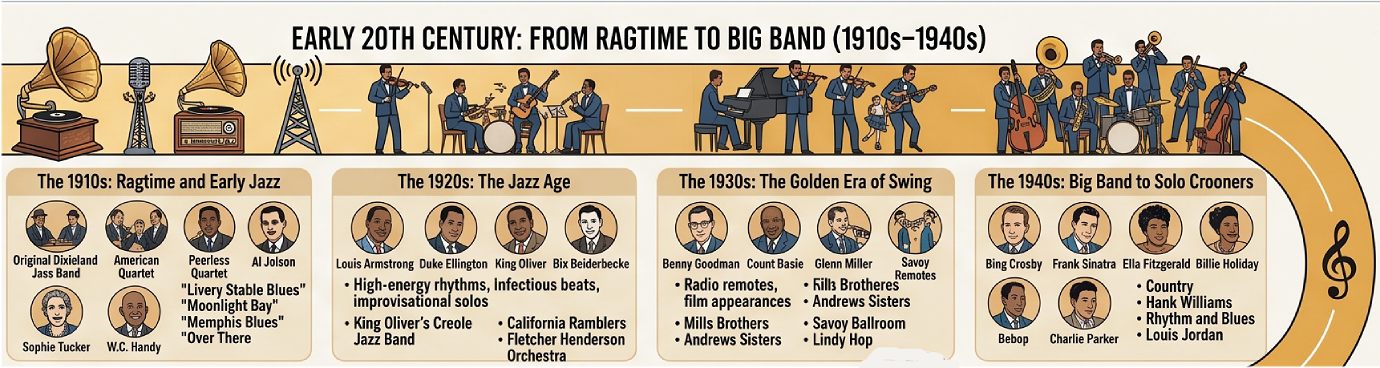
- The Early 20th Century (1910s–1940s): Transitioned from vocal quartets and early New Orleans jazz to massive Big Band ensembles, eventually giving way to the “Solo Crooner” following World War II.
- The Mid-Century Revolution (1950s–1970s): Saw the emergence of Rock and Roll as a “dangerous” teenage cultural force, the British Invasion, and the diversification into stadium rock, disco, and punk.
- The Modern Era (1980s–2020s): Defined by the visual influence of MTV, the emergence of Hip-Hop as a dominant cultural force, the “Seattle Sound” (grunge), and the current landscape of international K-Pop and hyper-personalized streaming.
Projections for the 2030s and beyond suggest a radical shift toward AI-driven production, hyper-personalization, and eventually, bio-digital and “cosmic” harmonies that move beyond traditional human performance.
——————————————————————————–
Early 20th Century: From Ragtime to Big Band (1910s–1940s)
The 1910s: Ragtime and Early Jazz
The 1910s were defined by ragtime, vocal harmony ensembles, and the birth of recorded jazz. The era was dominated by quartets and orchestras that bridged the gap between vaudeville and the “jass” of New Orleans.
| Category | Key Entities | Notable Works/Achievements |
|---|---|---|
| Pioneering Jazz | Original Dixieland Jass Band | First jazz recording in 1917 (“Livery Stable Blues”). |
| Vocal Ensembles | American Quartet, Peerless Quartet | Hits like “Moonlight Bay” and “Let Me Call You Sweetheart.” |
| Soloists/Leaders | Al Jolson, Sophie Tucker, W.C. Handy | Handy popularized the blues with “Memphis Blues.” |
| Wartime Music | American Quartet | “Over There” (1917) reflected the World War I era. |
The 1920s: The Jazz Age
Music shifted from New Orleans-style “hot jazz” to more organized dance music. Small ensembles evolved into larger arrangements featuring brass and reed sections.
- Key Leaders: Louis Armstrong, Duke Ellington, King Oliver, and Bix Beiderbecke.
- Characteristics: High-energy rhythms, infectious beats (drums/banjo), and improvisational solos that set the stage for the swing era.
- Major Bands: King Oliver’s Creole Jazz Band, The California Ramblers, and the Fletcher Henderson Orchestra.
The 1930s: The Golden Era of Swing
During the Great Depression, big band music served as a vital cultural escape. Radio broadcasts (radio remotes) and film appearances helped bands reach millions.
- Iconic Leaders: Benny Goodman (“The King of Swing”), Count Basie (Kansas City style), and Glenn Miller (commercial success).
- Vocal Innovation: The Mills Brothers mimicked instruments with their voices; the Andrews Sisters popularized boogie-woogie swing.
- Cultural Hubs: The Savoy Ballroom in Harlem, the “Home of Happy Feet,” where the Lindy Hop was refined.
The 1940s: Big Band to Solo Crooners
This decade bridged complex orchestral swing with smaller jazz and R&B groups. It marked the rise of the superstar solo artist.
- The Rise of the Crooner: Bing Crosby became the decade’s best-selling artist (“White Christmas”), while Frank Sinatra transitioned from the Tommy Dorsey band to cultural icon status.
- Female Powerhouses: Ella Fitzgerald (“First Lady of Song”) and Billie Holiday dominated jazz and swing charts.
- Emerging Genres: Bebop (Charlie Parker), Country (Hank Williams), and Rhythm and Blues (Louis Jordan) began laying the groundwork for the 1950s.
——————————————————————————–
The Mid-Century Cultural Shift (1950s–1970s)
The 1950s: Rock and Roll and Doo-Wop
The 1950s saw a massive transformation from traditional pop to high-energy rockabilly and multi-part vocal harmonies.
- Rock and Roll Pioneers: Elvis Presley (“The King”), Chuck Berry, Little Richard, and Buddy Holly introduced electric guitars and “dangerous” rhythms.
- Doo-Wop: Groups like The Platters and The Drifters dominated with tight harmonies and nonsense background syllables.
- Traditional Staples: Nat King Cole and Dean Martin maintained the popularity of “crooner” style music.
The 1960s: British Invasion and Motown
This decade was defined by massive cultural shifts, psychedelic exploration, and the rise of soul.
- British Invasion: The Beatles and The Rolling Stones redefined rock, heavily influenced by appearances on The Ed Sullivan Show.
- The Motown Sound: Detroit-based groups like The Supremes and The Temptations brought R&B to mainstream audiences.
- American Folk & Psychedelic: Bob Dylan shifted folk to electric rock; the Jimi Hendrix Experience pioneered virtuoso rock guitar.
The 1970s: Stadium Rock, Disco, and Punk
The 1970s was a monumental decade for genre diversification, from the glitz of disco to the raw rebellion of punk.
- Stadium Rock Giants: Led Zeppelin, Pink Floyd (progressive rock), Queen (theatrical rock), and Fleetwood Mac.
- The Disco Phenomenon: The Bee Gees and Donna Summer (“Queen of Disco”) dominated the late 70s dance floors.
- Punk & New Wave: The Ramones and Sex Pistols rejected mainstream excess for a high-energy, raw sound, while Blondie blended punk with pop.
——————————————————————————–
The Modern Era: Visual Media and Digital Domination (1980s–2020s)
The 1980s: The MTV Era and Hip-Hop
The rise of music videos and polished synth-pop defined the 80s, alongside the mainstreaming of heavy metal and hip-hop.
- Pop Icons: Michael Jackson ( Thriller), Madonna, Prince, and Whitney Houston.
- Rock & Metal: Guns N’ Roses, U2, and the “hair metal” sound of Def Leppard and Bon Jovi.
- Hip-Hop Pioneers: Run-D.M.C. (rock-rap crossover), Public Enemy (socially conscious), and N.W.A (gangsta rap).
The 1990s: Grunge, Britpop, and Teen Pop
The 90s replaced 80s polish with gritty emotional lyrics (grunge) and witnessed a resurgence of choreographed pop groups.
- The Seattle Sound: Nirvana, Pearl Jam, and Soundgarden revolutionized rock.
- The Golden Age of Hip-Hop: The era was defined by the West Coast/East Coast rivalry (2Pac vs. Biggie) and the rise of the Wu-Tang Clan.
- Pop Resurgence: The Spice Girls, Backstreet Boys, and *NSYNC brought global dominance to vocal pop groups.
The 2000s: Digital Transition and Hip-Hop Moguls
The decline of physical CD sales and the rise of the iPod shifted the industry toward digital distribution.
- Rock Revivals: The Strokes (garage rock) and Linkin Park (nu-metal).
- Hip-Hop Dominance: Eminem and Kanye West reshaped the sound of mainstream culture, while Jay-Z solidified his status as a mogul.
- Solo Icons: Beyoncé (post-Destiny’s Child) and Rihanna rose to global superstar status.
The 2010s–2020s: Streaming and International Proliferation
The current era is characterized by streaming-era pop stars and an international explosion of talent.
- 2010s Trends: Indie-folk (Mumford & Sons), dance-pop (The Chainsmokers), and the chart dominance of Adele, Taylor Swift, and Drake.
- 2020s Genre-Blending: Artists like Dua Lipa, Olivia Rodrigo, and Bad Bunny blend genres, while BTS represents the global dominance of K-Pop.
- Subgenre Revivals: A shift toward post-punk revival (Idles, Fontaines D.C.) and an R&B revival led by SZA.
——————————————————————————–
Future Projections: 2030 and Beyond
The 2030s: Gen Alpha and AI Integration
Industry experts predict a shift toward independent, interactive creators and a rejection of 2020s nostalgia.
- Projected Stars: The Linda Lindas (punk), Sleep Theory (metalcore), and Chino Pacas (global urban).
- Technological Shifts: By 2030, there will be nearly 200 million music “consumer creators” using AI tools to bypass traditional labels.
- Gen Alpha Influence: Continued K-Pop dominance and a move toward “futuristic” sounds like hyperpop and Brazilian Funk.
Long-Range Forecast (2040–3000)
Predictions suggest music will evolve into an immersive, bio-digital experience.
| Era | Projected Trend | Description |
|---|---|---|
| 2040s | Hyper-Personalization | Niche, algorithmically generated idols and biometric compositions reacting to listener heart rates. |
| 2050s | Virtual Performance | Live shows evolve into immersive VR/AR experiences and holographic legacies of deceased icons. |
| 2100–2300 | Post-National | Sensory experiences streamed directly to neural implants; the first “Mars-born” genres emerge. |
| 2300–2600 | Algorithmic Deities | AI entities managing thousands of virtual bands tailored to an individual’s genetic makeup. |
| 2600–3000 | Cosmic Harmony | Music as data communication; “Quantum Choirs” existing in multiple states simultaneously. |
Way Back in Music History
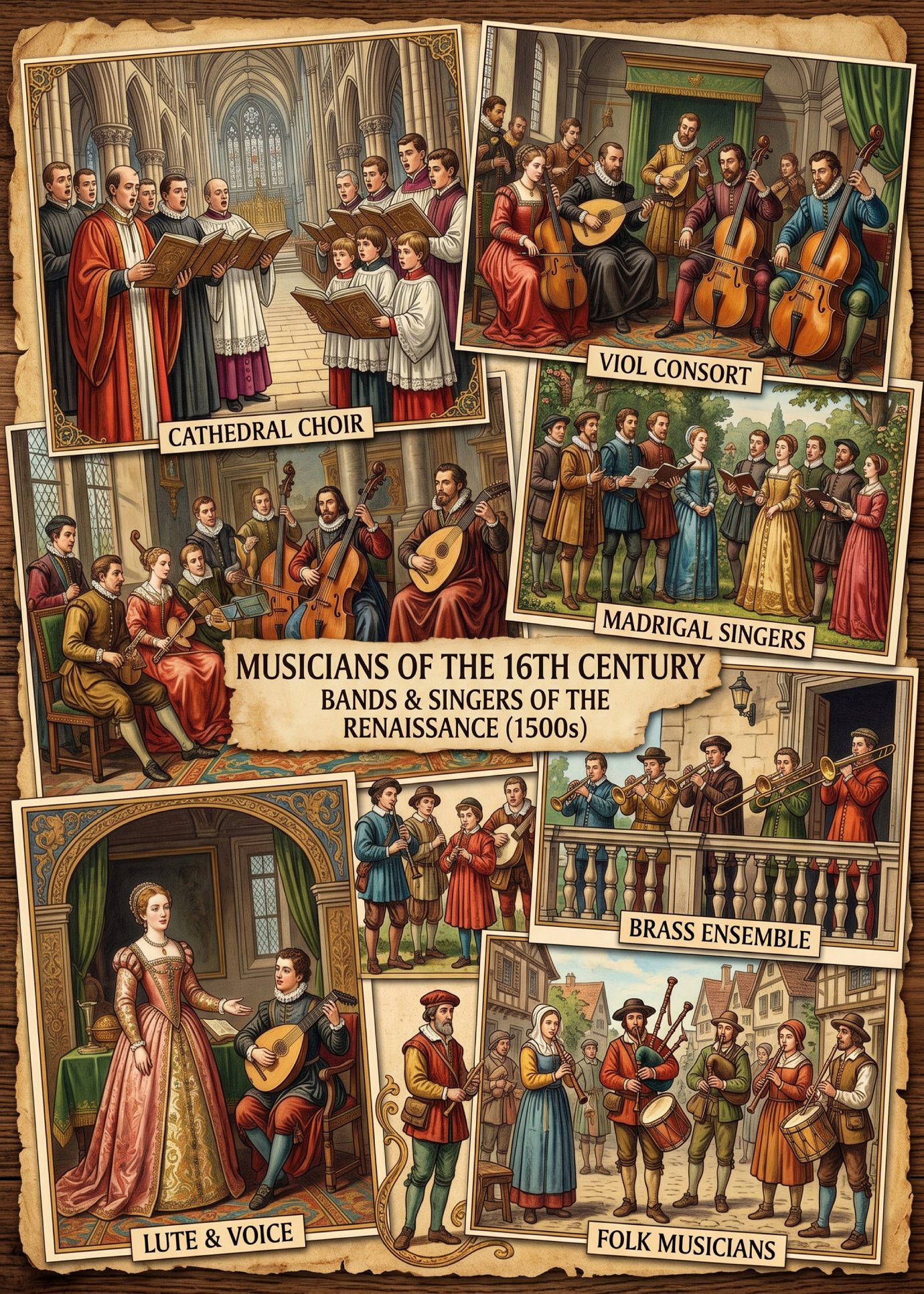
Music of the 1500s and 1600s

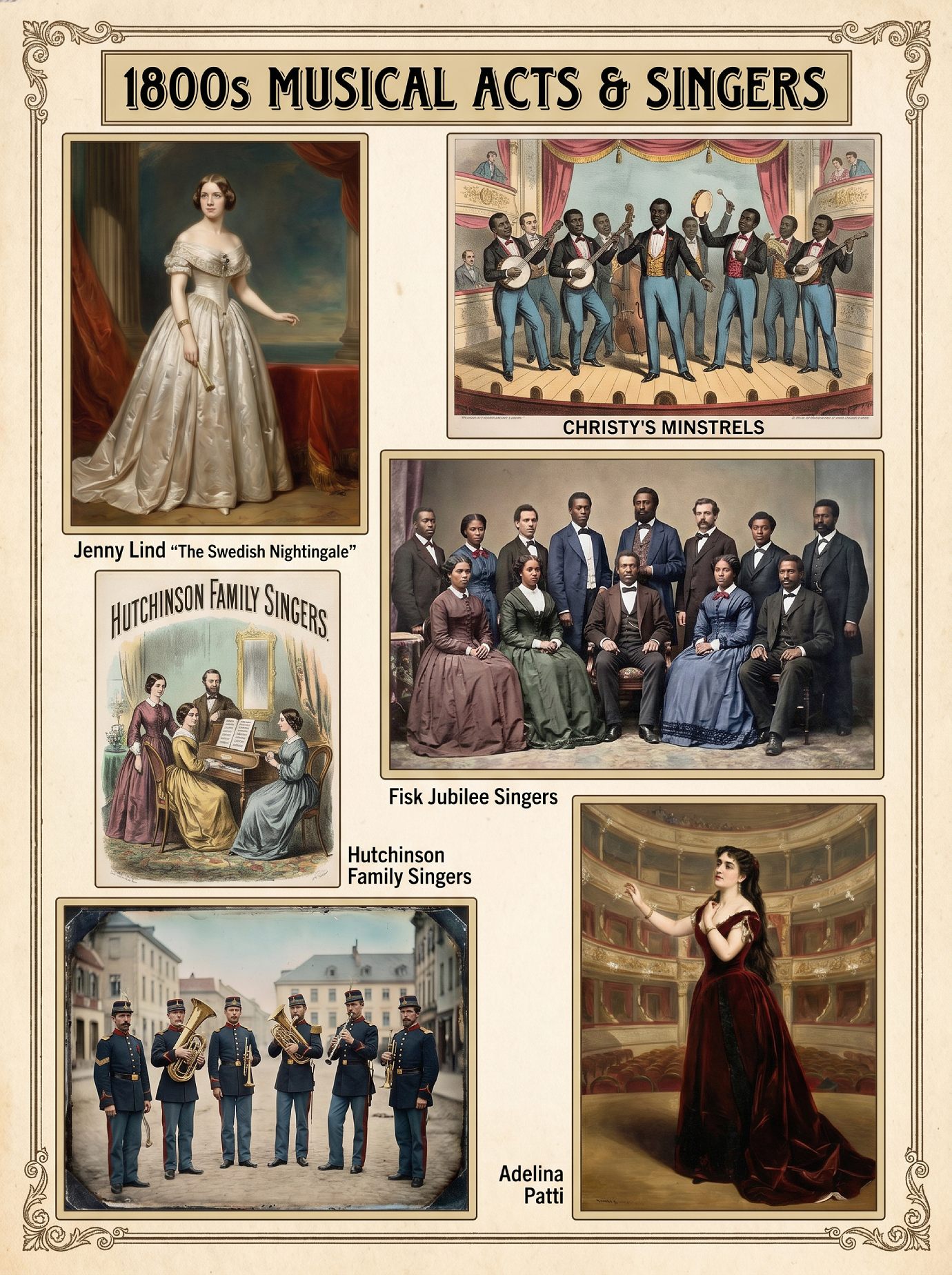
Music of the 1700s and 1800s