
- City Council 10-19-26 (10/20/2026)
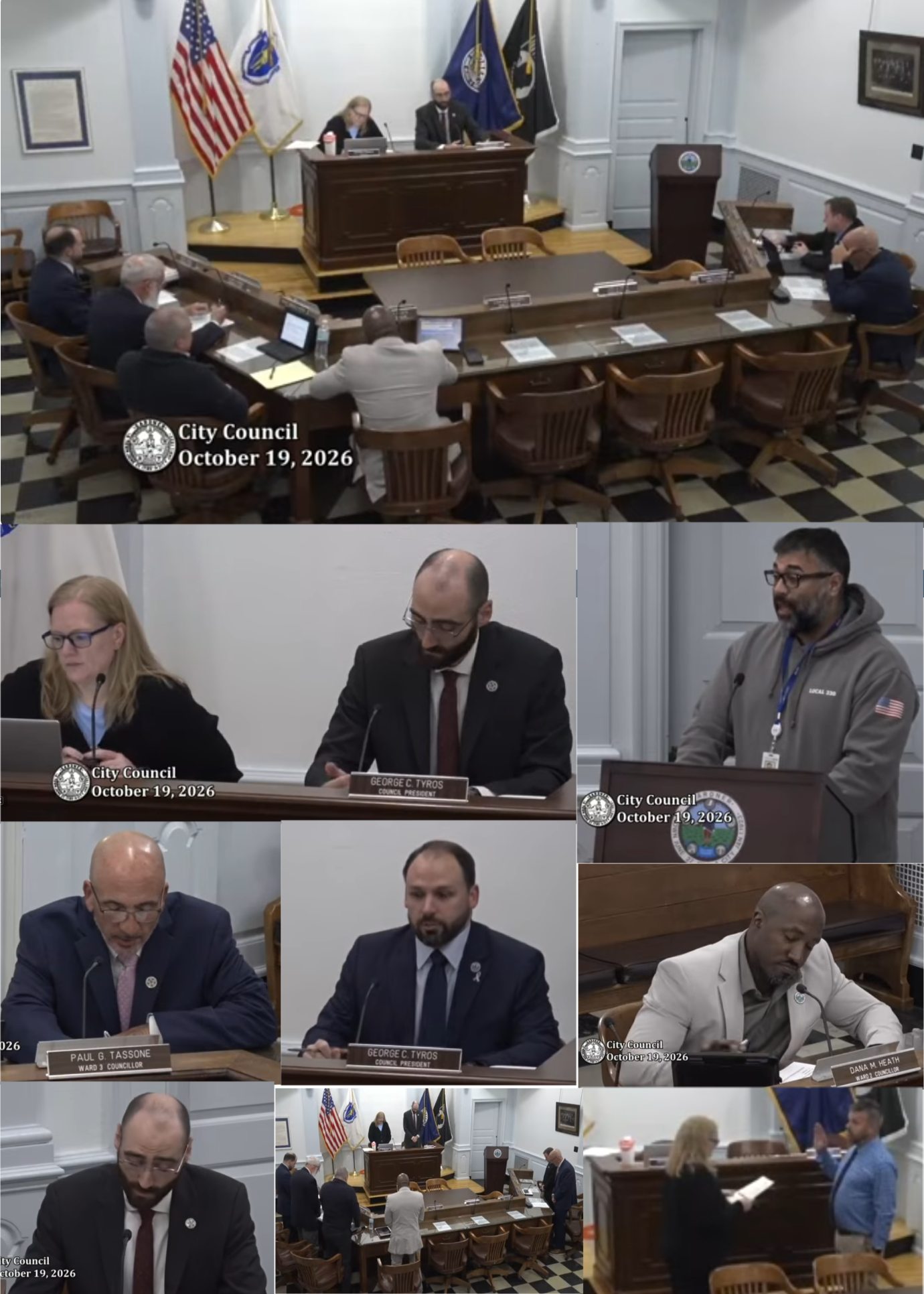
Only 7 members of the 11 member Gardner City Council attended the meeting on October 19, 2026.
City Council Meets – Sends “Tyros Ordinance” to Second Printing
Listen to the Gardner City Council meeting of October 19,2026 on any device, CLICK PLAY.
City Council 10-19-26 The meeting addressed capital project oversight, municipal appointments, local utility infrastructure, and public safety communication initiatives. The most prominent item of debate centered on an ordinance designed to strengthen transparency and municipal oversight regarding capital improvement planning and projects, the “Tyros Ordinance” —specifically addressing recent frictions between the City Council, the School Committee, and the School Department administration. Additionally, the Council confirmed two major municipal administrative appointments including Roland Jean as Building Commissioner and Alan Specht as Alternate Inspector of Wires , approved utility infrastructure requests from National Grid, and announced a new automated winter parking ban notification system developed in coordination with the Gardner Police Department.
The Council voted to send Item 1184—an ordinance establishing heightened transparency and oversight for capital improvement planning—to its second and final printing. To participate in debate on the floor, Council President Tyros temporarily yielded the chair to Councillor Heglin.
Core Debate and Inter-Departmental Friction: The ordinance addresses procedural gaps in capital planning oversight, particularly regarding school department expenditures. Council President Tyros countered recent public pushback from School Superintendent Pellegrino, who had characterized prior City Council comments as “pretty harsh” and asserted that the Council was attempting to “separate the school department from the school committee.”
Key aspects of the debate and evidence cited during the session include: Council Rationale: Council President Tyros emphasized that Council debates maintain a high bar of decorum, objectivity, and factual accuracy. He stated that the ordinance aims to close loopholes exposed by recent events, ensure fiscal soundness, and enforce the governing role of the School Committee as defined by the City Charter. School Committee Perspectives: Tyros cited statements from members of the Gardner School Committee made during a recent facilities meeting, demonstrating internal concurrence with the Council’s oversight goals.
Following council feedback, Deputy Chief Maroni of the Gardner Police Department, in collaboration with the Traffic Commission, the Line and Signs Department, and the IT Department, created an educational outreach initiative for winter parking bans: Infographic Signage: Municipal parking lots across the city will feature new informational signs detailing winter storm parking rules, website information, and CodeRED emergency alert registration instructions. Automated Information Line: For residents without access to social media or digital alerts, an automated phone system has been implemented to broadcast real-time parking ban status updates. Dedicated Information Phone Line: (978) 991-1515
Councilor Hardern Health Update: Council President Tyros shared that Councilor Hardern underwent two successful surgical operations in Worcester the previous week. She is currently recovering, undergoing physical therapy, and remaining actively updated on City Council operations via regular phone updates.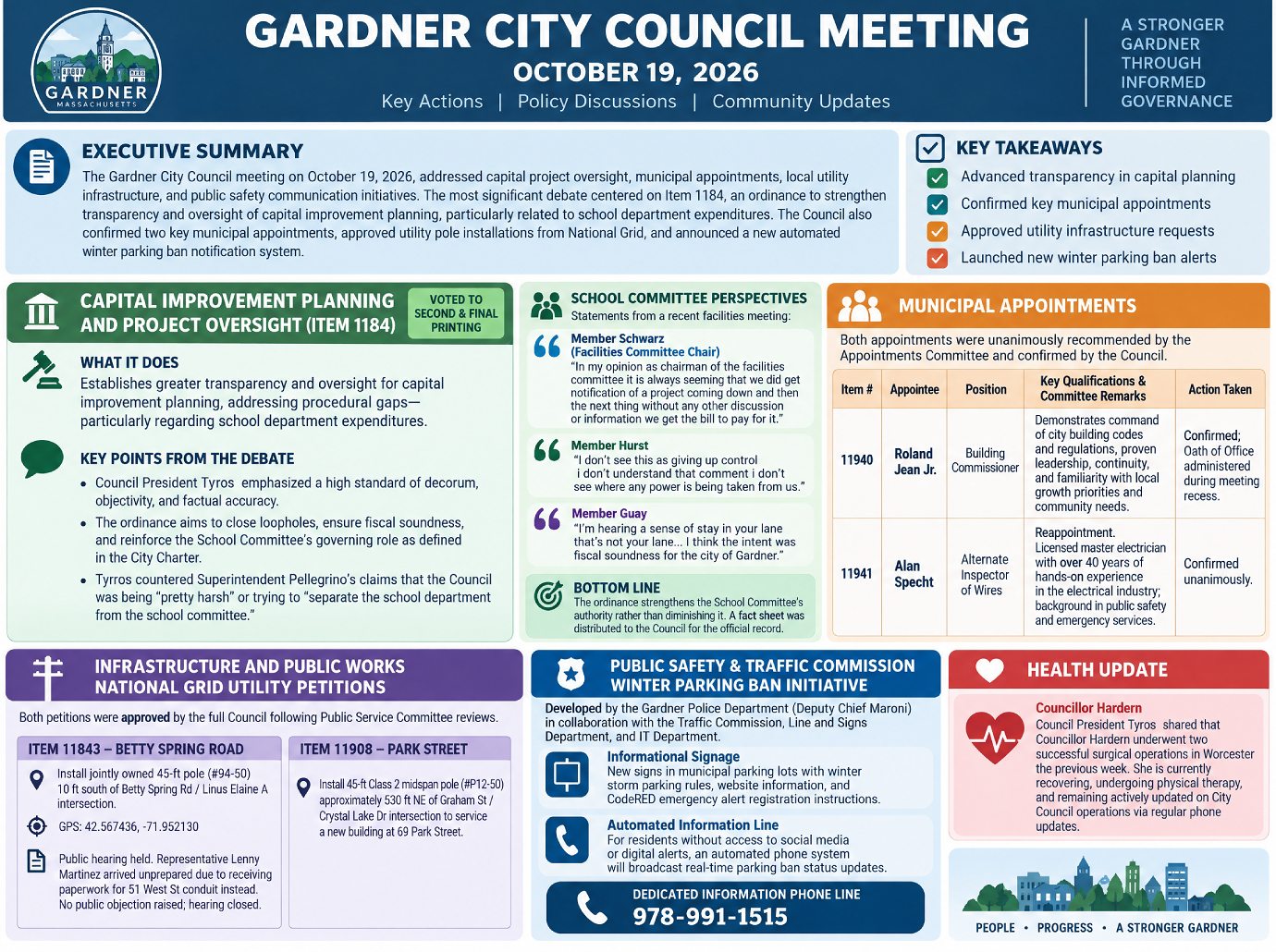

- The Tyros Ordinance (10/18/2026)
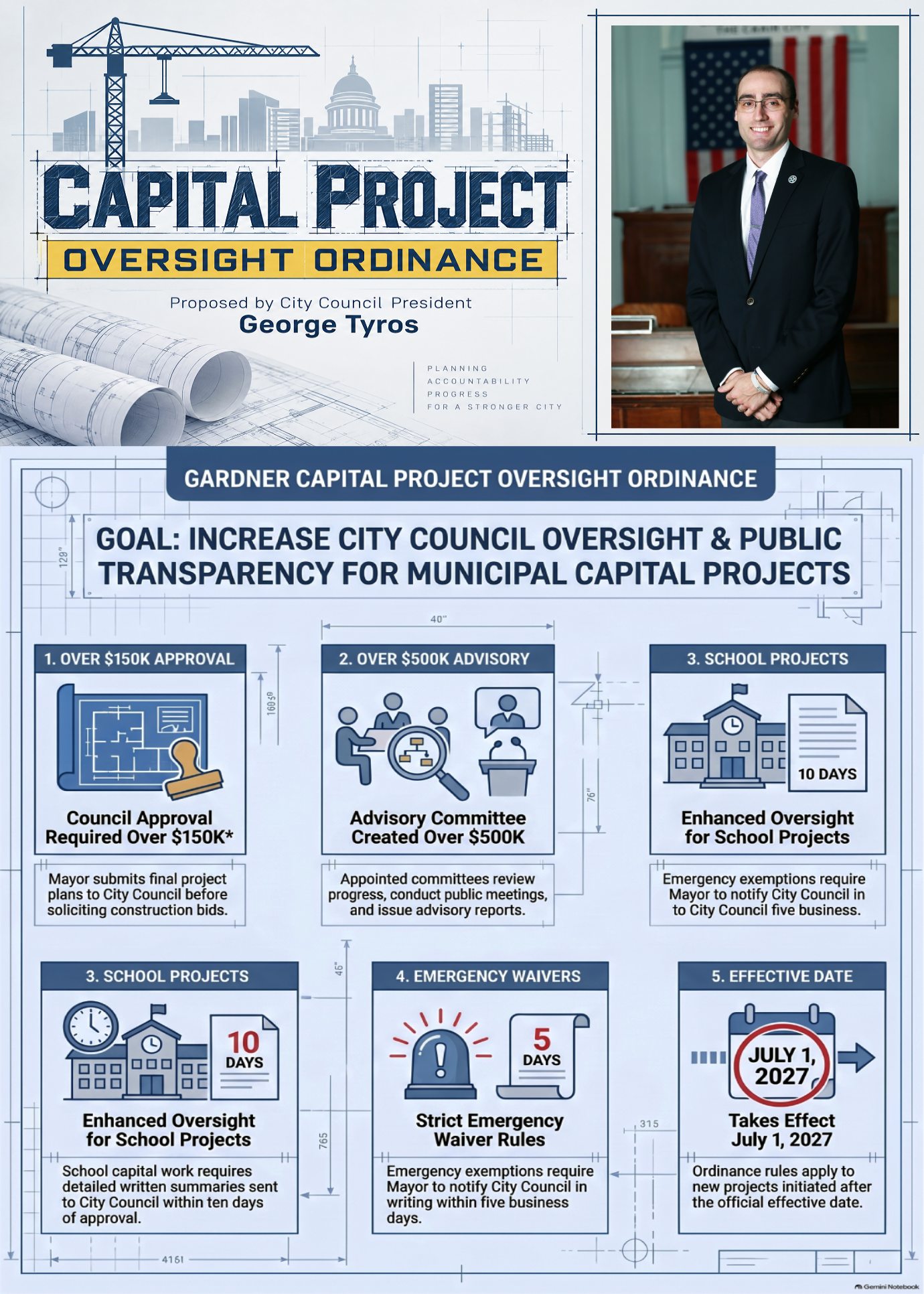
Gardner Magazine has prepared a complete report and policy analysis on PDF, CLICK HERE. We also have the 3 infographics below. CLICK Image for larger view.
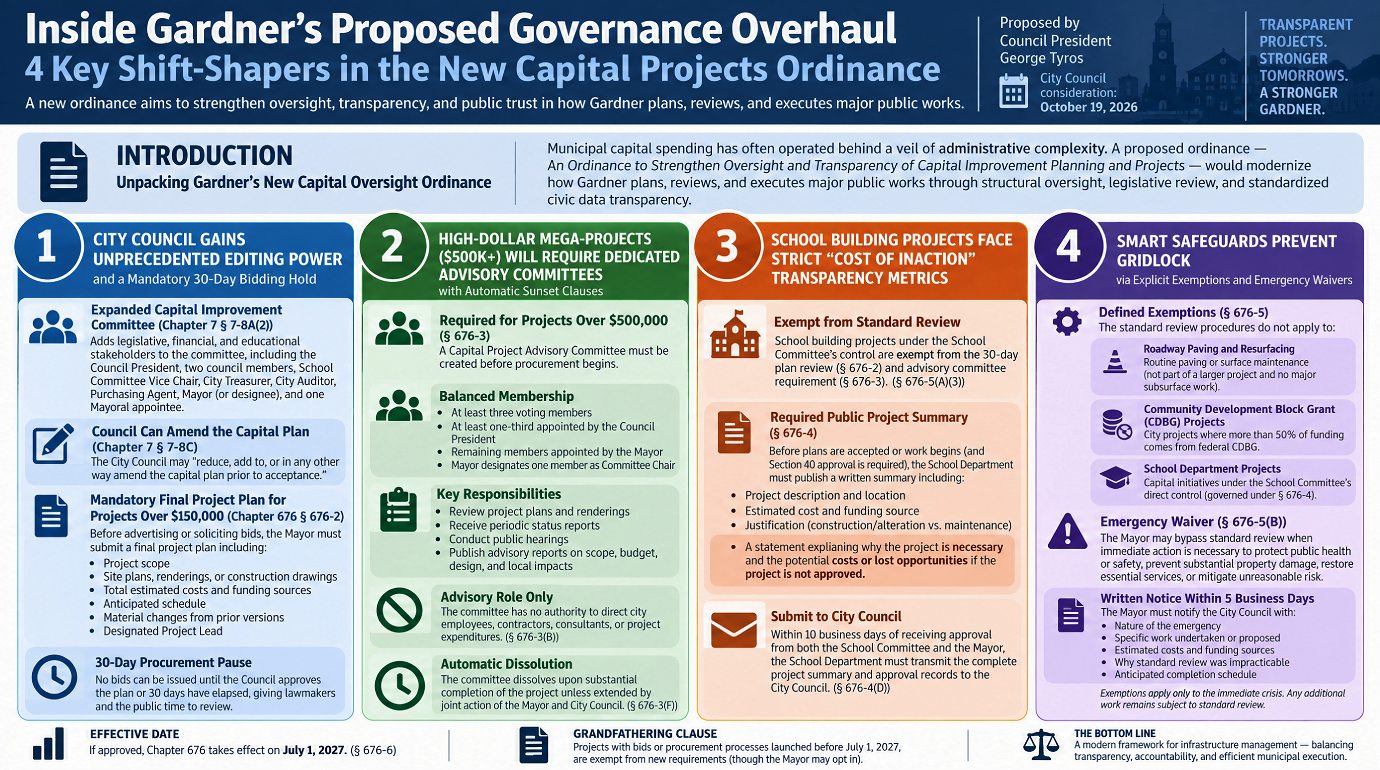
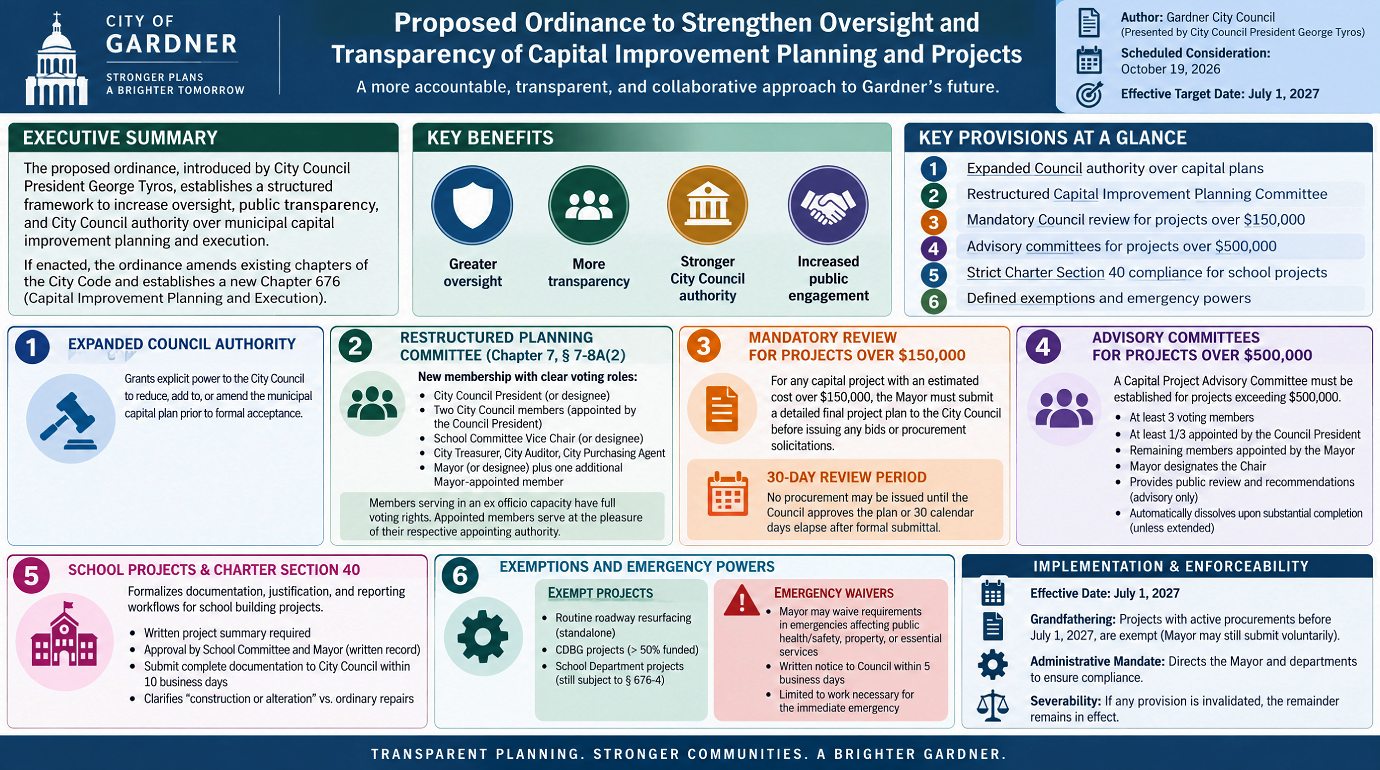
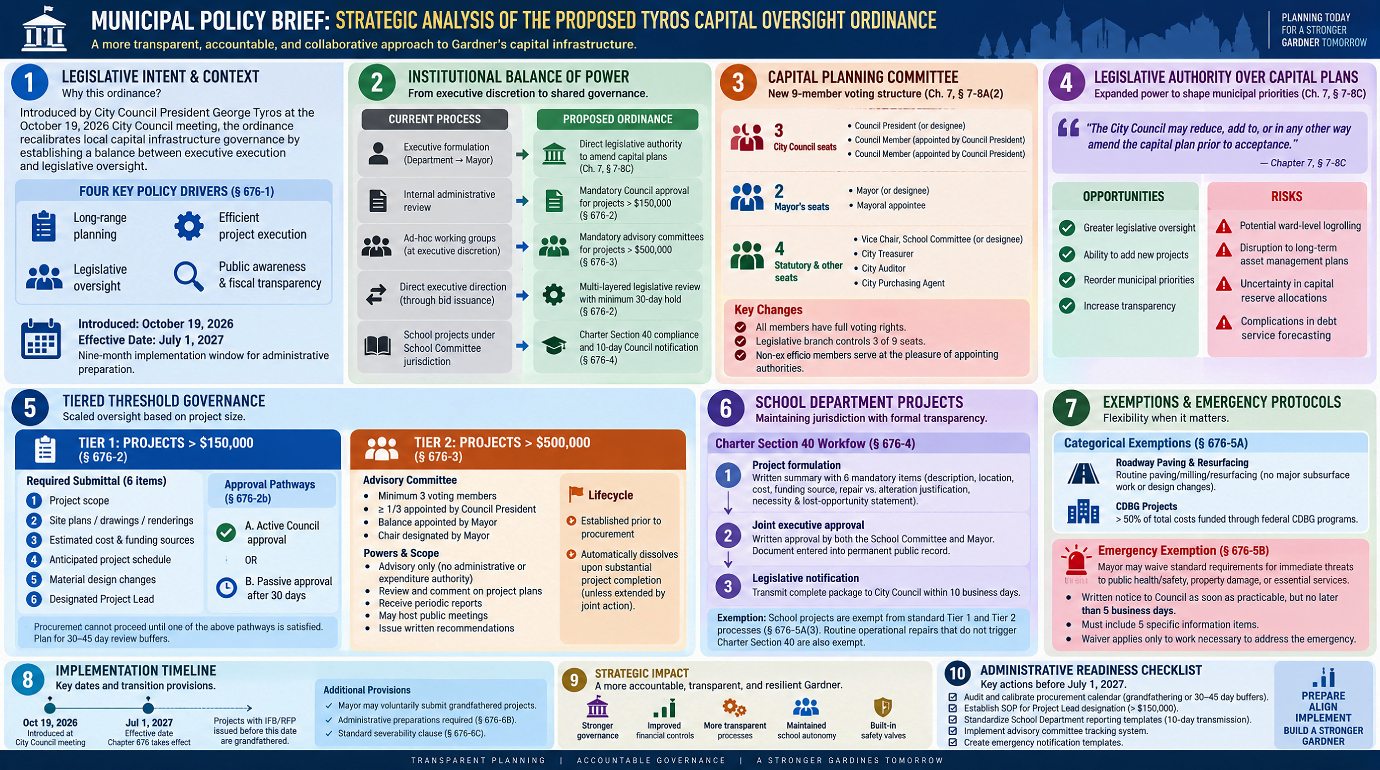
The Tyros Ordinance – Complete Report – Analysis and Debate
On Monday, October 19,2026 the Gardner City Council will take up the “Tyros Ordinance”. The proposal has its proponents and its detractors. We’ve enlisted Max and Maxine Rogers to debate both sides of the issue just like the City Councilors might on Monday. CLICK PLAY.
DEBATE – The Tyros Ordinance The proposed ordinance, (Full content on PDF CLICK HERE) introduced by Gardner City Council President George Tyros, establishes a structured framework designed to increase oversight, public transparency, and City Council authority over municipal capital improvement planning and execution. If enacted, the ordinance amends existing chapters of the City Code and establishes a new chapter—Chapter 676 (Capital Improvement Planning and Execution). The key provisions of the ordinance include:
- Expanded Council Authority over Capital Plans: Grants explicit power to the City Council to reduce, add to, or amend the municipal capital plan prior to formal acceptance.
- Restructured Planning Committee: Reconfigures the membership of the Capital Improvement Planning Committee, establishing clear voting roles and appointing authorities across the City Council, Administration, School Committee, and municipal financial officers.
- Mandatory Review for Projects Over $150,000: Requires the Mayor to submit detailed final project plans to the City Council for approval prior to issuing bid solicitations for any capital project exceeding $150,000, enforcing a 30-day review period or explicit Council approval.
- **Creation of Advisory Committees for Projects Over $500,000:** Mandates the establishment of a multi-member Capital Project Advisory Committee for major projects ($500,000+) to solicit public feedback and review progress.
- Strict Charter Section 40 Compliance for School Projects: Formalizes documentation, justification, and reporting workflows between the School Department, Mayor, and City Council regarding school building alterations versus ordinary repairs.
- Defined Exemptions and Emergency Powers: Establishes specific carve-outs for routine roadway resurfacing, majority CDBG-funded projects, and School Department projects, while providing a strictly conditioned emergency waiver process for the Mayor.
- 3 Generations – Weights and Measures (10/15/2026)
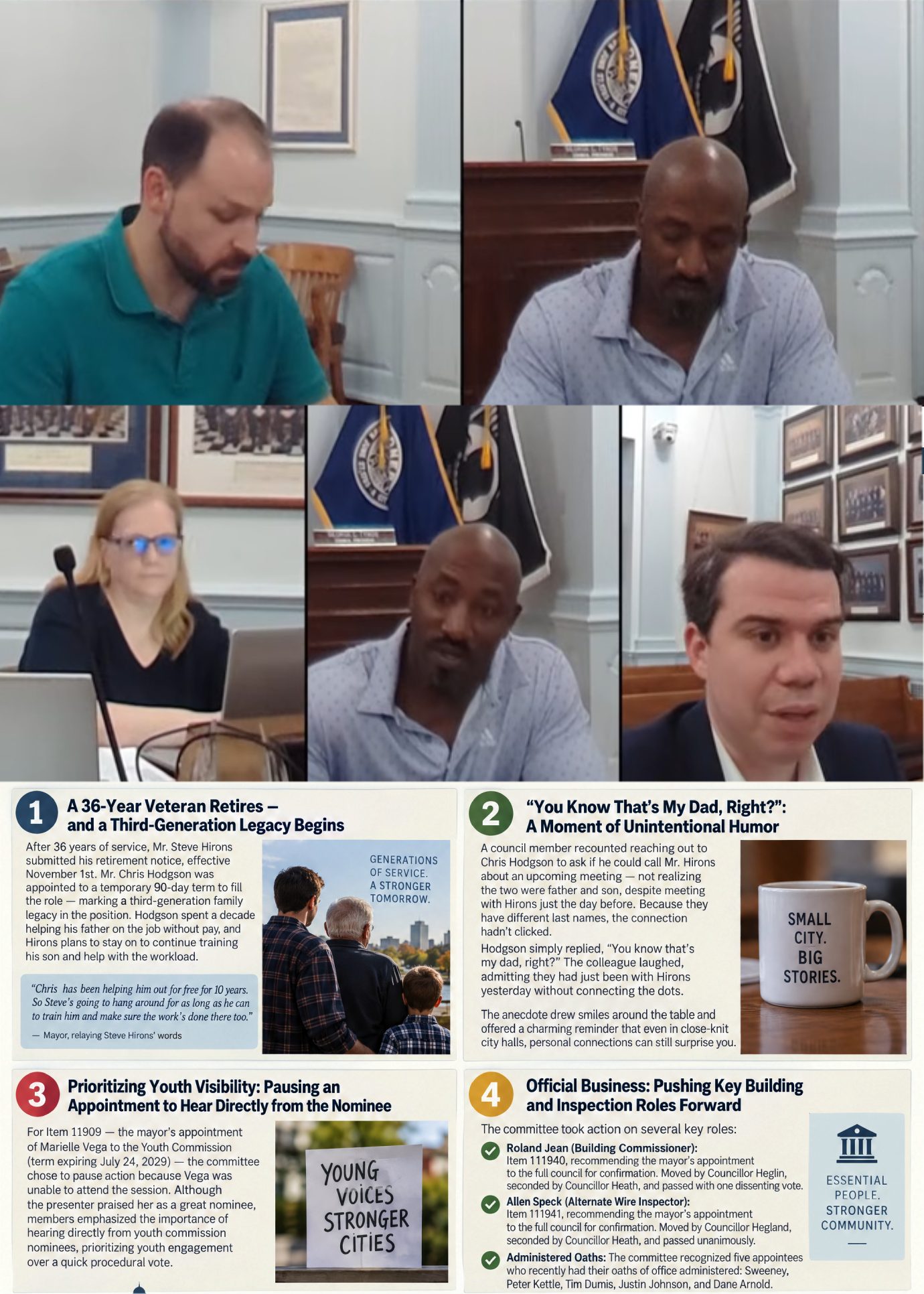
Appointments Committee – a 36 Year Veteran Retires and a 3rd Generation Legacy Begins
The Gardner Appointments Committee met on October 14, 2026. Listen on any device, CLICK PLAY.
Appointments Committee 10-14-26 After 36 years in the role of the Sealer of Weights and Measures for the City of Gardner, Stephen Hirons has submitted his request for retirement effective November 1st. At an Appointments Committee meeting of October 14, 2026, Gardner Mayor Nicholson announced that he has given Hirons’ son a temporary 90 day appointment to the role. making him the 3rd generation in the job. This transition marks the arrival of a third-generation family legacy in the position, with Hodgson stepping into the exact footsteps previously walked by both his father and his grandfather.
What makes this passing of the torch even more extraordinary is Hodgson’s extensive, quiet preparation. As shared during the meeting, Hodgson spent a decade helping his father on the job entirely without pay. To ensure a seamless transition, Hirens plans to stay nearby to continue training his son and assist with the workload. As the mayor recounted during the meeting, relaying Hirens’ own words:
“Chris has been helping him out for free for 10 years. So Steve’s going to hang around for as long as he can to train him and make sure the work’s done there too.”
“You Know That’s My Dad, Right?”: A Moment of Unintentional Humor – A council member recounted an earlier attempt to get in touch with Mr. Hirons regarding an upcoming meeting. The member reached out to Chris Hodgson, asking if he could call Hirons and tell him he was needed. At the time, the council member had no idea the two men were father and son—despite having spent time meeting with Hirons just the day before. Because the two men carry different last names, the connection hadn’t clicked.
Hodgson simply replied, “You know that’s my dad, right?” To which the astonished colleague could only laugh, admitting they had just been with Hirens yesterday without connecting the dots.
The responsibilities of the Sealer of Weights and Measures is an important position with the following responsibilities: Inspecting and certifying commercial weighing and measuring devices, Maintaining accuracy for gas and oil dispensing equipment, scales, and retail devices, Enforcing Massachusetts General Laws regarding commercial integrity and consumer protection.
- Assessors 10-15-26 (10/15/2026)
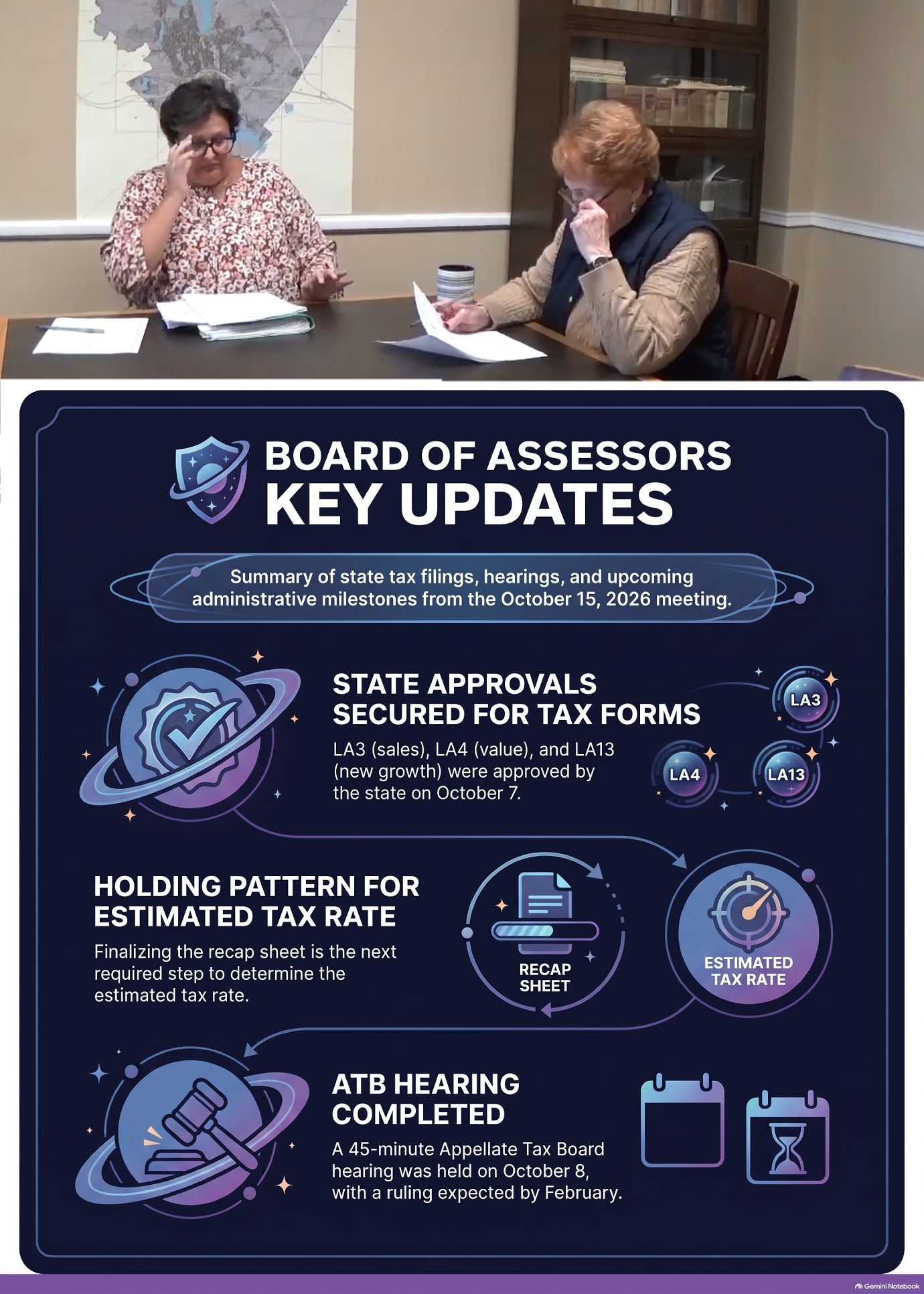
Inside the Board of Assessors: Lessons from this 3-Minute Meeting
On Thursday, October 15, 2026, at precisely 9:01 AM, Assessor Christine Kumar and Member Paulette Burns convened in an empty room. There were no packed public benches, no grand speeches, and no heated debates. , the Board of Assessors meeting wrapped up in just minutes. Yet behind this brief, unassuming gathering lies the unseen machinery of local government—the precise administrative mechanisms that establish community property tax rates and defend local assessments in state legal proceedings.
For municipal observers and local taxpayers, a close look at this micro-meeting reveals surprising lessons about local tax administration, legal procedural rigor, and the deliberate pacing of civic governance.
Major Pre-Tax Hurdles Are Cleared (Now Comes the “Holding Pattern”): Before a municipality can determine its local tax rate, it must satisfy a rigorous gauntlet of state-level reporting requirements. During the October 15 meeting, the board received an essential status update: three foundational filings had officially crossed the finish line on October 7, 2026. LA3 (Sales): The official compilation and reporting of local real estate sales data, establishing baseline market transactions. LA4 (Value): The comprehensive catalog of property valuations calculated across the entire community. LA13 (New Growth): The specific valuation figures attributed to new construction, physical developments, and parcel improvements.
Together, these three forms form the structural bedrock of municipal tax assessment. Until state authorities review and approve this triad, local assessors are legally constrained—the municipality literally cannot complete its official recap sheet or finalize the local tax rate. With all three forms signed, submitted, and approved by the state on October 7th, the assessment office successfully cleared its largest regulatory hurdles. However, clearing these hurdles does not lead to immediate public action; instead, it triggers a mandatory administrative “holding pattern.” The board must now wait while the final recap sheet is assembled to establish an estimated tax rate. For local taxpayers and municipal observers, this transition illustrates the inherent rhythm of assessment work: intense periods of data gathering and state submission followed by necessary, patient pauses while formal calculations align.
The 5-Minute Word Count in a 45-Minute Appeal: While setting the municipal tax rate requires navigating state approvals internally, defending those property valuations externally presents an entirely different administrative test.
During the meeting, the assessor briefed the board on an Appellate Tax Board (ATB) hearing held the previous week, on Thursday, October 8, 2026. The report offered a vivid look into modern municipal tax adjudication, highlighting both the hybrid format of present-day hearings and the multi-month lag built into municipal justice.
The hearing took place via Zoom, featuring a distinct technological split: the ATB commissioner and the clerk were visible on video, while the appealing property owner participated strictly via a telephone call. Despite the formal 45-minute block allotted for the hearing, the town’s active testimony was surprisingly brief. The assessor noted speaking for “all of about five minutes in total” while presenting the municipality’s case.
“I spoke for all of about five minutes in total. So I I think it went well. Uh, we should last year for the same. I believe we did not get the determination until February. So, it’ll it’ll be a while before we know, but I I think we’re in pretty good shape.”
- City Council November Food Drive (10/9/2026)
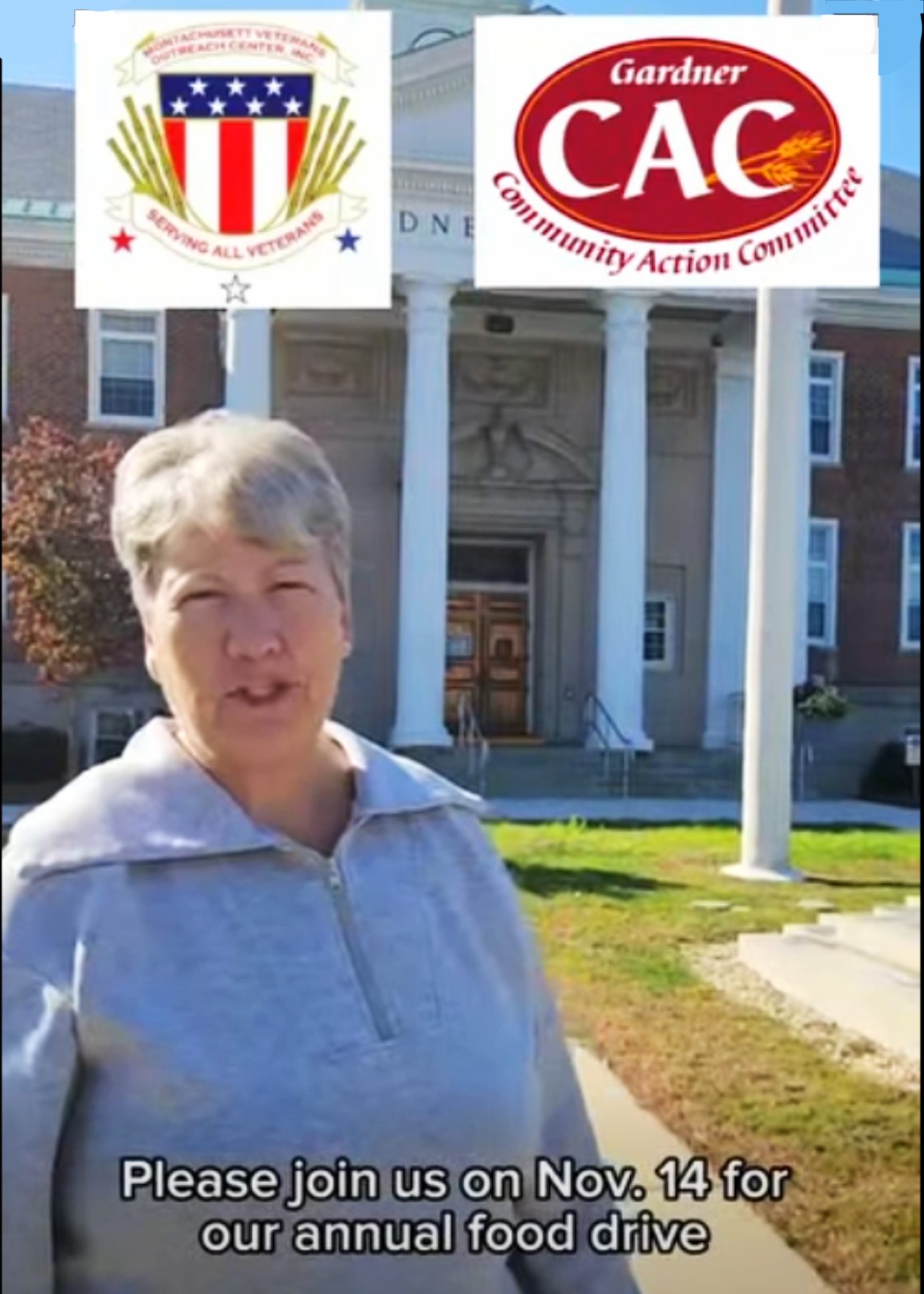
Gardner City Council Organizes Food Drive
The Gardner City Council is sponsoring a community food drive scheduled for Saturday, November 14, from 9:00 AM to 11:30 AM. The objective of the drive is to stock the food pantries of the Massachusetts Veterans Outreach Center, Inc. (MVOC) and the Gardner Community Action Committee (CAC) in preparation for the holiday season. Listen to this short statement from Gardner City Councilor Judy Mack. CLICK PLAY.
Councilor Judy Mack re November 14th Food Drive Donations will be collected directly outside four local commercial grocery and retail locations and delivered to the recipient pantries on the same day. The initiative requests specific non-perishable food staples, holiday cooking ingredients, gluten-free items, and financial contributions (cash or gift cards).
Organizational Framework & Key Stakeholders: Sponsor: Gardner City Council – Beneficiary Organizations: Massachusetts Veterans Outreach Center, Inc. (MVOC): An organization dedicated to serving all veterans and Gardner Community Action Committee (CAC): A local community action committee operating a regional pantry. Primary Objective: Mobilize community donations to fully restock local pantries ahead of the holiday season.
Schedule & Delivery: Date: Saturday, November 14 – Collection Hours: 9:00 AM – 11:30 AM – Distribution Logistics: All items collected outside designated drop-off points during the morning window will be transported directly to the MVOC and CAC pantries that same day.
Designated Drop-off Locations: – Donations will be accepted outside the entrance of the following four retail sites: Price Chopper, Aldi, Walmart, and Hannaford.
Requested Donation Inventory: The event organizers have outlined specific pantry needs, categorized by general items, special dietary requirements, and non-food monetary assistance. Suggested Food Items include the following: Canned & Jarred Goods: Canned fruit, canned vegetables, applesauce, jelly/jam, pudding cups, spaghetti sauce, soups (pop-top and ramen), cranberry sauce. Grains, Dry Staples & Baking: Pasta, rice, instant mashed potatoes, baking mixes (cookies, muffins, cornbread), gravy mixes, crackers. Proteins & Oils: Peanut butter, spices, cooking oils. Snacks & Beverages: Granola bars, fruit snacks, juice boxes.
Special Considerations & Financial Support” Gluten-Free Items: Highlighted as a continuous high-priority need (“always needed”). Monetary Contributions: Cash and gift cards are explicitly requested and noted as “always appreciated.”
- Finance Committee 10-9-26 (10/9/2026)
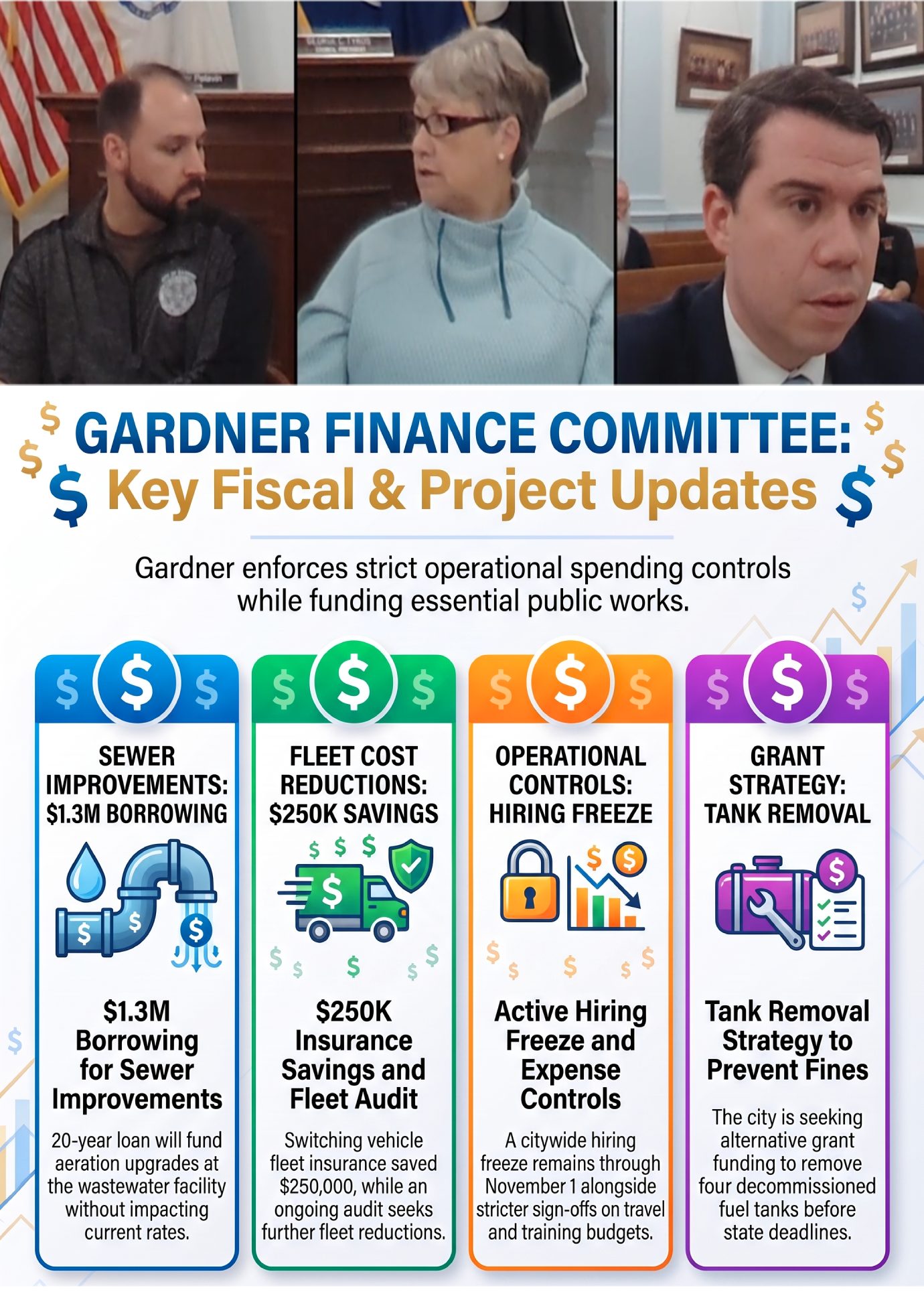
2 additional infographics are featured below.
Borrowing – Savings – Hiring Freeze – Strategies – Topics of Gardner Finance Committee
The Gardner Finance Committee met on October 9, 2026. Listen to the meeting on any device, CLICK PLAY.
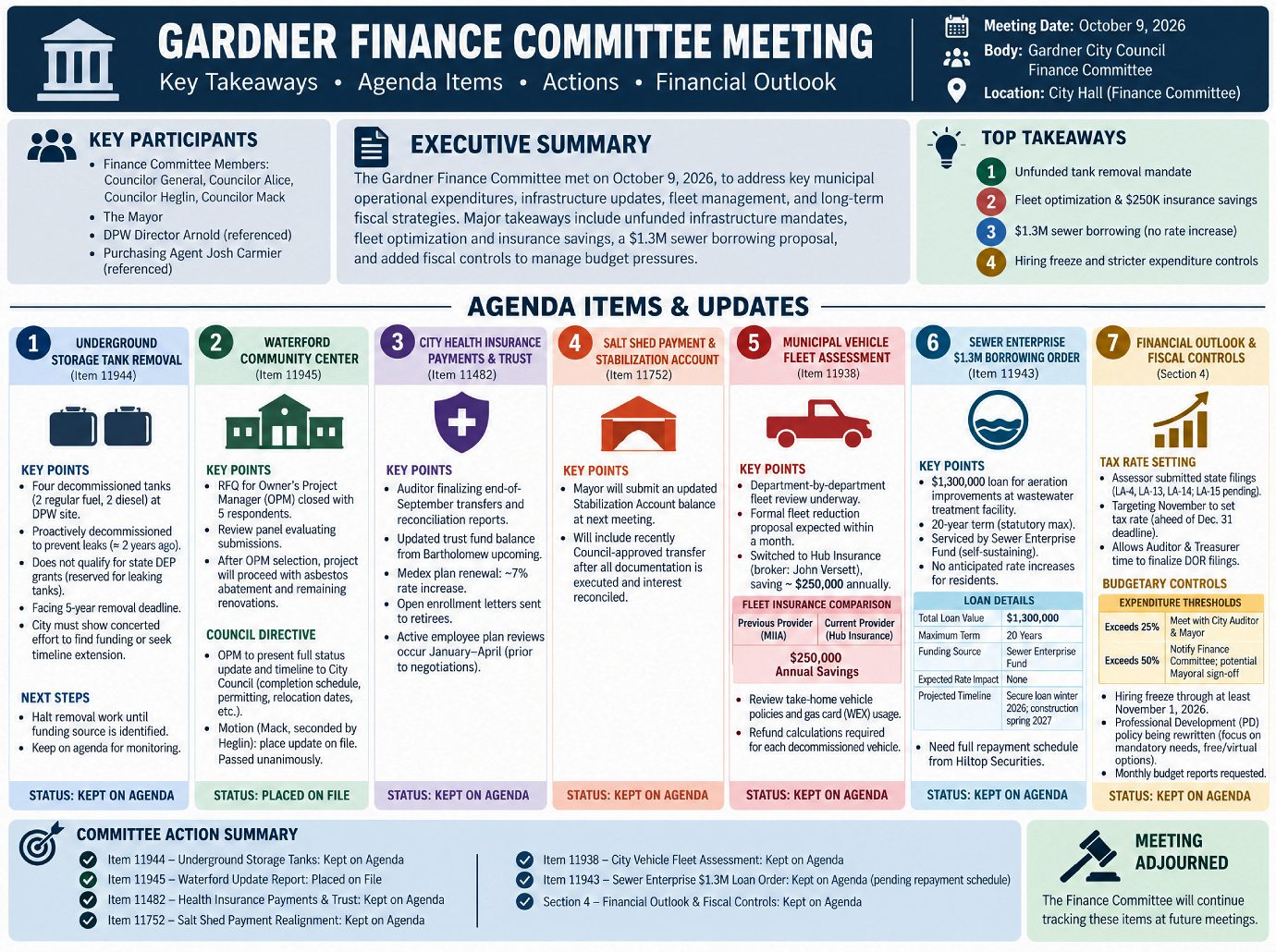
Finance Committee 10-9-26 The Gardner Finance Committee convened on October 9, 2026, to address key municipal operational expenditures, infrastructure updates, fleet management, and long-term fiscal strategies. Key topics included underground storage tank removal funding, the city vehicle fleet review, and updates on a wastewater treatment facility upgrade loan. Additionally, participants examined the city’s health insurance trust fund, stabilization accounts, and upcoming tax rate settings. The committee also reviewed ongoing administrative policies, such as professional development spending and hiring restrictions, aimed at maintaining fiscal responsibility.
Critical Items from the Meeting
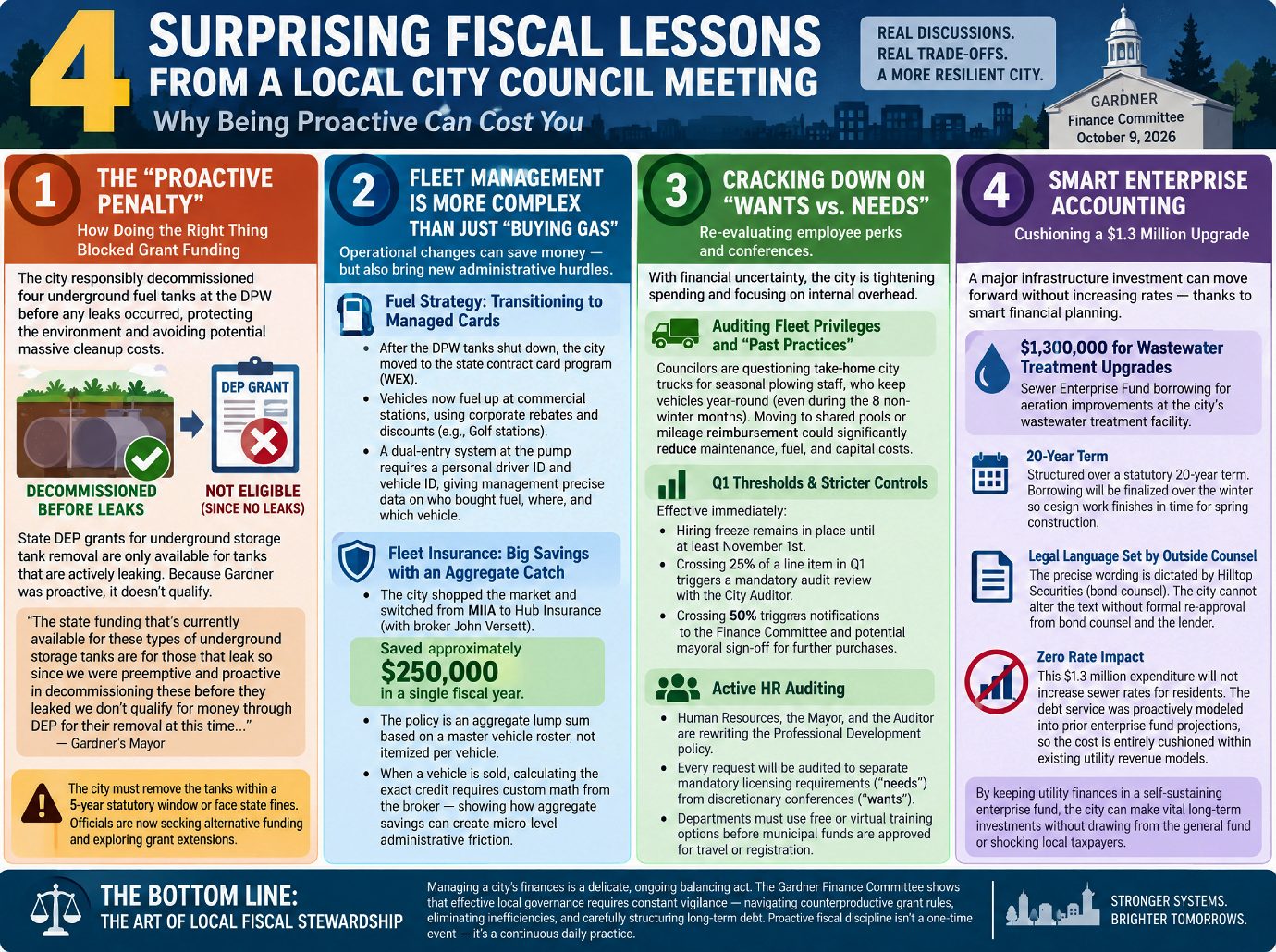
- Unfunded Infrastructure Mandates: The city faces an impending five-year deadline to remove decommissioned underground fuel storage tanks at the DPW. Because Gardner proactively decommissioned the non-leaking tanks to prevent environmental contamination, the city currently fails to qualify for state Department of Environmental Protection (DEP) removal grants reserved for active leaks, leaving the project unfunded.
- Fleet Optimization and Insurance Savings: The administration is conducting individual department assessments to reduce the municipal vehicle fleet. Switching the city’s aggregate fleet insurance provider to Hub Insurance saved approximately $250,000 in a single year. Further cost controls are being evaluated around vehicle take-home policies and gas card rebate usage (WEX program).
- Major Sewer Enterprise Borrowing: The committee reviewed a proposed $1,300,000 borrowing order for aeration improvements at the wastewater treatment facility. The 20-year loan will be serviced strictly by the Sewer Enterprise Fund without anticipated rate increases for residents.
- Fiscal Controls & Financial Outlook: To manage budget pressures ahead of setting the tax rate in November, the Mayor confirmed an ongoing hiring freeze through at least November 1, 2026. Additionally, stricter expenditure controls have been implemented, including a mandatory rewrite of the city’s Professional Development (PD) policy to scrutinize “wants versus needs.”
- Council on Aging – October (10/8/2026)
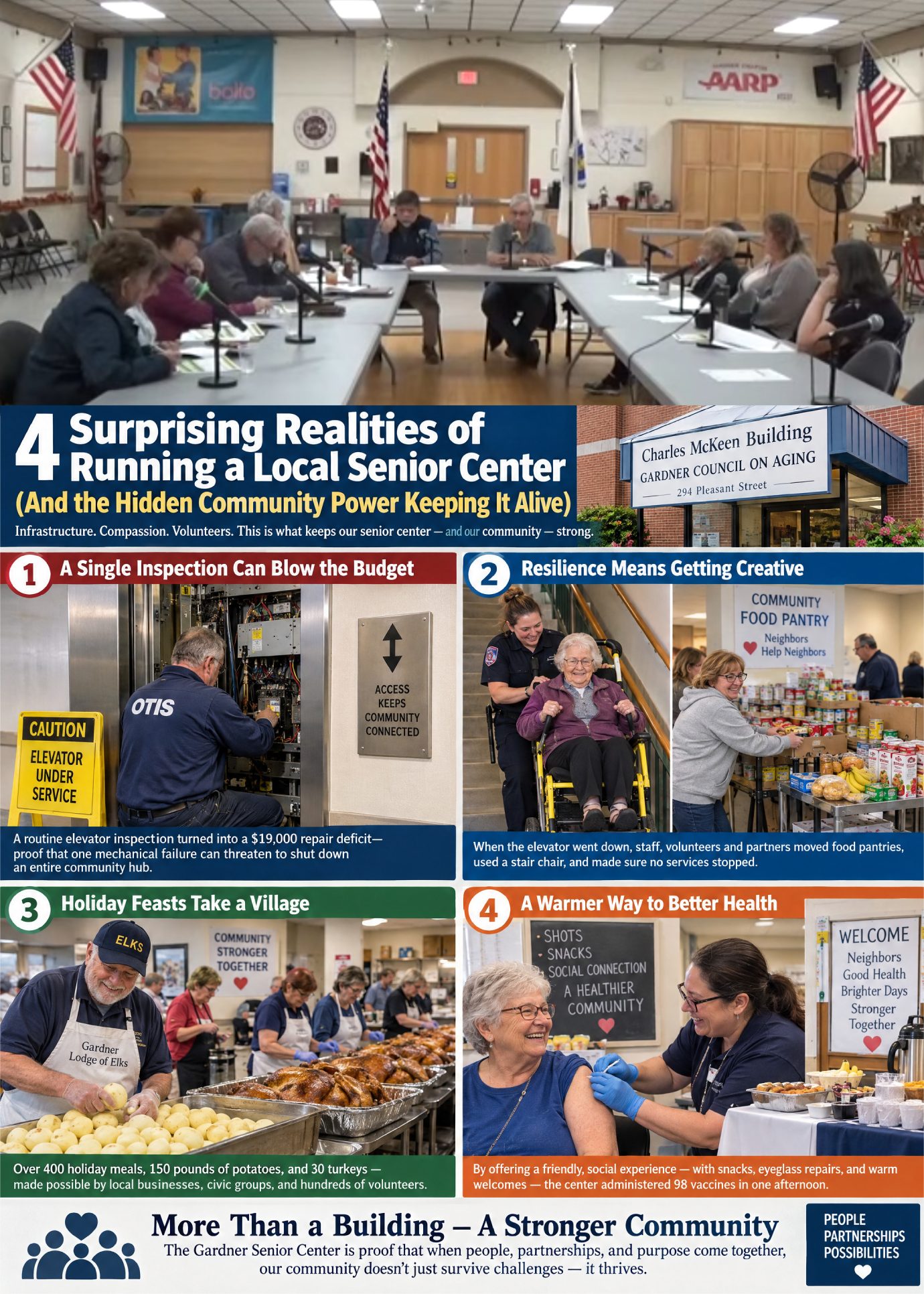
Realities Faced by the Senior Center in Gardner MA
Listen to the Council on Aging meeting of 10-5-26 on any device, CLICK PLAY.
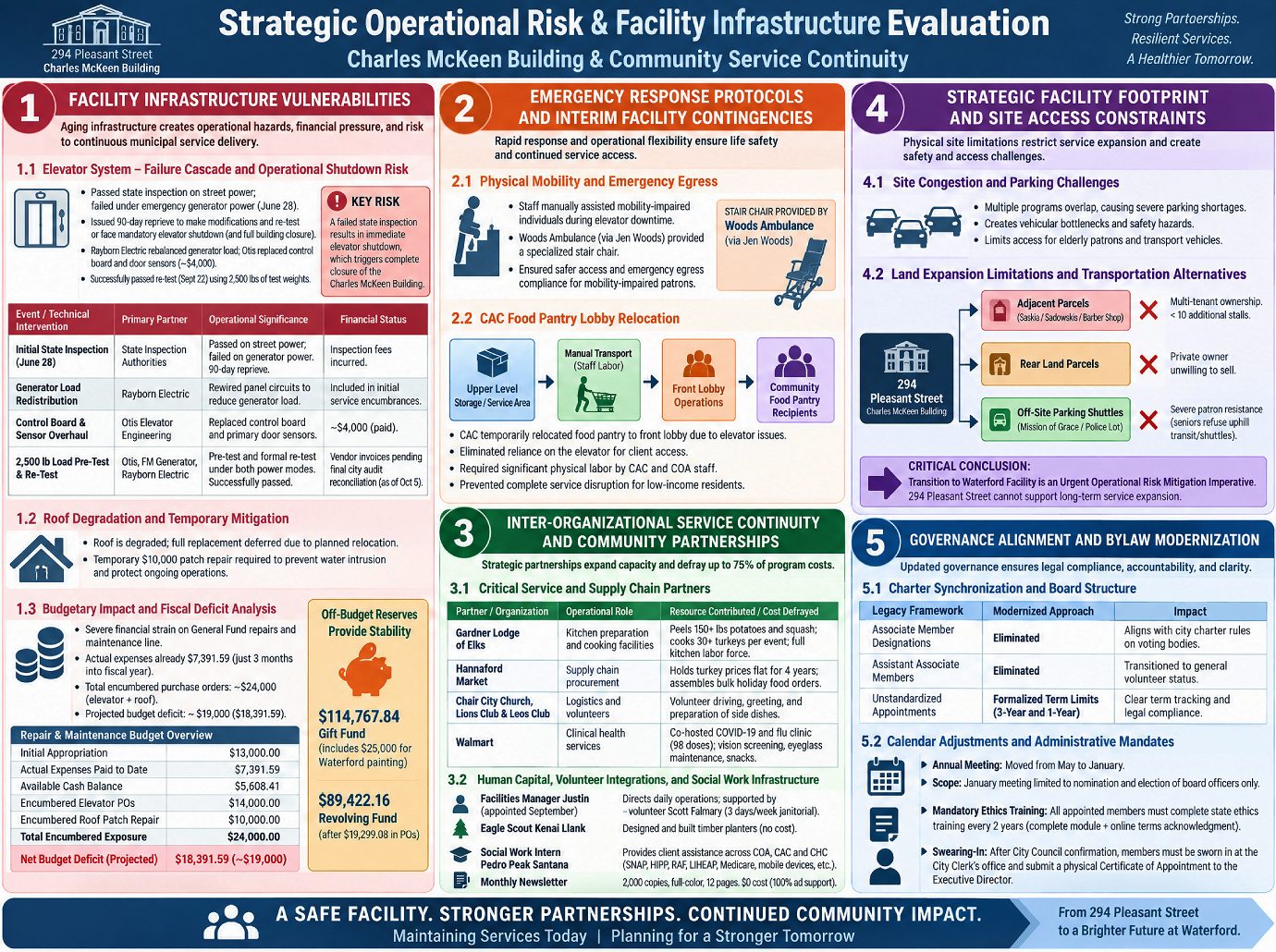
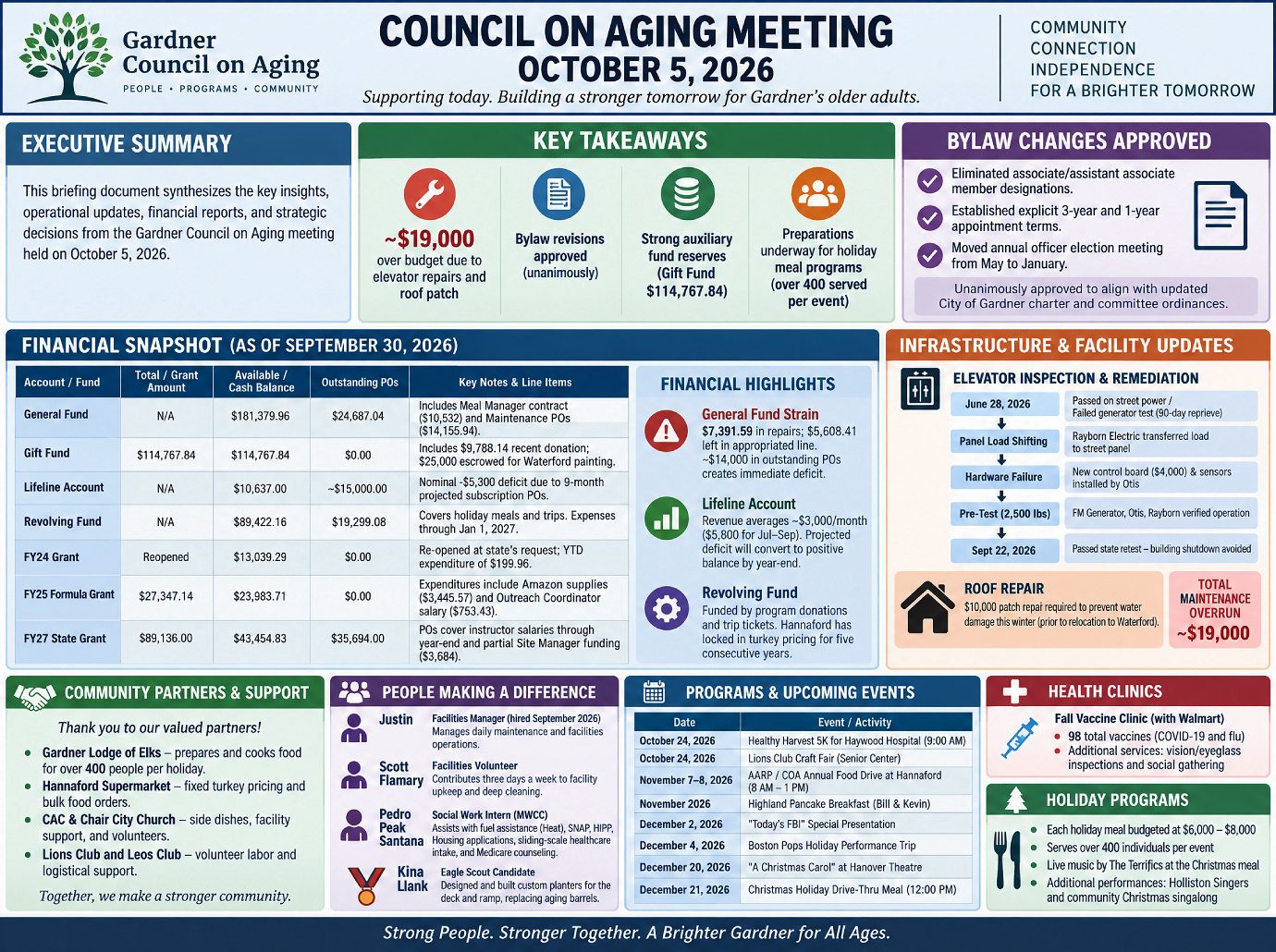
Council on Aging 10-5-26 Facility Repair Costs and Budget Deficits were discussed: Unanticipated, critical repairs to the senior center’s aging elevator—including load retests and a full circuit board replacement—along with an upcoming $10,000 roof patch, have driven the facility’s repair and maintenance line item approximately $19,000 over budget early in the fiscal year.
The Senior Center has strong Special Fund Reserves: Despite General Fund maintenance pressures, auxiliary funds remain healthy. The Gift Fund holds a balance of $114,767.84 (including $25,000 escrowed for future painting at the Waterford site), and the Revolving Fund maintains a clear cash balance of $89,422.16.
Community Partnerships & Holiday Operations: The COA is preparing for its holiday meal programs (budgeted between $6,000 and $8,000 per holiday), which serve over 400 individuals per event. Crucial support continues from partners such as the Gardner Lodge of Elks, Hannaford Supermarket, Chair City Church, the CAC, and local service clubs.
Financial Details & Observations: The General Fund has paid $7,391.59 in direct out-of-pocket repairs with an available balance of $5,608.41 left in the appropriated line. However, outstanding purchase orders total ~$14,000, creating an immediate deficit in maintenance funding. Lifeline Account Mechanics: Revenue for Lifeline averages ~$3,000 per month ($5,800 reported for the July–September quarter). Recurring subscription receipts will quickly convert the current projected deficit into a positive net cash balance by fiscal year-end. Revolving Fund Revenue & Price Lock: Program revenues stem from program/class donations (yoga, line dancing, craft fees) and trip tickets (e.g., Hanover Theatre at $137/ticket). Hannaford Supermarket has locked in turkey pricing at the same rate for five consecutive years to stabilize holiday meal expenditures.
Infrastructure & Facility Challenges: The primary driver of the current budgetary shortfall was a complex, multi-stage failure of the senior center’s elevator:
- Initial Inspection (June 28): The elevator passed inspection on municipal street power but failed when tested under generator power, prompting a 90-day state reprieve.
- Remediation Work: Rayborn Electric modified the generator panel, shifting specific electrical loads from the generator back to the main street load panel.
- Testing Sequence: A pre-test utilizing 2,500 lbs of weight was conducted alongside Otis Elevator, FM Generator, and Rayborn Electric to avoid a second state failure, which would have legally forced a full building shutdown.
- Hardware Failure: Mid-process, the elevator’s main control board and sensors failed. Otis Elevator installed a replacement board costing nearly $4,000.
- Outcome: The elevator successfully passed the formal state retest on September 22, 2026.
Urgent Roof Repair: A patch repair estimated at $10,000 is mandatory to prevent water damage and navigate the upcoming winter season prior to the Council’s planned future relocation to the Waterford facility.Combined with elevator expenses, total maintenance overruns will stand at approximately $19,000. Stair Chair Implementation: Woods Ambulance (via Jen Woods) immediately loaned a specialized stair chair to transport patrons safely and fulfill emergency readiness standards. CAC Relocation: The CAC temporary food pantry was shifted to the front lobby of the Charles McKeen Building (294 Pleasant St.), adding significant logistical work for staff to transfer food manually without interrupting service delivery.
Programmatic Operations, Health Clinics, and Upcoming Events
Fall Health Clinic: Vaccine Clinic Performance: Conducted in partnership with Walmart, the clinic administered 98 total vaccines (COVID-19 and flu). The event included secondary services, such as complimentary vision/eyeglass inspections and social gatherings.
Upcoming Event Dates | Event / Activity |
+——————+——————————————————+
| October 24, 2026 | Healthy Harvest 5K for Heywood Hospital (9:00 AM) |
| October 24, 2026 | Lions Club Craft Fair (Gardner Senior Center) |
| November 7–8 | AARP / COA Annual Food Drive at Hannaford (8 AM–1 PM)|
| November 2026 | Highland Pancake Breakfast (Hosted by Bill & Kevin) |
| December 2, 2026 | “Today’s FBI” Special Presentation |
| December 4, 2026 | Boston Pops Holiday Performance Trip |
| December 20, 2026| “A Christmas Carol” at Hanover Theatre |
| December 21, 2026| Christmas Holiday Drive-Thru Meal (12:00 PM / Noon)- Holiday Entertainment: The Christmas meal program will feature live instrumental music performed by The Terrifics, alongside additional seasonal events including the Holliston Singers and a community Christmas singalong.
- Airport Commission – October (10/8/2026)
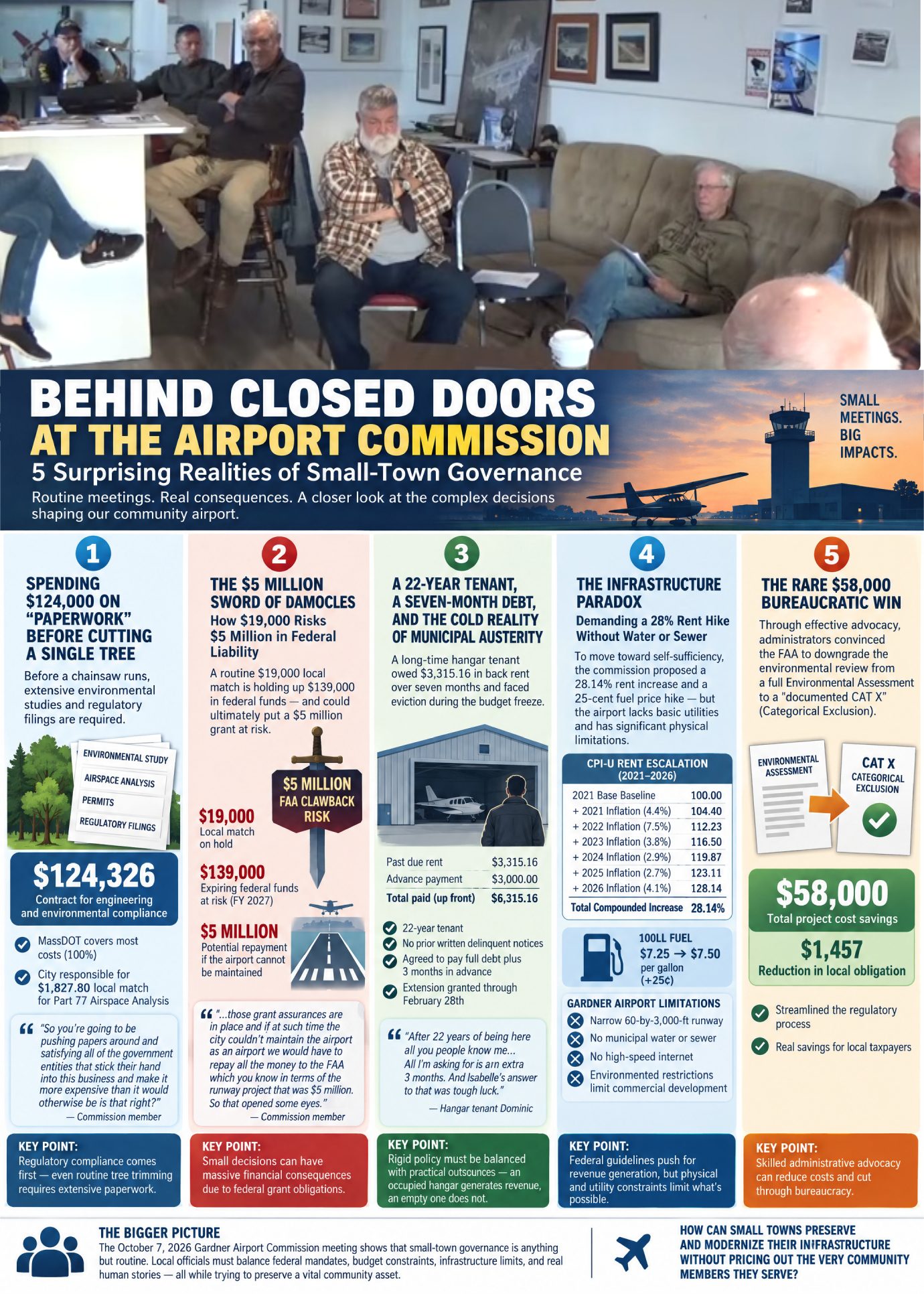
Gardner Airport Commission Addresses Critical Infrastructure
Listen to the meeting on any device, CLICK PLAY.
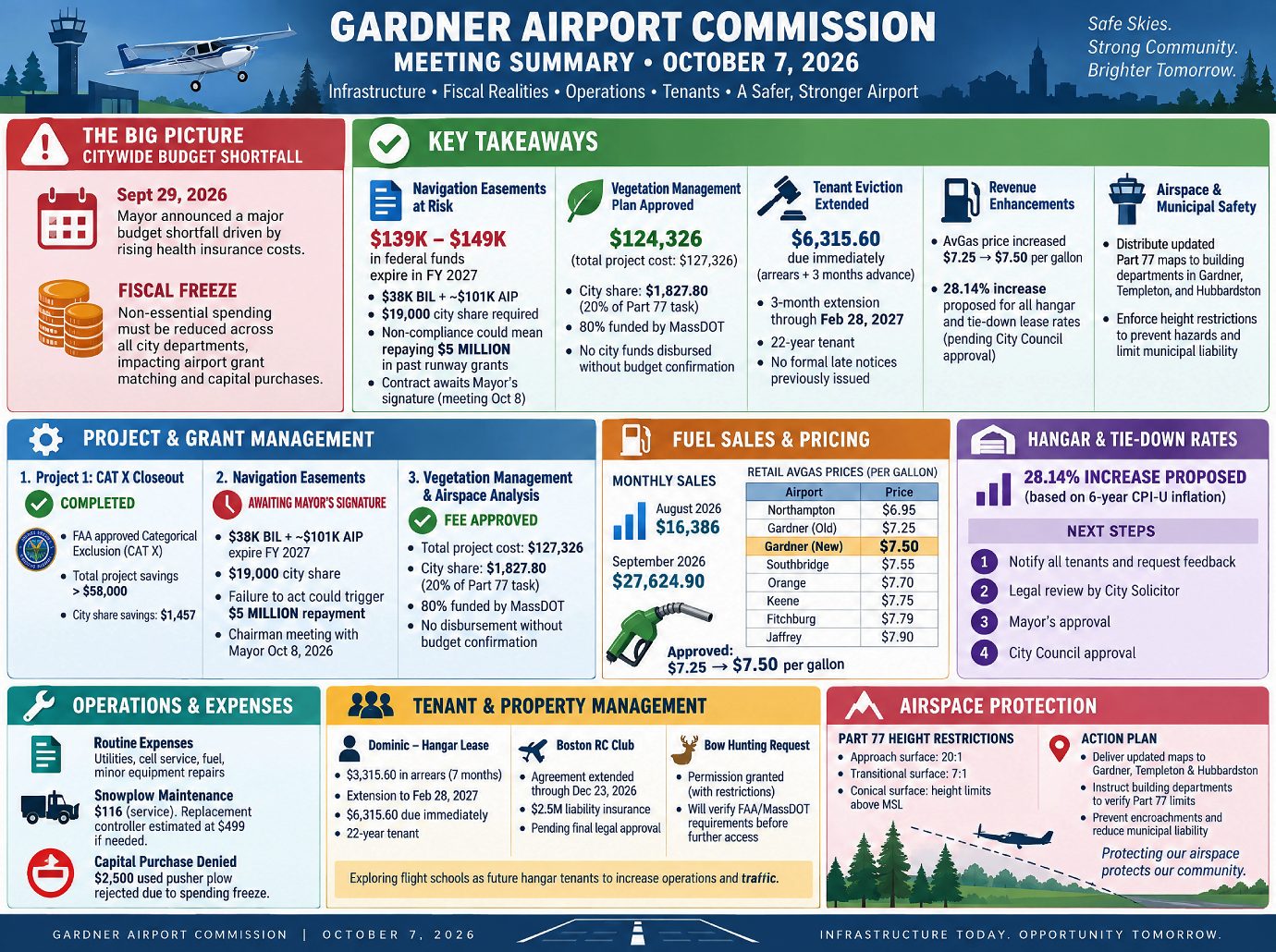
Airport Commission 10-7-26 The Gardner Airport Commission convened on October 7, 2026, to address critical infrastructure projects, fiscal constraints, operational policies, and lease agreements. The meeting occurred against the backdrop of a major citywide budget shortfall announced by the Mayor on September 29, 2026, driven primarily by rising health insurance expenses. This fiscal freeze mandates a reduction in non-essential spending across all municipal departments, directly impacting airport grant matching and capital purchases.
Citywide Budget Shortfall & Municipal Context: Mayor’s Directive (Sept 29, 2026): Issued to all city personnel following unexpected budget deficits driven by rising municipal health insurance costs.Mandated Restrictions: Strict prohibition of non-essential spending, mandatory prior approval for all transfers and personnel reclassifications, and an initiative to plug all current budget deficits.
Critical Takeaways
- Navigation Easement Acquisitions at Risk: A pending contract for navigation easement scoping remains unsigned by the Mayor. Delaying this contract jeopardizes approximately $139,000 to $149,000 in expiring federal funding ($38,000 Bipartisan Infrastructure Law [BIL] and ~$101,000 Airport Improvement Program [AIP] funds set to expire in FY 2027). Failure to secure easements risks violating federal grant assurances, which could legally obligate the city to repay $5 million in past federal runway grants. The required city contribution is $19,000.
- Vegetation Management Plan Fee Approved: The Commission voted to approve Gail’s project fee of $124,326 (total project cost of $127,326 including an Independent Fee Estimate) for a Vegetation Management Plan and Part 77 airspace analysis. City exposure is restricted to $1,827.80 for the Part 77 task ( funded at 80% by MassDOT), with a built-in safeguard that no city funds will be disbursed without formal local budget confirmation.
- Tenant Eviction & Extended Settlement: Tenanted hangar occupier Dominic was slated for immediate eviction due to $3,315.60 in rent arrears spanning seven months. Recognizing a 22-year tenancy and a lack of formal written late notices, the Commission voted to grant a 3-month extension through February 28, 2027, conditional on full immediate payment of arrears plus $3,000 in advance rent (totaling $6,315.60).
- Revenue Enhancement Initiatives: To offset stagnant revenues, the Commission approved raising retail AvGas prices from $7.25 to $7.50 per gallon and voted to pursue a 28.14% increase on all hangar and tie-down lease rates based on six-year cumulative CPI-U inflation data, pending City Council approval and tenant notification.
- Airspace & Municipal Safety Strategy: The Commission resolved to distribute updated Part 77 Airspace Plan maps to building departments in Gardner, Templeton, and Hubbardston to enforce height restrictions on nearby developments and shield the city from municipal liability.
- Traffic Commission 9-29-26 (10/8/2026)
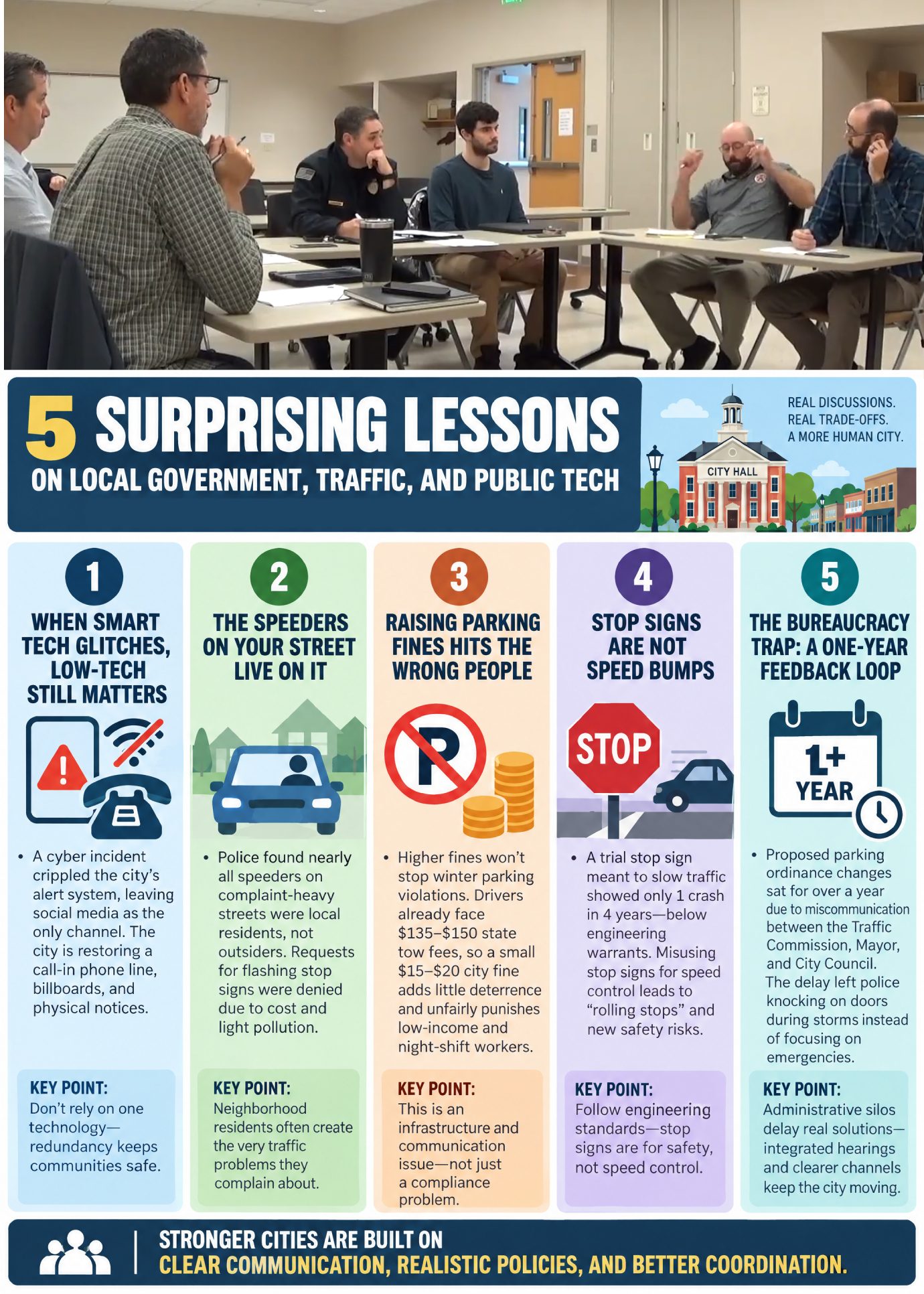
Traffic Commission
Listen to the meeting on any device, CLICK PLAY.
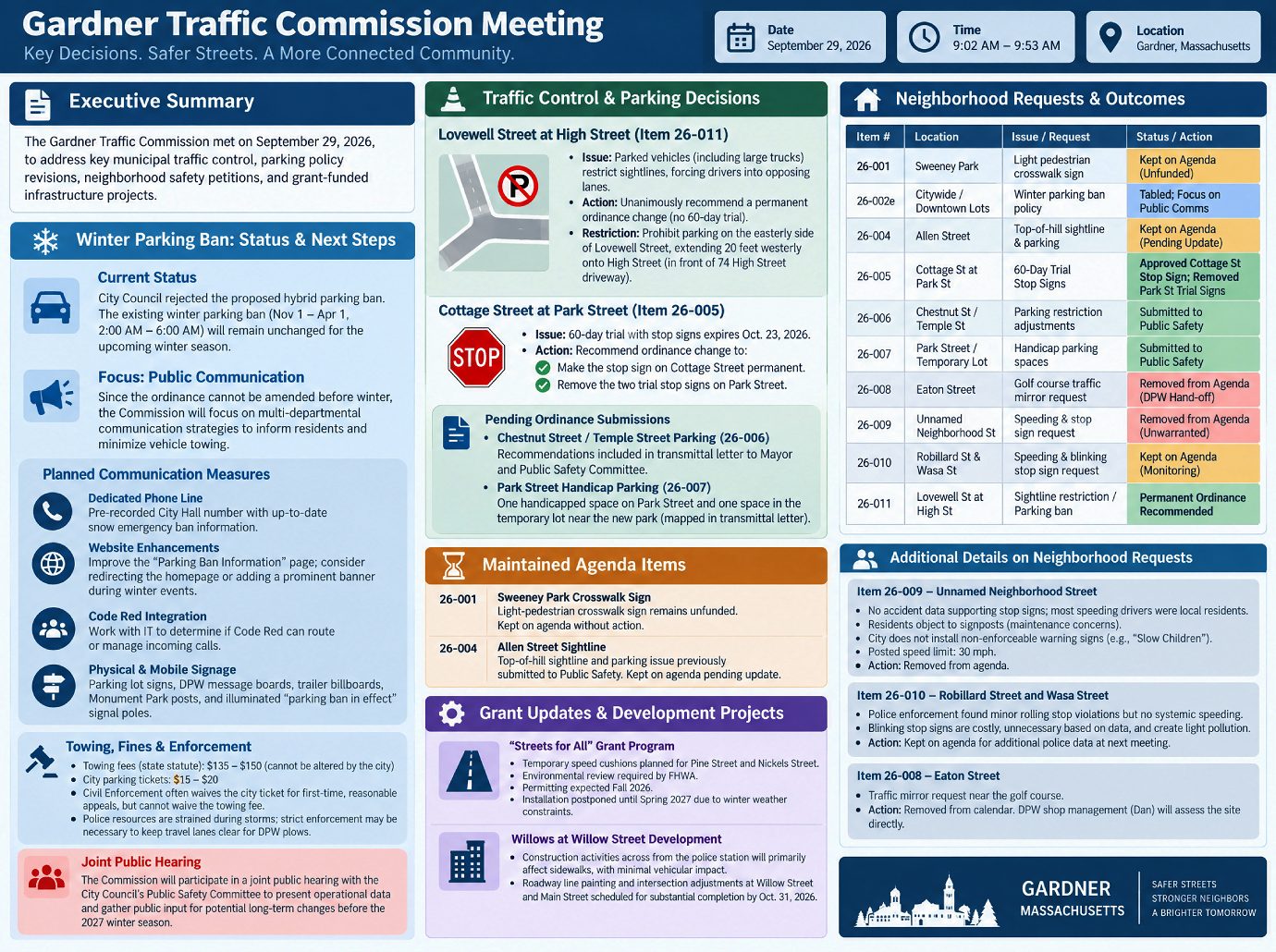
Traffic Commission 9-29-26 The Gardner Traffic Commission met on September 29, 2026, to address key municipal traffic control, parking policy revisions, neighborhood safety petitions, and grant-funded infrastructure projects.
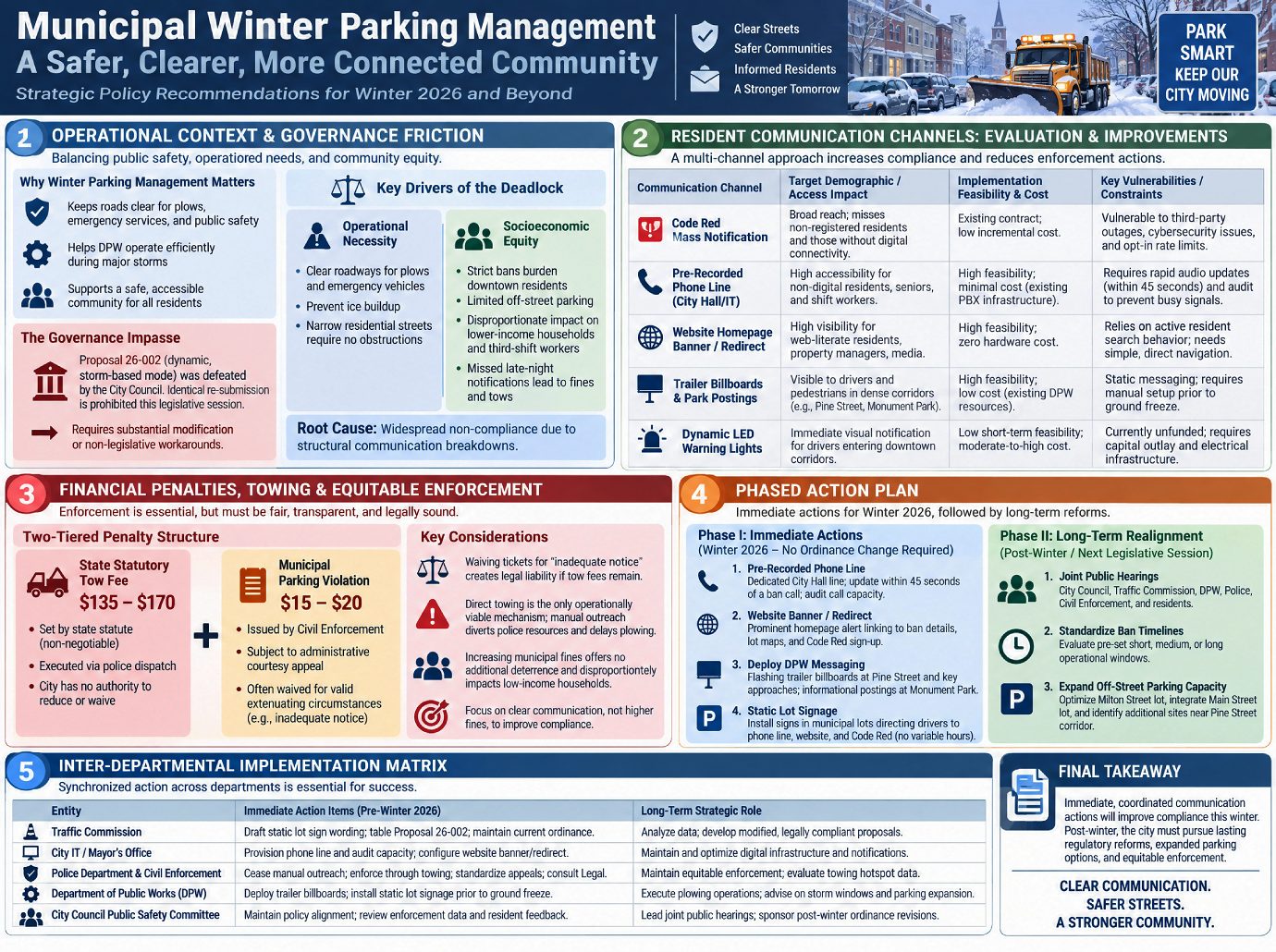
The primary focus of the meeting centered on resolving communication and enforcement challenges regarding the city’s winter overnight parking ban following the City Council’s rejection of a proposed hybrid parking ban. Because ordinance changes cannot be enacted for the upcoming winter season, the Commission shifted strategy toward improving public communication mechanisms. Key measures include developing a pre-recorded, dedicated city phone line, improving website accessibility, and coordinating a joint public hearing with the City Council’s Public Safety Committee.
The Commission advanced several local traffic control measures, including recommending permanent parking restrictions at Lovewell and High Streets and modifying a 60-day trial at Cottage and Park Streets to retain a single stop sign on Cottage Street while removing trial signs on Park Street. Neighborhood requests for new stop signs and blinking signalization on Robillard Street, Wasa Street, and an unnamed neighborhood street were declined due to a lack of supporting traffic/accident data, lack of funding, and neighborhood impact concerns.
Winter Parking Ban Policy & Public Communication Strategies: The Traffic Commission had previously submitted a hybrid proposal to adjust the city’s winter parking ban schedule (historically operating November 1 to April 1, 2:00 AM to 6:00 AM). The City Council voted down the proposed hybrid model. Under municipal rules, an exact proposal voted down cannot be resubmitted during the same session unless it is substantially modified.City Council feedback indicated that even a hybrid parking ban negatively impacts lower-income residents and conflicts with city initiatives aimed at increasing downtown housing accessibility. Consequently, the existing winter parking ban ordinance will remain unchanged for the upcoming winter season, and, because the ordinance cannot be amended before winter, the Commission agreed to focus on multi-departmental communication strategies to inform residents and minimize vehicle towing during snow events: Civil Enforcement and IT are investigating the feasibility of establishing a dedicated, pre-recorded City Hall phone number. Residents without internet or Code Red access can call this line to hear up-to-date snow emergency ban timelines. The Commission is working with IT to determine if Code Red can route or manage incoming calls. Other proposals included more prominent website exposure regarding parking during winter weather events, and various signage ideas.
Various Traffic Control, Parking, and Ordinance Recommendations were discussed. Neighborhood Traffic Requests and Dismissals+———–+———————————–+————————————+———————————–+
| Item # | Location | Issue / Request | Commission Action / Status |
+———–+———————————–+————————————+———————————–+
| 26-001 | Sweeney Park | Light pedestrian crosswalk sign | Kept on Agenda (Unfunded) |
| 26-002e | Citywide / Downtown Lots | Winter overnight parking ban policy| Tabled; Focus on Public Comms |
| 26-004 | Allen Street | Top-of-hill sightline & parking | Kept on Agenda (Pending Update) |
| 26-005 | Cottage Street at Park Street | 60-Day Trial Stop Signs | Approved Cottage St Stop Sign; |
| | | | Removed Park St Trial Signs |
| 26-006 | Chestnut Street / Temple | Parking restriction adjustments | Submitted to Public Safety |
| 26-007 | Park Street / Temporary Lot | Designated handicap parking spaces | Submitted to Public Safety |
| 26-008 | Eaton Street | Golf course traffic mirror request | Removed from Agenda (DPW Hand-off)|
| 26-009 | Unnamed Neighborhood Street | Speeding & stop sign request | Removed from Agenda (Unwarranted) |
| 26-010 | Robillard Street & Wasa Street | Speeding & blinking stop sign req. | Kept on Agenda (Monitoring) |
| 26-011 | Lovewell Street at High Street | Sightline restriction / Parking ban| Permanent Ordinance Recommended |
+———–+———————————–+————————————+———————————–+
There’s more information in the infographics below.
- City Council 10-5-26 (10/6/2026)
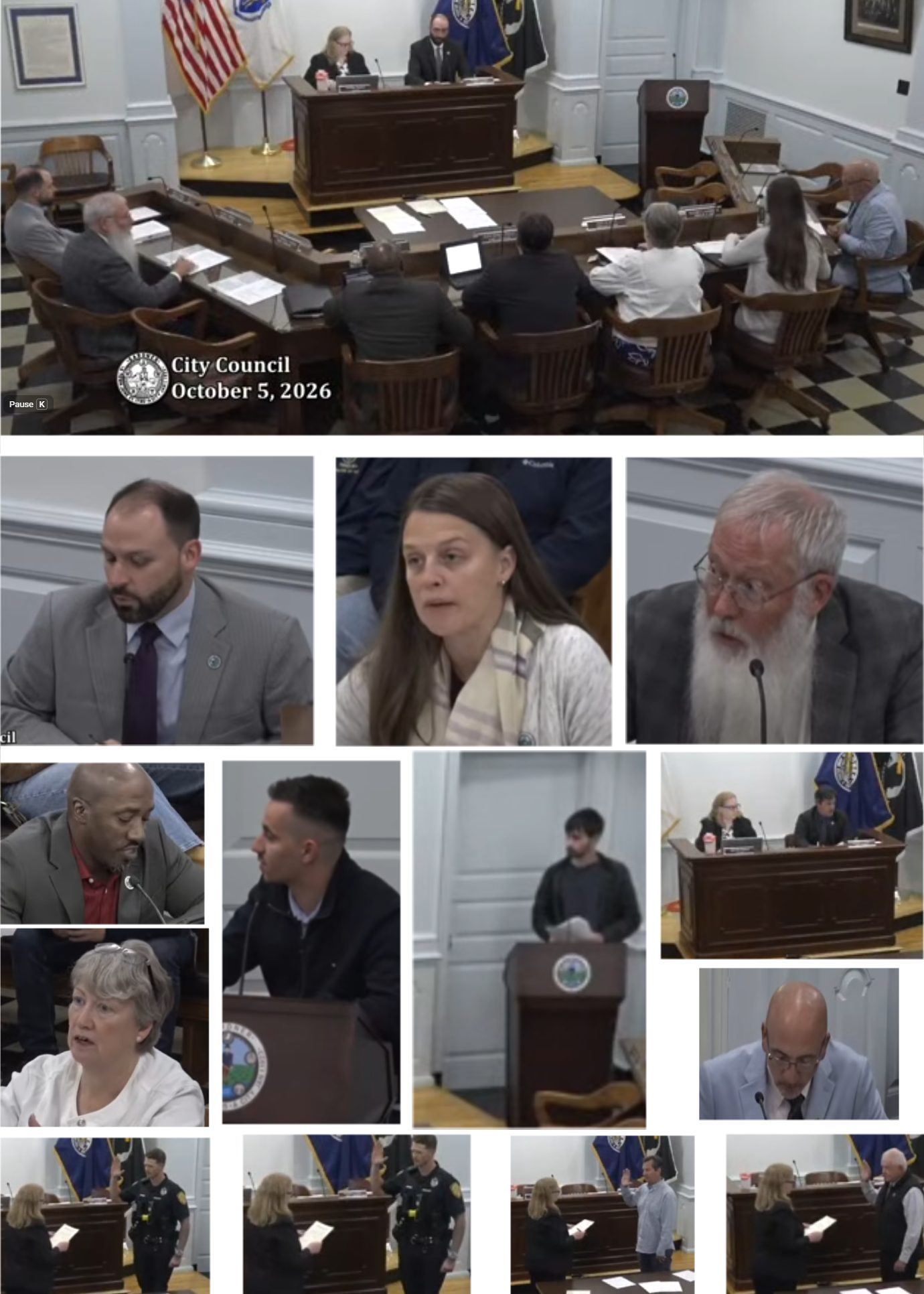
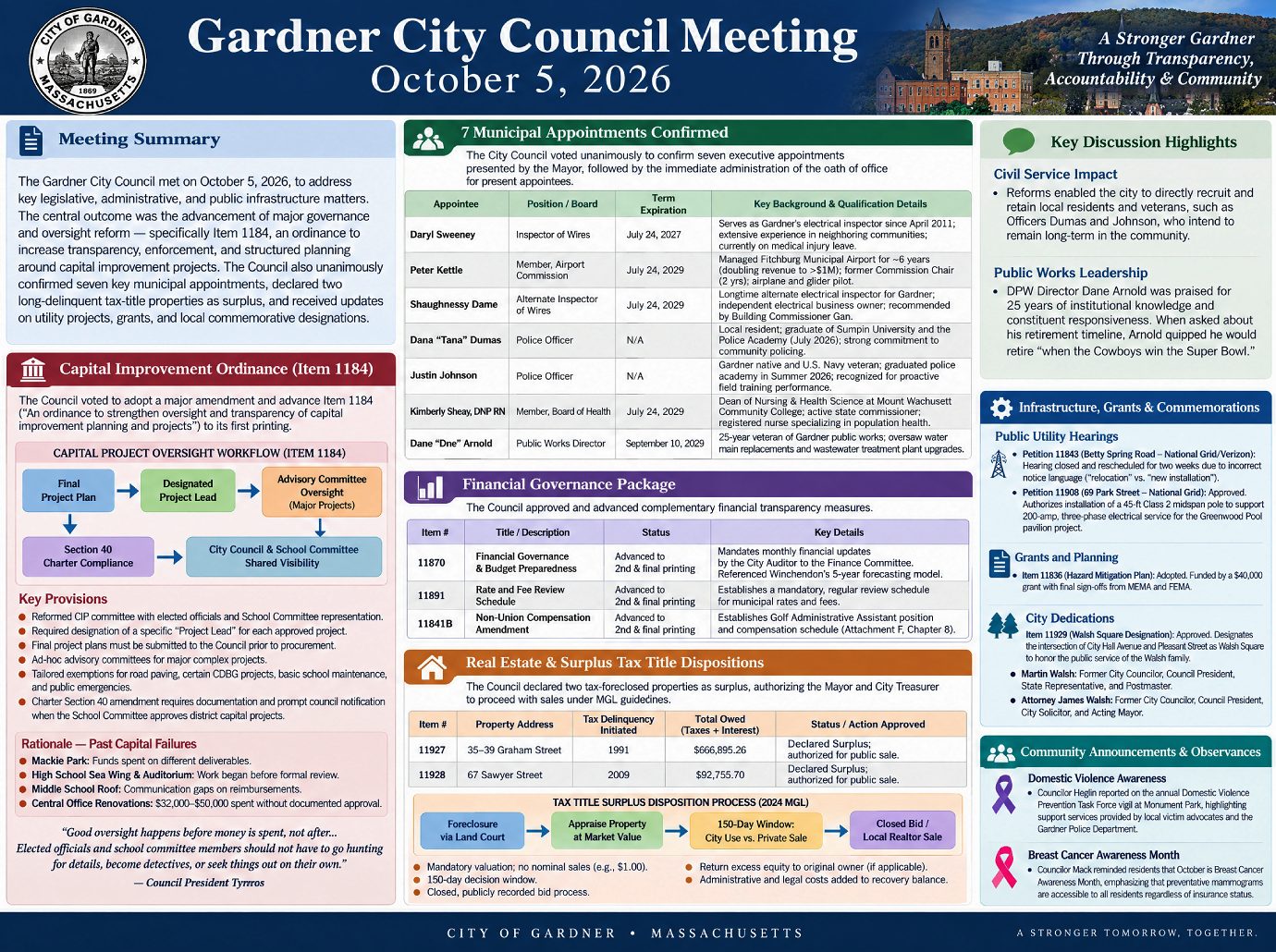
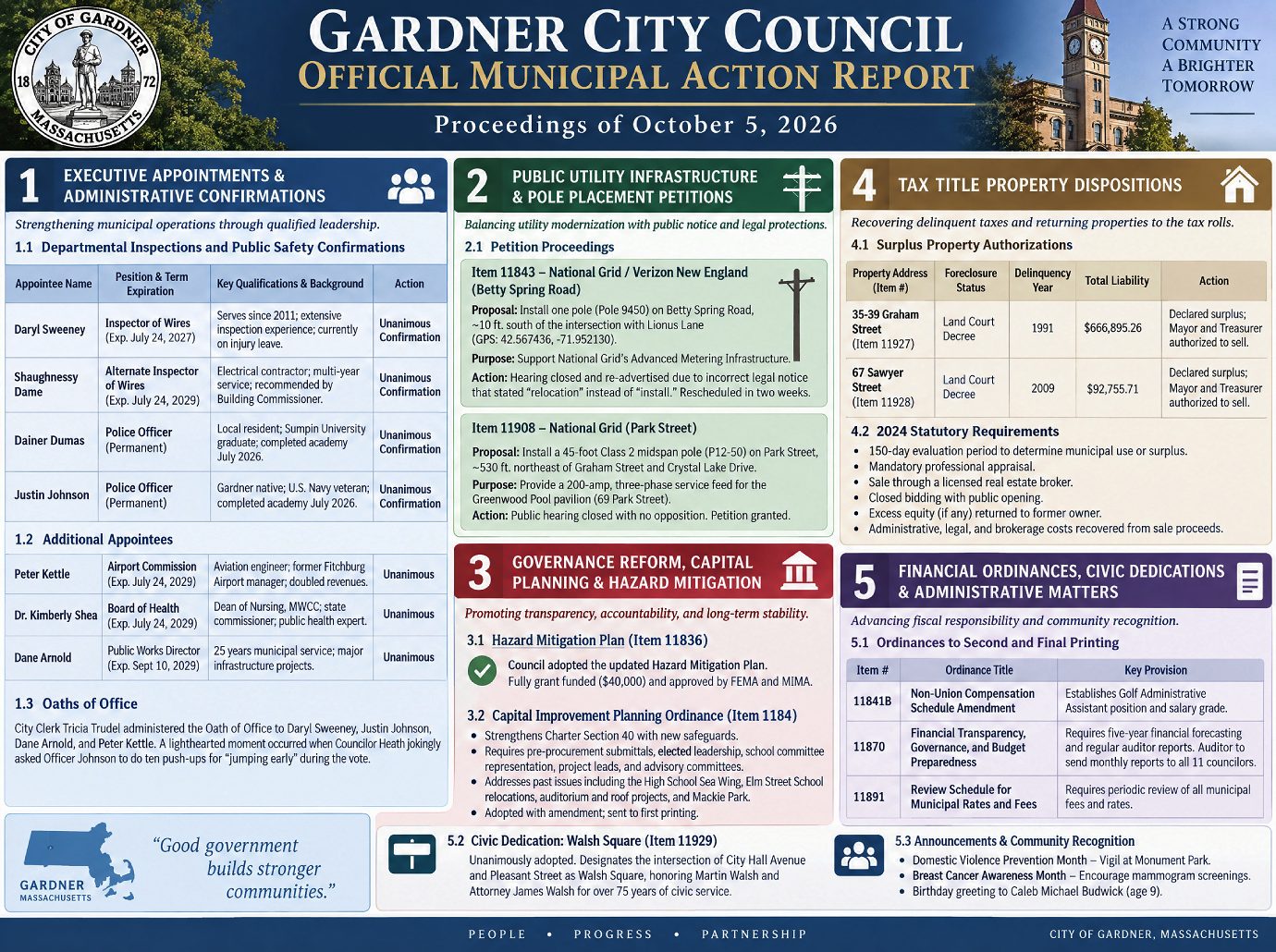
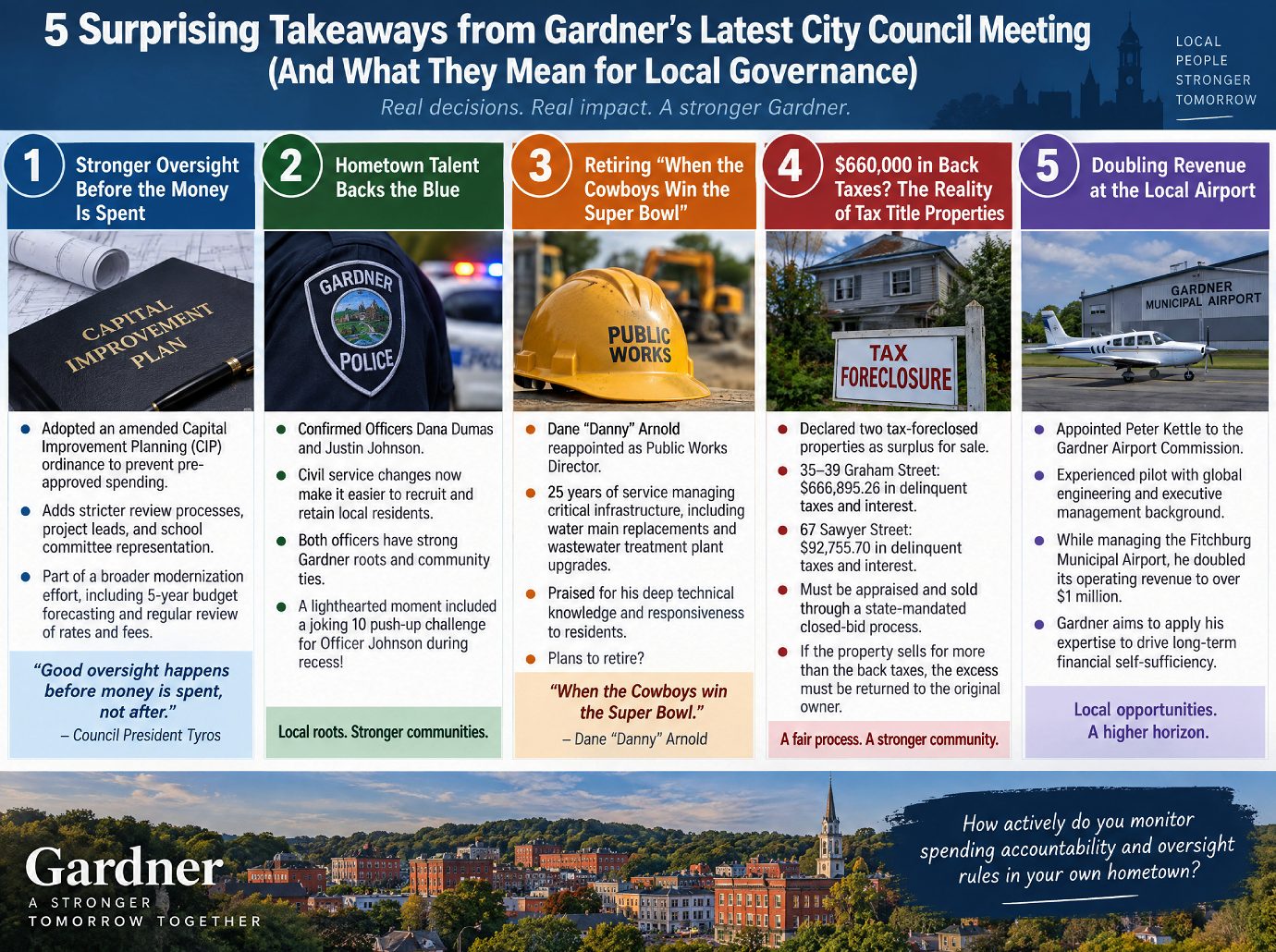
Gardner Magazine has 3 infographics at the end of this article focusing on a summary of the October 5, 2026 Gardner City Council Meeting, a Municipal Action Report, and 5 Takeaways from the Meeting.
Gardner City Council Holds First October Meeting of 2026
Listen to the meeting on any device, CLICK PLAY.
City Council10-5-26 The Gardner City Council convened on October 5, 2026, to address key legislative, administrative, and public infrastructure matters. The central outcome of the meeting was the advancement of major governance and oversight reform—specifically Item 1184, an ordinance designed to increase transparency, enforcement, and structured planning around capital improvement projects. This reform addresses historic accountability issues stemming from past municipal and school projects, establishing strict documentation and reporting protocols under Section 40 of the City Charter.
Additionally, the Council unanimously confirmed seven key municipal appointments across public works, public safety, public health, electrical inspection, and airport oversight. On financial and real estate matters, the Council declared two long-delinquent tax-title properties as surplus, enabling their disposition under revised 2024 Massachusetts General Laws (MGL). Finally, updates were provided on city utility projects, the Hazard Mitigation Plan, and local commemorative designations.
Key Discussions on Appointments: — Civil Service Impact: Councilors highlighted that recent civil service reforms enabled the city to directly recruit and retain local residents and veterans, such as Officers Dumas and Johnson, who intend to remain long-term in the community. Public Works Leadership: DPW Director Dane Arnold was lauded for 25 years of institutional knowledge and constituent responsiveness. When asked in committee regarding his retirement timeline, Arnold famously quipped he would retire “when the Cowboys win the Super Bowl.”
Oversight Ordinance Adopted: The Council voted to adopt a major amendment and advance Item 1184 (“An ordinance to strengthen oversight and transparency of capital improvement planning and projects”) to its first printing. Originally submitted by Council President Tyrros with mayoral support, the ordinance overhauls how municipal and school capital projects are planned, approved, and monitored. Councilors cited a history of opaque spending, scope shifts, and retroactive approval requests as the primary motivation for the ordinance: Central Office Renovations: Over $32,000 (and potentially up to $50,000) was expended relocating central administrative offices from the second to the first floor at Elm Street School—marking the third renovation in six years—without documented approval from the School Committee. Maki Park: Funds approved by the City Council were spent on deliverables different from what was authorized. High School C Wing & Auditorium Projects: Work began or substantial funds were committed prior to formal review and appropriation by elected bodies. Middle School Roof: Recurring communication gaps regarding capital funding reimbursements. Council President George Tyros stated: “”Good oversight happens before money is spent, not after… Elected officials and school committee members should not have to go hunting for details, become detectives, or seek things out on their own.”
Hazard Mitigation Plan Adopted: The Council formally adopted the city’s updated Hazard Mitigation Plan. The project was funded by a $40,000 grant and involved multi-tier agency review, obtaining final sign-offs from both the Massachusetts Emergency Management Agency (MEMA) and FEMA.Important Councilor Comments:
- Domestic Violence Awareness: Councilor Heglin reported on the annual Domestic Violence Prevention Task Force vigil held at Monument Park, highlighting ongoing support services provided by local victim advocates and the Gardner Police Department.
- Breast Cancer Awareness Month: Councilor Mack reminded residents that October is Breast Cancer Awareness Month, emphasizing that preventative mammograms are accessible to all residents regardless of insurance status.
2025-10-21