
Social Media – Addiction or Habit – Complete Gardner Magazine Reports
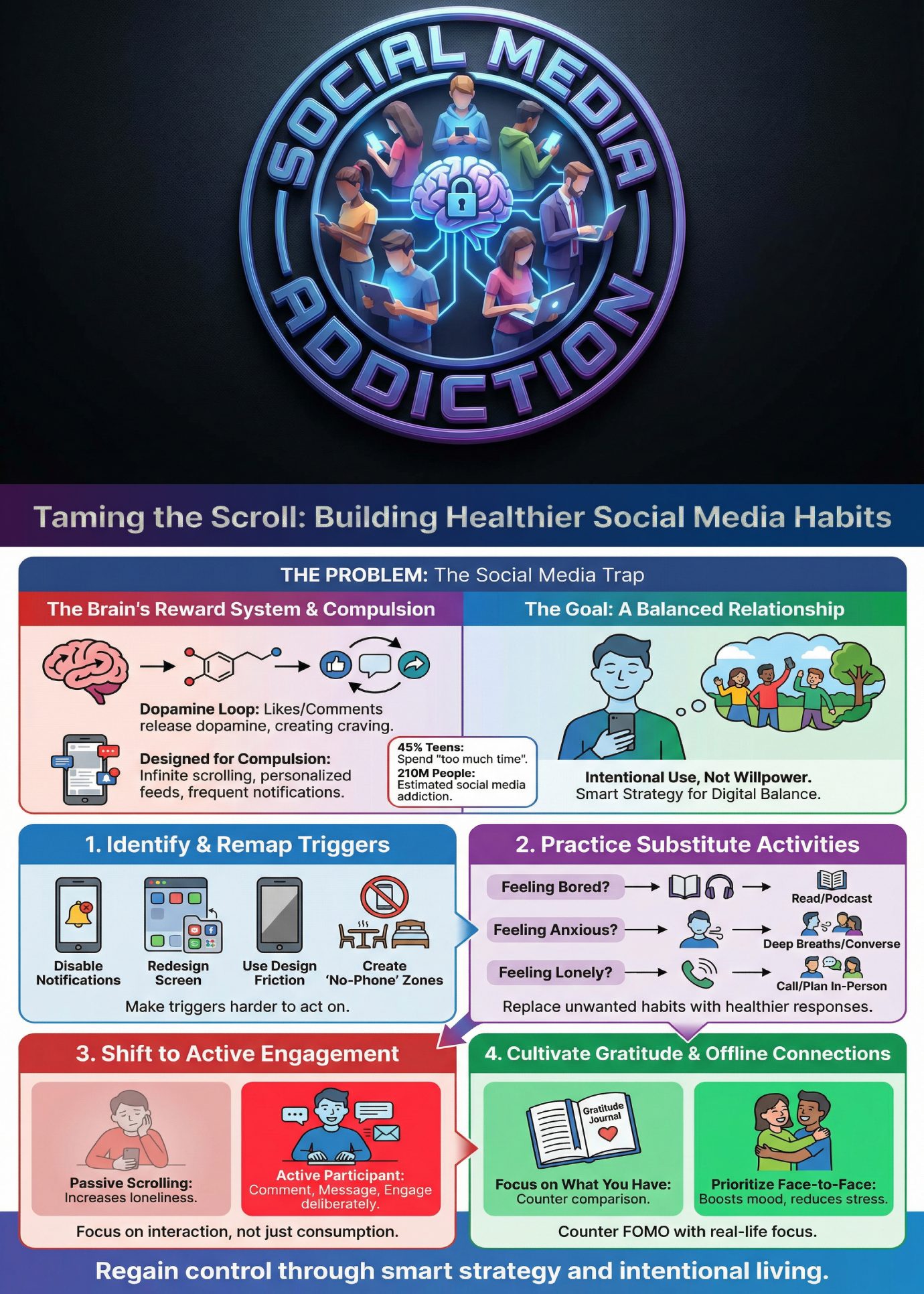
This page is a series of reports, information, and recommendations regarding Social Media Addiction
Click a link to jump to a particular report and section.
Briefing on Social Media Use, Addiction, and Mental Health
You’re Thinking About Social Media Addiction All Wrong. Here’s What the Research Says.
Is It a Social Media Habit or an Addiction? A Guide to Understanding Your Use
Taming the Scroll: How to Build Healthier Social Media Habits
A Formal Literature Review on Social Media Addiction and Problematic Use
Deep Dive and Debate Podcasts
“Deep Dive” podcast on Social Media Use. Listen on any device, CLICK PLAY.
“Debate” – Is Social Media an Addition or Habit. Listen on any device, CLICK PLAY.
Fun Song about falling for a fake social media pitch: Social Media Ditch. Listen on any device, CLICK PLAY.
Briefing on Social Media Use, Addiction, and Mental Health

Briefing on Social Media Use, Addiction, and Mental Health
This document synthesizes findings from multiple research sources to provide a comprehensive overview of social media use, its classification as an addiction or habit, and its profound impact on mental health, particularly among adolescents and young adults.
A central conflict emerges between clinical definitions of addiction and public perception. While studies indicate that only a small fraction of users (as low as 2%) exhibit clinical symptoms of addiction, a significantly larger portion (ranging from 18% to over 60%) self-identify as addicted. This discrepancy is likely fueled by a pervasive media narrative that favors the “addiction” label over “habit.” This labeling is not benign; research demonstrates that framing heavy use as an addiction diminishes users’ self-efficacy, reduces perceived control over their behavior, and increases self-blame.
The impact of social media on mental health is multifaceted. A strong correlation exists between heavy social media use and negative outcomes, including increased anxiety, depression, loneliness, poor sleep, low self-esteem, and body image issues. Teenagers, particularly girls, report more of these negative effects. Conversely, teens also credit social media with significant benefits, such as feeling more connected to friends, finding a space for creativity, and receiving social support.
Usage patterns and their effects vary significantly across demographics. Younger generations, especially Generation Z and young adults, report the highest levels of use and perceived addiction. Research on the academic landscape reveals an exponential growth in studies on this topic, though it is heavily concentrated in Western countries and often relies on cross-sectional data from student populations, highlighting significant gaps in understanding the phenomenon across different cultures, age groups, and platforms. Proposed interventions range from individual strategies like digital detoxes and habit-reversal techniques to broader measures including parental guidance, school-based education, and potential regulation of platform design.
1. Prevalence and Perceptions of Social Media Use
The scale of social media engagement is immense, with approximately 4.8 billion users worldwide as of 2024. Amid this widespread use, a significant portion of users experience problematic levels of engagement, leading to concerns about addiction.
1.1. Statistical Overview of Addiction
Estimates of social media addiction vary, reflecting different methodologies and definitions. Key global and national statistics include:
• Global Prevalence: An estimated 210 million people worldwide (approximately 4-5% of users) suffer from social media addiction.
• Self-Perceived Addiction: In the U.S., about 30% of social media users self-identify as addicts. This figure dramatically increases to 78% for individuals aged 18-24. A separate study of teens and young adults found that 60% believe they are addicted to their phones.
• Youth Dependence: 54% of teenagers acknowledge finding it difficult to give up social media. Among U.S. teens, 70% report feeling anxious when disconnected from social media.
1.2. The Discrepancy Between Clinical Symptoms and Self-Perception
A significant gap exists between the clinical diagnosis of addiction and users’ self-perception. Research by Anderson & Wood highlights this divide:
• Clinical Symptoms: Using the Bergen Social Media Addiction Scale (BIAS), only 2% of active Instagram users in a representative U.S. sample were classified as “at risk for addiction.” The least frequently experienced symptoms were withdrawal (4% reporting it often) and life conflict (6%).
• Self-Reported Addiction: In the same study, 18% of users agreed at least somewhat that they were addicted, with 5% indicating substantial agreement. This suggests over half of users who believe they are addicted do not meet the pathological criteria used for clinical assessment.
• Habit Perception: In contrast, a much larger portion of users recognize their usage as habitual. Approximately 49% of Instagram users reported having a habit of using the platform.
This discrepancy suggests that the term “addiction” is being used more broadly by the public than its clinical definition allows, a trend potentially influenced by popular media.
2. The Mechanisms of Compulsive Use: Addiction vs. Habit
Two primary models are used to explain the mechanics of excessive social media use: the biochemical addiction model centered on dopamine, and the cognitive model of habit formation.
2.1. The Dopamine and Addiction Cycle Model
This model, detailed in the Gashaj analysis, frames social media use as a behavioral addiction analogous to substance abuse.
• Process of Addiction: The cycle follows six steps: initial use, abuse, tolerance, dependence, addiction, and relapse.
• Dopamine Reinforcement: Social media applications are designed to be reinforcing, releasing dopamine when users receive likes, comments, or view engaging content. This creates a psychological craving.
• Dopamine Imbalance: Dr. Anna Lembke’s work, cited in the research, explains that the infinite and easy access to dopamine via technology creates a tolerance. The brain adjusts by down-regulating its own dopamine receptors, tilting the user’s baseline state towards pain and discomfort. This means users need to engage more frequently to achieve the same effect, and the pleasure derived from the activity diminishes over time.
• Cognitive Impacts: This dopamine tolerance is associated with aggression, poor impulse control, symptoms of ADHD, and addiction. The constant stream of information overloads cognitive resources, shortening attention spans and impairing memory recall.
2.2. The Habit Formation Model
In contrast, Anderson & Wood argue that most excessive social media use is better understood as a habit.
• Habit Definition: Habits are cognitive associations between environmental cues and behavioral responses that develop through repetition of rewarded actions. Once formed, perceiving the cue (e.g., boredom, a notification, picking up the phone) automatically activates the response (e.g., opening an app and scrolling).
• Distinction from Addiction: While habit learning can be a component of addiction, habits themselves do not inherently involve the core pathological symptoms of clinical addiction, such as severe withdrawal or life conflict. The key distinction is that habits are automated responses to cues, while addiction involves compulsive motivation and physiological dependence.
• Supporting Evidence: The fact that a large majority of users identify their behavior as habitual (49%) while only a small minority exhibit clinical addiction symptoms (2%) supports the habit model as a more accurate descriptor for the average heavy user.
3. The Impact on Mental and Psychological Well-being
The connection between social media and mental health is a primary focus of current research. While the negative consequences are widely reported, users, particularly teens, also identify significant benefits.
3.1. Negative Consequences
Multiple studies have found a strong link between heavy social media use and an increased risk for a range of mental health challenges.
| Identified Negative Impact | Supporting Data and Observations |
|---|---|
| Depression & Anxiety | In a survey of teens and young adults, 93.8% reported experiencing one or more negative psychological effects. 43 respondents (53.8%) cited depression and 44 (55%) cited anxiety. 70% of teens report feeling anxious when disconnected. |
| Loneliness & Social Isolation | Studies found that high usage of platforms like Facebook and Instagram increases rather than decreases feelings of loneliness. 67% of U.S. adults associate social media use with feelings of isolation. |
| Low Self-Esteem & Poor Body Image | Viewing manipulated and curated images can make users feel insecure about their appearance and life circumstances. In one study, 58 respondents (72.5%) felt social media affected their self-esteem, and 53 (66.3%) cited effects on body image. |
| Fear of Missing Out (FOMO) | FOMO can fuel greater social media use, compelling users to check for updates constantly to ensure they are not missing out on experiences others are having. This can impact self-esteem and trigger anxiety. |
| Sleep Problems | 59 respondents (73.8%) in one study felt they experience worsened sleep due to social media. The light from screens can disrupt sleep cycles, and the compulsion to check notifications can interrupt rest. |
| Cyberbullying | Approximately 59% of U.S. teens have experienced online bullying. Social media platforms can be hotspots for spreading hurtful rumors, lies, and abuse. |
| Suicide Risk | Teens who spend more than five hours a day on social media face a 70% heightened risk of contemplating suicide. |
| Impact on Grades & Productivity | 66.3% of respondents in one study believed their phone usage negatively affects their educational outcomes. A Pew survey found 40% of teens say social media hurts their productivity. |
3.2. Perceived Benefits for Teenagers
Despite the clear risks, teens also derive value from social media, particularly in the realms of social connection and self-expression. A 2024 Pew Research Center survey found:
• Connection with Friends: 74% of teens say social media makes them feel more connected to what’s going on in their friends’ lives.
• Social Support: 52% feel they have people who will support them through tough times, though this is a decline from 67% in 2022.
• Creativity and Acceptance: 63% say social media is a place to show their creative side, and 52% say it makes them feel more accepted.
• Mental Health Resource: 34% of teens report at least sometimes getting information about mental health on social media.
4. Key Demographics and At-Risk Populations
The impact of social media is not uniform; it varies significantly by age, gender, culture, and other demographic factors.
4.1. Age
Younger generations exhibit the highest rates of use and are most susceptible to its negative effects.
• Teens (13-17): 45% of teens say they spend too much time on social media, up from 36% in 2022. They spend an average of 8 hours and 39 minutes online daily.
• Young Adults (18-24): 78% of U.S. social media users in this age group self-identify as addicts. Their daily average usage is around 139 minutes.
• Older Adults (55-64): Report lower levels of addiction, with 21% reporting feelings of addiction to social media.
4.2. Gender
Females consistently report higher usage and more negative psychological impacts than males.
• Perceived Addiction: 59% of females report feeling addicted, compared to 41% of males.
• Usage: A study by Gashaj found females had a higher average daily screen time (7.65 hours) than males (6.55 hours) and picked up their phones more often (144 vs. 129 times daily), though these differences were not statistically significant.
• Negative Impacts on Teens: Teen girls are more likely than boys to say social media has hurt their mental health (25% vs. 14%), confidence (20% vs. 10%), and sleep (50% vs. 40%). Girls are also more likely to feel overwhelmed by drama (45% vs. 34%) and feel worse about their own lives (34% vs. 20%).
4.3. Culture and Race
• Cultural Context: The prevalence of social media addiction is reported to be higher in collectivist cultures (31%) compared to individualist cultures (14%).
• Racial and Ethnic Differences (U.S. Teens): Black teens (50%) are more likely than White (31%) or Hispanic (39%) teens to be highly concerned about teen mental health. They are also more likely to use social media as a mental health resource (49% vs. 30% of White teens) and to feel “a lot” of support and acceptance from these platforms.
5. The “Addiction” Label: A Costly Misnomer?
The widespread use of the term “addiction” to describe heavy social media use has significant, and often detrimental, consequences for users.
5.1. The Role of Media
A content analysis of U.S. media outlets from 2021-2024 found that the phrase “social media addiction” appeared far more frequently and received vastly more online engagement than “social media habit.” This media narrative, amplified by official warnings like that of the U.S. Surgeon General, likely contributes to users’ tendency to self-label as “addicted” even without clinical pathology.
5.2. Negative Consequences of the Addiction Label
Research by Anderson & Wood demonstrates that framing frequent use as an addiction has deleterious effects on user psychology:
• Reduced Self-Efficacy: In a correlational study, users who self-reported being more addicted (but not more habitual) also experienced a lower perceived ability to control their use.
• Increased Self-Blame: An experimental study showed that having users reflect on their “addiction” led them to blame themselves more for overuse.
• Causal Link: The experiment provided clear causal evidence that an addiction framing negatively impacts users’ perceived control over their past, present, and future use of social media.
This research suggests that the addiction label, rather than empowering users, may hinder their ability to change their behavior by fostering a sense of powerlessness.
6. The Research Landscape and Future Directions
A 2022 bibliometric analysis of research on “social media addiction” and “problematic social media use” reveals key trends and gaps in the academic literature.
6.1. Research Trends
• Exponential Growth: Scholarly output on the topic has grown exponentially, rising from just two publications in 2013 to 195 in 2021.
• Geographic Distribution: Research is heavily concentrated in the USA, the UK, and Turkey, which together account for 47% of publications. This indicates a need for more research in other regions with high social media penetration, such as Southeast Asia and South America.
• Methodological Focus: The vast majority of studies are quantitative, empirical, and cross-sectional. There is a notable lack of qualitative and longitudinal studies, which could provide deeper insights and track effects over time.
• Sample Population: Most research relies on samples of undergraduate students aged 19-25, limiting the generalizability of findings to other age groups.
• Platform Focus: Studies have predominantly focused on Facebook and Instagram, with less attention paid to other major platforms like YouTube, WhatsApp, and the rapidly growing TikTok.
6.2. Future Research Directions
Based on these gaps, researchers recommend:
• Conducting more longitudinal studies to assess long-term effects.
• Expanding research to include diverse age groups, particularly older adults and younger adolescents.
• Investigating a wider array of social media platforms to understand their unique features and impacts.
• Examining the role of engagement-based ranking and recommendation algorithms in forming online habits and promoting potentially harmful content.
• Developing and validating diagnostic criteria and screening instruments based on official classifications like the DSM-V.
7. Recommendations and Interventions
A variety of strategies have been proposed to mitigate the negative impacts of social media, targeting individuals, families, schools, and policymakers.
7.1. Individual-Level Interventions
• Cognitive Behavioral Therapy (CBT): A highly effective approach for changing the patterns of thinking that lead to compulsive behaviors.
• Habit-Change Strategies: Instead of focusing on willpower, which is often ineffective against strong habits, users can:
◦ Modify Cues: Remove triggers by turning off notifications, placing the phone out of sight, or using grayscale mode to make the screen less appealing.
◦ Practice Substitute Activities: Consciously replace the habit of opening social media with a different activity, such as reading a book or using a language-learning app.
• Mindful Usage and Digital Detox:
◦ Track Usage: Use an app to monitor time spent on social media and set reduction goals (e.g., limiting use to 30 minutes per day, which has been shown to reduce anxiety and depression).
◦ Change Focus: Before logging on, clarify the motivation. If it is to relieve loneliness or boredom, consider healthier substitutes like calling a friend or taking up a hobby.
◦ Express Gratitude: Focusing on positive aspects of one’s own life can counter feelings of inadequacy and FOMO.
7.2. Family, School, and Policy Interventions
• Parental Involvement: Parents can monitor their child’s online activity, set time limits, enforce “social media breaks” (e.g., no phones at dinner or before bed), and talk openly about the unrealistic nature of online portrayals.
• Education: Schools and communities should focus on educating youth about responsible social media use, cyberbullying, privacy, and developing strong coping mechanisms for stress.
• Regulation and Platform Design: Policymakers and public health officials are encouraged to consider regulations that promote healthier platform design. This includes greater transparency around algorithms, ethical design principles, and consumer awareness of data extraction and monetization.
———————-
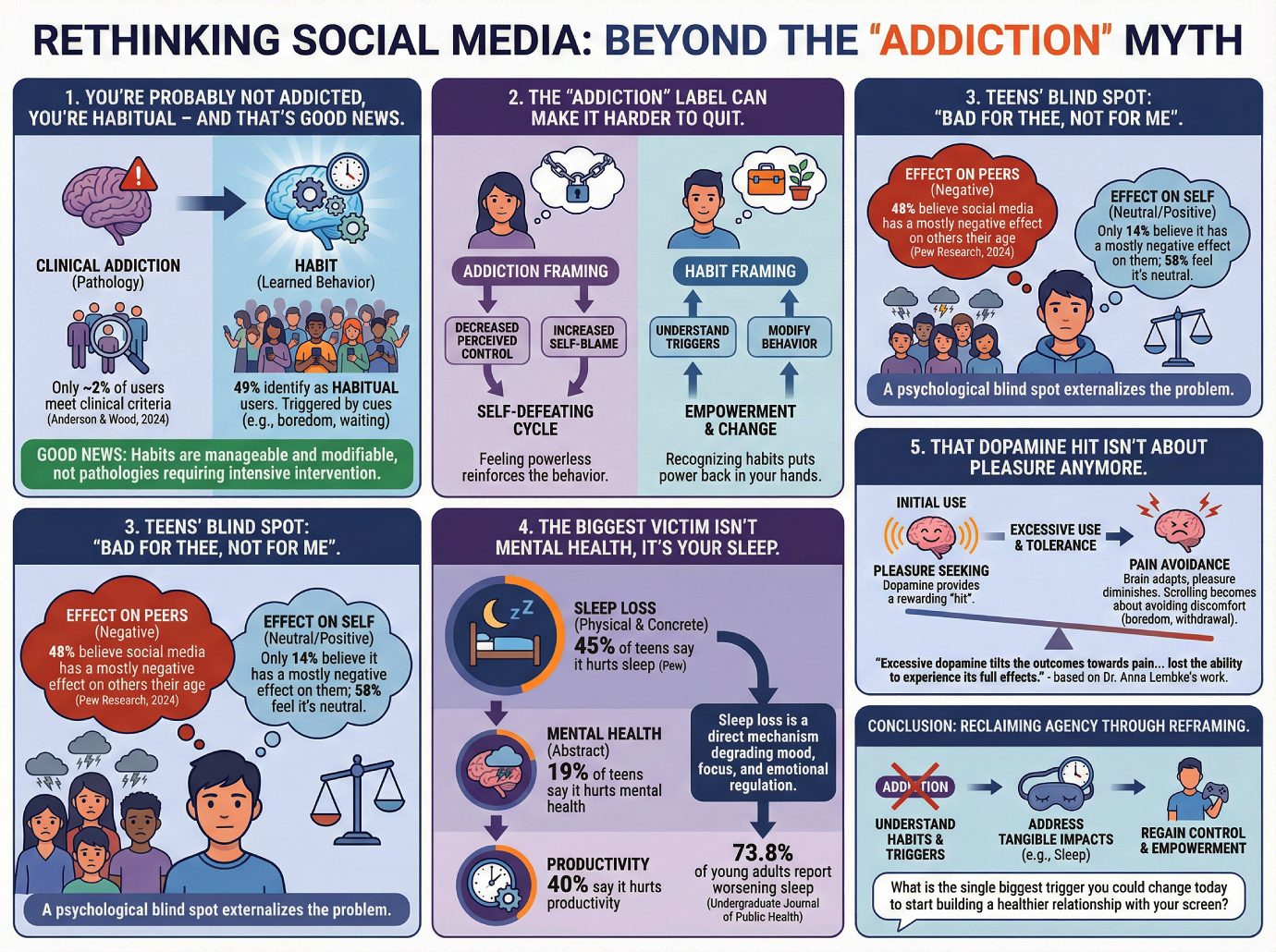
You’re Thinking About Social Media Addiction All Wrong. Here’s What the Research Says.
You’re Thinking About Social Media Addiction All Wrong. Here’s What the Research Says.
You pick up your phone to check a single notification and, 45 minutes later, you emerge from a scrolling rabbit hole, wondering where the time went. It’s a familiar feeling for many, often accompanied by a self-diagnosis: “I’m addicted to my phone.” The public conversation around social media is saturated with concerns about its addictive nature and its detrimental effects on our well-being.
These concerns are valid, but recent research reveals a more nuanced and, in some ways, more empowering reality. The story of our relationship with these platforms is filled with surprising and counter-intuitive truths. While the problem is real, the way we frame it—often by using the powerful and paralyzing language of addiction—might be holding us back from finding real solutions. This article will distill the most impactful takeaways from new research that can help you reframe the problem and regain control over your digital life.
1. You’re Probably Not Addicted, You’re Habitual—And That’s Good News.
The word “addiction” is used so frequently in conversations about social media that it has become almost synonymous with heavy use. However, research suggests this is a significant overestimation. A 2024 study by Anderson & Wood on Instagram users found that while up to 18% of users believed they were addicted—a figure consistent with other reports that place self-identified addiction as high as 30% among U.S. users—only a small fraction actually met the clinical criteria for being at risk.
Based on a standard psychiatric scale, only 2% of active Instagram users showed symptoms that warranted a warning of potential addiction.
So, if it’s not addiction for most people, what is it? The research points to a more common and manageable culprit: habit. A habit is a learned, automatic behavior triggered by specific context cues. You feel bored, so you open the app. You’re waiting in line, so you start scrolling. A study found that this is a much better description for a huge portion of users, with 49% of participants identifying their social media use as habitual.
This distinction is more than just semantics; it’s genuinely good news. Clinical addiction is a pathology that often requires intensive intervention. A habit, on the other hand, is a learned behavior. While strong habits can be difficult to change, they are not pathologies. They can be understood, deconstructed, and modified with the right strategies, putting the power to change back in your hands.
2. The “Addiction” Label Can Actually Make It Harder to Quit.
Mislabeling a powerful habit as a clinical addiction doesn’t just misdiagnose the problem—it can actively make it worse. The same research from Anderson & Wood demonstrated this in an experimental study. When users were prompted to view their frequent social media use through the lens of addiction, it had immediate negative consequences.
Participants who adopted the addiction framing reported a decrease in their perceived control over their behavior and an increase in self-blame for their overuse.
This creates a self-defeating psychological cycle: the more you tell yourself you are powerless against an “addiction,” the less power you feel you have to change your behavior. This psychological trap is reinforced by the underlying neurology of habitual use. When we constantly turn to social media to avoid the discomfort of boredom or negative feelings, our brain’s reward system changes. As one study on dopamine imbalance explains:
“With this increased access, individuals develop an avoidance of discomfort in our society whether from social interaction, daily tedious tasks, or more. Pain and discomfort are necessary to value and truly experience the effects of dopamine.”
3. Teens Think Social Media Is Bad for Other Teens, But Not for Them.
When it comes to understanding the impact of social media, teenagers exhibit a fascinating psychological blind spot. A 2024 Pew Research Center survey revealed a stark disconnect between how teens view social media’s effect on their peers versus on themselves.
The core finding is that 48% of teens believe social media has a mostly negative effect on people their age, but only 14% believe it has a mostly negative effect on them personally. This “bad for thee, not for me” perception suggests that while teens are aware of the potential harms, they don’t necessarily see themselves as victims.
This perception of harm to others has grown significantly more negative, rising from 32% in 2022 to 48% in 2024. Meanwhile, a majority of teens (58%) feel the effect on their own lives is neutral. This reinforces the idea that they recognize a widespread problem but tend to externalize it, believing it affects others more acutely than it affects them.
4. Its Biggest Victim Isn’t Your Mental Health, It’s Your Sleep.
While headlines often focus on the link between social media and abstract mental health crises, users themselves point to a more immediate and concrete consequence. The most widely reported harm isn’t an abstract feeling of anxiety, but the very real, physical loss of sleep—which is one of the most tangible vectors through which our mental health is damaged.
Data from the Pew Research survey highlights this contrast clearly. While 19% of teens say social media hurts their mental health, more than double that percentage—45%—say it hurts their amount of sleep. Another 40% say it hurts their productivity.
This finding is powerfully reinforced by another study from the Undergraduate Journal of Public Health, which surveyed teens and young adults on the perceived effects of social media. “Sleeping problems” was the single most selected negative effect, with an overwhelming 73.8% of respondents reporting that their social media use worsened their sleep.
The loss of sleep isn’t just a separate problem; it is a direct, physiological mechanism of mental health harm. While “well-being” can be hard to quantify, losing hours of sleep is a concrete consequence that degrades mood, focus, and emotional regulation. This makes it not only a more widely acknowledged problem but also a more urgent and actionable one to address.
5. That Dopamine Hit Isn’t About Pleasure Anymore.
The role of dopamine in social media use is often simplified to a “pleasure chemical” that provides a rewarding “hit” with every like and notification. While this is true initially, for heavy users, the dynamic changes. Excessive use leads to dopamine imbalance and tolerance, meaning the brain adapts and the original feeling of pleasure diminishes.
Drawing on the work of Dr. Anna Lembke in her book Dopamine Nation, research explains this using a pain/pleasure balance model. When we overuse sources of pleasure like social media, our brain’s internal balance tilts toward “pain” to compensate. As a result, continued scrolling becomes less about seeking pleasure and more about avoiding the pain of withdrawal, boredom, or the discomfort of being alone with our thoughts. You’re no longer scrolling to feel good; you’re scrolling to stop feeling bad.
This shift fundamentally changes the motivation for using the platforms, locking users into a cycle of chasing a reward they can no longer fully experience.
“Maintaining a balance is essential in maintaining a purposeful and fulfilling life because excessive dopamine tilts the outcomes towards pain, and the effects of dopamine are no longer experienced. This means that although teens and young adults turn to social media for dopamine, they have lost the ability to experience its full effects.”
Conclusion
Our public conversation about “social media addiction” is often built on a flawed foundation. The latest research encourages a critical shift in perspective. For most of us, what we call addiction is actually a set of deeply ingrained habits. Labeling it as such harms our self-efficacy, distracts us from the most tangible impacts—like the widespread loss of sleep that directly degrades mental health—and obscures the real neurological drivers behind our compulsive scrolling. By moving away from disempowering language and toward an understanding of habits, triggers, and rewards, we can begin to reclaim our agency. This new framework doesn’t dismiss the problem—it clarifies it, making it more solvable.
So, knowing that your social media use is likely a series of habits triggered by cues, what is the single biggest trigger you could change today to start building a healthier relationship with your screen?
————————–
Is It a Social Media Habit or an Addiction? A Guide to Understanding Your Use
Is It a Social Media Habit or an Addiction? A Guide to Understanding Your Use
Introduction: That “Addicted” Feeling
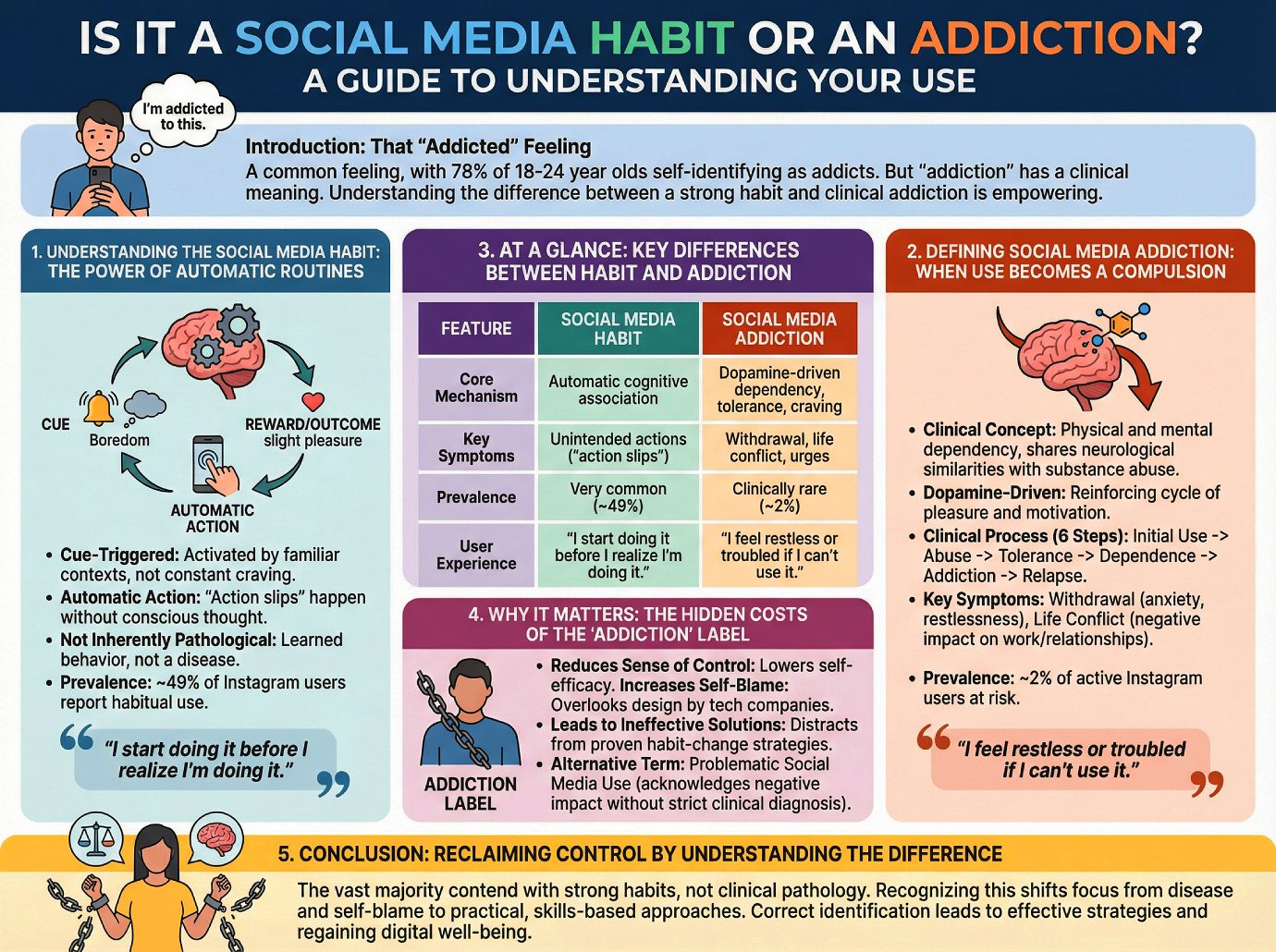
It’s a common feeling. You find yourself scrolling through a feed when you meant to do something else, and you think, “I’m addicted to this.” You’re not alone. It’s a feeling so common that studies show a staggering number of users self-identify as addicts—a figure that climbs to an overwhelming 78% for those aged 18-24.
While this feeling is valid, the word “addiction” has a specific clinical meaning. The purpose of this guide is to explain the crucial difference between a strong social media habit and a clinical social media addiction. Understanding this distinction is an empowering first step. It can help you see your own behavior more clearly and regain a sense of control over your digital life in a more effective and less judgmental way.
1. Understanding the Social Media Habit: The Power of Automatic Routines
A social media habit is best understood as an automatic routine. In psychological terms, habits are cognitive associations that form between cues in your environment and your responses to them. Through repetition, this connection becomes so strong that the action happens automatically, often without conscious thought.
The key components of a habit include:
• Cue-Triggered: Habits aren’t driven by a constant craving but are activated automatically by familiar contexts or triggers. This could be a notification ping, a moment of boredom, or feeling awkward in a social situation.
• Automatic Action: Once the habit forms, the behavior—like opening an app and scrolling—happens without you deliberately deciding to do it. Researchers call these “action slips,” where your actions don’t align with your conscious goals, like when you pick up your phone to check the weather and find yourself on Instagram ten minutes later.
• Not Inherently Pathological: While a strong social media habit can have unwanted consequences like wasted time or procrastination, it is not considered a clinical pathology. It’s a learned behavior, not a disease.
A significant portion of what feels like an “addiction” is actually a deeply ingrained habit. In fact, research shows that about 49% of Instagram users identify their use as habitual, recognizing that they often start using the app “before they realize they’re doing it.”
Understanding your social media use as a habit is the first step, but it’s also important to recognize when it crosses the line into something more serious.
2. Defining Social Media Addiction: When Use Becomes a Compulsion
In contrast to a habit, social media addiction is a clinical concept defined as a physical and mental dependency on an activity. It is considered a behavioral addiction that shares neurological similarities with substance abuse.
Social media platforms are designed to trigger the release of dopamine—the “reward” chemical—in the brain. This creates a reinforcing cycle: you get a notification or a “like,” you feel a small sense of pleasure, and you’re motivated to repeat the behavior. Over time, this can lead to a process that mirrors substance dependency.
One research paper, citing the American Addiction Centers, outlines the clinical process of addiction in six consecutive steps:
1. Initial Use
2. Abuse
3. Tolerance (requiring more of the activity to achieve the same effect)
4. Dependence
5. Addiction
6. Relapse
The key symptoms that distinguish a clinical addiction from a strong habit are the presence of true psychophysiological dependence. This includes experiencing:
• Withdrawal: Feeling restless, troubled, or anxious when you are prohibited from using social media.
• Life Conflict: When social media use has a clear, negative impact on your job, studies, or real-world relationships.
Now, let’s place these two concepts side-by-side for a clearer comparison.
3. At a Glance: Key Differences Between Habit and Addiction
This table breaks down the core distinctions between a social media habit and a clinical addiction, based on scientific research.
| Feature | Social Media Habit | Social Media Addiction |
|---|---|---|
| Core Mechanism | An automatic cognitive association between a cue (e.g., boredom) and a response (e.g., opening an app). | A dopamine-driven dependency characterized by tolerance, craving, and impaired control, similar to substance abuse. |
| Key Symptoms | Unintended actions (“action slips”), automatic behaviors performed without conscious thought. | Withdrawal (anxiety when unable to use), life conflict (negative impact on work/school), and urges/cravings. |
| Prevalence | Very common. Research indicates approximately 49% of Instagram users report their use is habitual. | Clinically rare. Research on Instagram users suggests only about 2% of active users are at risk for addiction based on clinical criteria. |
| User Experience | “I start doing it before I realize I’m doing it.” | “I feel restless or troubled if I can’t use it.” |
4. Why It Matters: The Hidden Costs of the ‘Addiction’ Label
While the term “addiction” is used casually in popular media to describe heavy social media use, misapplying it to what is actually a habit can be counterproductive and even harmful. Framing frequent use as an addiction can have several negative consequences:
• It Reduces Your Sense of Control: Studies show that when people are told their overuse is an “addiction,” their perceived ability to control their behavior—known as self-efficacy—goes down. The label can make the problem feel bigger and more insurmountable than it is.
• It Increases Self-Blame: The addiction label is associated with users blaming themselves more for their overuse. This is ironic, as it overlooks the fact that these apps are intentionally designed by tech companies to be habit-forming.
• It Can Lead to Ineffective Solutions: Believing you have an addiction might lead you to think that breaking the cycle requires immense willpower alone. But strong habits are notoriously difficult to control with willpower. The “addiction” narrative can distract from proven habit-change strategies, such as removing triggers (like turning off notifications) or creating friction (like moving apps off your home screen).
To describe heavy, impairing use that may not meet the strict criteria for clinical addiction, researchers often use the term Problematic Social Media Use. This phrase is preferred in clinical and research settings because it acknowledges the negative, life-impairing aspects of overuse without applying the strict, and often inaccurate, clinical diagnosis of addiction.
By understanding the real mechanism at play, you can adopt strategies that are more likely to succeed.
5. Conclusion: Reclaiming Control by Understanding the Difference
The evidence is clear: the vast majority of people who feel “addicted” to social media are actually contending with strong, deeply ingrained habits.
This distinction isn’t just academic; it’s the key to reclaiming your agency.
Recognizing that your excessive use is largely habitual—not a clinical pathology—provides a clear and manageable path toward regaining control. It shifts the focus away from a narrative of disease and self-blame toward a practical, skills-based approach. Correctly identifying the behavior allows you to adopt more effective strategies, feel less shame, and build the confidence needed to manage your digital well-being and align your actions with your true goals.
———————-
Taming the Scroll: How to Build Healthier Social Media Habits
Taming the Scroll: How to Build Healthier Social Media Habits
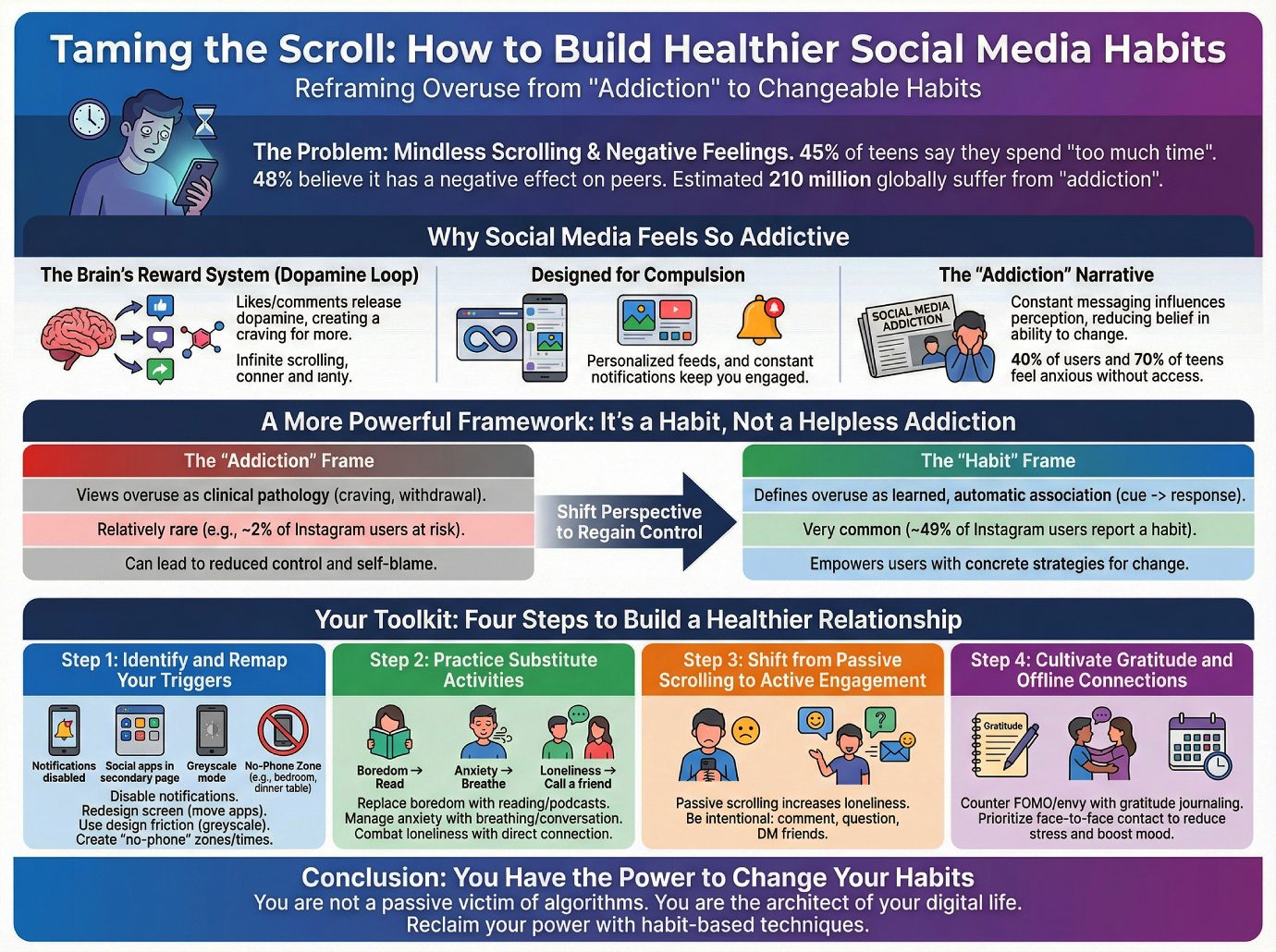
It starts with a quick check, but before you know it, an hour has vanished. You look up from your phone feeling dazed, depleted, and maybe even a little guilty. If you’ve felt stuck in this “mindless scroll,” you are not alone, and it’s not a personal failing. Recent data shows that 45% of teens now say they spend “too much time” on social media, and this unease is part of a growing collective awareness. The number of teens who believe social media has a negative effect on their peers has jumped from 32% to 48% in just two years. Globally, an estimated 210 million people are thought to suffer from social media addiction.
When our use feels out of control, it’s easy to label it an “addiction.” But this article introduces a more effective and empowering perspective: reframing your social media overuse as a series of powerful but ultimately changeable habits. By understanding the psychology behind your scrolling, you can adopt proven, practical strategies to regain control and build a healthier relationship with your digital life.
Why Social Media Feels So Addictive
Social media platforms are not neutral tools; they are sophisticated environments engineered to capture and hold your attention. Several powerful factors work together to make them feel so compelling and, at times, uncontrollable.
• The Brain’s Reward System: When you receive a like, a positive comment, or a share, your brain releases dopamine—the same “reward” chemical associated with pleasurable activities. This creates a powerful feedback loop. The more you are rewarded with this small hit of dopamine, the more time you want to spend on the platforms, creating a cycle of psychological craving.
• Designed for Compulsion: App developers intentionally build features to keep you engaged. Infinite scrolling removes natural stopping points, making it easy to keep going without a second thought. Personalized feeds use algorithms to show you exactly what will hold your interest, and frequent notifications constantly pull your attention back to the app.
• The “Addiction” Narrative: Popular media frequently describes heavy social media use as an “addiction.” This constant messaging influences how we perceive our own behavior. When authoritative sources use this language, we are more likely to adopt it ourselves, even if our usage doesn’t meet clinical criteria.
This cycle is often associated with negative feelings. Studies show that 40% of users and 70% of teens report feeling anxious when they can’t access their social media profiles. This feeling of helplessness is precisely why the “addiction” label is so problematic. Groundbreaking research offers a more empowering framework: what if most of this behavior isn’t a clinical addiction, but a powerful, re-engineerable habit?
A More Powerful Framework: It’s a Habit, Not a Helpless Addiction
Recent research from Ian A. Anderson and Wendy Wood argues that most of what we call “social media addiction” is more accurately described as a set of deeply ingrained habits. Habits are learned, automatic associations between a cue (like feeling bored) and a response (opening an app). This distinction is the key to regaining control.
The very act of labeling your overuse as an “addiction,” while well-intentioned, can be harmful. Studies show that this narrative has been proven to reduce a person’s belief in their ability to change (self-efficacy), creating a self-fulfilling prophecy of helplessness. By contrast, understanding overuse as a habit provides a clear and actionable roadmap for change.
The table below contrasts these two powerful frames:
| The “Addiction” Frame | The “Habit” Frame |
|---|---|
| Views overuse as a clinical pathology with symptoms like craving and withdrawal. | Defines overuse as a learned, automatic association between a cue (like boredom) and a response (like opening an app). |
| Is relatively rare; one study found only 2% of active Instagram users were at risk for clinical addiction based on a multi-symptom scale (the BIAS). | Is very common; the same study found about half (49%) of users reported having a habit of using Instagram. |
| Can lead to reduced feelings of control and increased self-blame, harming your belief in your ability to change. | Empowers users by providing concrete, proven strategies for changing behavior. |
Thinking of your mindless scrolling as a habit doesn’t minimize its impact, but it does make the problem solvable. With the right toolkit, you can deconstruct these automatic behaviors and build new, more intentional ones in their place.
Your Toolkit: Four Steps to Build a Healthier Relationship with Social Media
Regaining control over your social media use is not about sheer willpower; it’s about smart strategy. The following four steps are based on the science of habit change and can help you create a more balanced and intentional digital life.
Step 1: Identify and Remap Your Triggers
Habits are not conscious choices; they are automatic responses to environmental triggers. Because of this, the most effective way to break an unhealthy habit is to make its triggers less obvious or harder to act on.
• Disable notifications: The constant buzzing and beeping of your phone is a powerful trigger designed to pull you back in. Turn off all non-essential notifications to regain control of your time and focus.
• Redesign your phone screen: Move your social media apps off your home screen and into a folder on a secondary screen. This simple act of adding an extra step can disrupt the automatic “boredom-to-open” habit.
• Use design friction: Make your screen less appealing. Switching your phone to greyscale mode removes the stimulating, brightly colored icons and makes scrolling less visually rewarding.
• Create “no-phone” zones and times: Designate specific times or places where phones are off-limits. This could include mealtimes, the first hour after you wake up, or keeping your phone out of the bedroom to protect your sleep.
Step 2: Practice Substitute Activities
What is your primary trigger? Is it boredom? Loneliness? Procrastination? Once you identify the feeling that sends you scrolling, you can plan a healthier response. This powerful technique, drawn from clinical psychology and known as “habit reversal training,” involves consciously replacing an unwanted automatic behavior with a new, more beneficial one.
• When you feel bored, try reading a book or listening to a podcast instead.
• When you feel anxious in a social situation, try taking a few deep breaths or striking up a small conversation with someone nearby instead. This directly counters the feeling of being overwhelmed by drama that 39% of teens report.
• When you feel lonely, try calling or messaging a friend to make plans to see them in person instead.
Step 3: Shift from Passive Scrolling to Active Engagement
Research suggests that how you use social media matters just as much as how often. Passively scrolling—simply viewing images and reading posts without interacting—is more likely to increase feelings of loneliness and dissatisfaction. The key is to shift from being a passive consumer to an active participant.
When you catch yourself aimlessly scrolling, make a deliberate choice to engage: ask a question, share a thoughtful comment, or send a direct message to a friend. When you do choose to use social media, be intentional and active.
Step 4: Cultivate Gratitude and Offline Connections
Social media often triggers feelings of envy and the “fear of missing out” (FOMO), which can be especially potent when you’re feeling down. In fact, 27% of teens report that social media makes them feel “worse about their own life.” These final strategies help counter those negative emotions by focusing your attention on your real life.
• Focus on what you have: Counter the urge to compare by actively appreciating your own life. Practices like keeping a gratitude journal can help you focus on the positive aspects of your world, rather than the curated highlight reels you see online.
• Prioritize face-to-face contact: Humans are wired for in-person connection. Nothing reduces stress and boosts your mood more effectively than eye-to-eye contact with someone who cares about you. Make it a priority to schedule regular offline time with friends and family.
Conclusion: You Have the Power to Change Your Habits
Feeling like you spend too much time on social media is a common struggle, but it is not an unconquerable one. By shifting your perspective—seeing your overuse as a series of powerful habits rather than a helpless addiction—you reclaim your power to change. The most effective path forward lies in disrupting the environmental triggers that launch you into a scroll and consciously choosing substitute activities that better serve your well-being.
You are not a passive victim of algorithms. You are the architect of your digital life. With these practical, habit-based techniques, you have the power to tame the scroll and build a healthier, more intentional, and more fulfilling relationship with technology.
A Policy Proposal to Mitigate the Negative Impacts of Social Media and Reframe the Public Narrative on Problematic Use
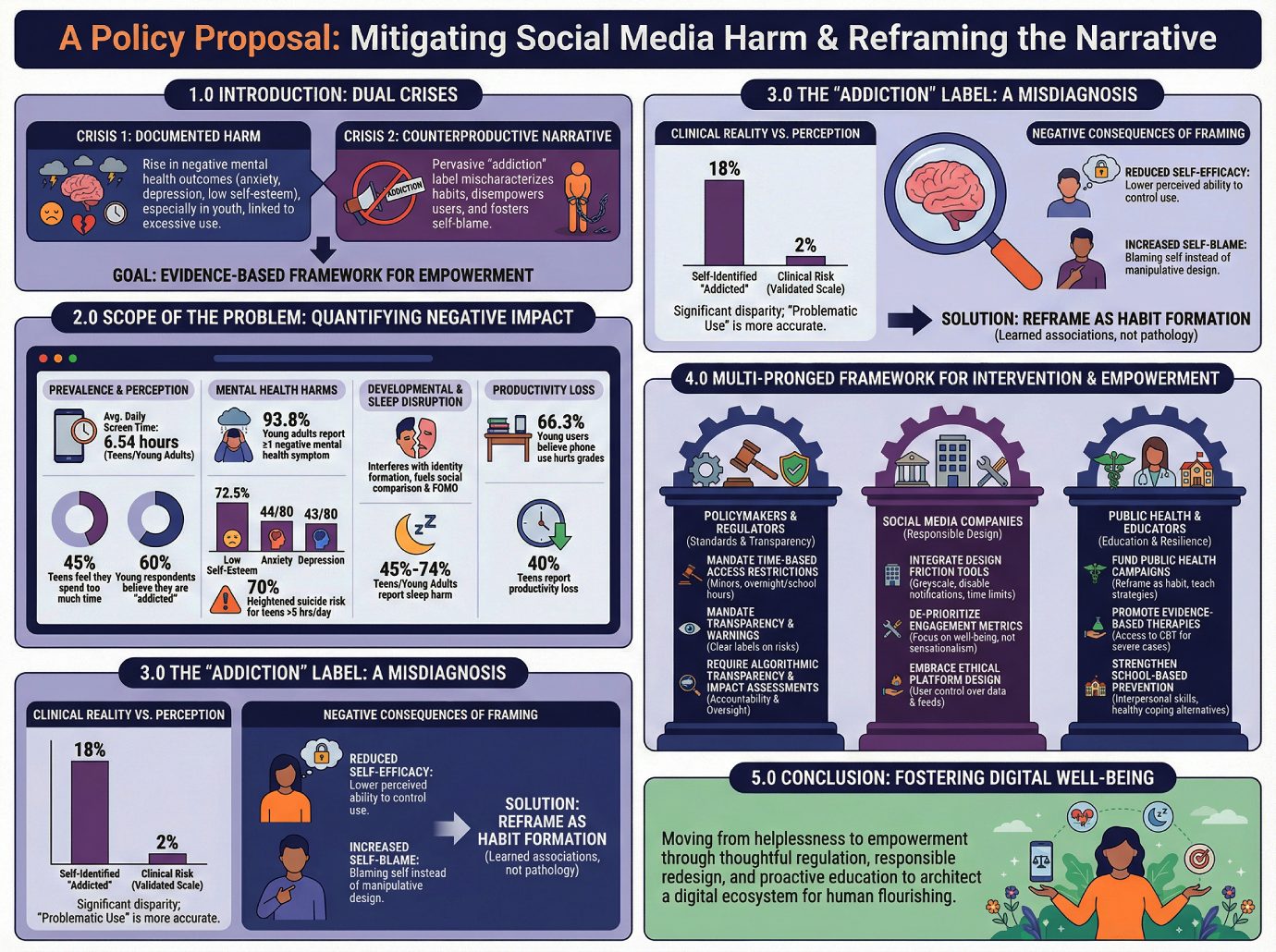
A Policy Proposal to Mitigate the Negative Impacts of Social Media and Reframe the Public Narrative on Problematic Use
1.0 Introduction: Addressing the Dual Crises of Social Media Harm and a Counterproductive Narrative
Social media is a ubiquitous feature of modern life, woven into the daily routines of billions of people worldwide. While these platforms offer undeniable benefits for connection, community, and information sharing, their current design and the public discourse surrounding their use present a dual crisis. The first is a well-documented rise in negative mental health outcomes, particularly among youth, linked to excessive platform engagement. The second is a pervasive yet counterproductive public narrative centered on “addiction,” a term that often mischaracterizes the underlying psychological mechanisms of overuse and disempowers the very users it purports to describe. This proposal presents an evidence-based framework to address both the technological and narrative dimensions of this challenge, offering concrete recommendations for policymakers, technology companies, and public health officials. To build a robust policy response, we must first establish the empirical foundation of these harms before deconstructing the flawed narrative used to describe them.
2.0 The Scope of the Problem: Quantifying the Negative Impact on Users
Effective public policy must be grounded in a clear-eyed assessment of empirical data. Acknowledging the profound integration of social media into the lives of young people, this section synthesizes key findings from multiple studies to establish the prevalence of problematic use and its specific, detrimental effects on the well-being of teens and young adults. The data reveal not only high levels of engagement but also a widespread user perception that this engagement is often excessive and harmful.
2.1 Prevalence and User Perception of Problematic Use
Quantitative analysis reveals that social media use consumes a significant portion of young people’s daily lives, with a substantial number of users reporting a feeling of dependency and a desire to reduce their screen time.
| Statistic | Finding |
|---|---|
| Average Daily Screen Time | Teens and young adults spend an average of 6.54 hours per day on their phones, with social media apps frequently ranking as their most-used applications (Gashaj). |
| User Self-Perception | 45% of teens believe they spend too much time on social media (Pew Research Center). |
| Self-Reported Phone Addiction | 60% of young respondents believe they are addicted to their phone (Gashaj). |
| Global Addiction Estimates | An estimated 210 million individuals suffer from social media addiction worldwide (“Social Media Addiction Statistics Worldwide”). |
| Disconnection Anxiety | 70% of teens report feeling anxious when they are disconnected from social media (“Social Media Addiction Statistics Worldwide”). |
2.2 Documented Harms to Mental Health and Well-being
Beyond user perceptions, research has consistently linked high levels of social media engagement with a range of negative outcomes affecting mental health, social development, sleep, and productivity.
• Mental Health Impacts A study of young adults found that 93.8% of respondents experienced at least one negative mental health symptom related to their social media use. Among these, 72.5% reported low self-esteem, while a detailed analysis of responses shows 44 of the 80 participants cited anxiety and 43 cited depression (Gashaj). Furthermore, teens who spend more than five hours a day on these platforms face a 70% heightened risk of contemplating suicide (“Social Media Addiction Statistics Worldwide”).
• Psychosocial Development Excessive social media use can interfere with critical developmental stages. Constant exposure to curated online personas can make it difficult for teens to form a stable identity, a key task in Erikson’s theory of psychosocial development (Gashaj). This is exacerbated by phenomena like social comparison, which fuels feelings of inadequacy, and the “Fear of Missing Out” (FOMO), which can trigger anxiety and compel users to constantly check their devices (HelpGuide).
• Sleep Disruption The link between social media use and poor sleep is well-documented, with studies showing that anywhere from 45% (Pew Research Center) to a staggering 74% (Gashaj) of teens and young adults report that platform engagement directly harms their sleep.
• Academic and Personal Productivity The distracting nature of social media has a tangible impact on performance in other areas of life. A majority of young users (66.3%) believe their phone usage negatively affects their grades (Gashaj). Similarly, 40% of teens report that social media platforms hurt their productivity (Pew Research Center).
Having documented the scale and nature of these harms, it is now crucial to critically examine the language commonly used to describe them.
3.0 The “Addiction” Label: A Costly and Counterproductive Misdiagnosis
Effective policy requires a precise definition of the problem it seeks to solve. While the term “addiction” is commonly used in public and media discourse to describe excessive social media use, a growing body of research indicates that this label is not only often clinically inaccurate but also actively harmful. It undermines the very goal of empowering users to regain control by fostering a sense of powerlessness and self-blame.
3.1 Discrepancy Between Clinical Risk and Public Perception
There is a significant disparity between the clinical prevalence of social media addiction and users’ self-perception. In a representative study of Instagram users, researchers found that while 18% of users self-identified as at least somewhat addicted, only 2% scored in a range indicating they were at risk of potential addiction based on a validated diagnostic scale (Anderson & Wood). This nine-fold difference between clinical reality and public perception is not accidental; it is a direct consequence of a pervasive and medically imprecise public narrative that conflates frequent use with clinical addiction. In academic circles, researchers often prefer the term “problematic social media use” precisely because this behavior has not been formally categorized as a clinical disorder (Pellegrino et al.).
3.2 The Negative Consequences of the Addiction Frame
The misapplication of the “addiction” label is not merely a semantic issue; it has tangible, negative consequences. An experimental study demonstrated a causal link between framing overuse as an addiction and a decline in users’ sense of agency. Specifically, this framing leads to:
• Reduced Self-Efficacy: Users exposed to the addiction narrative reported a lower perceived ability to control their own social media use.
• Increased Self-Blame: The addiction frame caused users to blame themselves more for their overuse, despite the fact that platforms are intentionally designed to maximize engagement.
By pathologizing a common behavior, the addiction narrative inadvertently disempowers users, making it harder for them to implement effective changes.
3.3 Reframing Overuse as Habit Formation
For the vast majority of users, frequent social media engagement is more accurately understood as a habit—a learned, automatic cognitive association between a contextual cue and a behavioral response (Anderson & Wood). For example, the cue of boredom or a spare moment in line becomes automatically associated with the response of opening a social media app.
This distinction is critical for policy and intervention. Viewing overuse as a habit, rather than a clinical addiction, shifts the focus away from treating a pathology and toward implementing proven, evidence-based habit-change strategies. It reframes the user not as a patient suffering from a disorder, but as an individual who can actively learn to reshape their digital behaviors.
This more accurate understanding of the problem allows us to propose a concrete policy framework aimed at both mitigating harm and empowering users.
4.0 A Multi-Pronged Framework for Intervention and Empowerment
A successful strategy to mitigate the harms of problematic social media use cannot rely on a single solution. It requires a coordinated effort involving policymakers, technology companies, and public health institutions. This framework is grounded in the understanding of problematic use as a largely habit-driven behavior and aims to create an environment where users are better informed, equipped, and empowered to cultivate healthier digital habits.
4.1 Recommendations for Policymakers and Regulators
Governments must legislate clear standards to establish a safer and more transparent digital ecosystem, shifting the burden of safety from the individual user to the platform architect.
1. Mandate Time-Based Access Restrictions for Minors: Implement regulations that limit platform access for minors during overnight hours or school hours. This creates structural support for healthy boundaries and protects critical periods for sleep and learning.
2. Mandate Transparency and Warnings: Require social media companies to place clear, visible warning labels on their platforms—similar to those on other products with known risks—informing users of the potential for problematic use and its documented impact on mental health.
3. Require Algorithmic Transparency and Impact Assessments: Enact policies that mandate transparency into the design of engagement-based ranking algorithms. Such regulations must include requirements for regular impact assessments and establish clear lines of regulatory oversight to ensure public accountability and compliance.
4.2 Recommendations for Social Media Companies
Platforms shall be required to move beyond a singular focus on maximizing engagement and take direct responsibility for user well-being by fundamentally redesigning their products.
• Mandate the Integration of Design Friction Tools: Platforms must proactively build in and prominently feature tools that create “design friction” to disrupt automatic, habitual use. This includes offering simple, one-click options to enable greyscale mode, disable all non-essential notifications, or set strict, enforceable time limits.
• De-Prioritize Engagement Metrics in Favor of Well-being Outcomes: Shift algorithmic priorities away from models that disproportionately amplify sensational, emotionally charged, or otherwise habit-forming content. Platforms must be re-engineered to prioritize content that contributes to genuine connection and user well-being.
• Embrace Ethical Platform Design: Commit to a design philosophy that prioritizes user well-being over maximal data extraction and engagement. This includes providing users with more meaningful control over their data, content feeds, and online experience.
4.3 Recommendations for Public Health Officials and Educators
Public institutions are essential for reshaping the public narrative, providing direct support to individuals, and building resilience at the community level.
1. Fund Public Health Campaigns to Reframe Problematic Use as Habit: Develop and fund educational campaigns that clarify the distinction between habit and addiction. These initiatives must empower users with practical, evidence-based strategies for habit change, directly countering the disempowering addiction narrative.
2. Promote Evidence-Based Therapies: For the small percentage of individuals who experience severe, clinically significant problematic use, endorse and improve access to effective treatments like Cognitive Behavioral Therapy (CBT), which helps individuals identify and change the thought patterns that drive compulsive behaviors.
3. Strengthen School-Based Prevention: Implement school programs that build resilience and provide healthy alternatives to excessive online engagement. Curricula should focus on fostering strong interpersonal communication skills, creating opportunities for face-to-face relationships, and educating students on healthy coping mechanisms for stress and boredom.
These coordinated actions provide a clear path toward a healthier digital future, culminating in a vision of digital well-being.
5.0 Conclusion: Fostering Digital Well-being Through Evidence-Based Policy
The documented harms associated with excessive social media use are significant and demand a robust policy response. However, this proposal argues that the prevailing “addiction” narrative, while well-intentioned, inadvertently exacerbates the problem by misdiagnosing its root cause and reducing user agency. The evidence strongly suggests that for most people, problematic use is a matter of deeply ingrained habit, not clinical pathology. By acknowledging this, we can move from a discourse of helplessness to one of empowerment.
The proposed three-pronged framework—thoughtful regulation, responsible platform redesign, and proactive public education—offers a synergistic and evidence-based path forward. This approach works to mitigate the environmental triggers and manipulative designs that foster unhealthy habits while simultaneously equipping users with the knowledge and tools to regain control over their digital lives. By adopting this comprehensive strategy, we have the opportunity to move beyond mitigating harm and begin architecting a digital ecosystem that, by design, fosters human flourishing.
——————————–
A Formal Literature Review on Social Media Addiction and Problematic Use
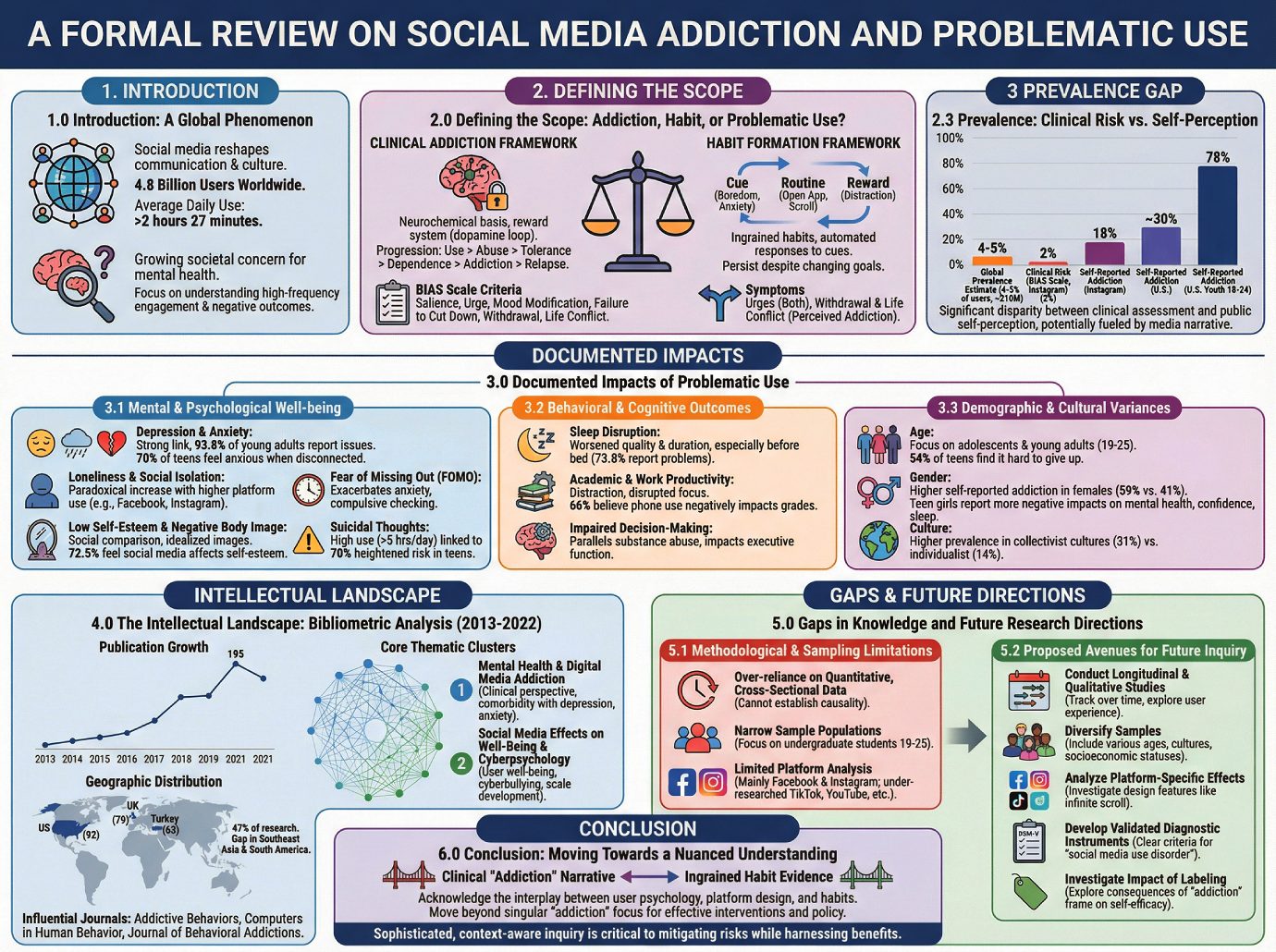
A Formal Literature Review on Social Media Addiction and Problematic Use
1.0 Introduction
Social media has become a globally ubiquitous force, fundamentally reshaping communication, community, and culture. With an estimated 4.8 billion users worldwide spending an average of over two hours and twenty-seven minutes on these platforms daily, the scale of this phenomenon is unprecedented. This deep integration into daily life has prompted growing societal concern regarding its impact on mental health and well-being. Researchers, clinicians, and policymakers are increasingly focused on understanding the nature of high-frequency engagement and its potential for negative outcomes.
The purpose of this literature review is to synthesize the current state of research on social media addiction and what is more broadly termed “problematic use.” By examining key research trends, dominant theoretical frameworks, documented impacts, and the intellectual structure of the field, this review provides a comprehensive overview of our current understanding. It seeks to clarify the central debates, highlight consistent findings, and identify critical gaps in the literature. The analysis begins by addressing the primary conceptual challenge that frames the entire discourse: defining the core problem.
2.0 Defining the Scope: Addiction, Habit, or Problematic Use?
A central conceptual challenge within the literature is the distinction between clinical addiction, ingrained habit, and the broader, less pathologizing term “problematic use.” This distinction is not merely semantic; it is critical because it shapes research questions, diagnostic criteria, public discourse, and the design of potential interventions. How the behavior is framed—as a clinical disorder akin to substance abuse or as a powerful but malleable learned behavior—has profound implications for both individuals and public health policy.
2.1 The Clinical Addiction Framework
The clinical addiction model applies criteria traditionally used for substance use disorders to social media behavior. This framework draws direct parallels, often describing a progression through six consecutive steps: initial use, abuse, tolerance, dependence, addiction, and relapse. This perspective posits that excessive social media use is not just a bad habit but a genuine behavioral addiction with a neurochemical basis.
At the core of this model is the brain’s reward system. The release of dopamine—a neurotransmitter associated with pleasure and reward—is triggered by social validation signals such as likes, shares, and notifications. This creates a reinforcing loop that can lead to psychological cravings and a compulsive need to engage with the platforms. Research utilizing this framework often employs tools like the Bergen Social Media Addiction Scale (BIAS), which assesses a multicomponent syndrome with six core components:
• Salience: Spending a lot of time thinking about or planning the use of social media.
• Urge: Feeling an urge to use social media more and more.
• Mood modification: Using social media to forget about personal problems.
• Failure to cut down on use: Trying to reduce use without success.
• Withdrawal: Becoming restless or troubled if prohibited from using social media.
• Life conflict: Using social media so much that it negatively impacts one’s job or studies.
2.2 The Habit Formation Framework
In contrast, the habit formation framework proposes that for the majority of users, excessive engagement is driven by deeply ingrained habits rather than a clinical pathology. Habits are defined as cognitive associations between context cues and automated responses that develop through repetition. For example, feelings of boredom, social anxiety, or simply picking up a phone can act as cues that automatically trigger the response of opening an app and scrolling.
Proponents of this view argue that these automated behaviors can persist even when a user’s goals change (e.g., intending to be more productive), which explains why many find it difficult to reduce their usage. This framework distinguishes between the components of addiction and habit. Critical analysis reveals that while symptoms like withdrawal and life conflict are uniquely related to a user’s perception of being addicted, symptoms like urges can be associated with both the compulsions of addiction and the automaticity of a strong habit.
2.3 Prevalence: Clinical Risk vs. Self-Perception
The tension between the clinical and habitual frameworks is starkly illustrated by the significant disparity between prevalence rates derived from clinical symptom scales versus those derived from direct self-report. As documented in studies by Anderson & Wood and analyses of U.S. health statistics, a substantial portion of the population feels addicted, yet a much smaller fraction meets the symptomatic criteria for a potential clinical disorder.
| Metric | Finding from Research |
|---|---|
| Global Prevalence Estimate | An estimated 210 million people (4-5% of users) worldwide suffer from social media addiction. |
| Clinical Risk (BIAS Scale) | Only 2% of active Instagram users scored in the range of “potential addiction.” |
| Self-Reported Addiction | 18% of Instagram users agreed at least somewhat that they were addicted. |
| Self-Reported Addiction (U.S.) | About 30% of U.S. social media users self-identify as addicts. |
| Self-Reported Addiction (U.S. Youth) | The figure for self-identified addiction rises to 78% for Americans aged 18-24. |
This data reveals a significant gap between clinical assessment and public self-perception. Research suggests this disparity may be fueled by a pervasive media narrative. A content analysis of news articles found that the term “social media addiction” is far more common than “social media habit.” This popular discourse may drive users to over-attribute their habitual, hard-to-control behaviors to the more alarming label of addiction. This conceptual debate is crucial, as it leads directly to an examination of the tangible impacts observed in users’ lives.
3.0 Documented Impacts of Problematic Social Media Use
Understanding the multifaceted impacts of excessive social media use is of strategic importance for public health, education, and individual well-being. A growing body of research has identified strong correlations between problematic use and a range of negative outcomes across psychological, behavioral, and demographic lines.
3.1 Mental and Psychological Well-being
The most extensively documented area of impact relates to mental and psychological health. Studies consistently link high levels of social media engagement with adverse outcomes.
• Depression and Anxiety: The link between problematic social media use and mood disorders is well-established. In one study of teens and young adults, 93.8% of respondents reported experiencing one or more issues from a list that included depression, anxiety, low self-esteem, body image concerns, and sleeping problems. The connection to anxiety is particularly strong, with 70% of teens reporting they feel anxious when disconnected. Heavy users have also been found to have an increased risk for clinical depression.
• Loneliness and Social Isolation: In a paradoxical finding, higher usage of social platforms like Facebook and Instagram is often correlated with an increase, rather than a decrease, in feelings of loneliness. This is echoed in broader surveys, where about 67% of U.S. adults associate their social media use with feelings of isolation.
• Low Self-Esteem and Negative Body Image: The curated and often manipulated nature of content on social media fosters an environment of social comparison that can be detrimental to self-worth. In one study, 72.5% of individuals felt that social media affected their self-esteem. Constant exposure to idealized images can lead to feelings of inadequacy, envy, and body dissatisfaction.
• Fear of Missing Out (FOMO): Social media platforms are powerful engines for generating FOMO—the perception that others are living better, more fulfilling lives. This feeling exacerbates anxiety and fuels a compulsive cycle of checking for updates, which in turn deepens the sense of missing out.
• Suicidal Thoughts: The most alarming research points to a correlation between extreme social media use and suicidality. One statistic indicates that teenagers who spend more than five hours per day on social media platforms face a 70% heightened risk of contemplating suicide compared to their peers.
3.2 Behavioral and Cognitive Outcomes
Beyond psychological distress, problematic social media use is correlated with tangible behavioral and cognitive impairments.
Sleep Disruption Use of social media, particularly before bed, is strongly linked to worsened sleep quality and duration. In one study of teens and young adults, 73.8% of respondents reported experiencing sleeping problems, a finding echoed in a separate national survey where 45% of teens stated social media hurt the amount of sleep they get. The light from screens can interfere with natural sleep cycles, while the stimulating nature of the content can make it difficult to fall asleep.
Academic and Work Productivity The distracting nature of social media significantly impacts performance in academic and professional settings. Notifications and the urge to check feeds disrupt focus and deep work. This is reflected in user perceptions, with 66% of respondents in one study believing their phone usage negatively impacts their grades and 40% of teens in another study reporting that social media hurt their productivity.
Impaired Decision-Making Emerging research suggests that significant engagement with social media can adversely affect an individual’s capacity for sound, risk-aware decision-making. This cognitive impairment shows parallels to the effects observed in individuals with substance abuse disorders, a link strengthened by the underlying neurochemical mechanism. The same dopamine reward cycle that drives substance dependence is implicated in compulsive social media use, highlighting the potential for behavioral addictions to impact executive function.
3.3 Demographic and Cultural Variances
The prevalence and impact of social media addiction are not uniform across all populations. Research has identified key differences based on age, gender, and cultural context.
• Age:
◦ The vast majority of existing research has focused on adolescents and young adults, particularly undergraduate students between the ages of 19 and 25.
◦ This demographic is acutely vulnerable, with 54% of teenagers finding it hard to give up social media and 45% feeling that they spend too much time on it.
• Gender:
◦ A notable gender disparity exists in self-reported addiction, with 59% of females reporting feeling addicted compared to 41% of males.
◦ Teen girls are more likely than teen boys to report that social media hurts their mental health (25% vs. 14%), confidence (20% vs. 10%), and sleep (50% vs. 40%). This perception is shared by their parents, with parents of teen girls also more likely than parents of teen boys to express high levels of concern about youth mental health (61% vs. 49%).
• Culture:
◦ Cultural orientation appears to be a significant factor. The prevalence of social media addiction is reported to be significantly higher in collectivist cultures (31%) compared to individualist cultures (14%).
These documented impacts underscore the need to understand not only the user’s experience but also the structure of the research field investigating these phenomena.
4.0 The Intellectual Landscape of Social Media Research: A Bibliometric Analysis
Bibliometric analysis offers a quantitative method for mapping the evolution and structure of a scientific field. By analyzing publication data, citation networks, and keywords, it is possible to identify key trends, influential actors, and dominant research themes. This section synthesizes findings from a major bibliometric study of 501 articles published between 2013 and 2022 to map the intellectual landscape of research on social media addiction and problematic use.
4.1 Publication Growth and Geographic Distribution
Research in this area has experienced exponential growth, increasing from a handful of publications in 2013 to a peak of 195 in 2021. This rapid expansion reflects the growing recognition of the topic’s importance. Geographically, the research is highly concentrated. The United States (92 publications), the United Kingdom (79), and Turkey (63) collectively accounted for 47% of the total research output during the analyzed period. This concentration also highlights a significant gap: there is a relative underrepresentation of research from regions with high social media penetration, such as Southeast Asia and South America.
4.2 Influential Authors and Publication Venues
A small number of scholars have been highly influential in shaping the field, as measured by publication productivity and citation counts. The top three most influential authors identified are M.D. Griffiths, C.Y. Lin, and A.H. Pakpour. Their work frequently appears in a core set of academic journals that serve as the primary venues for research on this topic. The most prolific journals include:
• Addictive Behaviors
• Computers in Human Behavior
• Journal of Behavioral Addictions
4.3 Core Thematic Clusters and Keyword Analysis
Author co-citation analysis reveals the intellectual structure of the field, which is organized around two primary thematic clusters:
1. Mental Health and Digital Media Addiction: This cluster approaches the topic from a medical and clinical perspective. Research here treats digital media addiction as a mental health disorder and focuses on exploring its comorbidity with pathologies such as depression, anxiety, and obsessive-compulsive disorder.
2. Social Media Effects on Well-Being and Cyberpsychology: This cluster adopts a broader psychological and sociological lens. It focuses on user well-being, human-computer interaction, and specific negative behaviors like cyberbullying. A key focus within this cluster is the development and validation of scales to measure social media addiction.
A keyword co-occurrence analysis reinforces the dominance of these themes. The most frequent keywords appearing in the literature are “social media addiction,” “problematic social media use,” “internet addiction,” and “depression,” clearly outlining the central concerns of the research community. These findings provide a clear map of what has been studied, which in turn illuminates what has been overlooked.
5.0 Gaps in Knowledge and Future Research Directions
While the body of research on problematic social media use is growing rapidly, bibliometric and critical analyses reveal significant limitations and conceptual challenges. The current state of the literature, though valuable, is characterized by methodological and sampling constraints that limit the certainty and generalizability of its findings. This section outlines these gaps and proposes directions for a more robust and nuanced research agenda.
5.1 Methodological and Sampling Limitations
The primary weaknesses in the current body of literature can be categorized as follows:
1. Over-reliance on Quantitative, Cross-Sectional Data: The vast majority of studies are quantitative and cross-sectional, capturing data at a single point in time. While effective for identifying correlations, this approach cannot establish causality. This methodological dominance makes it difficult to distinguish between cause, effect, and co-occurring phenomena, leaving open the question of whether heavy social media use causes mental health issues or if individuals with pre-existing vulnerabilities are simply more drawn to these platforms.
2. Narrow Sample Populations: Research has disproportionately focused on specific, convenient samples—primarily undergraduate students between the ages of 19 and 25. This narrow focus severely limits the generalizability of findings to other critical demographics, such as younger adolescents whose brains are still developing, or older adults who may use social media for different reasons and experience different effects.
3. Limited Platform Analysis: Most research has concentrated on Facebook and Instagram. However, the social media ecosystem is diverse and constantly evolving. Other globally popular platforms with distinct features, algorithms, and user cultures—such as YouTube, WhatsApp, and TikTok—remain significantly under-researched.
5.2 Proposed Avenues for Future Inquiry
Addressing these limitations requires a clear and strategic direction for future research. Based on the identified gaps, the following avenues for inquiry are proposed:
• Conduct Longitudinal and Qualitative Studies: To move beyond correlation and understand causality, researchers must conduct longitudinal studies that track users over extended periods. Additionally, qualitative studies are needed to explore the subjective user experience—the “why” behind the behavior—which quantitative surveys often miss.
• Diversify Samples: Future research must include a wider range of age groups, cultural backgrounds, and socioeconomic statuses. It is particularly important to conduct studies in underrepresented geographical regions with high social media penetration, such as Southeast Asia and South America.
• Analyze Platform-Specific Effects: Researchers should investigate how the unique design features of different platforms—such as infinite scroll, “like” counts, ephemeral stories, and recommendation engines—contribute to habit formation and problematic use. A platform-agnostic approach is no longer sufficient.
• Develop Validated Diagnostic Instruments: There is a pressing need for clear, validated diagnostic criteria, potentially based on the DSM-V, for what could be termed a “social media use disorder.” Such instruments are crucial for distinguishing clinically significant pathological use from heavy habitual use, particularly given that current scales find only 2% of users meet the criteria for potential addiction, a figure vastly smaller than self-reports.
• Investigate the Impact of Labeling: Experimental findings show that framing frequent use as an “addiction” can reduce users’ self-efficacy and increase self-blame. Future research should explore the real-world consequences of this powerful media narrative on help-seeking behaviors, stigma, and the adoption of effective change strategies.
Pursuing these research directions will provide a more complete and actionable understanding of the complex relationship between social media and human well-being.
6.0 Conclusion and Implications
The body of research on social media’s impact is a rapidly expanding and critically important field, characterized by a central tension. On one hand, a dominant public and media narrative frames excessive use as a clinical “addiction.” On the other, the scientific evidence suggests that for the majority of users, this behavior is better understood as a deeply ingrained, cue-driven habit. This conceptual clash exists alongside a consistent and growing body of evidence documenting a strong association between problematic social media use and negative outcomes, particularly for mental health, sleep, and productivity.
This review has also underscored significant demographic nuances, with adolescents, young women, and individuals in collectivist cultures appearing to be at higher risk for negative effects. Yet the scientific foundation for our understanding remains constrained by key gaps in research—namely, an over-reliance on cross-sectional methods, narrow sample populations, and a limited focus on a few specific platforms.
Moving forward, it is essential to advance beyond a singular focus on “addiction” toward a more nuanced understanding of the interplay between user psychology, platform design, and ingrained habits. Acknowledging this complexity is the first step toward developing effective interventions for individuals, providing better guidance for parents and educators, and crafting evidence-based public policy. A sophisticated, context-aware inquiry is critical to harnessing the benefits of social media while mitigating its undeniable risks.