The Full Story of Thanksgiving – History, Myths, Traditions and the Truth Behind the Holiday.
Listen to the “Full Story of Thanksgiving” extensive podcast with the Chair Man and the Chair Lady” on any device, CLICK PLAY.
Thanksgiving is one of America’s most cherished holidays, bringing families together for turkey dinners, football games, parades, and expressions of gratitude. But the real history of Thanksgiving is far more complicated—and fascinating—than the familiar story of Pilgrims and Native Americans sharing a peaceful meal in 1621.
From early colonial harvest celebrations to presidential proclamations, political controversies, and modern traditions, Thanksgiving has evolved over more than four centuries into the national holiday Americans celebrate today.
The First Thanksgiving Wasn’t Really the First
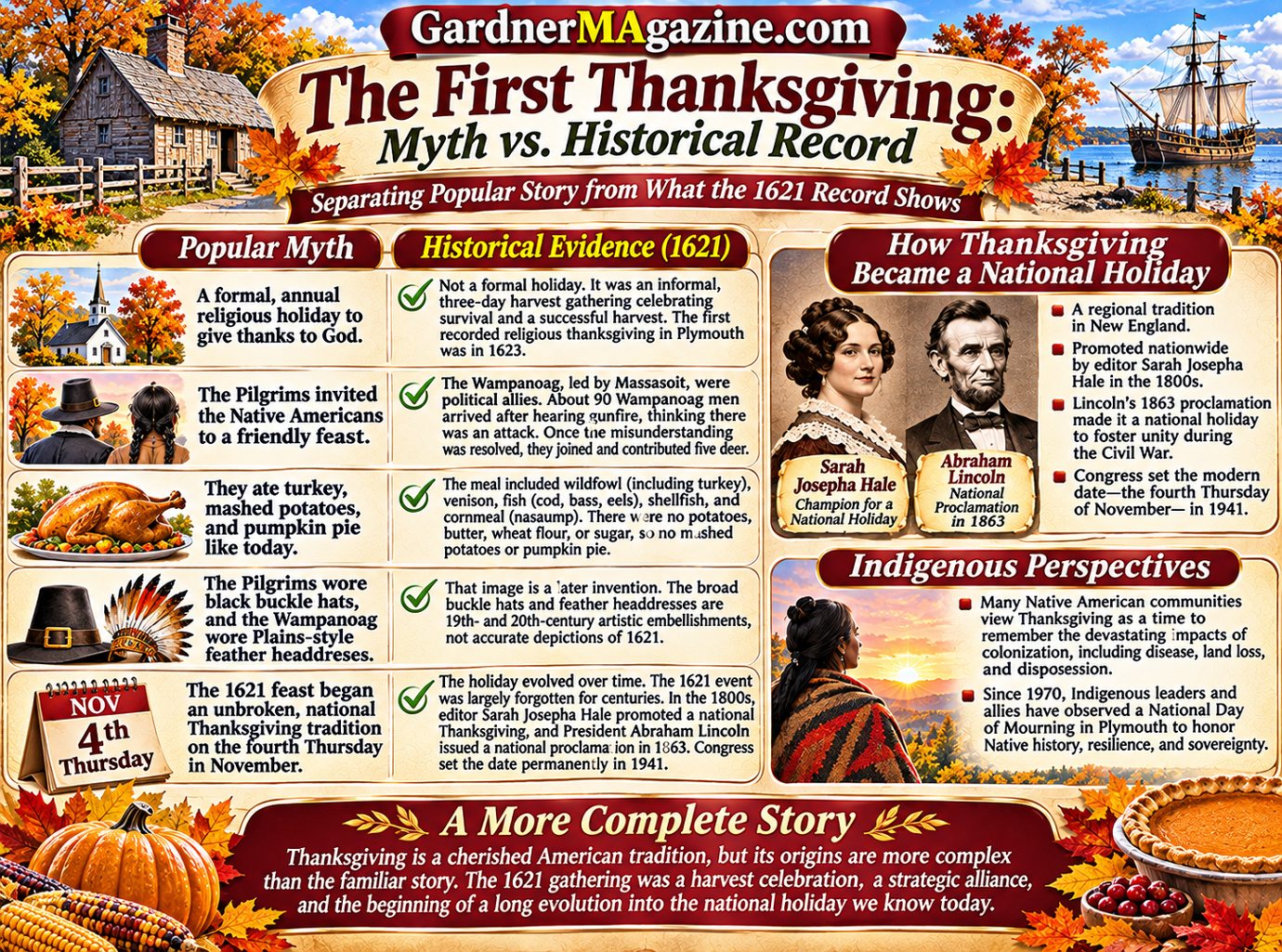
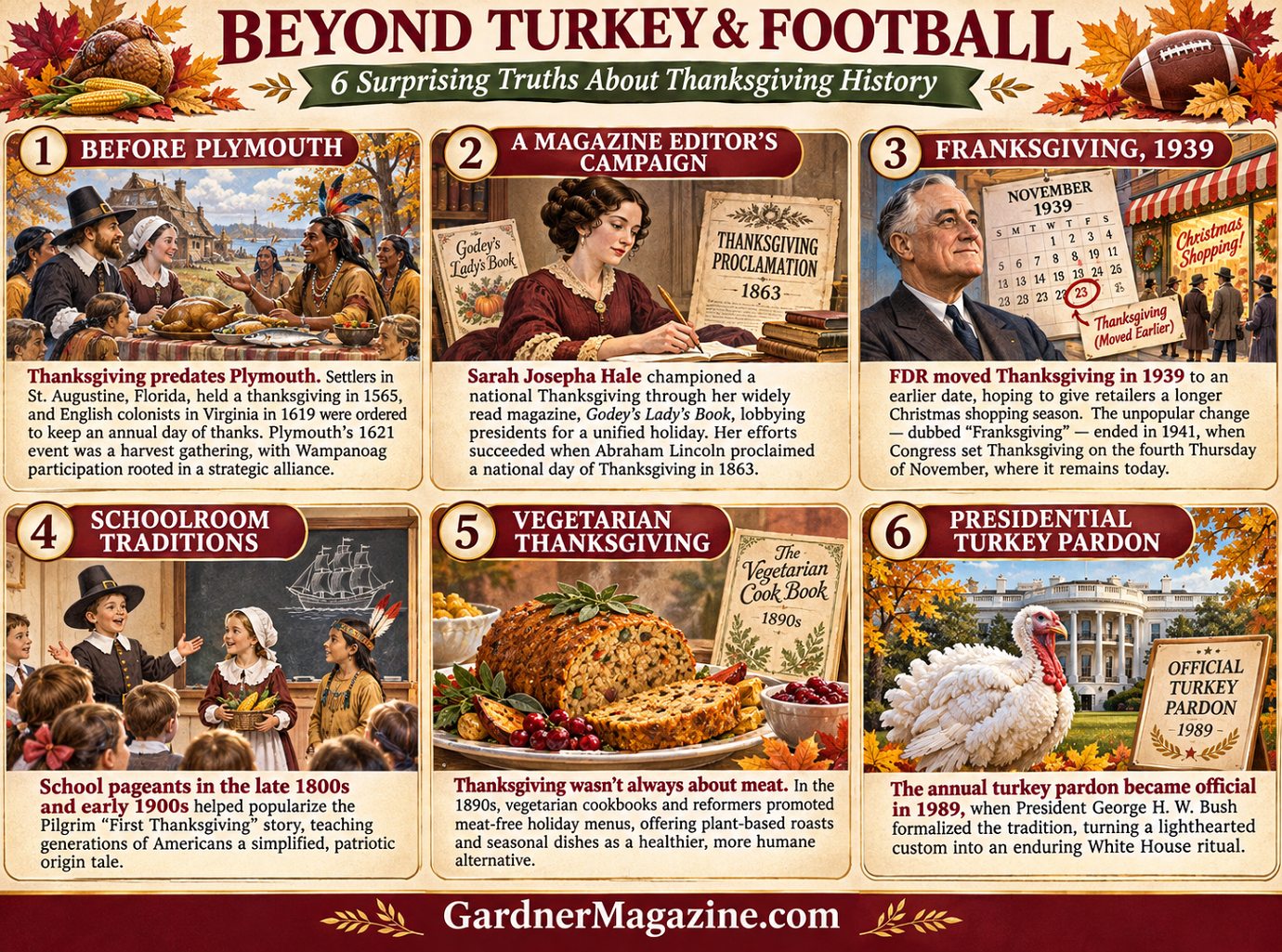
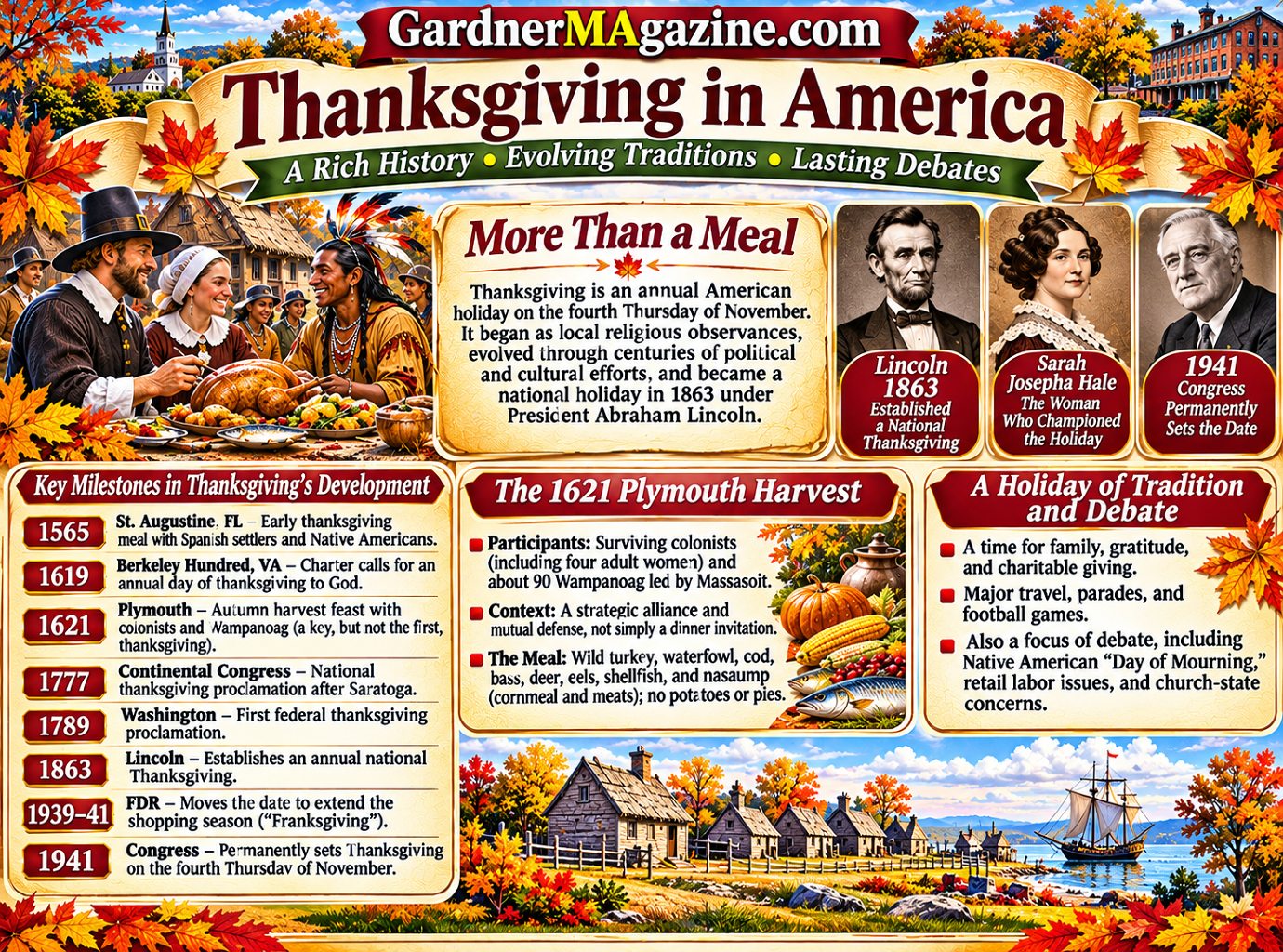
Although the 1621 Plymouth harvest celebration is commonly called the First Thanksgiving, earlier European thanksgiving observances occurred in St. Augustine, Florida, in 1565 and Berkeley Hundred, Virginia, in 1619. Native Americans had practiced their own traditions of gratitude and harvest celebrations long before European settlement. The famous Plymouth gathering was actually a three-day harvest celebration rather than a formal religious holiday. Approximately 90 Wampanoag men, led by Massasoit, joined surviving English colonists in festivities shaped by a strategic alliance between the two communities. The relationship was more complicated than the traditional story suggests. The Wampanoag had suffered devastating population losses from epidemics, while the colonists had endured a brutal winter that killed approximately half their population.
What Was Really on the Menu?
Forget mashed potatoes, pumpkin pie, and the familiar modern Thanksgiving dinner. Historical accounts describe a feast featuring wild fowl, venison, fish, shellfish, and corn-based dishes. The Wampanoag contributed five deer. Potatoes and traditional pumpkin pies were absent. Even the familiar images of Pilgrims wearing black clothing and large buckled hats are largely products of later artistic imagination.
How Thanksgiving Became a National Holiday
One of the most influential figures in Thanksgiving history was Sarah Josepha Hale, editor of Godey’s Lady’s Book. For decades, she campaigned for a national day of Thanksgiving, believing a shared celebration could help unite a divided country. Her efforts helped influence President Abraham Lincoln, who proclaimed a national Thanksgiving observance in 1863 during the Civil War. In 1939, President Franklin D. Roosevelt controversially moved Thanksgiving earlier to extend the Christmas shopping season. Critics nicknamed the change “Franksgiving.” Congress ultimately established Thanksgiving as the fourth Thursday of November in 1941, creating the permanent calendar tradition Americans follow today.
From Harvest Celebration to American Institution
Over time, Thanksgiving developed traditions extending far beyond the dinner table. The Macy’s Thanksgiving Day Parade began in 1924, professional football became a holiday fixture, and family travel turned Thanksgiving into one of America’s busiest travel periods. Other customs emerged, including presidential turkey pardons, which became an established annual White House tradition under President George H. W. Bush in 1989. Even vegetarian Thanksgiving celebrations have a surprisingly long history, with meatless holiday recipes appearing in the late 1800s.
The Native American Perspective
For many Native Americans, Thanksgiving carries a different historical meaning. Since 1970, Indigenous activists have observed a National Day of Mourning in Plymouth, Massachusetts, remembering the devastating consequences of colonization, including disease, warfare, and the loss of ancestral lands. Other Native American communities embrace the holiday as an opportunity to celebrate gratitude, family, and Indigenous cultural traditions. These perspectives remind Americans that the historical relationship between European settlers and Native peoples cannot be reduced to a single peaceful dinner.
A Holiday That Continues to Evolve
Thanksgiving today represents many things: gratitude, faith, family, generosity, community service, and the beginning of the holiday season. Its history also reveals how traditions are shaped by politics, economics, cultural change, and the desire for national unity. The real Thanksgiving story is not simply about a meal shared in 1621. It is about centuries of American history, the contributions and experiences of different peoples, and the continuing evolution of a national tradition.
Gardner Magazine Presents an In-Depth Thanksgiving Podcast
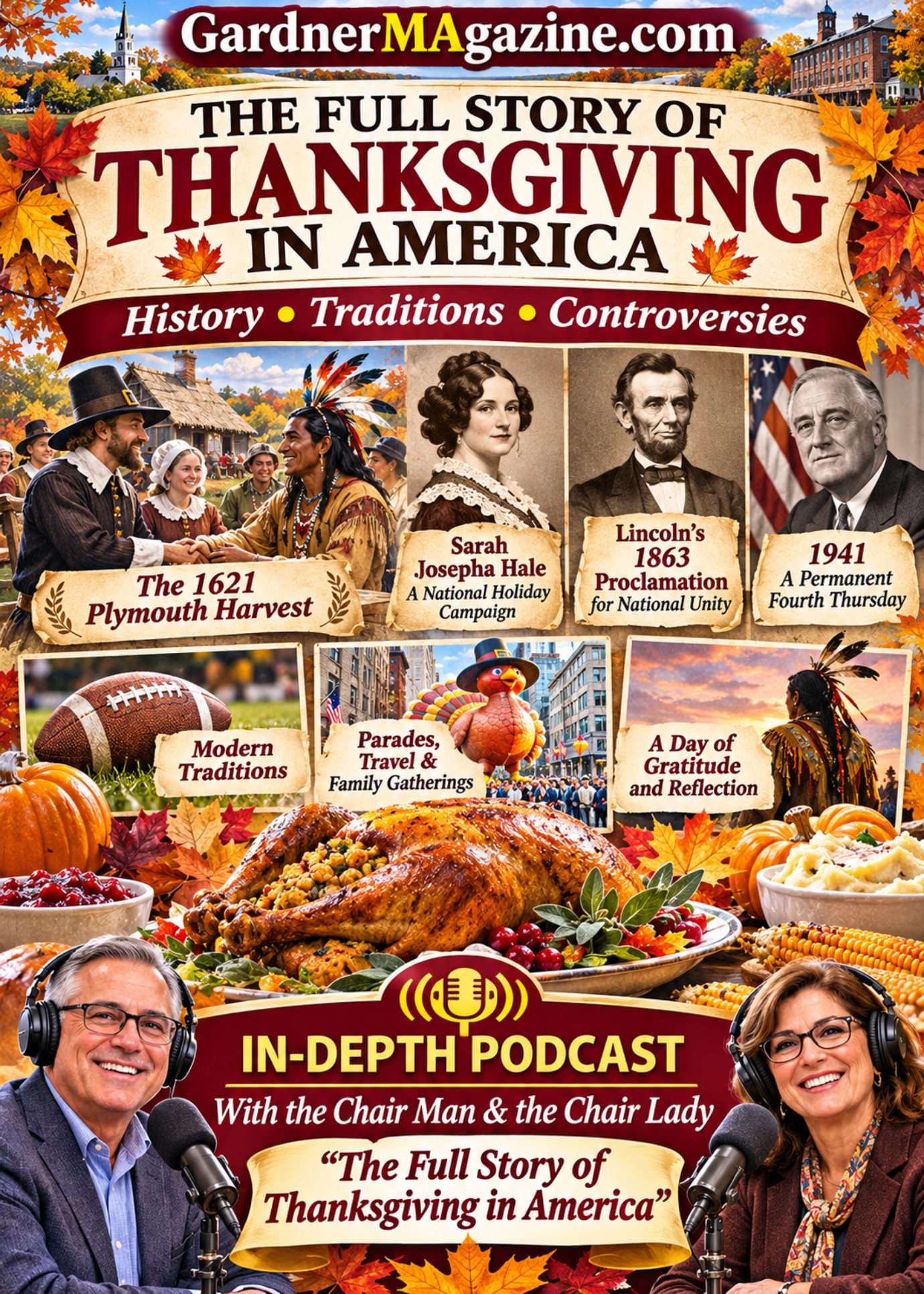
For readers interested in exploring the complete story, GardnerMagazine.com presents a special in-depth podcast featuring the Chair Man and the Chair Lady, entitled “The Full Story of Thanksgiving in America.” Just click the Play Button at beginning of this article. The program explores the holiday’s origins, the myths surrounding the Plymouth celebration, the people responsible for establishing Thanksgiving as a national holiday, and the traditions and controversies that continue to shape its observance. Thanksgiving may be a time to celebrate the blessings of the present, but understanding its history provides a deeper appreciation of the American experience.