
West Nile Detected in Gardner Mosquito – Risk Level Remains LOW
The following is a Press Release from the Gardner Health Department on October 6, 2026:
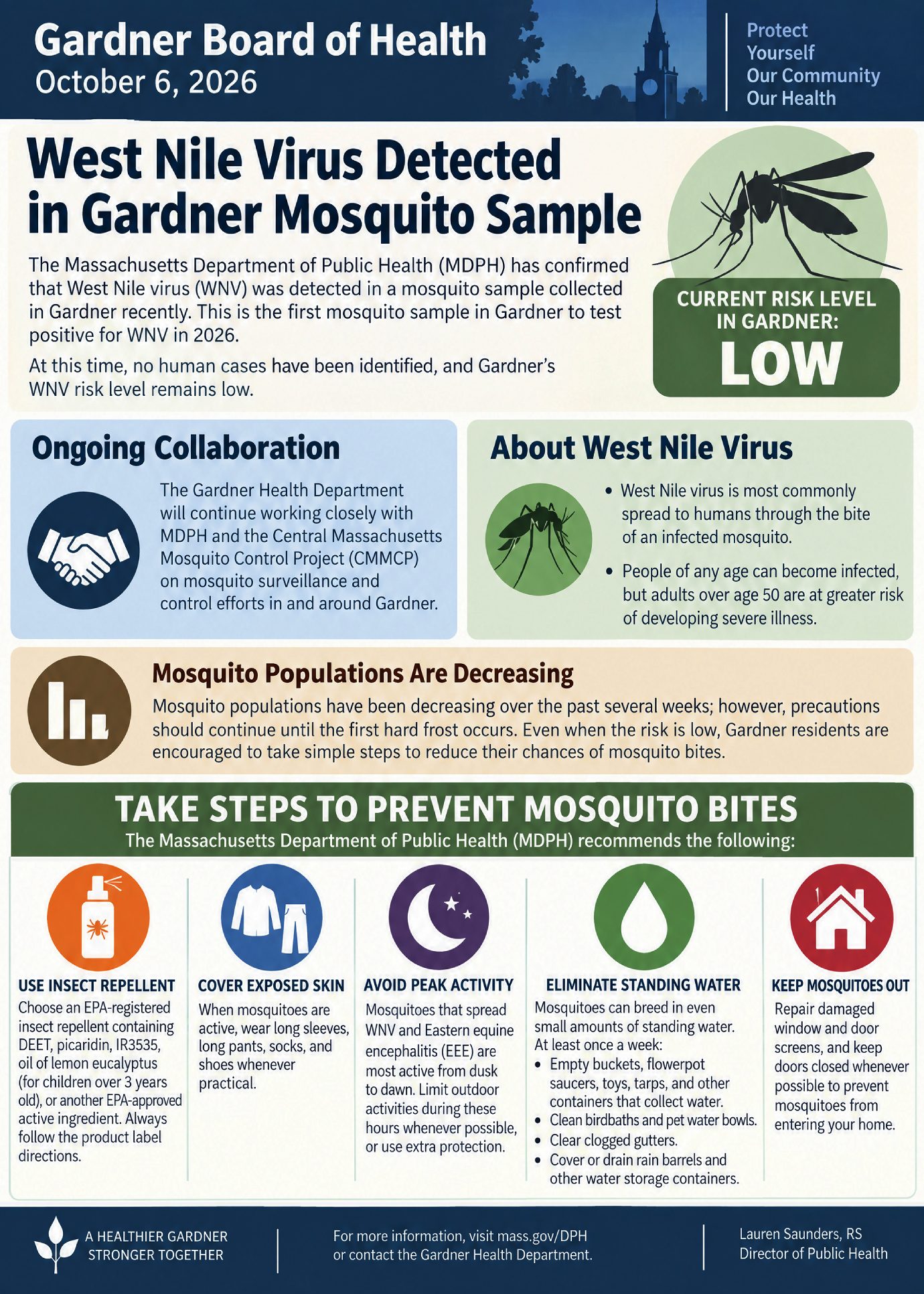
The Massachusetts Department of Public Health (MDPH) has confirmed that West Nile virus (WNV) was detected in a mosquito sample collected in Gardner recently. This is the first mosquito sample in Gardner to test positive for WNV in 2026. At this time, no human cases have been identified, and Gardner’s WNV risk level remains low.
The Gardner Health Department will continue working closely with MDPH and the Central Massachusetts Mosquito Control Project (CMMCP) on mosquito surveillance and control efforts in and around Gardner.
West Nile virus is most commonly spread to humans through the bite of an infected mosquito. While people of any age can become infected, adults over age 50 are at greater risk of developing severe illness.
Mosquito populations have been decreasing over the past several weeks; however, precautions should continue until the first hard frost occurs. Even when the risk is low, Gardner residents are encouraged to take simple steps to reduce their chances of mosquito bites. The Massachusetts Department of Public Health (MDPH) recommends the following:
- Use an EPA-registered insect repellent. Choose a product containing DEET, picaridin, IR3535, oil of lemon eucalyptus (for children over 3 years old), or another EPA-approved active ingredient. Always follow the product label directions.
- Cover exposed skin. When mosquitoes are active, wear long sleeves, long pants, socks, and shoes whenever practical.
- Avoid peak mosquito activity. Mosquitoes that spread WNV and Eastern equine encephalitis (EEE) are most active from dusk to dawn. Limit outdoor activities during these hours whenever possible, or use extra protection.
- Eliminate standing water. Mosquitoes can breed in even small amounts of standing water. At least once a week:
- Empty buckets, flowerpot saucers, toys, tarps, and other containers that collect water.
- Clean birdbaths and pet water bowls.
- Clear clogged gutters.
- Cover or drain rain barrels and other water storage containers.
- Repair damaged window and door screens, and keep doors closed whenever possible to prevent mosquitoes from entering your home.
Lauren Saunders, RS
Director of Public Health