In the following podcast, the Chair Man and the Chair Lady discuss the 62 Diseases linked directly to the consumption of alcohol. Listen on any device, CLICK PLAY.
Gardner Magazine Special Report – The Impact of Alcohol on the Body – No Safe Amount According to Experts.
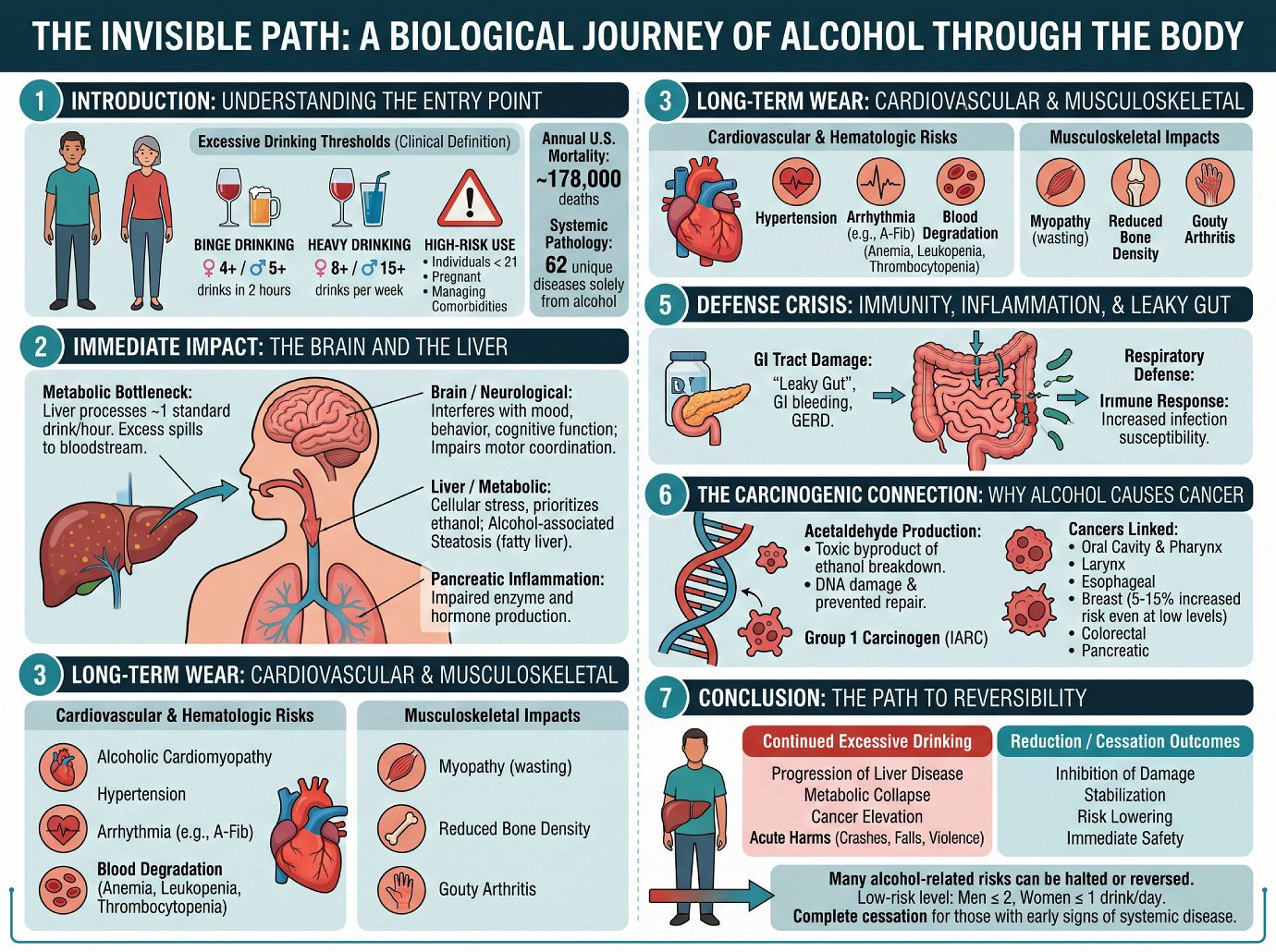
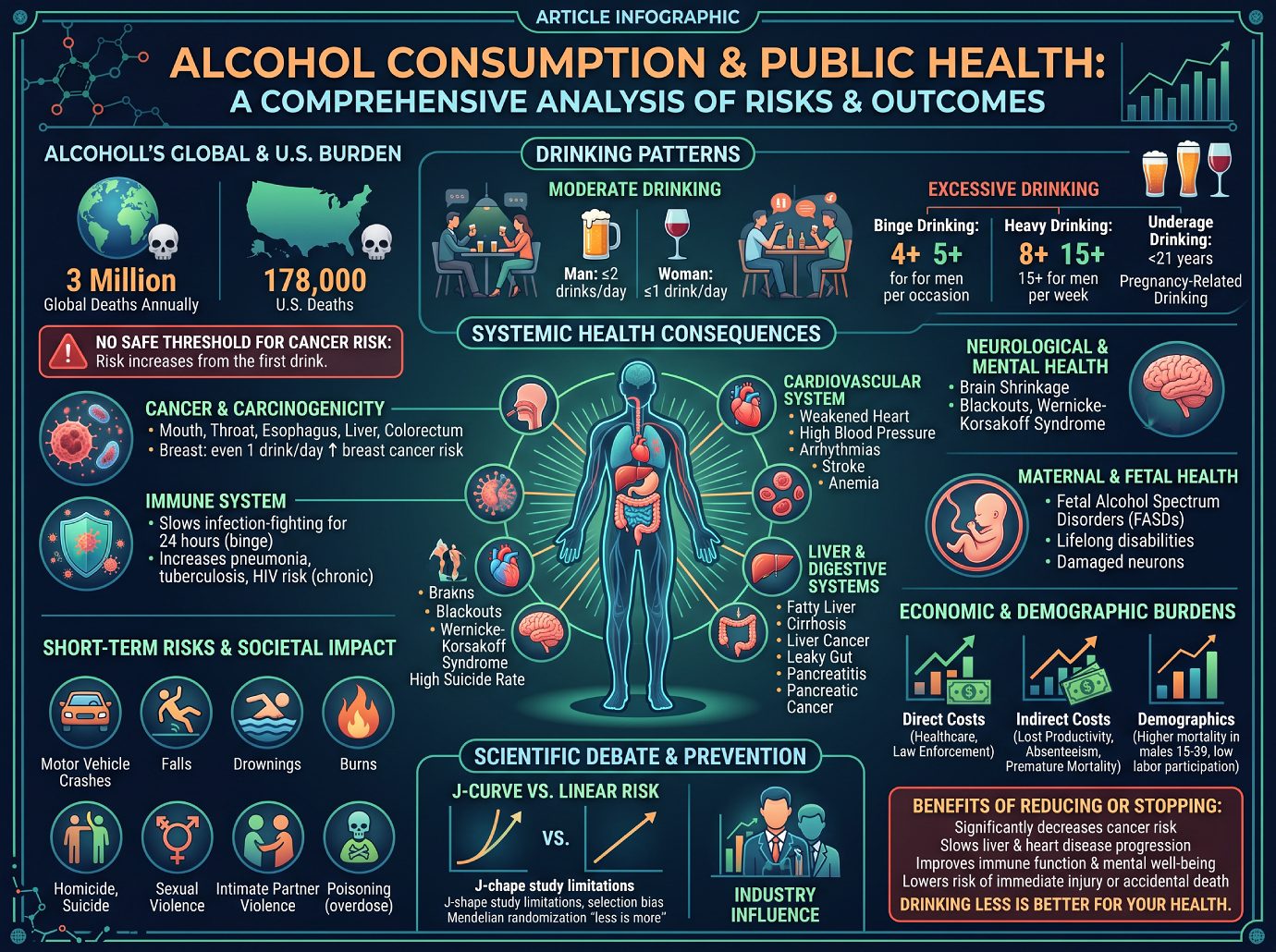
This is a comprehensive analysis of the serious health consequences associated with alcohol consumption, emphasizing that the risks often outweigh any perceived benefits. Major health organizations like the CDC and NIAAA detail how drinking affects nearly every organ system, leading to immediate injuries and chronic conditions such as liver disease, heart failure, and stroke.
According to multiple sources of data, there is a strong causal link between alcohol and at least seven types of cancer, with researchers noting that risk increases even at low levels of intake. The documentation identifies excessive drinking patterns—including binge and underage drinking—as primary contributors to significant annual mortality rates and long-term cognitive impairments like dementia.
Furthermore, there are critical dangers to fetal development and the potential for certain physical harms to be slowed or reversed through reduction or abstinence. Ultimately, the collective evidence suggests that consuming less alcohol is the most effective strategy for improving overall longevity and public health. In the paragraphs below, you’ll learn that public health experts are now messaging that there is no safe amount of alcohol.
Explanation: The “No Safe Threshold” for Cancer
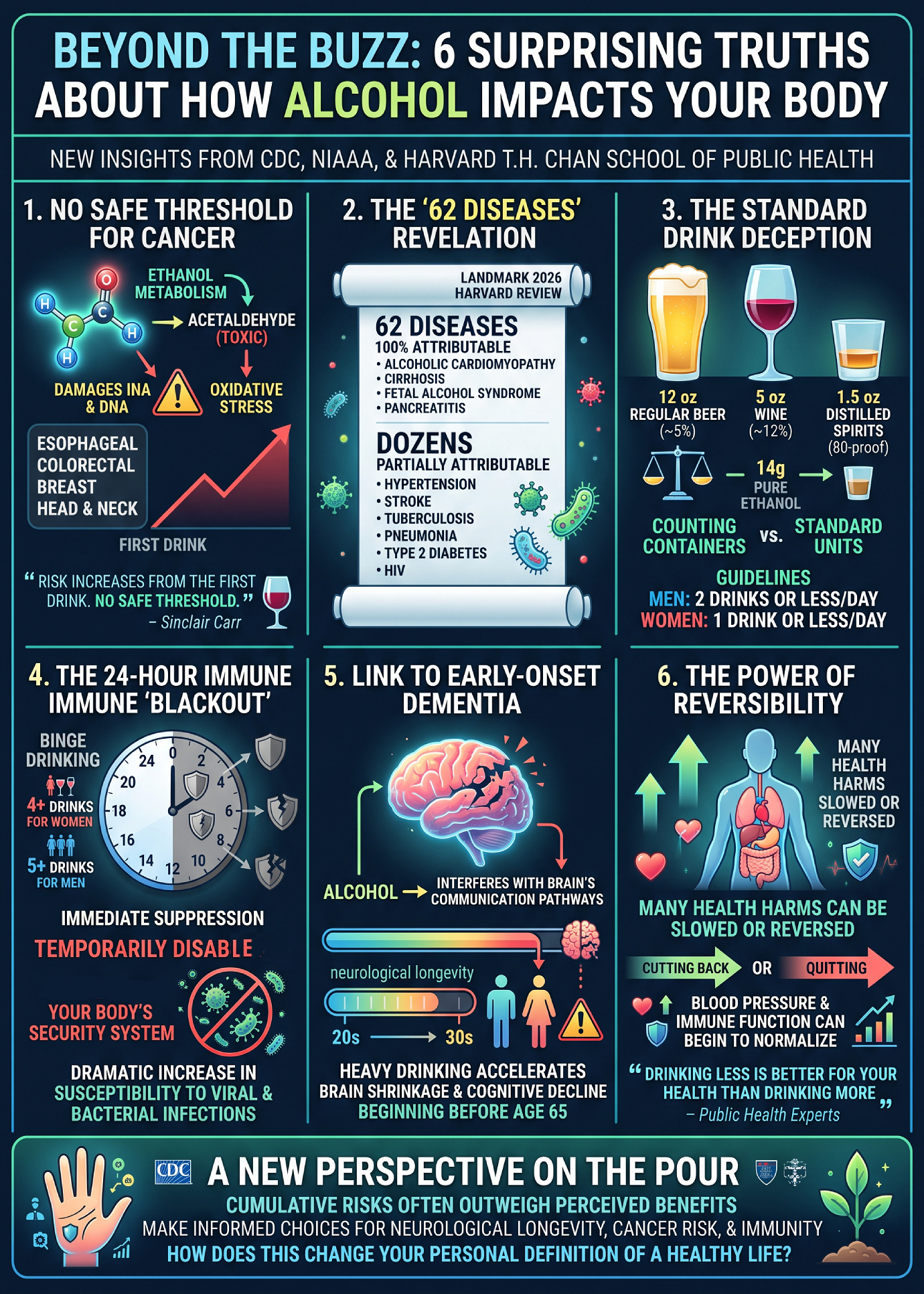
Perhaps the most significant shift in public health messaging involves alcohol’s relationship with cancer. While many associate alcohol primarily with liver health, the International Agency for Research on Cancer (IARC) classifies it as a Group 1 carcinogen—the same high-risk category as tobacco and asbestos.
The biological mechanism is a two-pronged attack on our cells. When the body metabolizes ethanol, it produces acetaldehyde, a toxic byproduct that can directly damage DNA and prevent cells from repairing that damage. Simultaneously, alcohol consumption generates oxidative stress, creating reactive molecules that further degrade cellular integrity. For certain types of cancer—specifically esophageal, colorectal, breast, and head and neck cancers—the risk does not wait for “heavy” drinking to begin.
“For cancer, the evidence indicates that risk increases from the first drink, with no safe threshold.” — Sinclair Carr
This finding is particularly counter-intuitive for a public accustomed to advice suggesting that “moderate” drinking is a safe baseline. New data reveals that for cancer risk, the only truly safe level of consumption is none. The infographics below describe the biological journey of alcohol through the body and a comprehensive analysis of alcohol risks and outcomes. Click any image for a larger view.