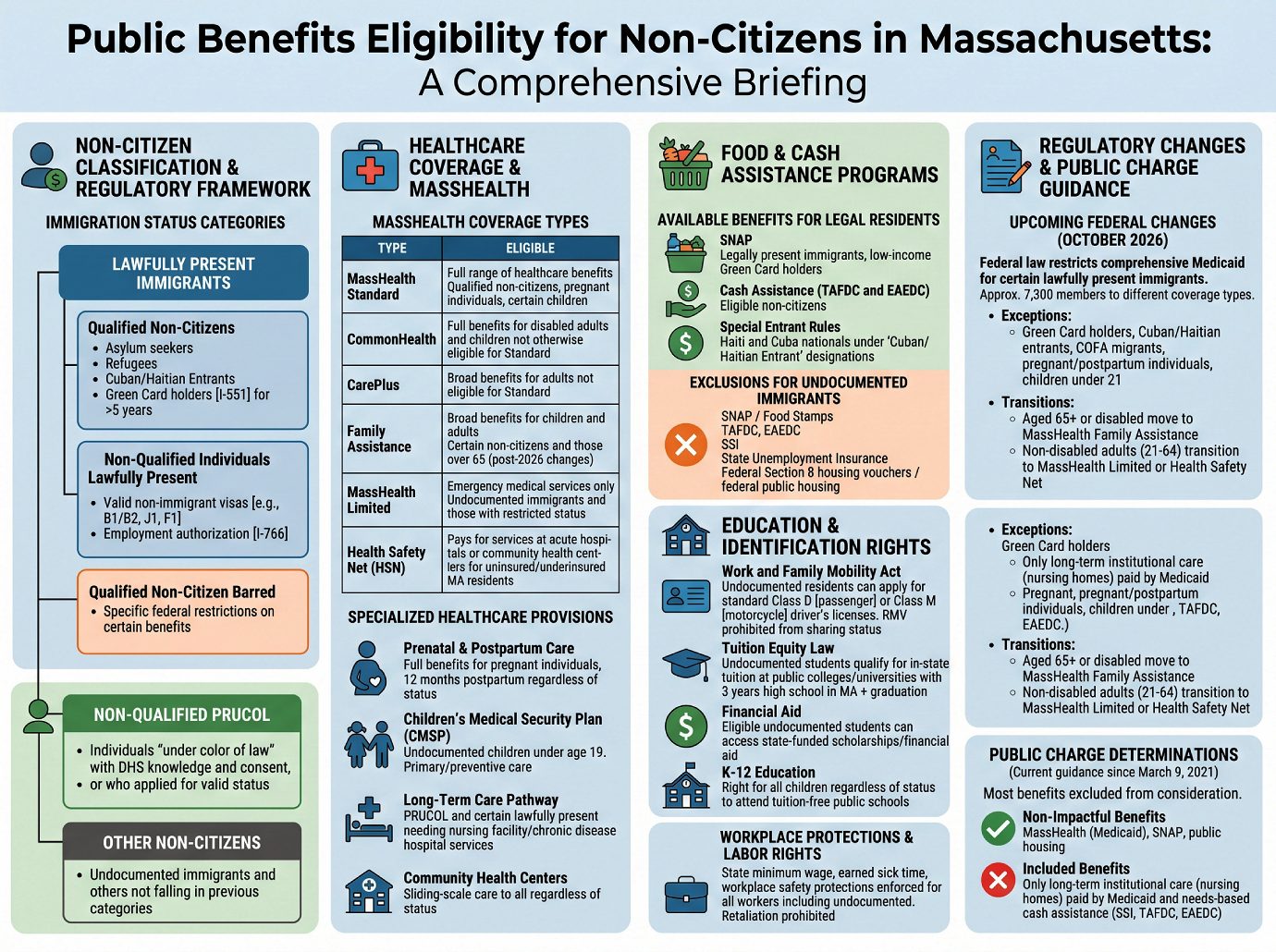
- Lawfully Present Immigrants: Includes three sub-types:
- Qualified Non-Citizens: Asylum seekers, refugees, Cuban/Haitian entrants, and Green Card holders (I-551) who have held their status for more than five years.
- Non-Qualified Individuals Lawfully Present: Holders of valid non-immigrant visas (e.g., B1/B2, J1, F1) or employment authorization (I-766).
- Qualified Non-Citizen Barred: Lawfully present individuals who may face specific federal restrictions on certain benefits.
- Non-Qualified PRUCOL: Individuals residing in the U.S. “under color of law” with the knowledge and consent of the Department of Homeland Security (DHS), or those who have applied for a valid status.
- Other Non-Citizens: Individuals who do not fall into the above categories, typically including undocumented immigrants.
Just What Are the Immigrant Rights in Massachusetts? Gardner Magazine Reports
Public Benefits Eligibility Varies Considerably Depending on Immigration Status.
Listen to this Deep Dive podcast explaining it all, CLICK PLAY.
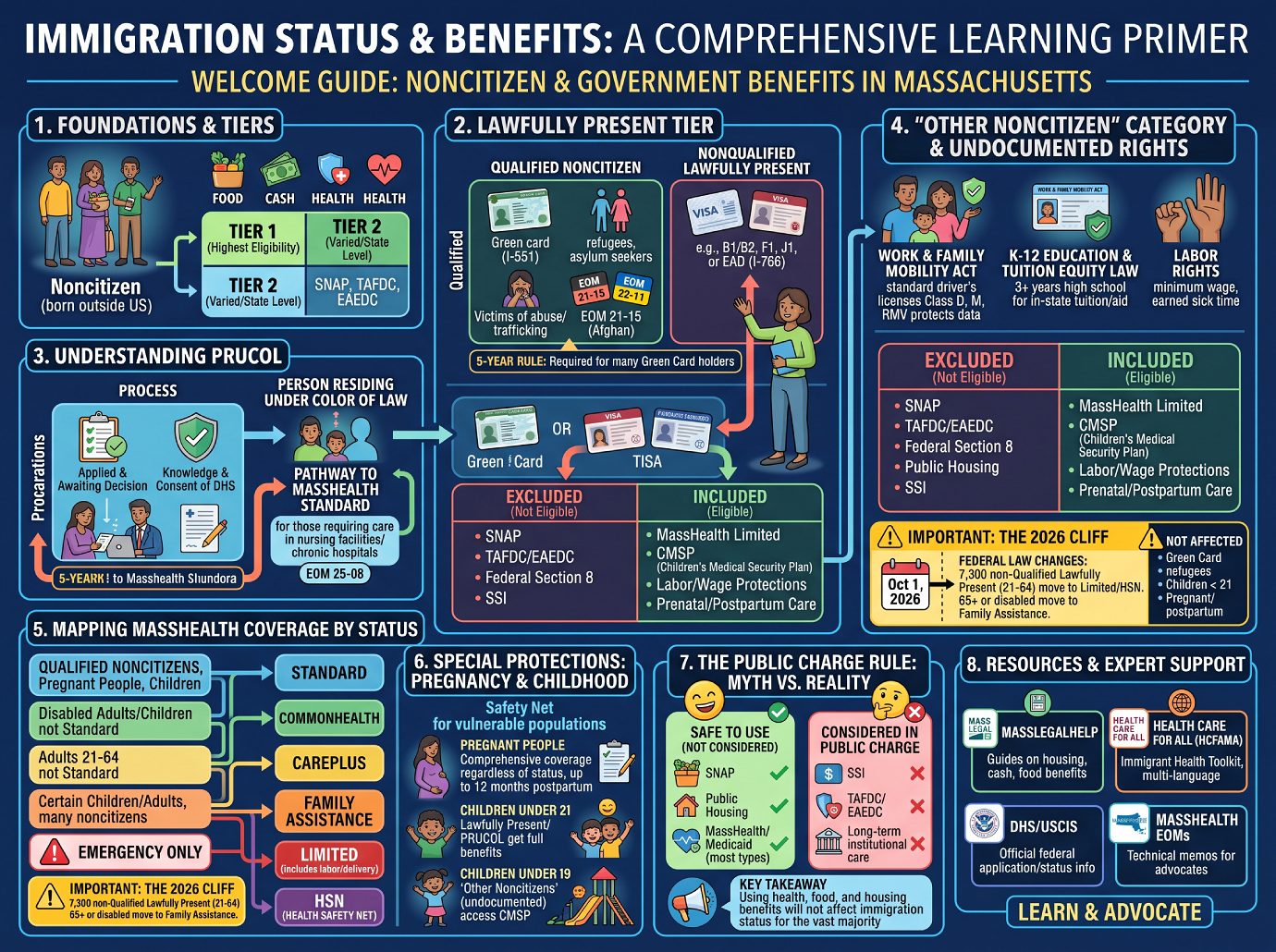
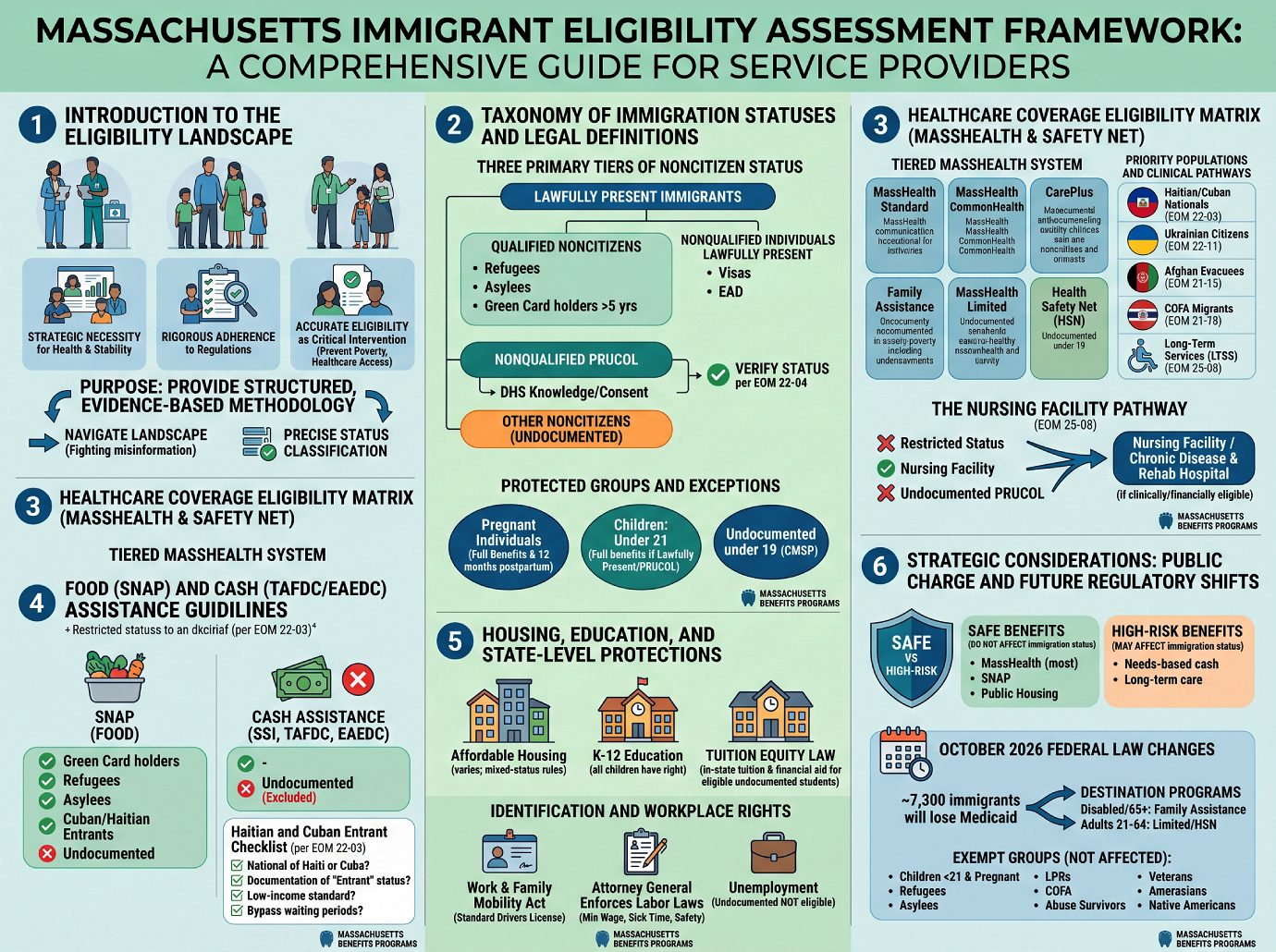
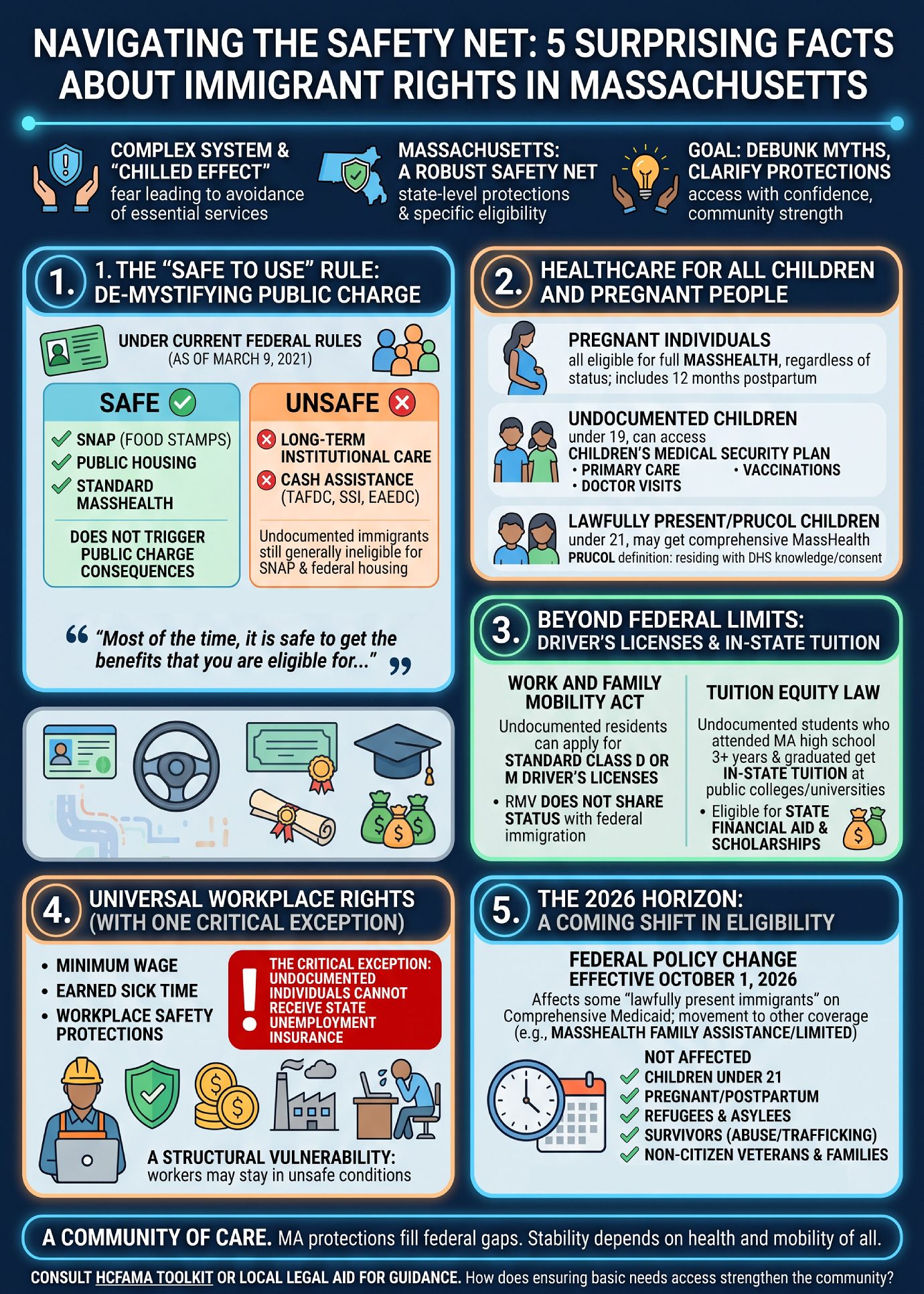
The infographic immediately below details Public Benefits for Massachusetts Residents. The 3 at the bottom focus specifically on non-citizens.
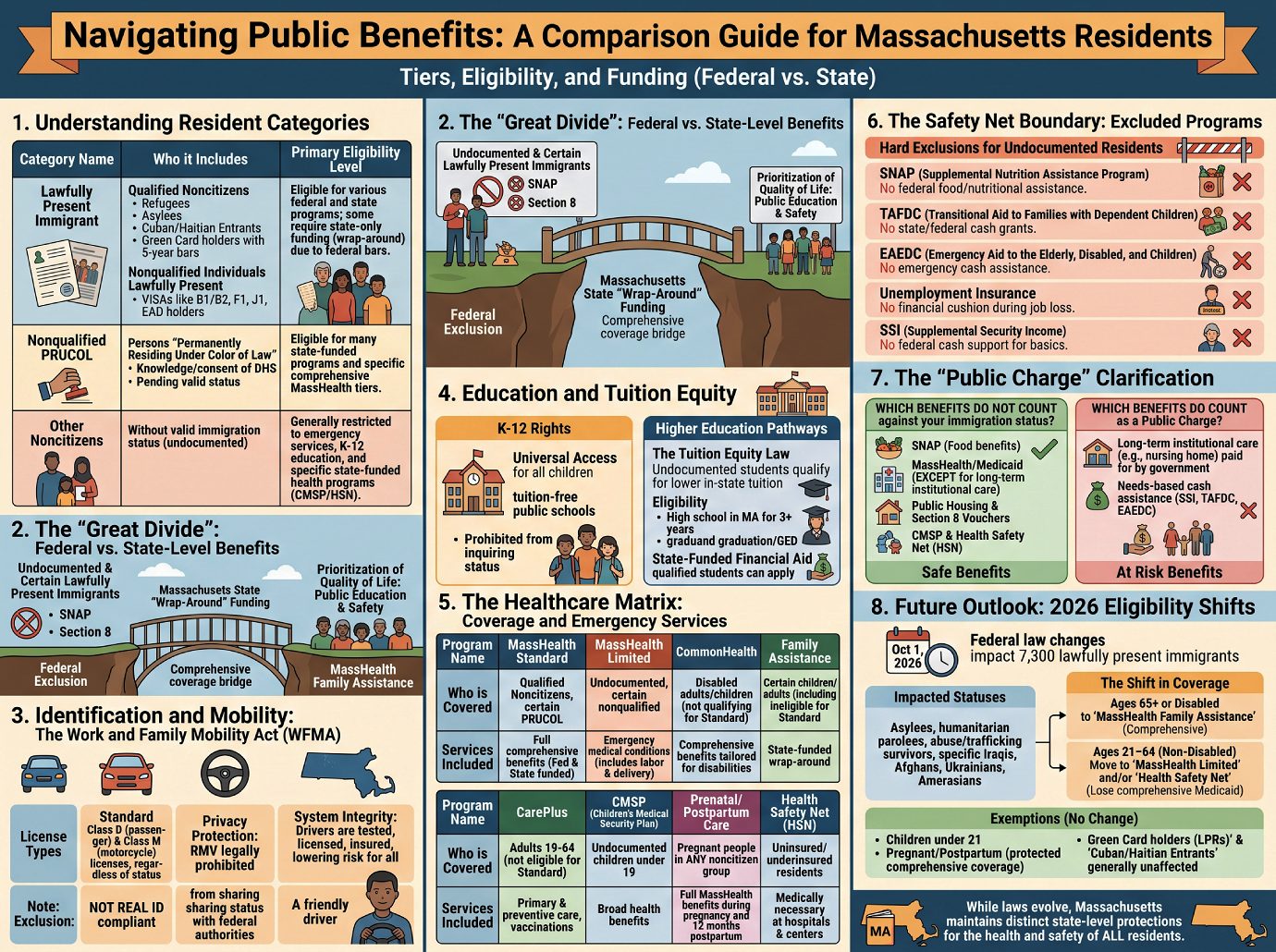
The landscape of public benefits for non-citizens in the United States is notoriously complex, often clouded by shifting federal regulations and widespread misinformation. For many of our neighbors in Massachusetts, this complexity creates a “chilled effect”—a phenomenon where families avoid essential services like healthcare or food assistance out of a deep-seated fear that seeking help might jeopardize their future immigration status.
In the Commonwealth, however, state-level protections and specific eligibility rules offer a more robust safety net than many realize.
Non-citizens residing in Massachusetts navigate a complex landscape of public benefit eligibility determined by their specific immigration status. While undocumented immigrants are legally excluded from most federal and state welfare programs—including SNAP, TAFDC, and standard MassHealth—they maintain access to critical state-level provisions such as emergency healthcare, K-12 education, and driver’s licenses. Conversely, “Lawfully Present Immigrants” and those with “PRUCOL” (Permanently Residing Under Color of Law) status have broader access to comprehensive health coverage and financial assistance.
A significant regulatory shift is scheduled for October 1, 2026, when new federal law will transition approximately 7,300 lawfully present immigrants from comprehensive Medicaid to more restricted coverage types. Crucially, as of March 2021, the use of most health and food benefits—excluding long-term institutional care and cash assistance—does not negatively impact “Public Charge” determinations for immigration status. CLICK any infographic image below for larger view.