Societal and Political Receptions
- National Political Flashpoint: The passage of the bill quickly drew sharp condemnation from high-profile conservative politicians and anti-abortion organizations, who criticize the move as extreme and describe it as allowing “abortion up to birth”.
- Religious Backlash: The Massachusetts Catholic Conference and local bishops issued joint statements strongly opposing the law, calling the removal of legal restraints on late-term abortions “gravely immoral”
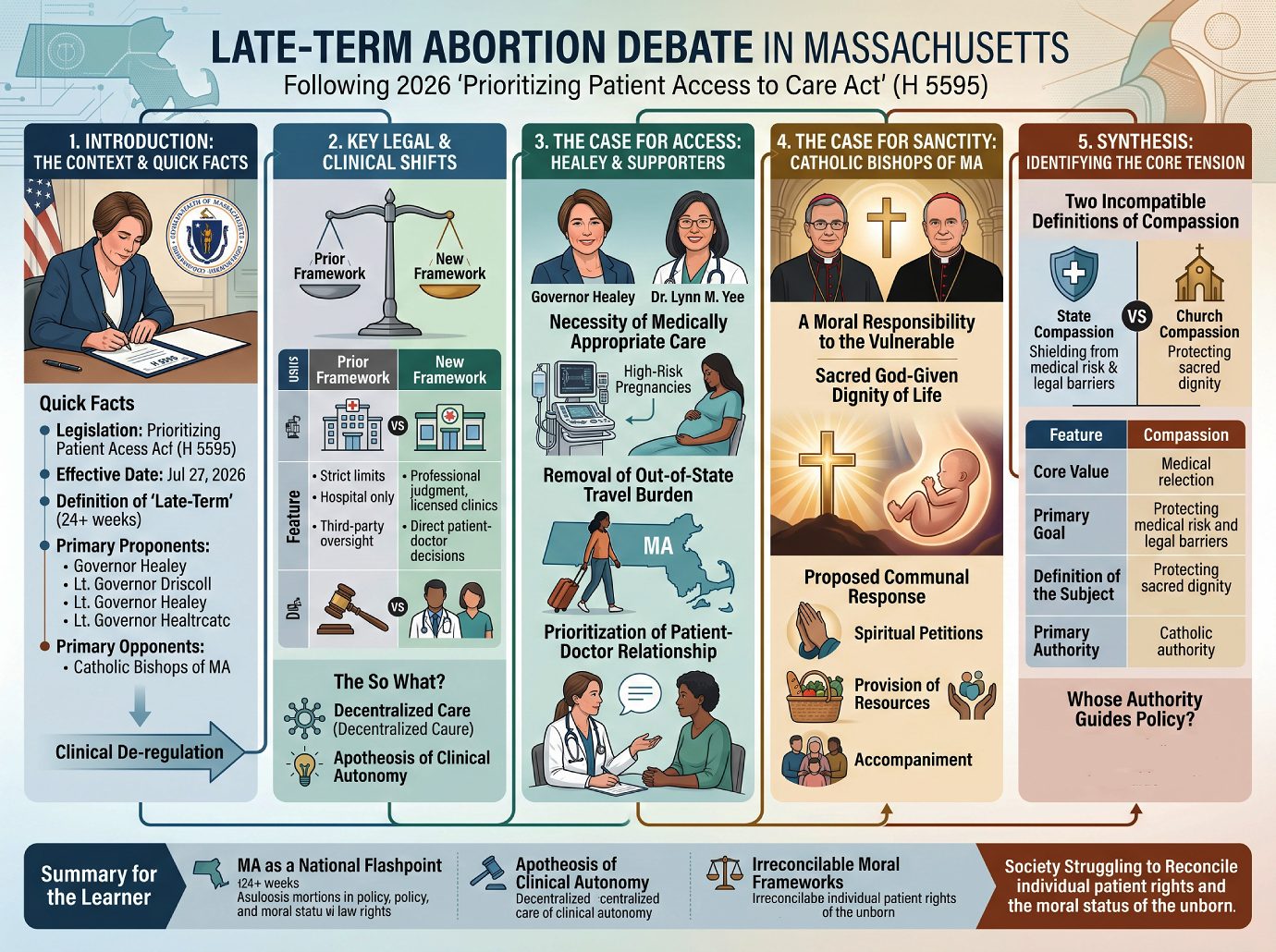
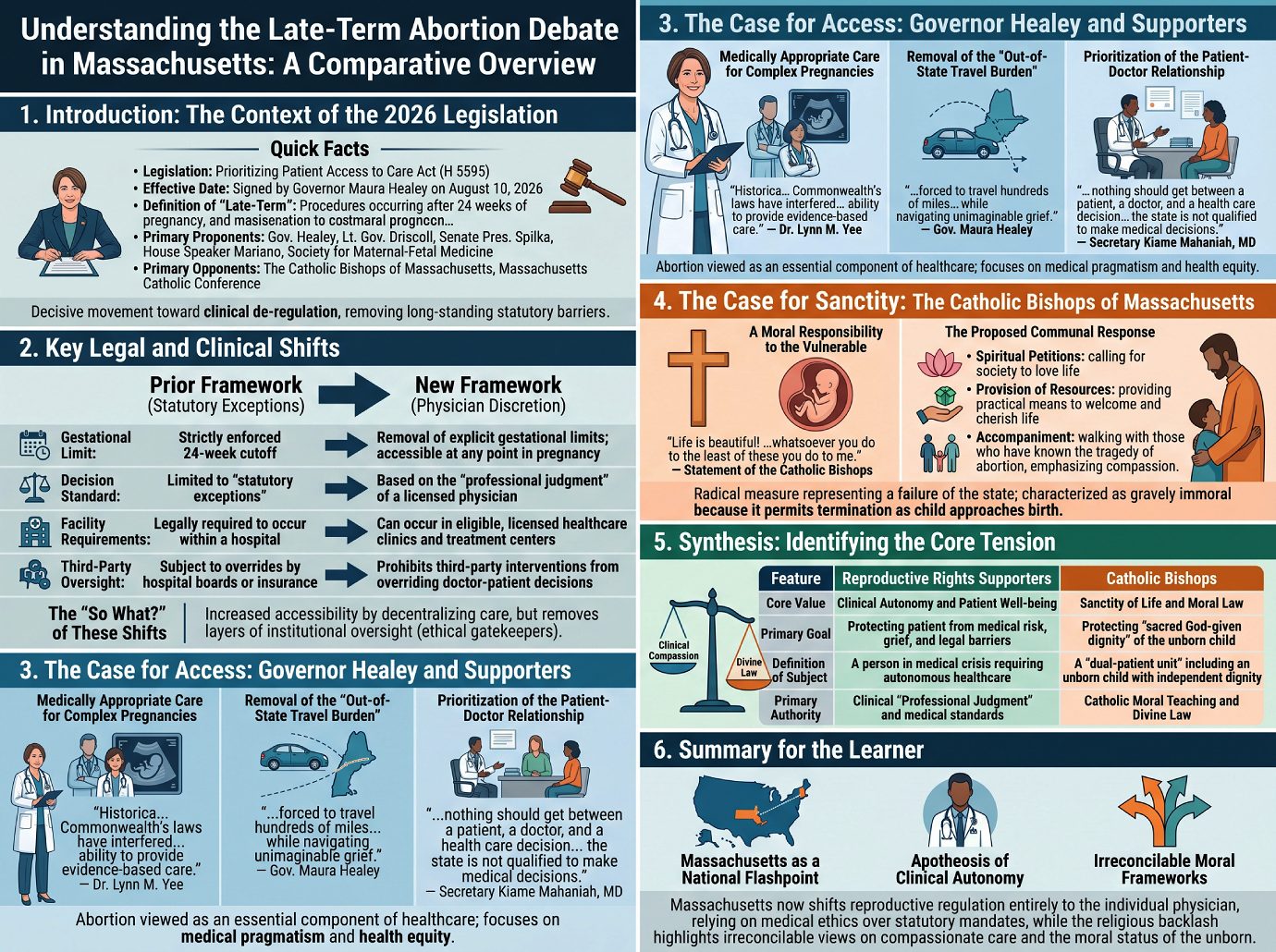
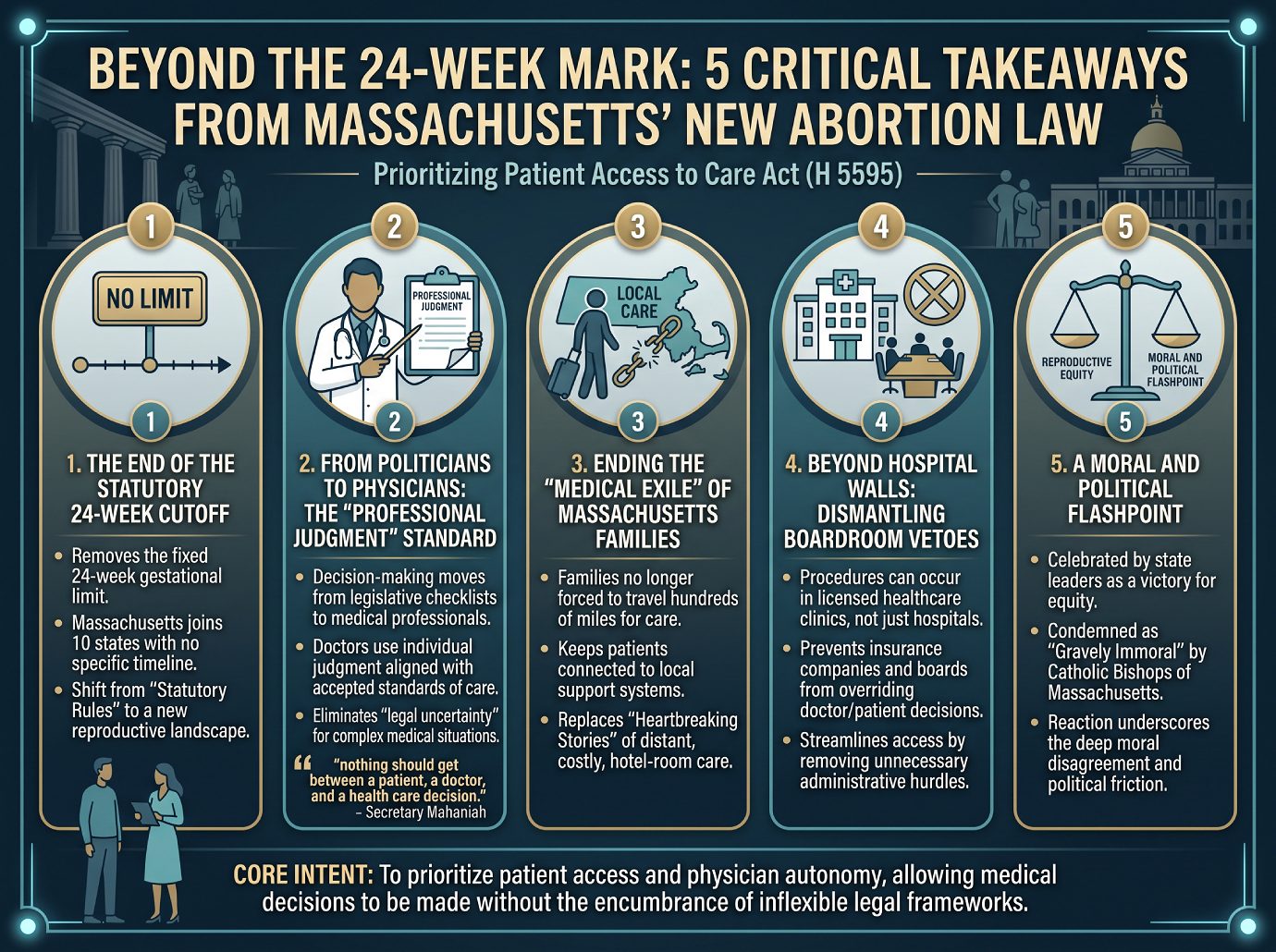
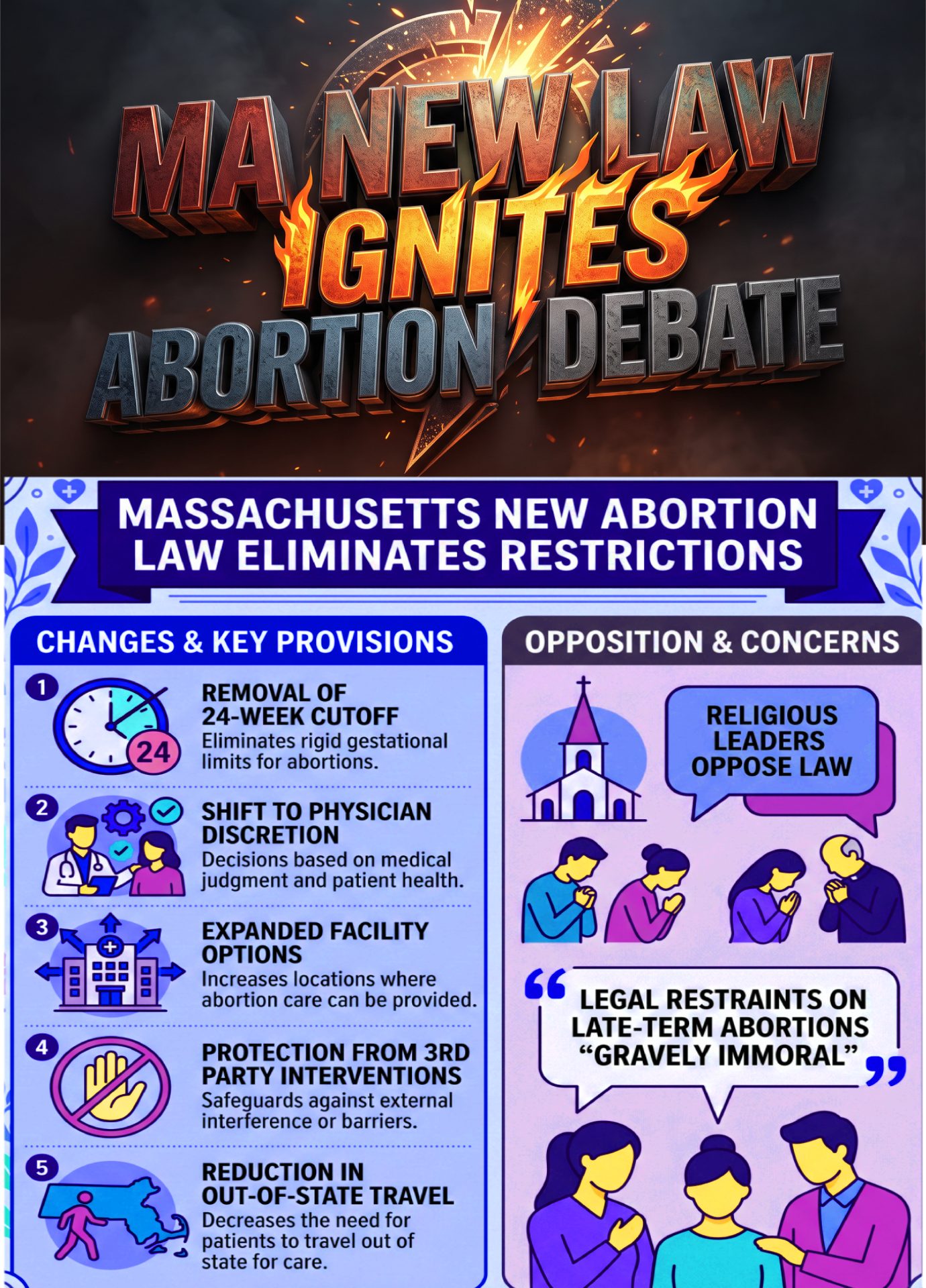
More information below in infographic form for your perusal covering details of the new MA law and the late-term abortion debate in Massachusetts. CLICK any IMAGE for larger view.
New MA Abortion Law Ignites Abortion Debate
The consequences of the new Massachusetts abortion law signed into law by Governor Maura Healey on August 10, 2026 focus primarily on removing statutory gestational limits and transferring late-stage medical decisions completely to the discretion of physicians. Max and Maxine Rogers debate the new law in this podcast, CLICK PLAY.
Clinical and Legal Changes include:
- Removal of the 24-Week Cutoff: The law shifts Massachusetts into a group of states that do not impose explicit gestational limits, legalizing abortion access at any point in a pregnancy.
- Shift to Physician Discretion: Under the previous framework, post-24-week abortions were only legally permitted under specific statutory conditions (such as saving the patient’s life or severe fetal abnormalities). The new law replaces those rules, allowing a licensed physician to perform the procedure based entirely on their own “professional judgment”.
- Expanded Facility Options: The law eliminates the requirement that post-24-week abortions must take place inside a hospital setting. These procedures can now be performed in other eligible, licensed healthcare clinics and treatment centers.
- Protection from Third-Party Interventions: Insurance, hospital boards, or other third-party review systems are blocked from overriding the treatment decisions made between the patient and their doctor.
- Reduction in Out-of-State Medical Travel: Proponents emphasize that patients experiencing severe, late-term medical complications will no longer face the physical and financial burden of traveling out of state to receive care.