
City Council Briefing on Vision Zero Expected in September – Public Engagement Event Planned for October
It is probably the only project where having NOTHING for a goal is actually a good thing. And the goal of Vision Zero is exactly that – to reduce traffic fatalities in Gardner to ZERO. A good reference for ongoing discussions is this meeting from the middle of July, Vision Zero Three. Listen on any device, CLICK PLAY.
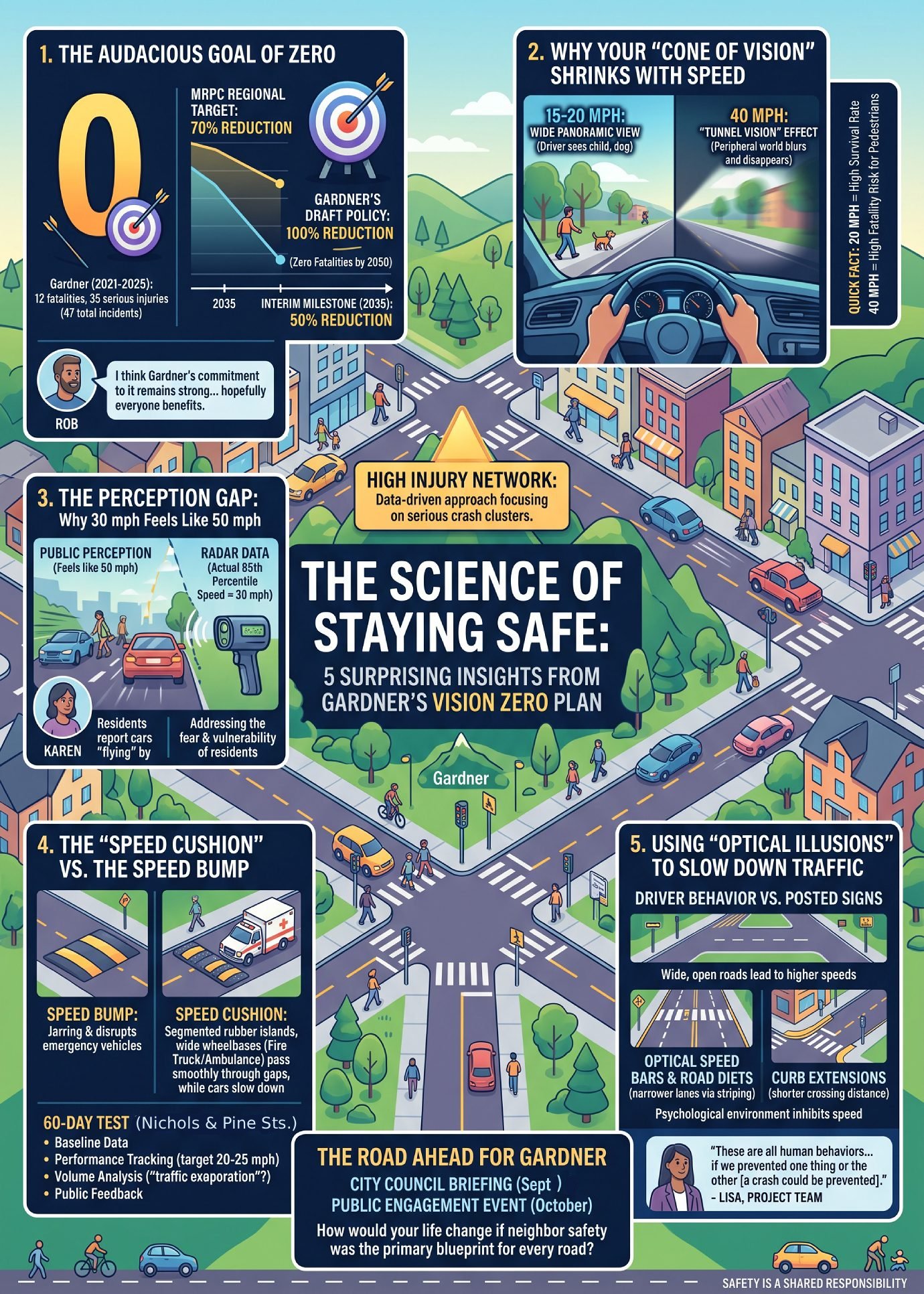
The City of Gardner is currently in the third quarter of its Safety Action Plan development, moving from data analysis toward the identification and implementation of safety countermeasures. Central to this initiative is the adoption of a “Vision Zero” policy, which proposes a target of zero fatal and serious injury crashes within the city by 2050, with an interim goal of a 50% reduction by 2035.
Analysis of crash data from 2021 to 2025 reveals a baseline of 47 total fatalities and serious injuries. To address these trends, the city has identified a High Injury Network (HIN) and is launching a demonstration project using temporary “speed cushions” on Nichols and Pine Streets. These efforts, supported by federal grant funding, aim to influence driver behavior through both physical roadway changes and systematic safety countermeasures.
Public input gathered from events such as the library block party and the food truck festival highlighted several recurring issues:
- Distracted Driving and Speeding: Viewed as the primary contributors to safety concerns.
- Non-Vehicular Vulnerability: Lack of safe infrastructure for bicycles, e-bikes, and scooters.
- Educational Needs: Confusion regarding proper navigation of the local Rotary, suggesting a need for better wayfinding and driver education.
he demonstration project data collection begins in September 2026, coinciding with a briefing for the City Council. A formal public engagement session is scheduled for October to present the draft Safety Action Plan and gather feedback on the temporary speed cushions. The ultimate objective remains the creation of a document that allows the city to self-certify for federal funding while making measurable progress toward the elimination of traffic-related fatalities.