Watch this short Gardner Magazine video about the Black Bear Paradox. Just click the red play button and it will play out of the page or you can watch full screen via YouTube.
The Chair Man and the Chair Lady talk about the Black Bear surge. Listen on any device, CLICK PLAY.
Coexisting with Black Bears – Why They’re Here and How to Be As Safe as Possible in Greater Gardner.
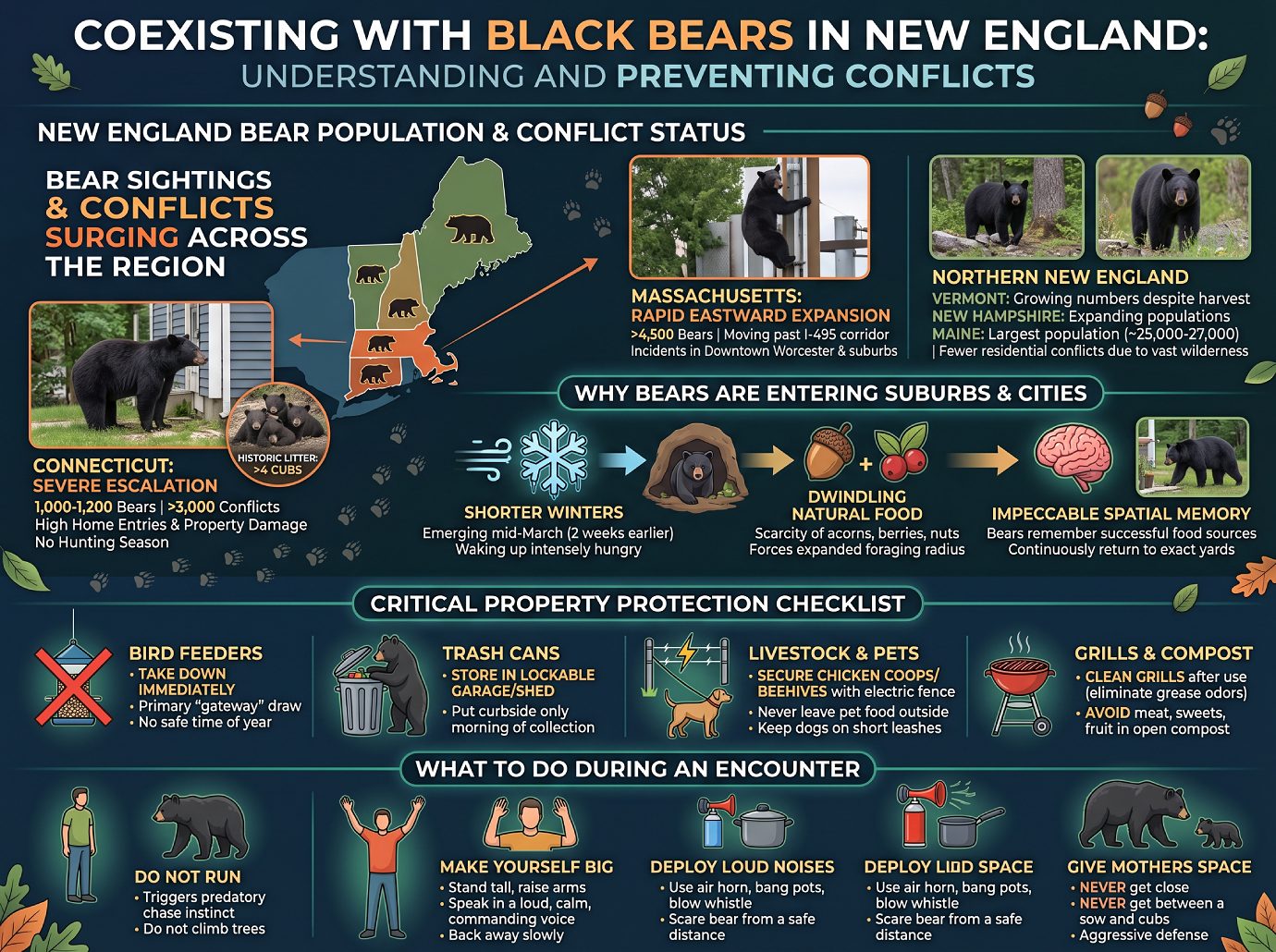
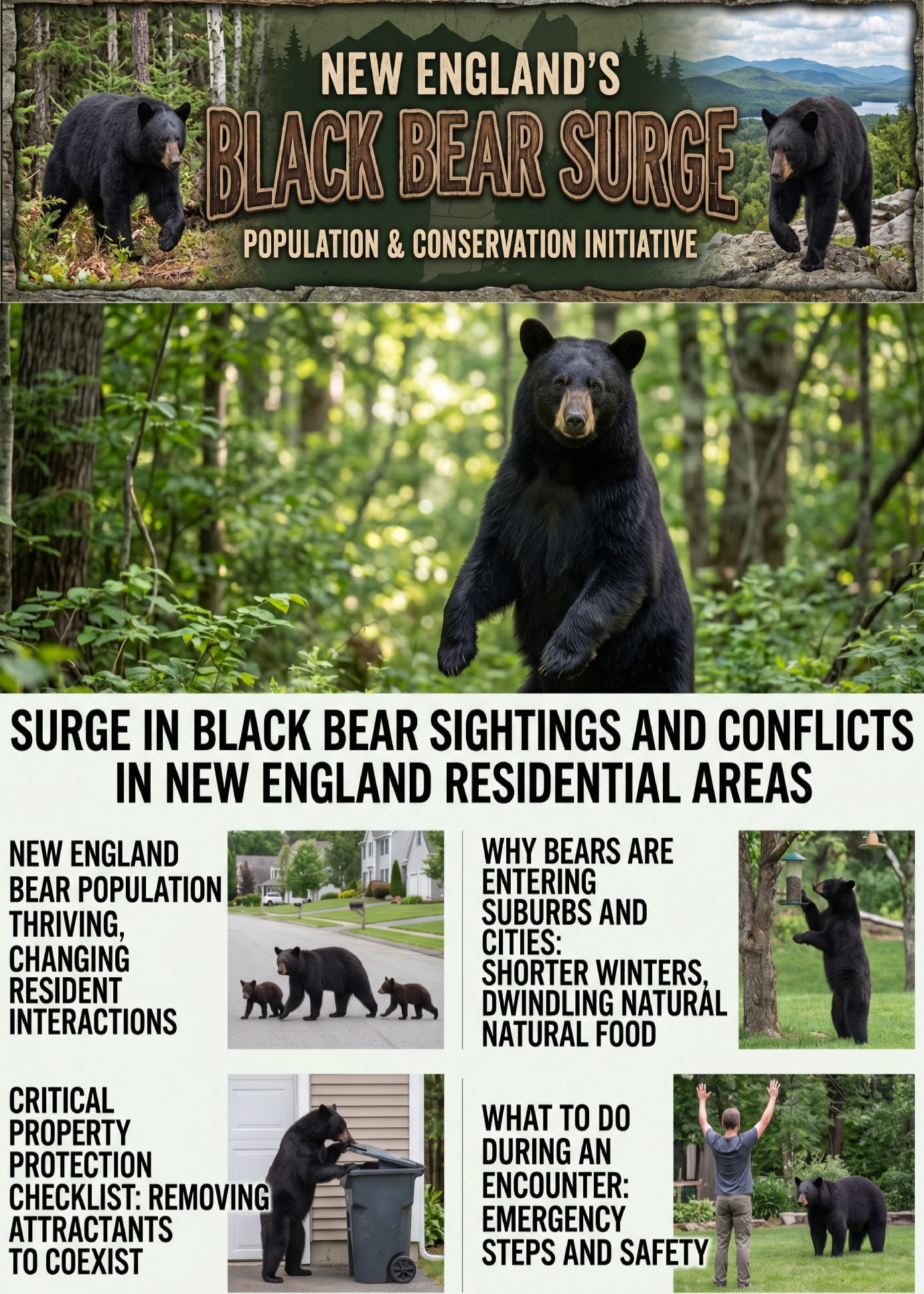
Black bear populations are steadily growing across New England, resulting in a surge of residential sightings. Driven by suburban development and warmer spring weather, bears—especially young ones seeking independence—are regularly wandering into backyards and urban centers, such as recent high-profile sightings in the Greater Gardner MA area and even the City of Worcester.
The jarring reality for New Englanders is that the “wilderness” is no longer a destination we visit in the Berkshires or the North Woods; the wilderness has moved in next door. As bear populations surge and human developments sprawl, we are witnessing a profound biological boundary dissolution. These ancient neighbors are reclaiming the landscape, and they are doing so with a surprising comfort in our suburban environments.
Why Bears Are in Neighborhoods
Bears are highly adaptable and opportunistic feeders. They are drawn to residential areas because they provide easy access to high-calorie food sources. Common attractants include:
- Bird feeders: These are the leading cause of human-bear conflicts.
- Unsecured garbage: Open cans and dumpsters are quick meals.
- Unprotected livestock/pets: Backyard chickens, pet food left outdoors, and bee hives are major attractants.
- Compost piles: Improperly managed compost draws bears with sweet or food-scrap smells.
Black bear populations are expanding eastward pinto more densely populated suburbs. If a bear visits your property, the best course of action is to give it space and let it move on.
The “Do Not Run” Protocol: Survival Essentials
If you find yourself face-to-face with a bear, your response must be dictated by science, not fear.
- Do Not Run or Climb: This is the most critical rule.
- Make Yourself Large: Stand tall, raise your arms, and use a loud, commanding voice.
- Use Loud Noises: Air horns, whistles, or banging pots are effective deterrents.
- Give Mothers Space: Never approach a sow with cubs; their protective instinct is absolute.
- Keep Dogs Leashed: Loose dogs are the primary trigger for bear attacks.
Scientific Insight: Why shouldn’t you run? Because running triggers the predatory chase instinct. This is an ancient, hard-wired evolutionary reflex. Even if a bear has no intention of eating you, the sight of a fleeing animal flips a switch in its brain that says “prey,” causing it to pursue you at speeds up to 35 mph.