City Finances Extensively Discussed During Finance Committee Session
Listen to the entire meeting on any device, CLICK PLAY.
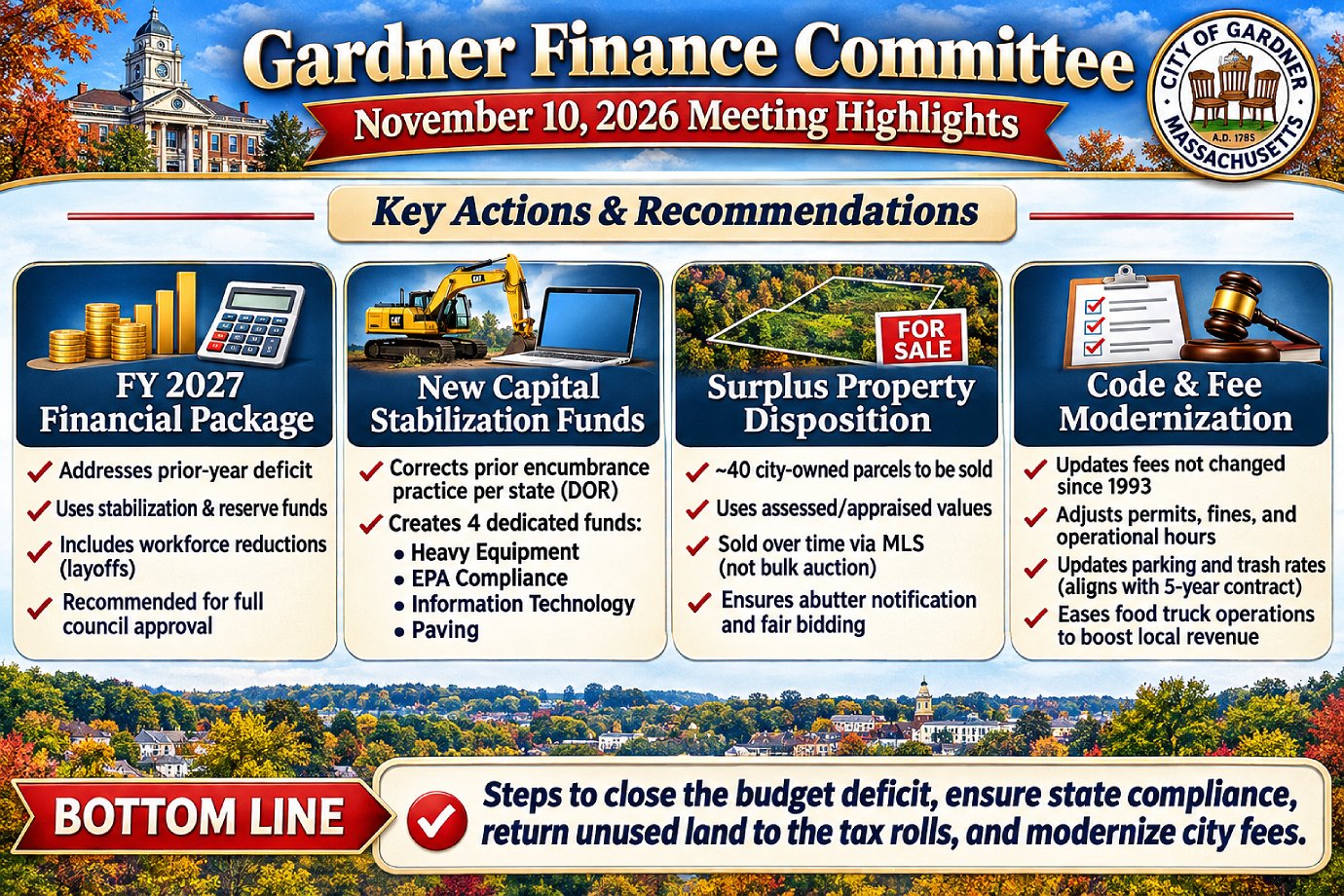
The November 10, 2026 meeting of the Garder City Council Finance Committee addressed a heavy agenda focused on resolving structural deficit issues, updating city financial procedures to comply with state regulations, releasing municipal surplus real estate, and modernizing outdated municipal code fees.
The primary takeaways from the meeting include:
- FY 2027 Financial Health & Deficit Package: To address a severe prior-year budget deficit driven by rising municipal health insurance costs, a lack of available free cash, and macroeconomic inflationary pressures, the executive branch presented a comprehensive multi-order financial package This package relies on stabilization funds, reserve accounts, enterprise transfers, and workforce reductions (layoffs) to stabilize the city’s tax levy before the upcoming tax rate setting deadline. The committee voted to recommend adoption of this package to the full council.
- Correction of Encumbrance Practices via Stabilization Funds: In consultation with the Massachusetts Department of Revenue (DOR), the city is moving to eliminate the practice of rolling over unused line-item balances via encumbrances to save for long-term capital purchases. Four specialized stabilization funds (Heavy Equipment, EPA Regulations, Information Technology, and Paving) are being established under MGL Chapter 40, Section 5B, to ensure formal council oversight for multi-year capital savings.
- Disposition of Municipal Surplus Properties: Implementation of the Municipal Surplus Property Plan—funded by a November 2025 state grant from the Community One Stop for Growth program—is underway. Approximately 40 parcels acquired over several decades (dating back to the 1920s) through tax title, donations, and bequests are being put forward for surplus declaration at assessed or appraised values to return them to the active tax rolls.
- Comprehensive Code Amendments & Fee Modernization: One item proposes extensive adjustments to municipal fines, permitting fees, operational hours flexibility, and process requirements—many of which have not been updated since 1993. Key provisions shift administrative permitting expenses to private applicants, modernize parking violations, align trash rates with a 5-year hauling contract, and ease food truck operations to generate local tax revenue.