The Paper on the Rear Window: Unpacking a Viral Carjacking Scheme
Listen to this important podcast on this topic on any device, CLICK PLAY.
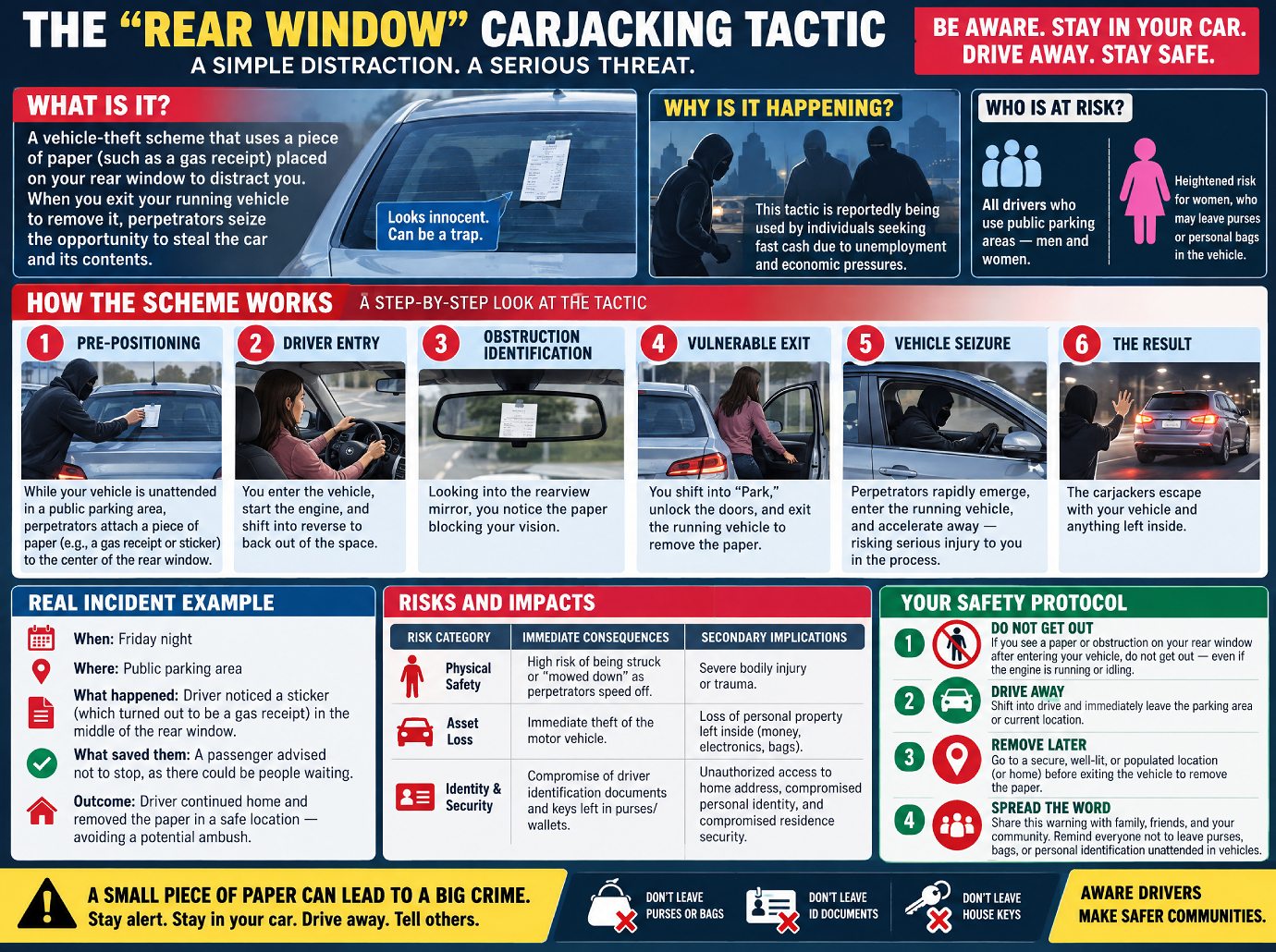
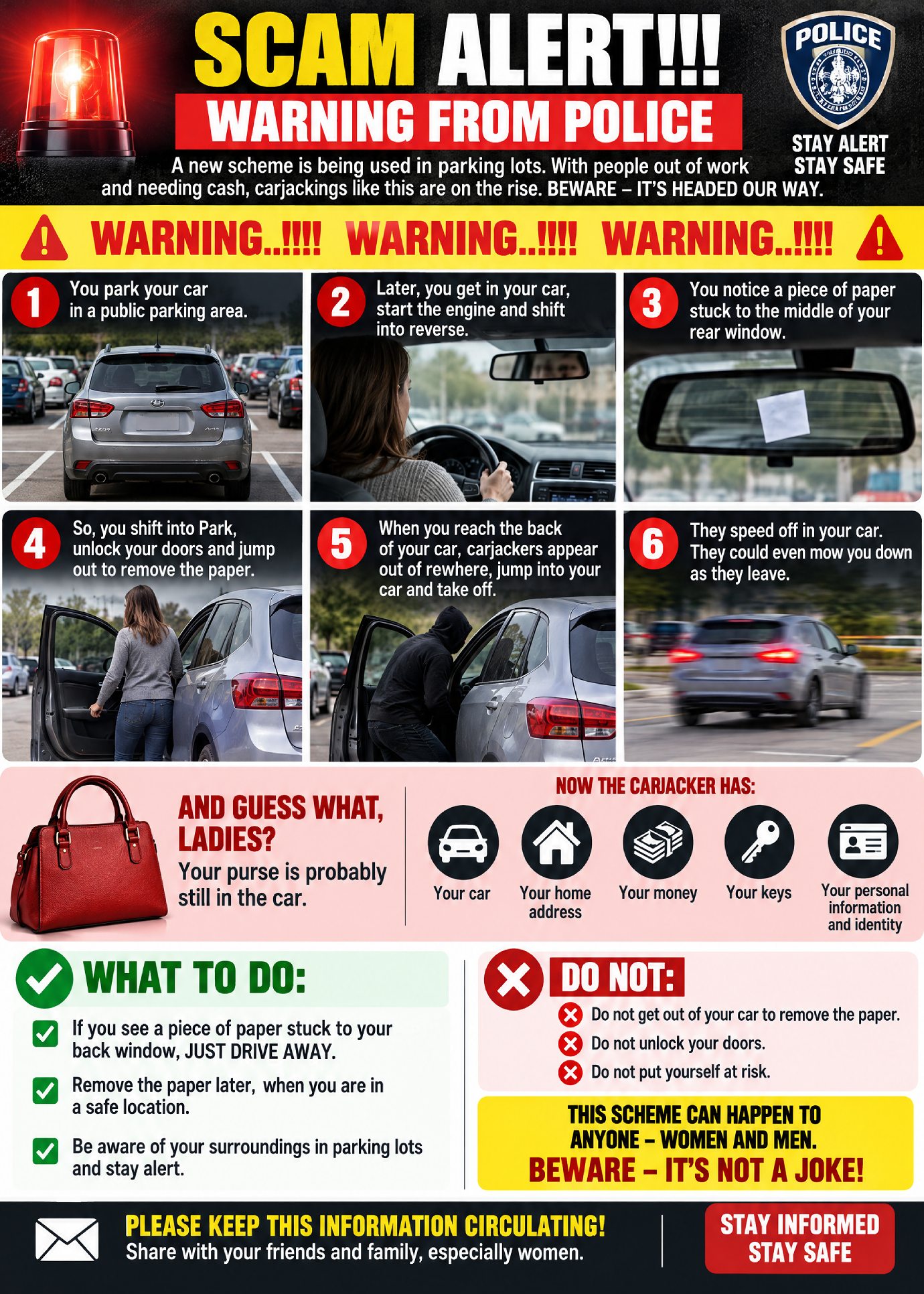
You walk across a public parking lot after running errands, unlock your car, and settle into the driver’s seat. You start the engine, shift into reverse, and prepare to back out of your space. But as you glance into your rearview mirror, you spot an unfamiliar piece of paper—or perhaps a gas receipt—stuck directly to the middle of your rear window. It is a minor, unexpected obstruction, but it creates an immediate impulse to step out and clear it. That brief moment of friction is precisely what opportunistic criminals are counting on.
Exploiting Routine Reactions (The Anatomy of the Distraction): This carjacking scheme targets muscle memory rather than brute force. By placing a visual obstruction on the rear glass, thieves create a mild psychological lever: a driver cannot safely back up without a clear view. The danger lies not in the paper itself, but in the automated sequence of reactions it triggers. Most people operate on autopilot during routine transitions, causing them to abandon basic safety protocols the moment an unexpected annoyance arises.
“When you look into the rearview mirror to back out of your parking space, you notice a piece of paper stuck to the middle of the rear window. So, you shift into Park, unlock your doors, and jump out of your car…”
The moment a driver steps out, leaving the engine idling and the vehicle unlocked, the trap snaps shut. Watching from nearby, carjackers exploit those few exposed seconds to slip into the driver’s seat and accelerate away—endangering the driver who is standing vulnerable near the rear bumper.
The Cascade Effect (From Vehicle Theft to Total Identity Compromise): Losing a vehicle is a major financial and logistical loss, but this tactic triggers a far more dangerous domino effect. Because drivers step out expecting to return in five seconds, personal items like purses or shoulder bags are almost universally left sitting inside the cabin.
“So now the carjacker has your car, your home address, your money, and your keys. Your home and your whole identity are now compromised!“
A stolen purse contains far more than cash. With immediate access to driver’s licenses, identification documents, and house keys, a thief instantly bridges the gap between your vehicle and your residence. What begins as a minor parking lot distraction rapidly escalates into a total security and identity compromise, placing both men and women at severe risk.
The Counter-Intuitive Countermeasure (Drive First, Clean Later): Defeating this scheme requires overriding standard habits. The single safest reaction to seeing an unexpected paper or receipt attached to your rear window is to prioritize immediate physical security over immediate visual clarity.
- Drive away immediately: Do not exit the vehicle to clear the obstruction. Keep your doors locked, leave the parking area, and put distance between yourself and any hidden watchers.
- Remove the paper later: Wait until you have driven away to a safe, well-lit, or familiar location before stepping outside to clean the window.
- Safeguard your identity: Remaining inside your locked vehicle and driving away keeps your purse, keys, money, and personal identification documents completely out of reach.
Vigilance in the Micro-Moments: Personal safety often hinges on recognizing how minor daily routines can be manipulated against us. By staying alert to unusual circumstances and resisting the urge to react instantly to artificial distractions, you preserve control over your environment and keep your identity secure.