Gardner MA Temporary Tap Water Changes – COMPLETE COVERAGE
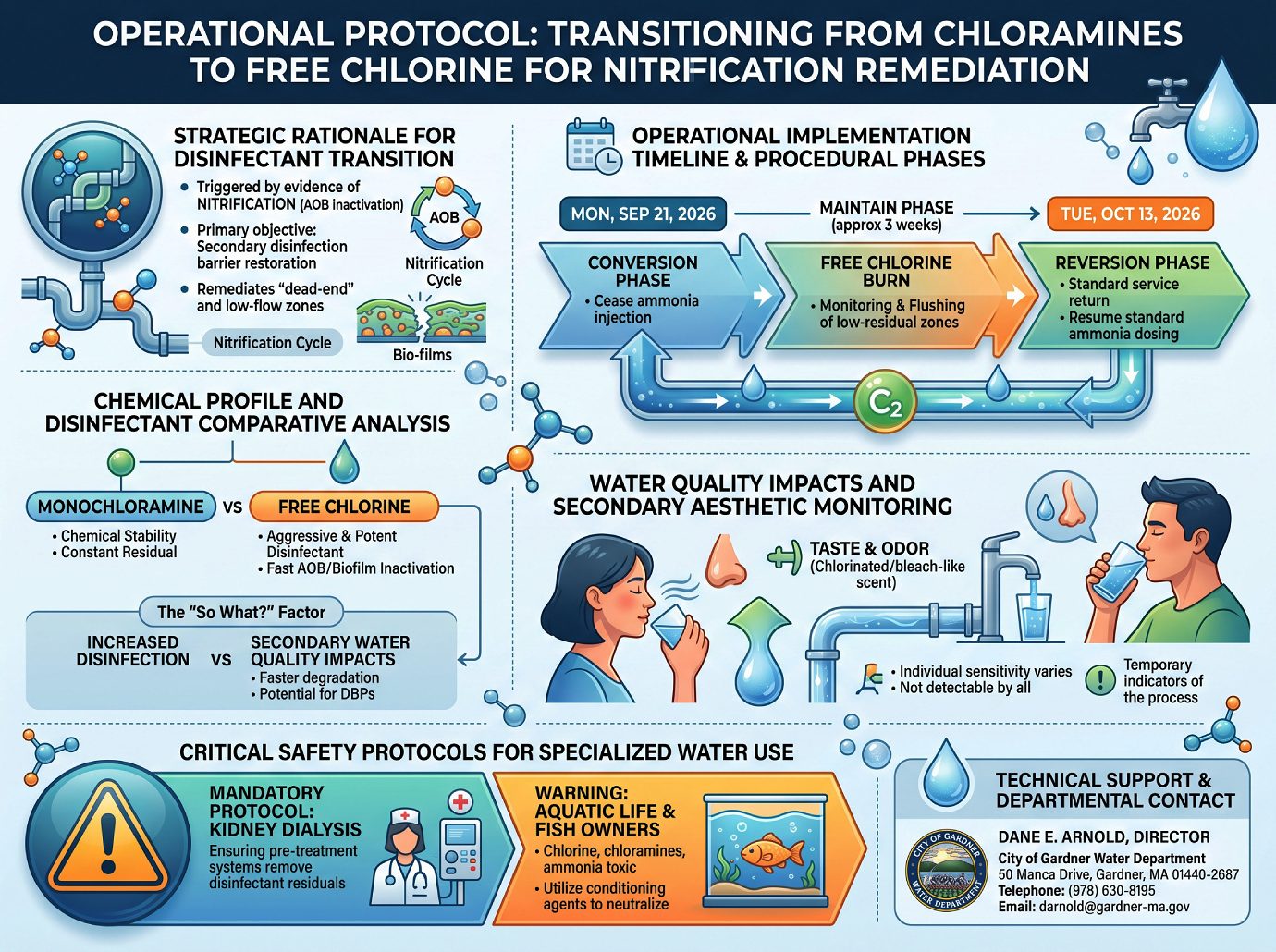
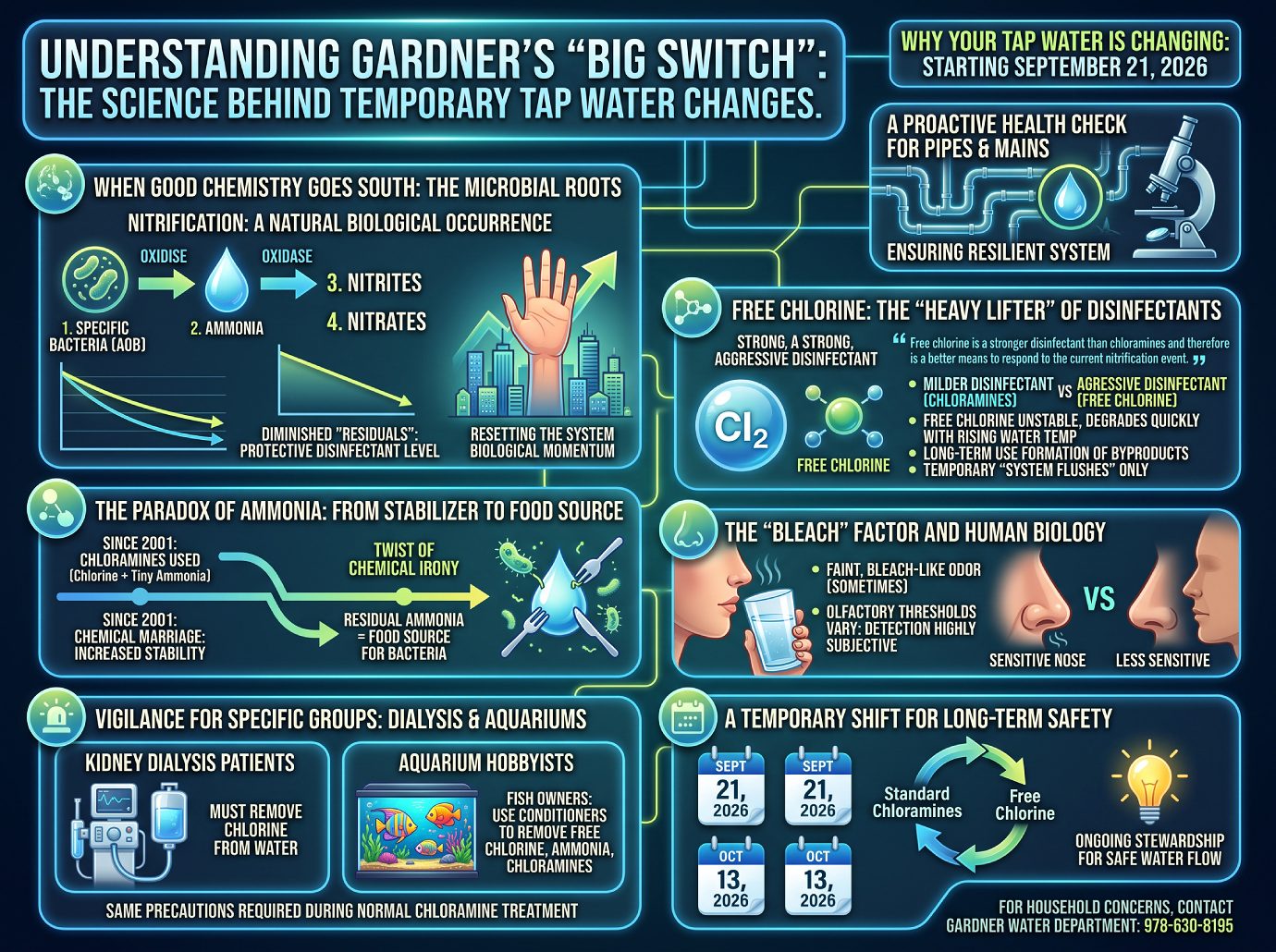
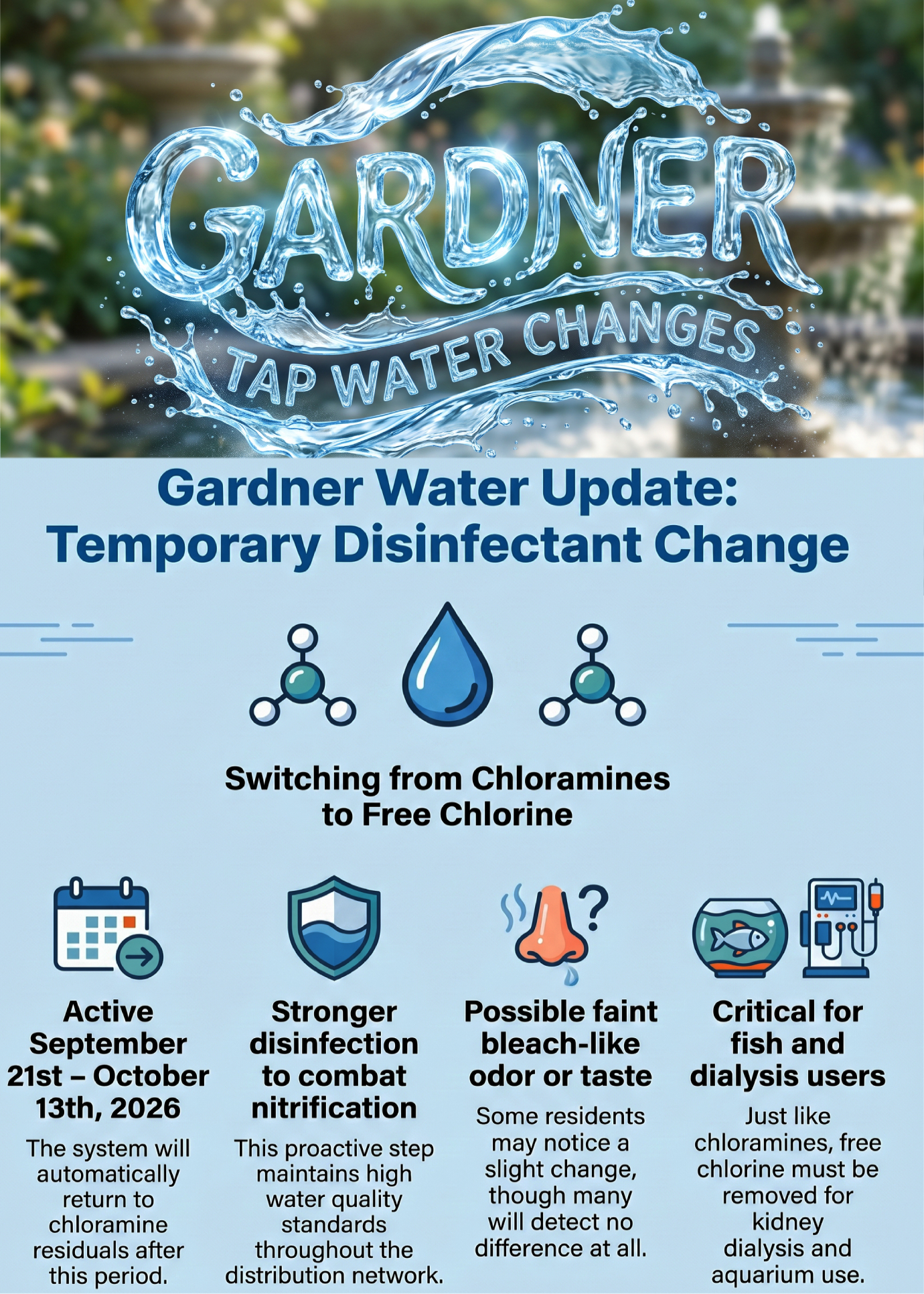
Beginning September 21, 2026, the City of Gardner Water Department will implement a temporary change in its water disinfection process, transitioning from chloramines to free chlorine. This shift is a proactive measures designed to address low chloramine residuals caused by nitrification within specific areas of the water distribution system. The temporary conversion is scheduled to last approximately three weeks, with a projected return to standard chloramine disinfection on October 13, 2026. While the water remains safe, customers may notice a faint chlorine odor, and specific precautions are required for kidney dialysis patients and fish owners.
Overview of the Disinfection Transition: The City of Gardner has utilized chloramines for maintaining disinfectant residuals in its distribution system since 2001. The upcoming temporary modification is a targeted response to maintain the integrity of the water supply.
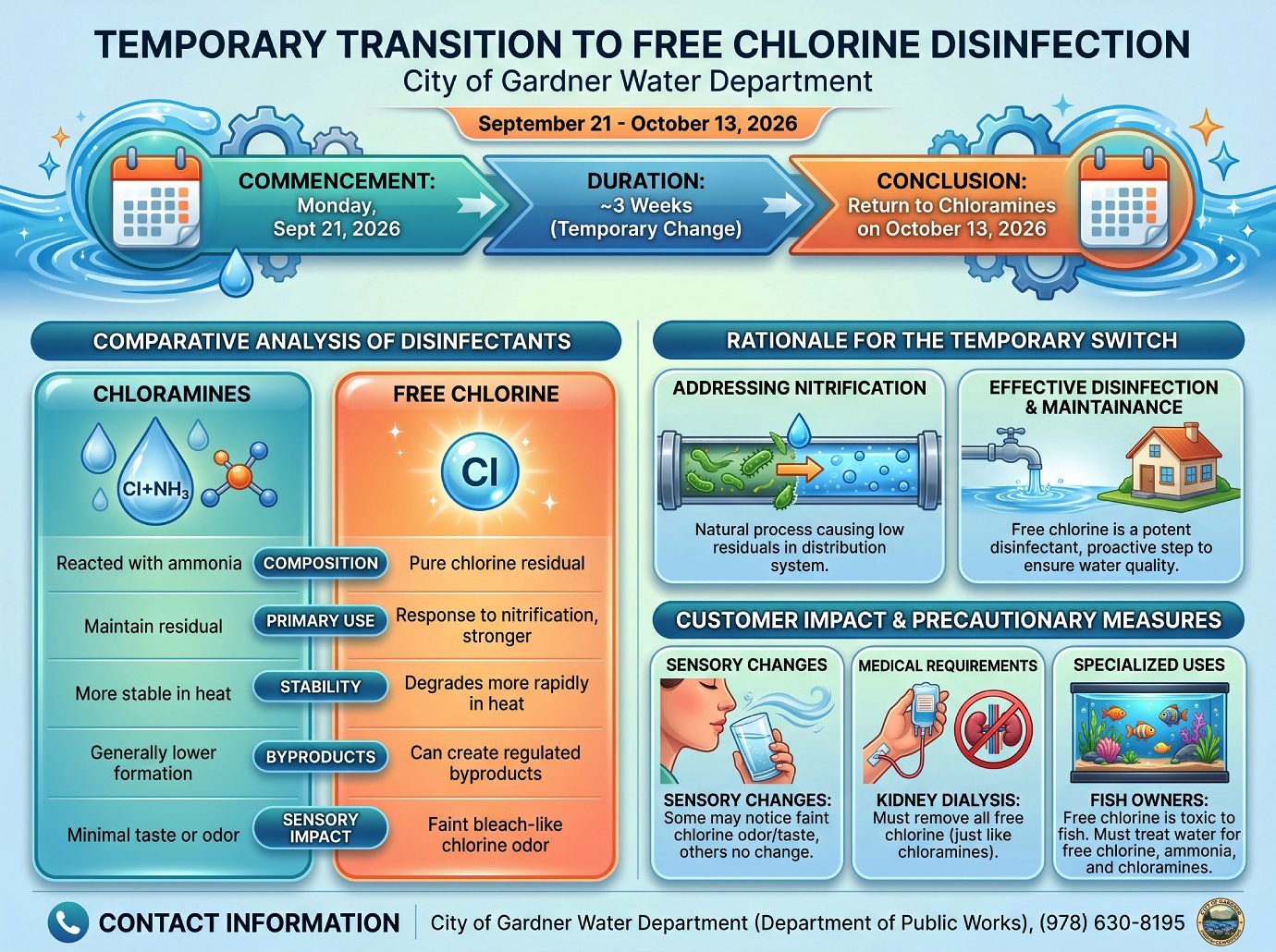
Commencement Date: Monday, September 21, 2026.
- Duration: Approximately three weeks.
- Conclusion Date: Anticipated return to chloramines on October 13, 2026.
Comparative Analysis of Disinfectants: The transition involves moving from a secondary disinfectant (chloramines) to a primary, stronger disinfectant (free chlorine) to address specific biological processes in the water mains.
| Feature | Chloramines | Free Chlorine |
|---|---|---|
| Composition | Chlorine reacted with a small amount of ammonia. | Pure chlorine residual. |
| Primary Use | Final disinfection and residual maintenance to prevent bacteria/viruses. | Stronger disinfection; used to respond to nitrification events. |
| Stability | More stable under elevated water temperatures. | Degrades more rapidly under elevated temperatures. |
| Byproducts | Generally lower byproduct formation. | Can create regulated disinfection byproducts. |
| Sensory Impact | Minimal taste or odor. | May exhibit a faint bleach-like (chlorine) odor. |
Rationale for the Temporary Switch: The primary driver for this change is the detection of nitrification, a natural process that has led to low chloramine residuals in parts of the distribution network and water mains.
- Effective Disinfection: Free chlorine is a more potent disinfectant than chloramines, making it a superior tool for neutralizing the effects of nitrification.
- Proactive Maintenance: The Department of Public Works is implementing this switch as a preventative step to ensure the continued delivery of effectively disinfected water to all customers.
Customer Impact and Precautionary Measures: While the transition is a standard maintenance procedure, the City has identified specific areas where customers may be affected or need to take action.
Sensory Changes: Individuals have varying levels of sensitivity to the taste and odor of water. During this period, some customers may notice a faint, bleach-like chlorine scent. However, many residents are expected to detect no change in water quality.
Medical and Specialized Requirements: Certain users must take specific steps to treat the water before use during this transition:
- Kidney Dialysis: Just as with chloramines, free chlorine must be completely removed from the water used in kidney dialysis machines.
- Fish Owners: Free chlorine can be toxic to fish. Owners of tropical fish must ensure that free chlorine, ammonia, and chloramines are removed from the water before it is introduced to fish environments.
Contact Information: The City of Gardner Water Department remains the primary point of contact for questions or further information regarding this temporary disinfection change.
- Department: City of Gardner Water Department (Department of Public Works)
- Phone: (978) 630-8195
Each of the following infographics covers different angles of this topic. CLICK IMAGE for larger view.