An interview with Templeton Town Administrator James Ryan and Police Chief Michael Bennett
Listen to this interview on any device, CLICK PLAY
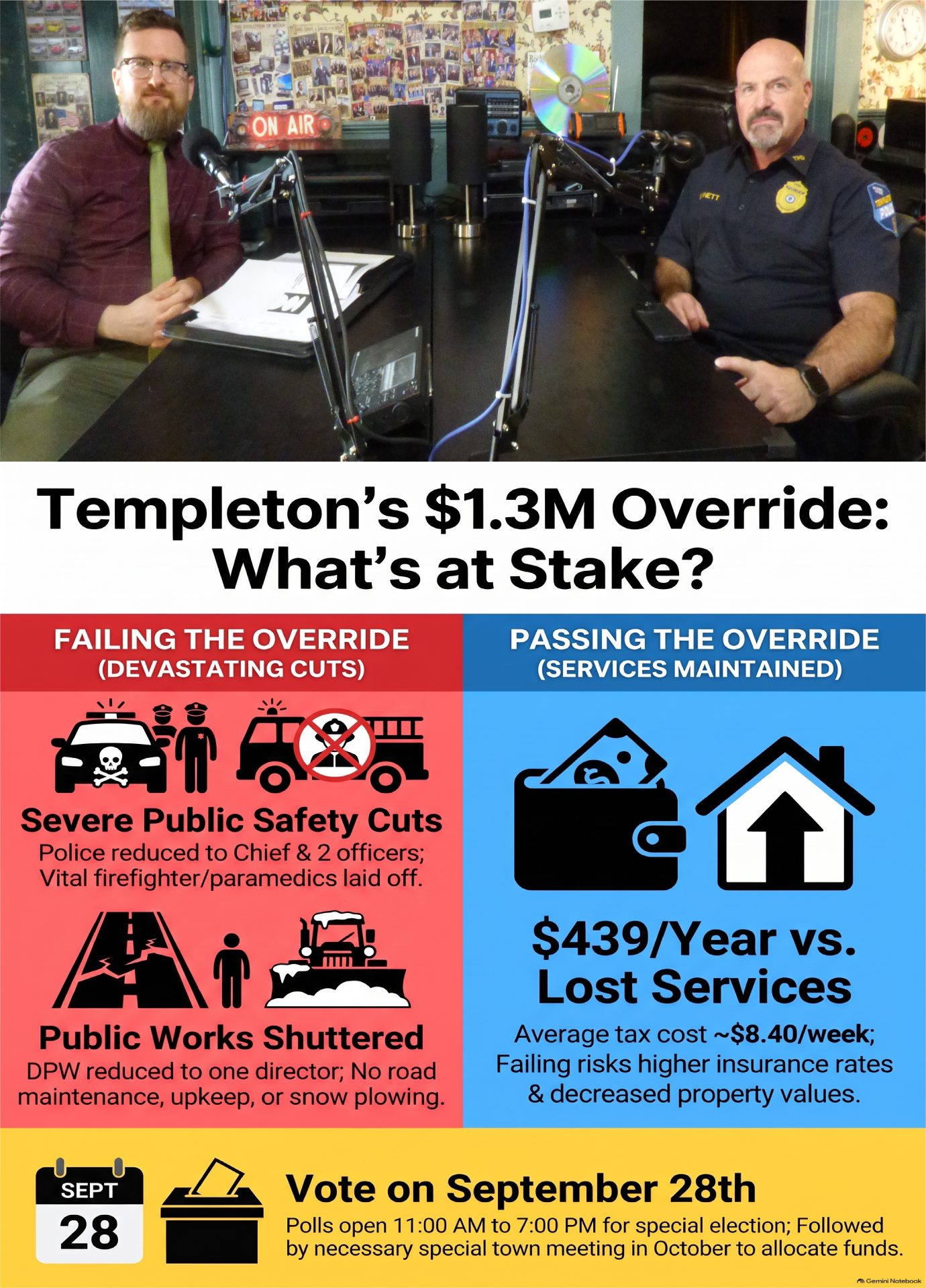
In this interview, Templeton Town Administrator James Ryan and Police Chief Michael Bennett discuss a looming budget deficit and a critical tax override vote scheduled for September 28th. The officials explain that approving a $1.3 million funding increase is necessary to maintain essential town services and restore a midnight police shift. Failure to pass the measure would result in severe personnel cuts, including the layoff of nearly all public works employees and a drastic reduction in the police and fire departments. Chief Bennett highlights the public safety risks of relying on state police coverage, while Ryan clarifies that one-time grants cannot solve the town’s structural financial issues. Ultimately, the leaders emphasize that the community must decide between a modest tax increase or the loss of local emergency response and infrastructure maintenance.
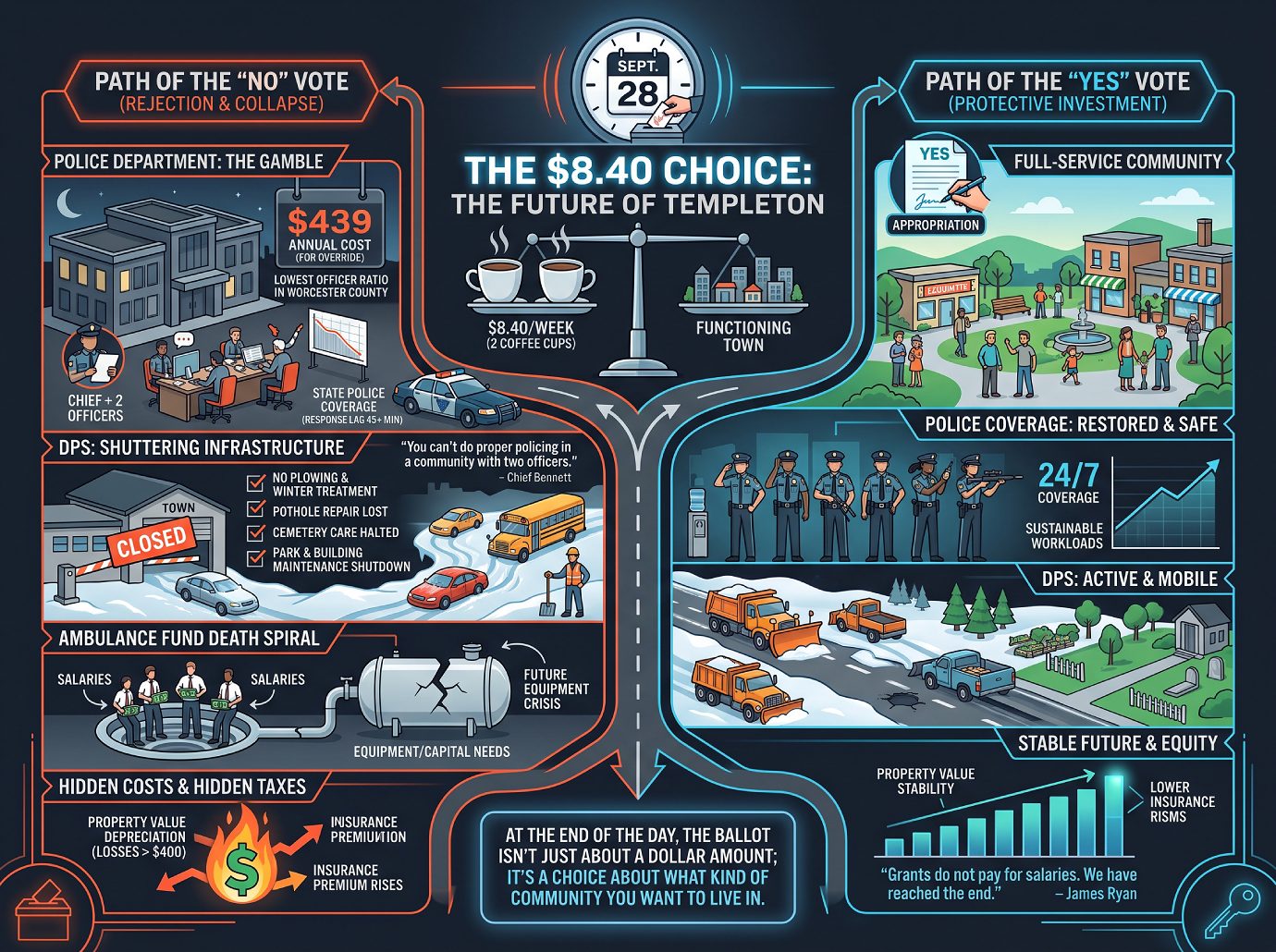
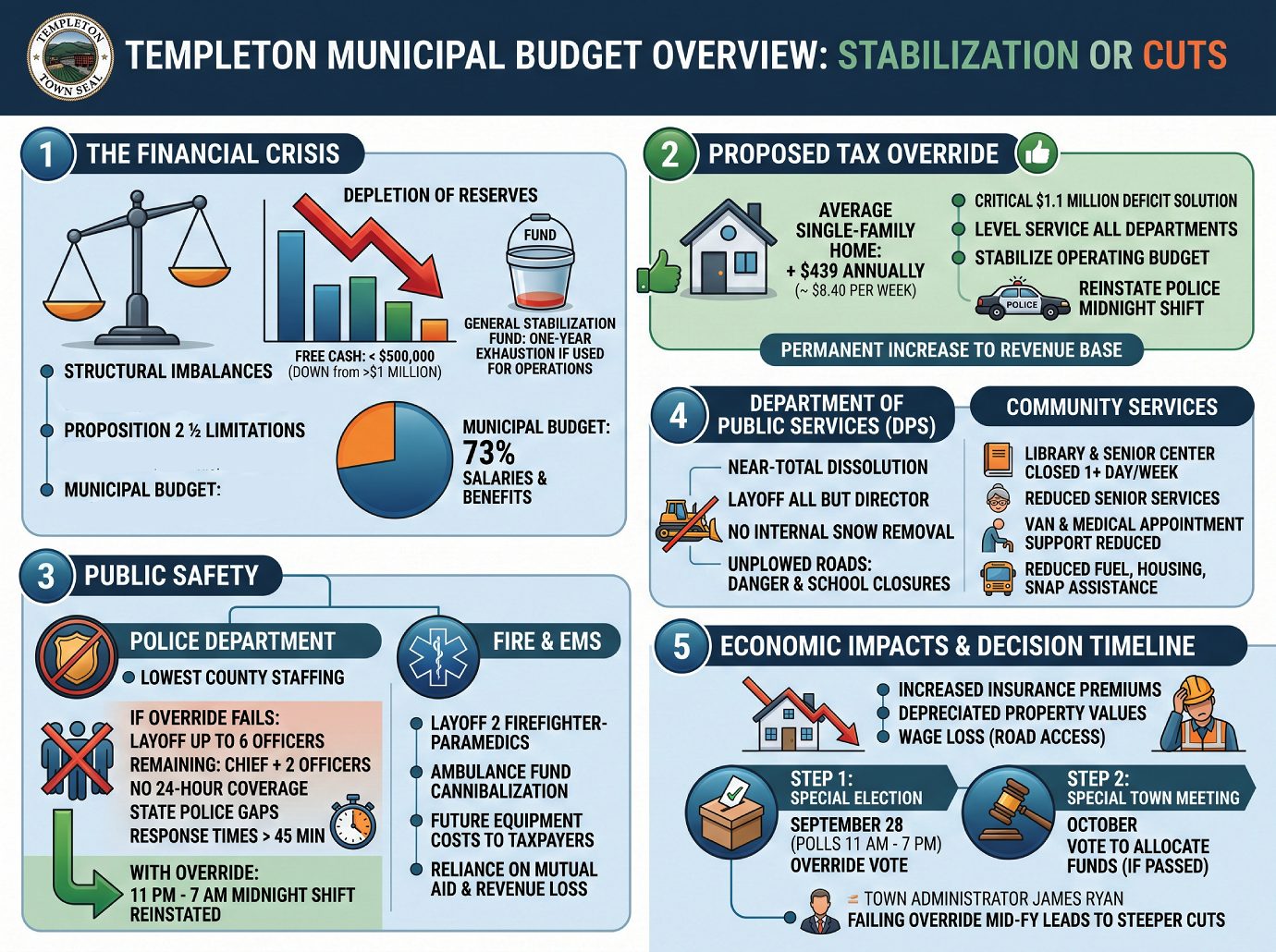
The Town of Templeton faces a critical $1.1 million budget deficit that threatens the continuity of essential municipal services. On September 28, residents will vote on a $1.3 million tax override designed to stabilize the town’s operating budget. Approval of the override would allow the town to “level service” its departments and reinstate a dedicated police midnight shift. Failure to pass the override will trigger drastic personnel cuts, effectively shuttering the Department of Public Services (DPS) and reducing the Police Department to only the Chief and two officers. For the average single-family home, the override represents an estimated increase of $439 annually, or approximately $8.40 per week.
Overview of the Financial Crisis
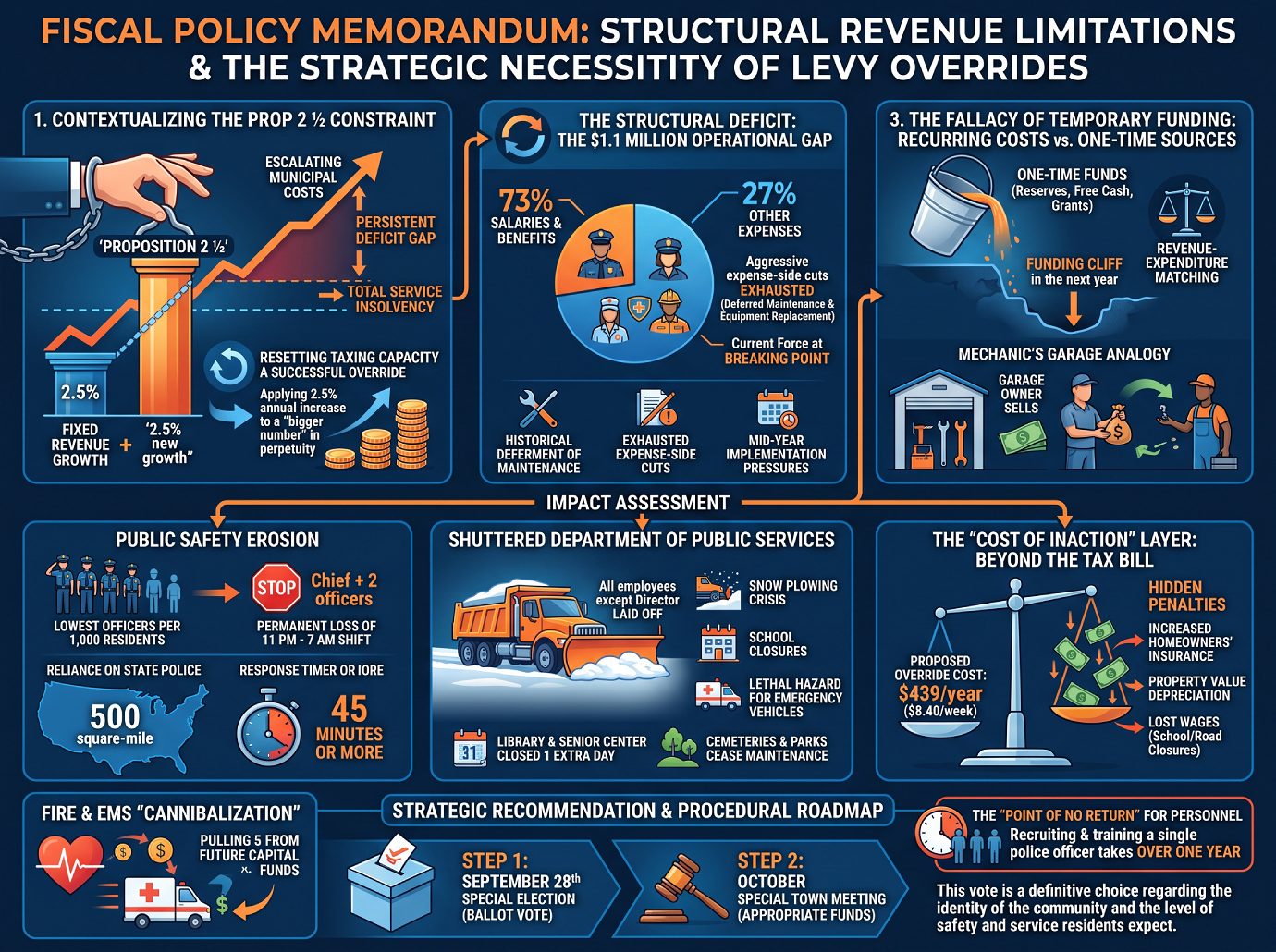
The current deficit is the result of years of structural financial imbalances. The town has historically avoided asking for tax increases by implementing expense-side cuts—often deferring equipment replacement and maintenance—and using one-time revenue sources like “free cash” to plug operating gaps.
- Depletion of Reserves: Free cash certification has dropped from over $1 million to under $500,000 in just a few years.
- Limitations of One-Time Funds: Town officials emphasize that the $1.5 million general purpose stabilization fund cannot solve the problem; using it for operating expenses would exhaust the fund within a year, leaving the town in an even worse position.
- Revenue Constraints: Proposition 2 ½ limits annual tax levy increases. The override provides a permanent increase to the revenue base, which is necessary to cover recurring operating costs such as salaries and benefits, which comprise 73% of the municipal budget.
Impact on Public Safety
Police Department
The Templeton Police Department currently operates with the lowest number of officers per 1,000 residents in Worcester County.
- Consequences of Override Failure: The department would be forced to lay off up to six officers, leaving only the Chief and two officers. This staffing level is insufficient to maintain even a consistent day shift, let alone 24-hour coverage.
- Loss of Midnight Shift: Currently, the town lacks an 11:00 p.m. to 7:00 a.m. shift. State Police coverage for this period is unreliable, as only two troopers cover a 500-square-mile area. Response times can reach 45 minutes or more.
- Operational Strain: Existing officers are working 60 to 80 hours per week to cover gaps. Two officers have already left due to job insecurity, and two others are out with injuries.
- Long-term Recovery: Rebuilding the department would take over a year per officer due to academy and field training requirements, assuming qualified candidates can be recruited.
Fire and EMS
- Staffing Reductions: Failure of the override would result in the layoff of two firefighter-paramedics.
- Ambulance Fund Cannibalization: To save the general fund, the town has shifted firefighter salaries to the ambulance receipts account. This account, intended for capital needs like ambulances and defibrillators, will eventually become insolvent, forcing equipment costs back onto the taxpayers.
- Service Disruptions: Loss of staff may lead to reliance on mutual aid from neighboring towns (Winchendon or Hubbardston). This results in a loss of revenue for Templeton, as the responding agency collects the insurance payments.
Impact on Infrastructure and Community Services
Department of Public Services (DPS):The most visible impact of a failed override would be the near-total dissolution of the DPS.
- Staffing Cuts: Every employee in the department would be laid off except for the Director. This includes highway staff, mechanics, and buildings and grounds personnel.
- Snow Removal: The town would lose its ability to plow roads internally. Outsourcing is difficult and expensive, as the state pays significantly higher rates for private plow contractors.
- Safety and Schools: Unplowed roads pose a danger to public safety vehicles and would likely lead to frequent school closures, disrupting parents’ ability to work.
- Maintenance: Maintenance of municipal buildings, parks, and cemeteries would cease.
Community Services
- Library and Senior Center: Both facilities would be forced to close at least one additional day per week.
- Senior Support: Reductions would impact van services for medical appointments and assistance programs for fuel, housing, SNAP, and other essential benefits.
Economic and Strategic Considerations: Town leadership identifies several hidden costs associated with voting against the override:
| Factor | Potential Negative Impact of Override Failure |
|---|---|
| Insurance Premiums | Home insurance rates may increase due to diminished public safety services. |
| Property Values | Real estate values may depreciate as municipal services (schools, safety, infrastructure) decline. |
| Employment | Residents may lose wages if unmaintained roads prevent them from reaching their jobs. |
| Grants | While the town pursues grants, these funds only cover one-time projects and cannot be used for the salaries and benefits that drive municipal operations. |
Timeline for Decision: The town has outlined a two-step process for resolving the budget crisis:
- Special Election (September 28): Residents vote on the authority to tax above the levy limit. Polls are open from 11:00 a.m. to 7:00 p.m.
- Special Town Meeting (October): If the override passes, the town meeting must then vote to officially allocate the funds to the specific departments.
Town Administrator James Ryan noted that because this vote occurs mid-fiscal year, the cuts implemented in the event of a failure must be “steeper” to compensate for funds already spent during the first portion of the year.