The Real Reasons Behind the Morning Scramble – A Gardner Magazine Report
Why are we late to work? Gardner Magazine explores the subject in detail. The Chair Man and the Chair Lady discuss why we are always late for work and Max and Maxine Rogers debate the Billion Dollar Lateness Problem
View the complete `19 page Gardner Magazine Report on PDF, CLICK HERE.
Show this article to your family, friends, coworkers, and staff. Perhaps you can reduce lateness in the workplace, reduce costs, and maybe even save someone’s job.
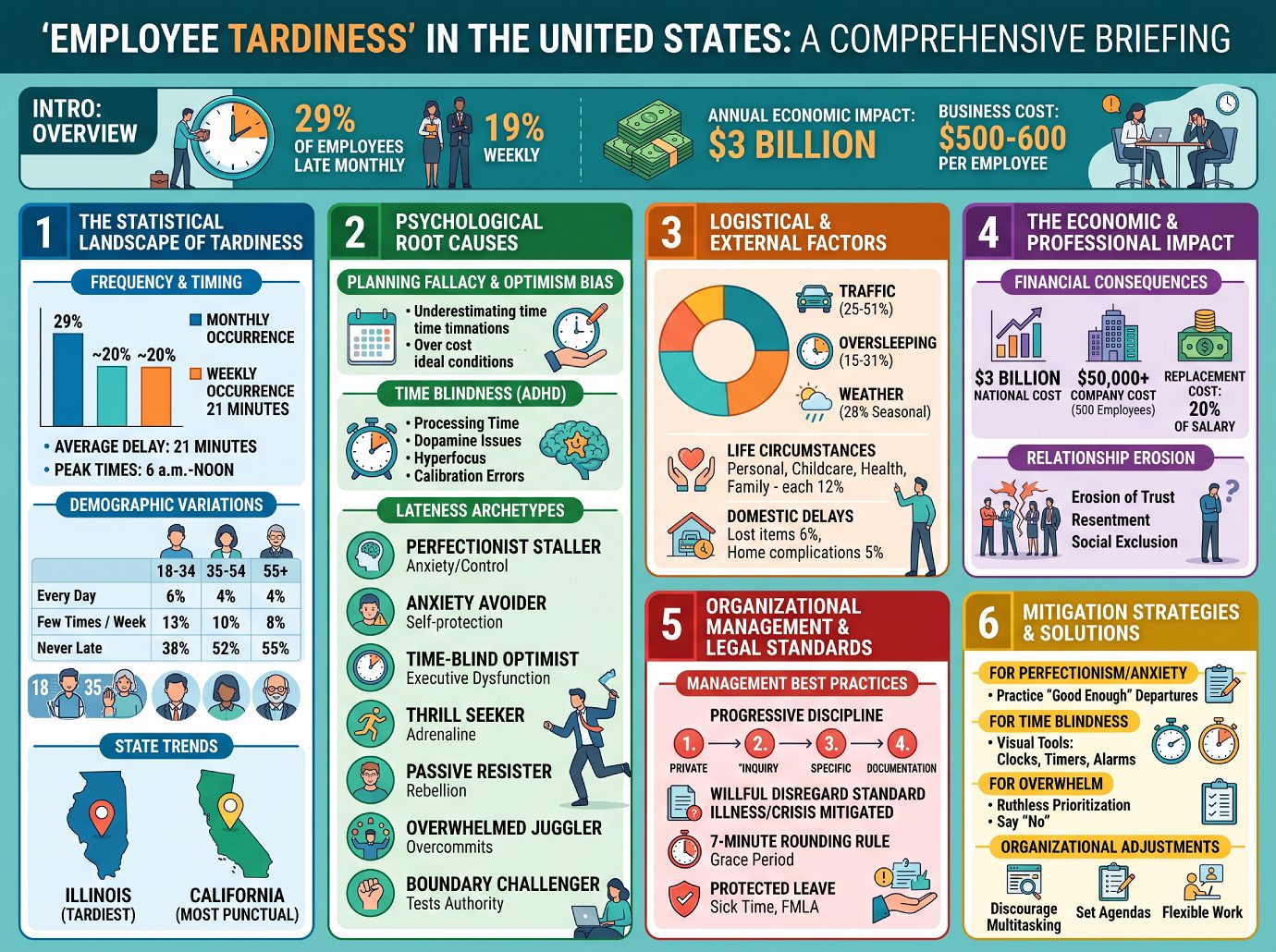
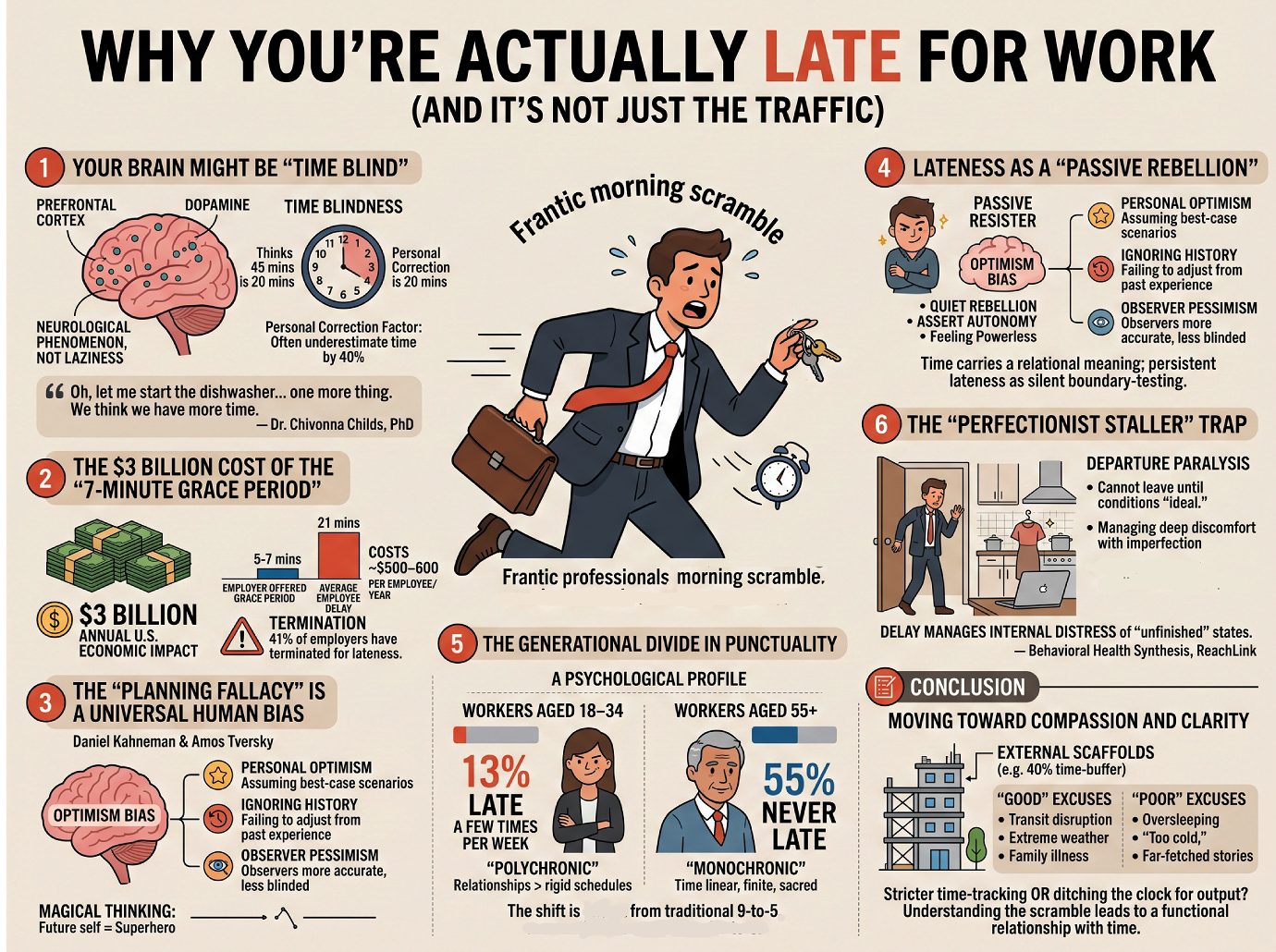
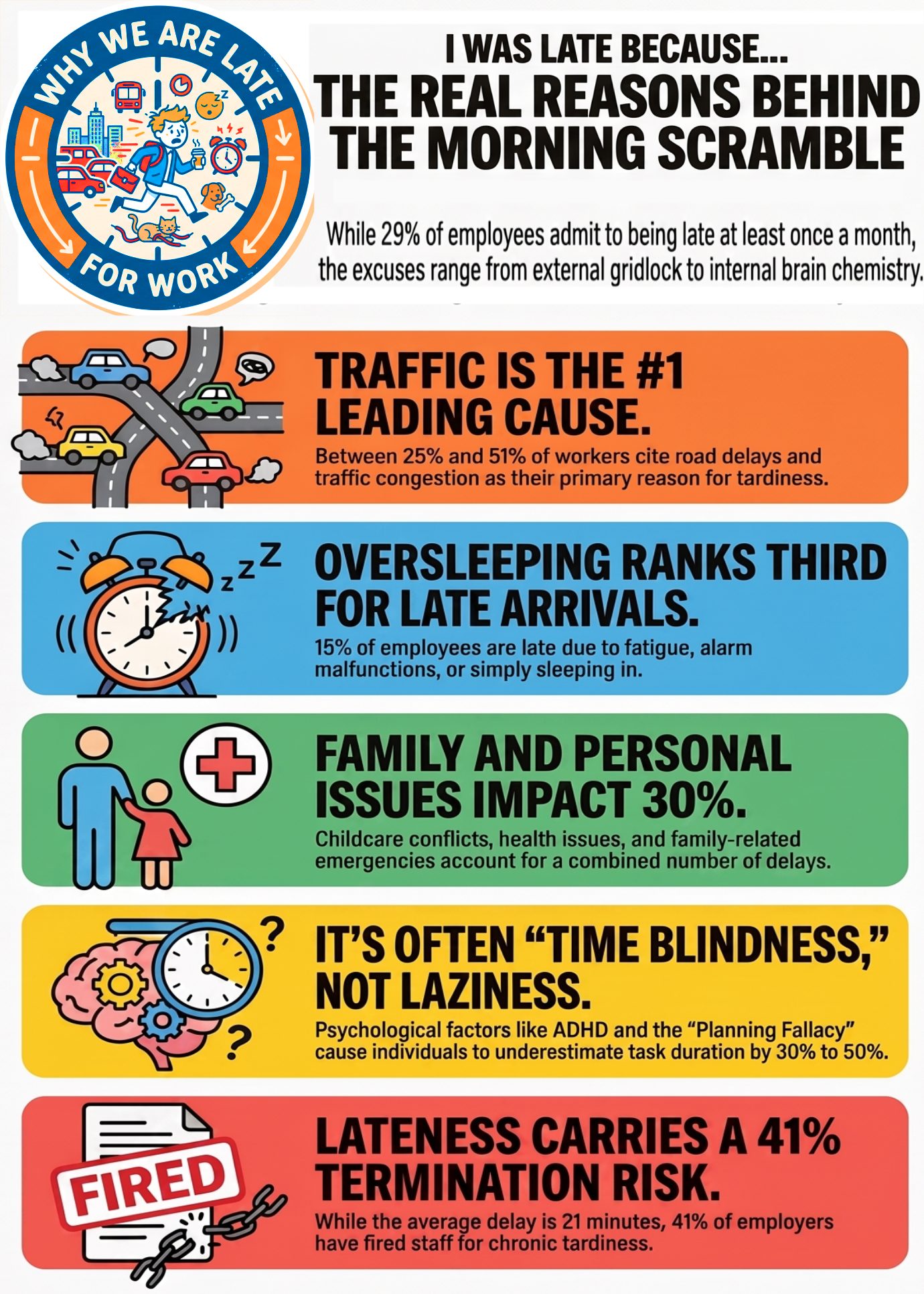
Employee lateness is a pervasive and costly phenomenon in the United States and the Commonwealth of Massachusetts, driven by a complex interplay of logistical barriers and deep-seated psychological patterns. Research indicates that 29% of employees are late at least once per month, with nearly one in five (19%) being regularly late on a weekly basis. The economic impact is significant, costing the U.S. economy an estimated $3 billion annually, with individual costs to businesses ranging from $500 to $600 per tardy employee.
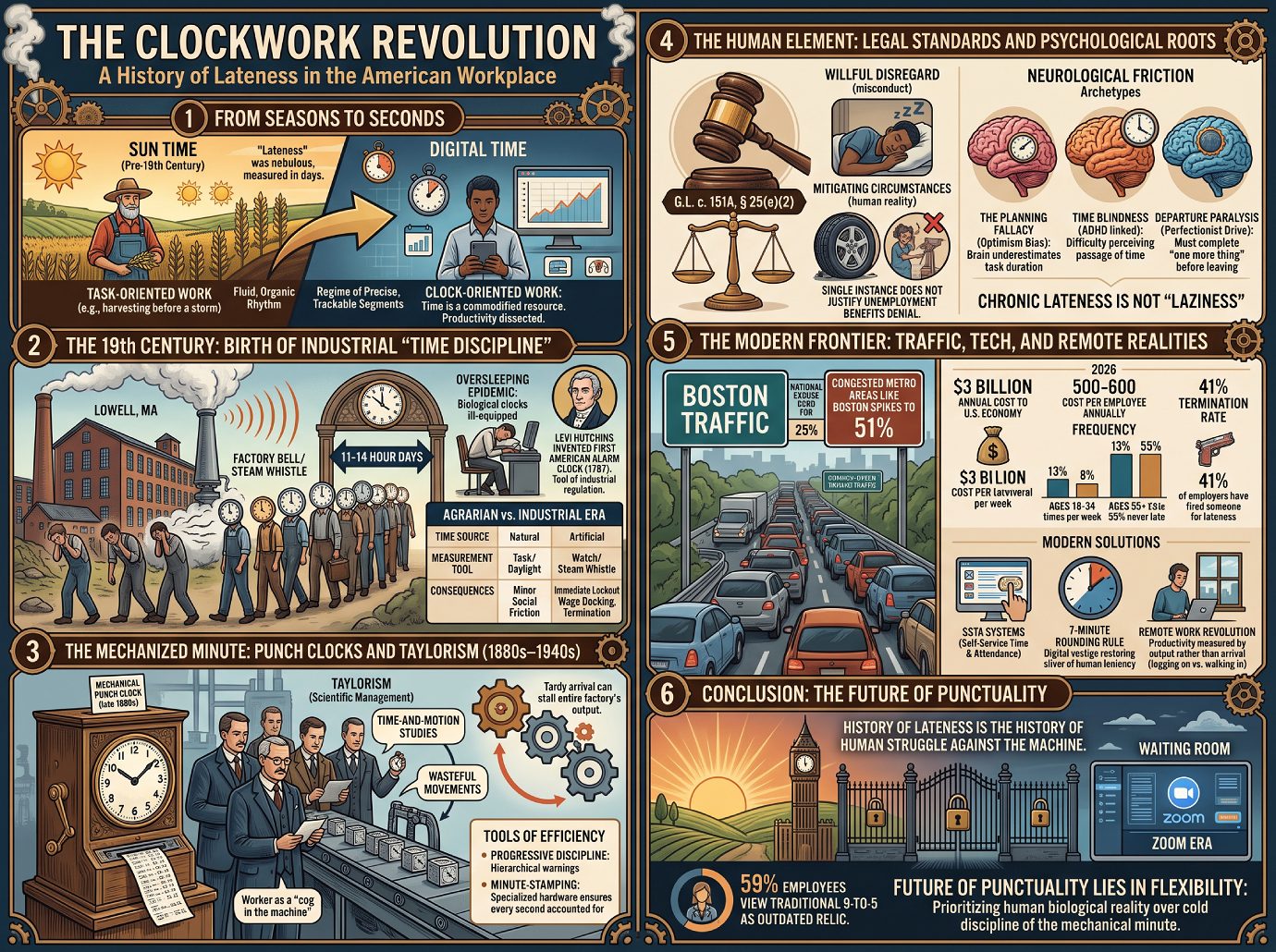
While external factors like traffic (25%) and oversleeping (15%) are the most cited reasons for delays, psychological research suggests that chronic lateness is rarely a simple failure of time management. Instead, it is often a symptom of “time blindness,” “optimism bias,” or underlying mental health conditions such as ADHD, anxiety, and depression. Employers remain divided on the issue: 41% have terminated employees for tardiness, while 18% prioritize work completion over strict punctuality. As workplace dynamics evolve, particularly with the rise of remote work and flexible schedules, the traditional “9 to 5” standard is increasingly viewed as outdated by a majority of the workforce (59%).
Some of the factors covered in the Gardner Magazine 19 page report, CLICK HERE. : 1. The statistical landscape of tardiness as it varies by age, employment type, and regional infrastructure 2. Psychological root causes as studies show chronic lateness often stems from neurological and emotional patterns rather than a lack of character or laziness. 3. Lateness due to factor beyond the immediate control of employees. 4. The measurable negative effect of tardiness on both macro-economic stability and individual career trajectories. 5. Organizational Management and Legal Standards 6. Mitigation Strategies and Solutions 7. An explanation of the reasons people are late for work. 8. A complete history of lateness in the American Workplace. Gardner Magazine 19 page report, CLICK HERE.