Home Heating Oil Price is Way Up – Gardner Magazine Reports on the How and Why
Experts disagree on the overall cause and eventual solution to the unprecedented high home heating oil prices. Gardner Magazine’s Max and Maxine Rogers debate the issue. CLICK PLAY.
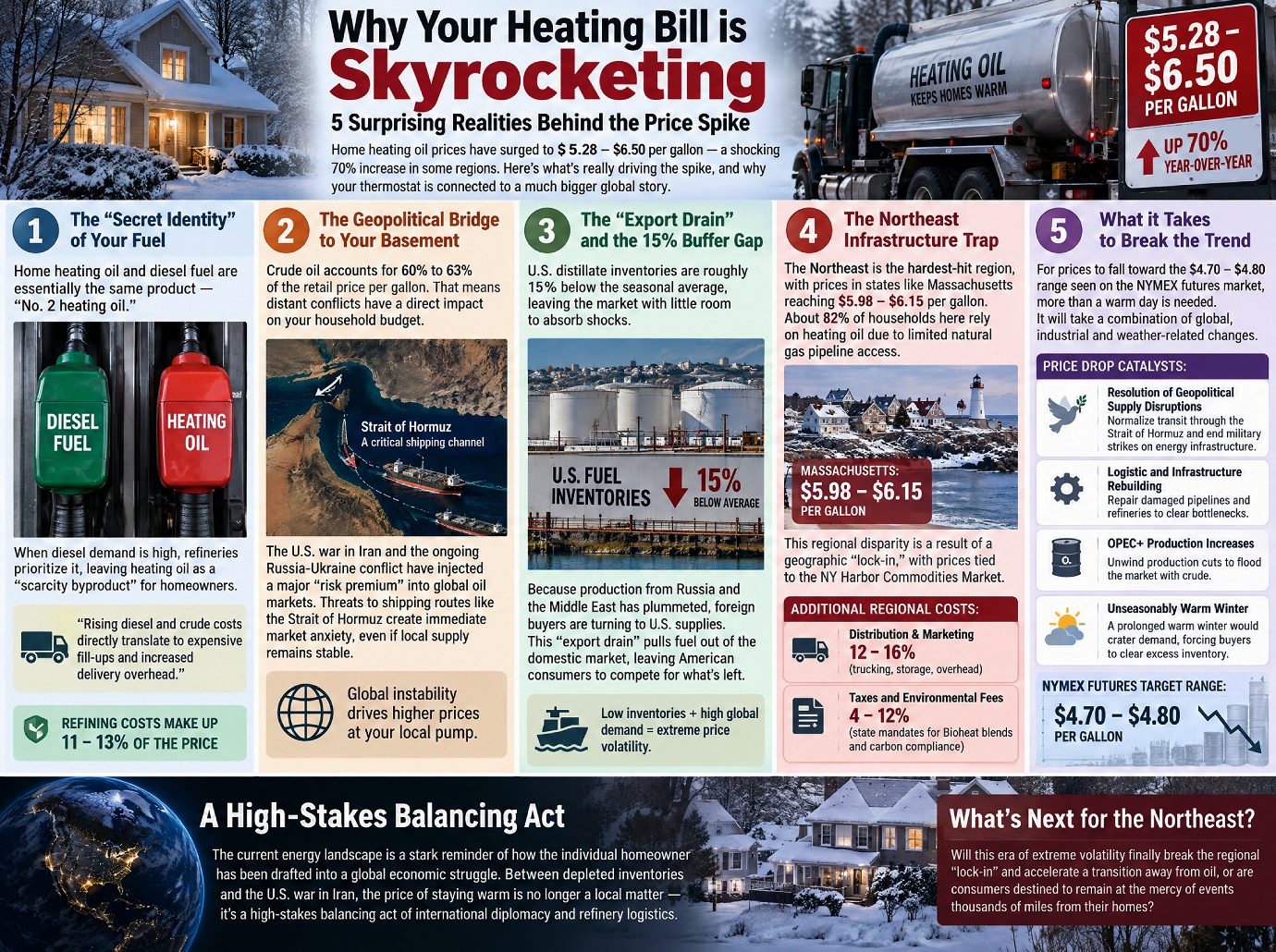
The home heating oil market is currently experiencing significant volatility, with retail prices in regions like the Northeast United States reaching near-record highs. In Massachusetts, for example, prices have surged to between $5.98 and $6.15 per gallon—a 50% to 70% increase over the previous year. This price escalation is driven by a convergence of geopolitical conflicts, record-low domestic inventories, and high international demand for U.S. distillates.
As heating oil is chemically nearly identical to diesel fuel, its price is tethered to global diesel and crude oil benchmarks. Currently, domestic distillate inventories are roughly 15% below the seasonal average, leaving the market with no buffer against supply shocks. For prices to decline significantly, the market requires a simultaneous easing of geopolitical tensions in the Middle East and Eastern Europe, an increase in global refinery output, and potentially unseasonably warm winter weather to reduce consumer demand.
The Four Pillars of Heating Oil Pricing: The retail price of a typical gallon of heating oil is determined by four primary cost components. While these percentages fluctuate based on market conditions, they provide a baseline for understanding consumer costs.
| Cost Component | Percentage of Retail Price | Description |
|---|---|---|
| Crude Oil | 60% – 63% | The single largest driver; tied to global supply, demand, and OPEC production levels. |
| Refining Costs | 11% – 13% | The expense of converting crude into “No. 2 heating oil”; affected by outages and maintenance. |
| Distribution & Marketing | 12% – 16% | Costs for storage, delivery trucks, driver wages, and local business operations. |
| Taxes & Fees | 4% – 12% | Federal, state, and local taxes plus environmental compliance (e.g., Bioheat mandates). |