Pollinators and Decline of Bee Populations in the United States
To Bee or Not to Bee – Jump to: Pollinator Population Declines and Conservation Strategies: A Comprehensive Briefing —-Why Massachusetts is Becoming the National Blueprint for Bee Conservation
Listen to this “Deep Dive” regarding the declining Bee population on any device, CLICK PLAY.
Listen to this “Deep Dive” regarding the preservation of Bees in the State of Massachusetts. “Saving Bees with Lazy Lawns.” CLICK PLAY.
This produced Gardner Magazine video “To Bee or Not to Bee” covers the issue and the solutions being implemented in the State of Massachusetts.
This article examines critical role of pollinators and the concerning decline of their populations across the United States. These animals, including managed honey bees and thousands of native species, contribute billions of dollars to the economy by supporting the production of fruits, nuts, and vegetables. Researchers have identified several primary stressors responsible for these losses, such as habitat destruction, pesticide exposure, climate change, and the spread of pathogens. In response, federal agencies and academic institutions are developing conservation strategies, including clean stock certification programs and habitat restoration initiatives. These efforts are essential to protecting food security and maintaining the health of diverse natural ecosystems. Ultimately, the texts emphasize that community involvement and scientific research are vital to ensuring these indispensable species thrive in the future.
*
Pollinator Population Declines and Conservation Strategies: A Comprehensive Briefing
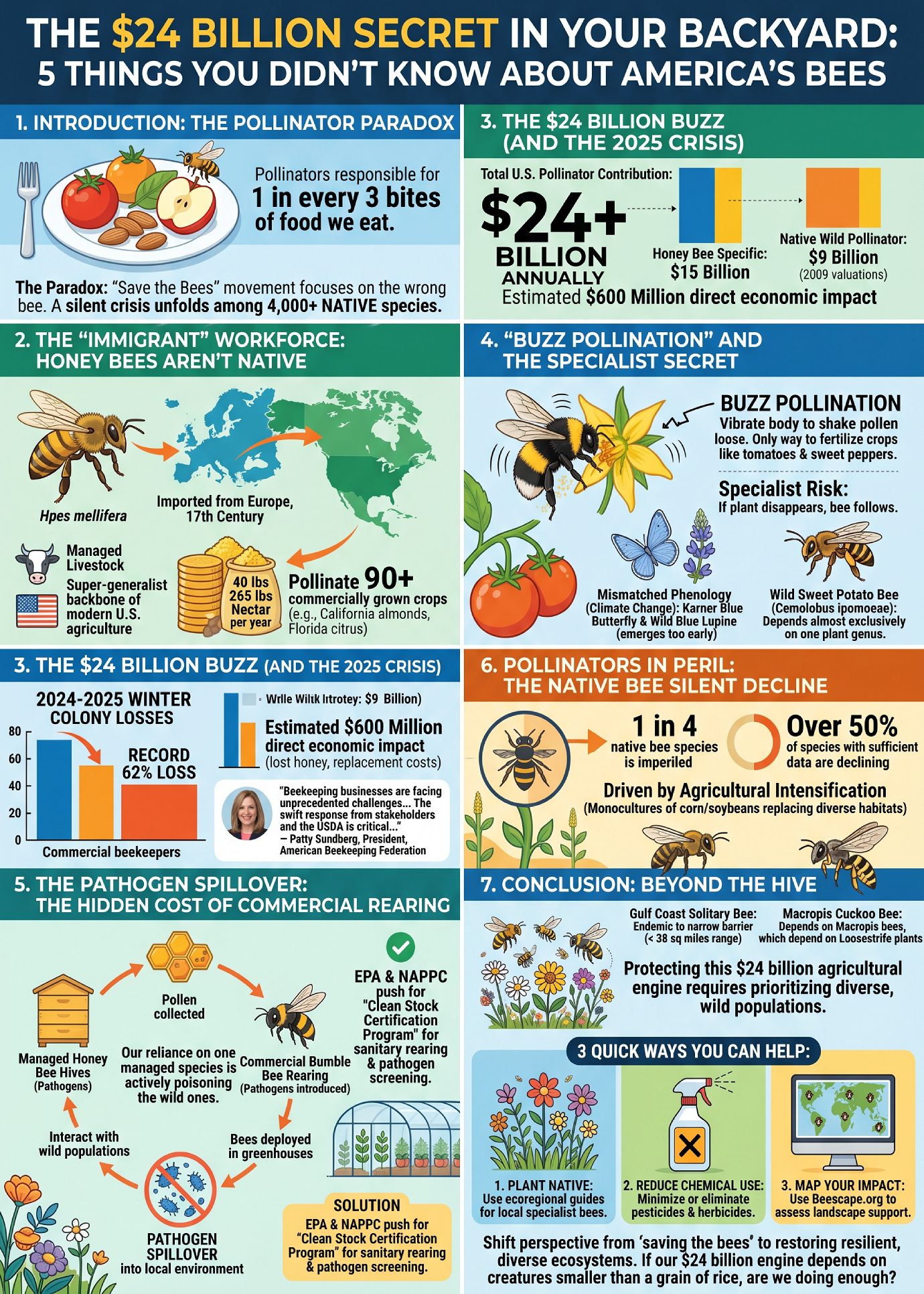
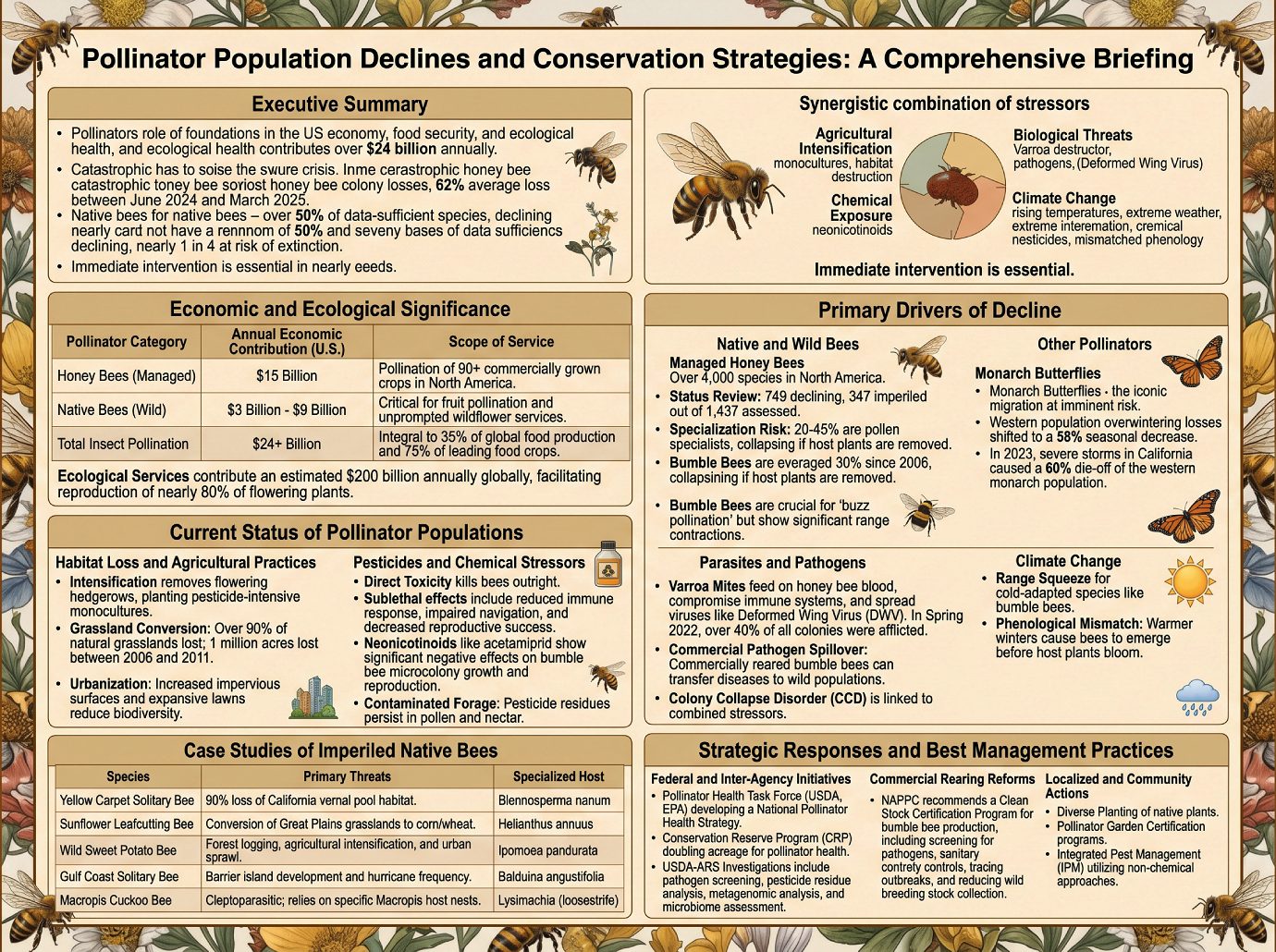
Pollinators are foundational to the stability of the United States economy, food security, and ecological health. They contribute more than $24 billion to the domestic economy annually, with honey bees alone accounting for $15 billion through the pollination of over 130 types of fruits, nuts, and vegetables. However, both managed and wild pollinator populations are facing an unprecedented crisis.
Recent data indicates a catastrophic escalation in honey bee colony losses, with commercial beekeepers sustaining an average loss of 62% between June 2024 and March 2025—the highest ever recorded. Simultaneously, native bees are in severe peril; a systematic review of over 4,000 North American and Hawaiian species reveals that more than 50% of data-sufficient species are declining, and nearly 1 in 4 is at increasing risk of extinction.
The decline is driven by a synergistic combination of stressors:
- Agricultural Intensification: The expansion of monocultures (e.g., corn and soy) and the destruction of natural habitats like grasslands and vernal pools.
- Chemical Exposure: Widespread use of pesticides, including neonicotinoids and broad-spectrum insecticides.
- Biological Threats: Parasites like the Varroa destructor mite and pathogens such as Deformed Wing Virus, which can spill over from managed colonies to wild populations.
- Climate Change: Rising temperatures, extreme weather events, and “mismatched phenology,” where the timing of plant flowering and pollinator emergence no longer align.
Immediate intervention through habitat restoration, “clean stock” certification programs for commercial rearing, and multi-agency research initiatives is essential to mitigate these trends and safeguard the nation’s food supply.
Economic and Ecological Significance
Pollinators provide vital ecosystem services that support biodiversity and agricultural productivity.
Economic Impact
| Pollinator Category | Annual Economic Contribution (U.S.) | Scope of Service |
|---|---|---|
| Honey Bees (Managed) | $15 Billion | Pollination of 90+ commercially grown crops in North America. |
| Native Bees (Wild) | $3 Billion – $9 Billion | Critical for fruit pollination and unprompted wildflower services. |
| Total Insect Pollination | $24+ Billion | Integral to 35% of global food production and 75% of leading food crops. |
Ecological Services
Beyond direct crop value, pollinators contribute an estimated $200 billion annually in global ecological services. They facilitate the reproduction of nearly 80% of flowering plants, which in turn provide food for wildlife, maintain soil health, and ensure water cleanliness.
Current Status of Pollinator Populations
Managed Honey Bees (Apis mellifera)
Honey bees are not native to North America, having been introduced by European settlers in the 1600s. Despite their non-native status, they are the most important agricultural pollinators due to their transportability.
- Historical Decline: Managed colonies have dropped from 6 million in 1947 to approximately 2.67 million in 2022.
- Winter Mortality: Historical loss rates were 10–15%. Since 2006, these have averaged 30%.
- 2024–2025 Crisis: Commercial beekeepers recently reported losing 1.6 million colonies. The 62% loss rate for commercial operations is a reversal of typical trends, where larger operations usually maintain higher stability than hobbyists.
Native and Wild Bees
North America is home to over 4,000 species of native bees, many of which are solitary and ground-nesting.
- Status Review: Out of 1,437 species with sufficient data to assess, 749 are declining and 347 are imperiled.
- Specialization Risk: Approximately 20–45% of native bees are pollen specialists, relying on a single plant genus. If the host plant is removed through development or agriculture, the bee population collapses.
- Bumble Bees: Crucial for “buzz pollination” (vibrating bodies to shake pollen loose), bumble bees are effective pollinators for greenhouse crops like tomatoes and strawberries. However, several species have shown significant range contractions.
Other Pollinators
- Monarch Butterflies: The iconic migration is at imminent risk. Western population overwintering losses have shifted from historically manageable levels to a 58% seasonal decrease. In 2023, severe storms in California caused a 60% die-off of the western monarch population.
Primary Drivers of Decline
Habitat Loss and Agricultural Practices
- Intensification: Changing land use to increase yield per unit often results in the removal of flowering hedgerows and the planting of pesticide-intensive monocultures.
- Grassland Conversion: Over 90% of North American natural grasslands have been converted to agriculture. Between 2006 and 2011 alone, 1 million acres of U.S. grasslands were lost.
- Urbanization: Increased impervious surfaces (pavement/buildings) and expansive lawns reduce botanical biodiversity and species richness.
Pesticides and Chemical Stressors
- Direct Toxicity: Insecticides used during blooming periods can kill bees outright. Sublethal effects include reduced immune response, impaired navigation, and decreased reproductive success.
- Neonicotinoids: Research on acetamiprid shows significant negative effects on bumble bee microcolony growth and reproduction, though typically at concentrations higher than standard environmental label rates.
- Contaminated Forage: Pesticide residues often persist in pollen and nectar, which are then carried back to the colony or nest.
Parasites and Pathogens
- Varroa Mites (Varroa destructor): These mites feed on honey bee blood, compromising immune systems and spreading viruses like Deformed Wing Virus (DWV). In Spring 2022, over 40% of all colonies were afflicted with Varroa mites.
- Commercial Pathogen Spillover: Commercially reared bumble bees may be exposed to pathogens via pollen collected from honey bee colonies. When these bees are deployed for greenhouse pollination, they can interact with wild bees, potentially transferring diseases to native populations.
- Colony Collapse Disorder (CCD): A phenomenon characterized by the rapid, catastrophic loss of adult bees from a hive, linked to a combination of stressors including mites, disease, and poor nutrition.
Climate Change
- Range Squeeze: Cold-adapted species like bumble bees are disappearing from the southern portions of their ranges but are not necessarily shifting north, leading to a reduction in suitable habitat.
- Phenological Mismatch: Warmer winters cause bees to emerge earlier, sometimes before their host plants have bloomed, leading to starvation and reduced larval success.
Case Studies of Imperiled Native Bees
| Species | Primary Threats | Specialized Host |
|---|---|---|
| Yellow Carpet Solitary Bee | 90% loss of California vernal pool habitat. | Blennosperma nanum |
| Sunflower Leafcutting Bee | Conversion of Great Plains grasslands to corn/wheat. | Helianthus annuus |
| Wild Sweet Potato Bee | Forest logging, agricultural intensification, and urban sprawl. | Ipomoea pandurata |
| Gulf Coast Solitary Bee | Barrier island development and hurricane frequency. | Balduina angustifolia |
| Macropis Cuckoo Bee | Cleptoparasitic; relies on specific Macropis host nests. | Lysimachia (loosestrife) |
Strategic Responses and Best Management Practices
Federal and Inter-Agency Initiatives
- Pollinator Health Task Force: Co-chaired by the USDA and EPA to develop a National Pollinator Health Strategy, focusing on research, public education, and public-private partnerships.
- Conservation Reserve Program (CRP): Efforts to double the acreage dedicated to pollinator health within the CRP to strengthen core habitats.
- USDA-ARS Investigations: Current four-tiered investigations include pathogen screening, pesticide residue analysis, metagenomic analysis, and microbiome assessment to determine the causes of recent catastrophic losses.
Commercial Rearing Reforms
To mitigate disease risk, the North American Pollinator Protection Campaign (NAPPC) recommends a Clean Stock Certification Program for bumble bee production. Suggested practices include:
- Screening all stock for pathogens and quarantining new stock.
- Implementing sanitary production controls.
- Tracing disease outbreaks and identifying causative agents.
- Reducing the need to collect breeding stock from the wild to prevent depletion of native populations.
Localized and Community Actions
Researchers emphasize that small-scale changes can have significant impacts:
- Diverse Planting: Incorporating ecoregionally appropriate native plants, trees, and shrubs into residential and public gardens.
- Pollinator Garden Certification: Programs that educate the public on creating habitats that provide both food and nesting sites.
- Integrated Pest Management (IPM): Utilizing non-chemical approaches, such as biological controls (natural enemies), to manage pests before resorting to toxic chemicals.
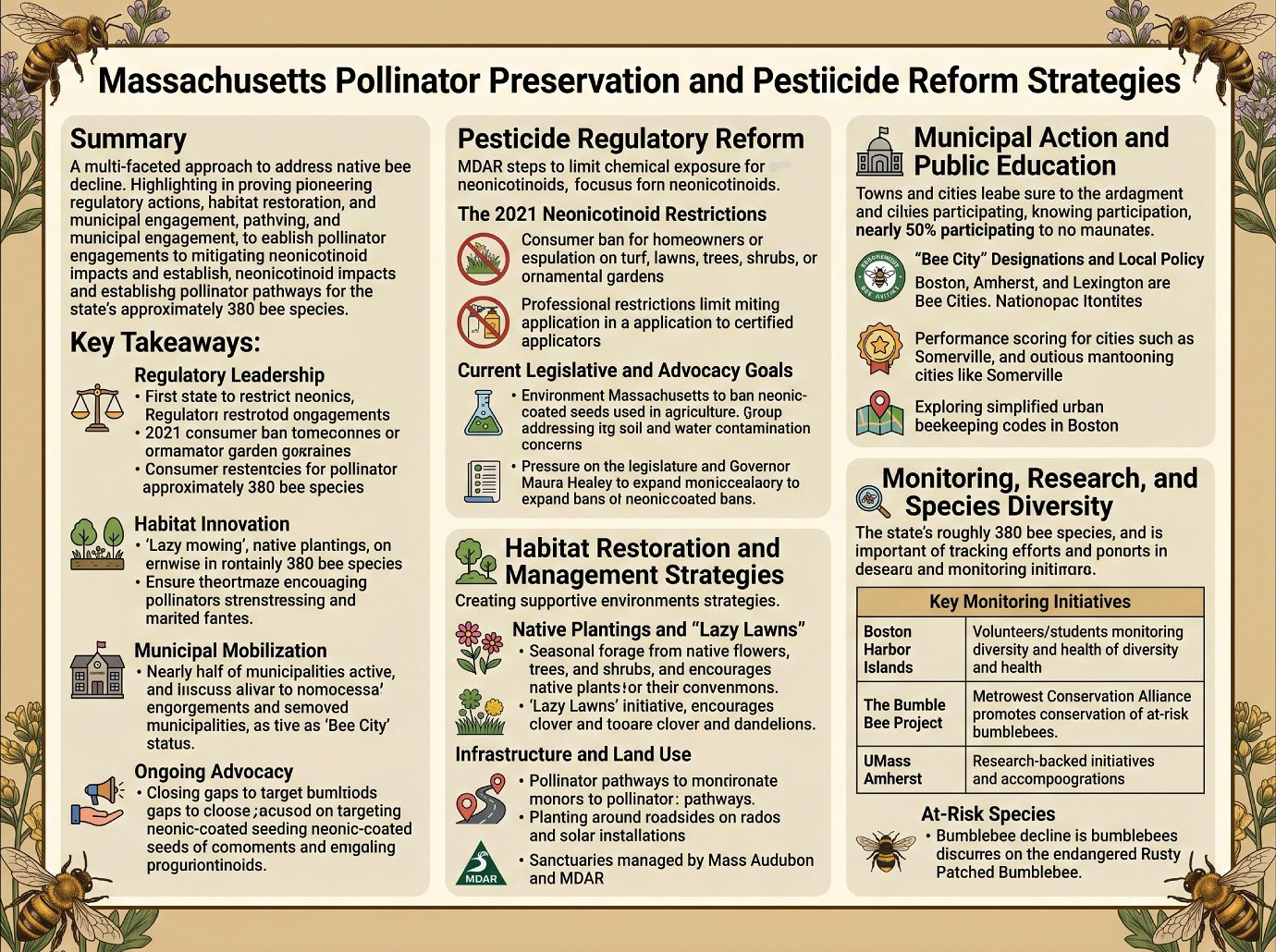
Why Massachusetts is Becoming the National Blueprint for Bee Conservation
Imagine a Massachusetts spring morning where the familiar, low-frequency hum of the garden has been replaced by an eerie, hollow stillness. The rusty patched bumblebee, once a common sight from the Berkshires to the Cape, has vanished from nearly 90% of its historic range. But where others see a tragedy, the Commonwealth is engineering a sophisticated comeback. What began as an environmental mystery has sparked a state-wide transformation, evolving from a series of policy shifts into a full-scale cultural movement. Massachusetts is no longer just observing the decline; it is building a “pollinator-friendly” infrastructure that serves as a strategic roadmap for the rest of the nation.
Beyond the Farm: Why Regulating the Backyard Matters Most
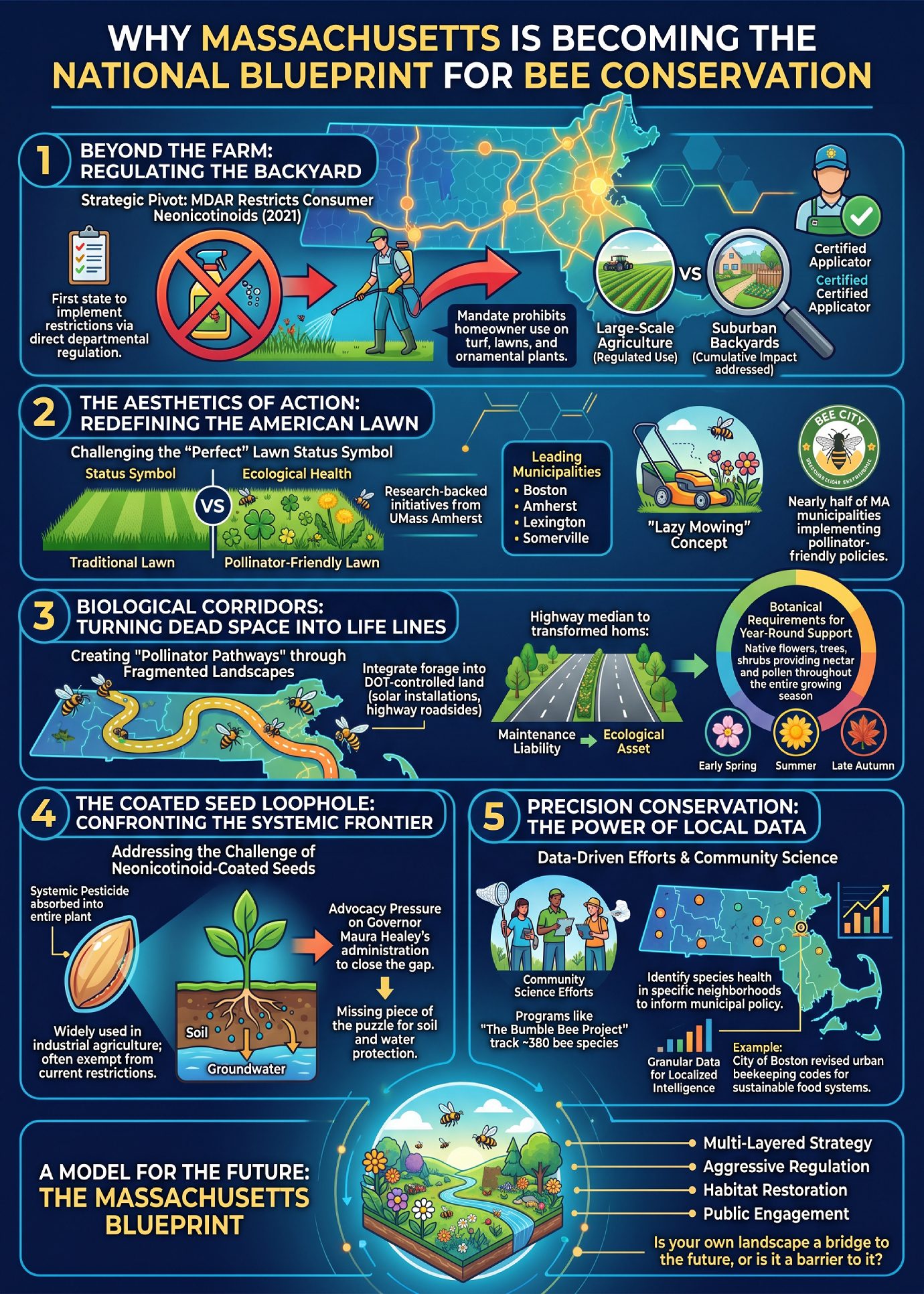
In 2021, the Massachusetts Department of Agricultural Resources (MDAR) executed a landmark strategic pivot by restricting the consumer sale and use of neonicotinoids (“neonics”). While other states have debated similar measures in legislative subcommittees for years, Massachusetts became the first to implement these restrictions through direct departmental regulation. This allowed for a swift, decisive response to the mounting evidence of insecticide-linked bee mortality.
The mandate is surgical: it prohibits homeowners from purchasing or using neonics on turf, lawns, and ornamental plants, effectively removing these high-risk chemicals from the consumer shelf. By shifting the focus from large-scale agriculture to suburban backyards, the state has addressed a critical blind spot in pesticide reform. For a sustainability strategist, this is a masterstroke: it acknowledges that the cumulative impact of millions of small-scale residential applications often outweighs the regulated use found on professional farms. Restricting these substances to certified applicators ensures that when chemicals are used, they are managed with professional precision rather than residential guesswork.
The Aesthetics of Action: Redefining the American Lawn
For decades, the “perfect” suburban lawn—a pristine, weed-free carpet of emerald green—was a status symbol. Today, that aesthetic is being challenged by research-backed initiatives from UMass Amherst and forward-thinking municipalities like Boston, Amherst, Lexington, and Somerville. These cities are spearheading the “lazy mowing” concept, which encourages residents to embrace a more relaxed maintenance schedule that allows clover and dandelions to bloom.
This movement has gained such momentum that nearly half of Massachusetts’ municipalities are now implementing pollinator-friendly policies, with many earning the official “Bee City” designation. This represents a low-cost, high-impact policy shift: by simply “doing less,” communities are achieving more for biodiversity. It is a fundamental challenge to suburban standards, signaling a shift where ecological health is becoming a more valuable currency than a manicured landscape.
Biological Corridors: Turning Dead Space into Life Lines
The Massachusetts model extends beyond residential gardens and into the “dead space” of state-controlled infrastructure. The state is increasingly focused on the creation of “pollinator pathways”—biological corridors designed to allow bees to travel safely through fragmented urban and suburban landscapes.
Current efforts have explored directing the Department of Transportation (DOT) to integrate pollinator-friendly forage into the land surrounding solar energy installations and along highway roadsides. This strategy transforms highway medians from maintenance liabilities into vital ecological assets. To ensure these corridors are functional year-round, the state has integrated specific botanical requirements into its planning:
“State programs emphasize planting native flowers, trees, and shrubs that provide nectar and pollen throughout the entire growing season to support at-risk species.”
By prioritizing native flora that blooms from early spring through late autumn, the state ensures that these pathways provide a continuous food supply rather than a temporary bloom.
The Coated Seed Loophole: Confronting the Systemic Frontier
Despite the progress in residential gardens, a significant systemic challenge remains: neonicotinoid-coated seeds. Widely used in industrial agriculture, these seeds are treated before they are even planted, allowing the pesticide to be absorbed into the plant’s entire vascular system as it grows. Because these seeds are often exempt from current restrictions, they represent a massive loophole that allows chemicals to leach into soil and groundwater.
Closing this gap is the “next frontier” for Massachusetts conservation. Advocacy groups like Environment Massachusetts are currently placing pressure on Governor Maura Healey’s administration to address this agricultural bypass. From a strategist’s perspective, coated seeds are a nightmare precisely because they are invisible; they cannot be regulated like a bottle of spray on a shelf. Addressing this issue is the missing piece of the puzzle, required to ensure that the state’s soil and water are as protected as its backyard gardens.
Precision Conservation: The Power of Local Data
The final pillar of the Massachusetts blueprint is the shift toward data-driven, “precision conservation.” Rather than relying on broad regional trends, organizations like the Metrowest Conservation Alliance and the Boston Harbor Islands National Recreation Area are engaging in massive community science efforts.
Programs like “The Bumble Bee Project” utilize students and volunteers to track the health of the state’s approximately 380 bee species. This granular data allows policymakers to identify exactly which species are thriving and which are on the brink of disappearance in specific neighborhoods. This localized intelligence is then reflected in municipal policy; for instance, the City of Boston has worked to revise urban beekeeping codes to support sustainable food systems. By empowering residents to act as both data collectors and habitat stewards, the state ensures that the responsibility for biodiversity is a shared public mission.
A Model for the Future
The “Massachusetts Model” demonstrates that protecting a species requires more than a single piece of legislation; it requires a multi-layered strategy that weaves together aggressive regulation, habitat restoration, and public engagement. By transforming everything from highway medians to the way we mow our grass, the Commonwealth is proving that even the most fragmented landscapes can be reclaimed for nature.
As these policies continue to redefine the landscape, they prompt a vital question for every homeowner, developer, and local leader: Is your own landscape a bridge to the future, or is it a barrier to it?