



Fight Against Cancer – Progress Report –

Fight Against Cancer – Progress Report –

Quick Links to Sections of this page:
The New Face of Cancer: 5 Revelations from a Landmark 2025 Report
Demystifying the Cancer Journey: From Cell to Survivor
A New Era in Cancer Treatment: Understanding Precision Medicine and Immunotherapy
2026 Relay for Life Greater Gardner
Your Guide to Reducing Cancer Risk: Simple Steps for a Healthier Life
A “Deep Dive” podcast about the fight against Cancer. Listen on any device, CLICK PLAY.
A “Debate” podcast about the fight against Cancer. Listen on any device, CLICK PLAY.
American Cancer Society 2025 report on PDF, CLICK HERE. – To get involved and/or learn more about the Greater Gardner Relay For Life, visit the Greater Gardner Relay for Life website, CLICK HERE.
Gardner Magazine has prepared 2 videos on the Fight Against Cancer. Play right out of the page or CLICK to make full screen.
Video on the left is from the American Cancer Society “What We Do” and the video on the right is about the 2026 Relay For Life. Play right out of the page or CLICK to make full screen.
2026 Relay for Life of Greater Gardner
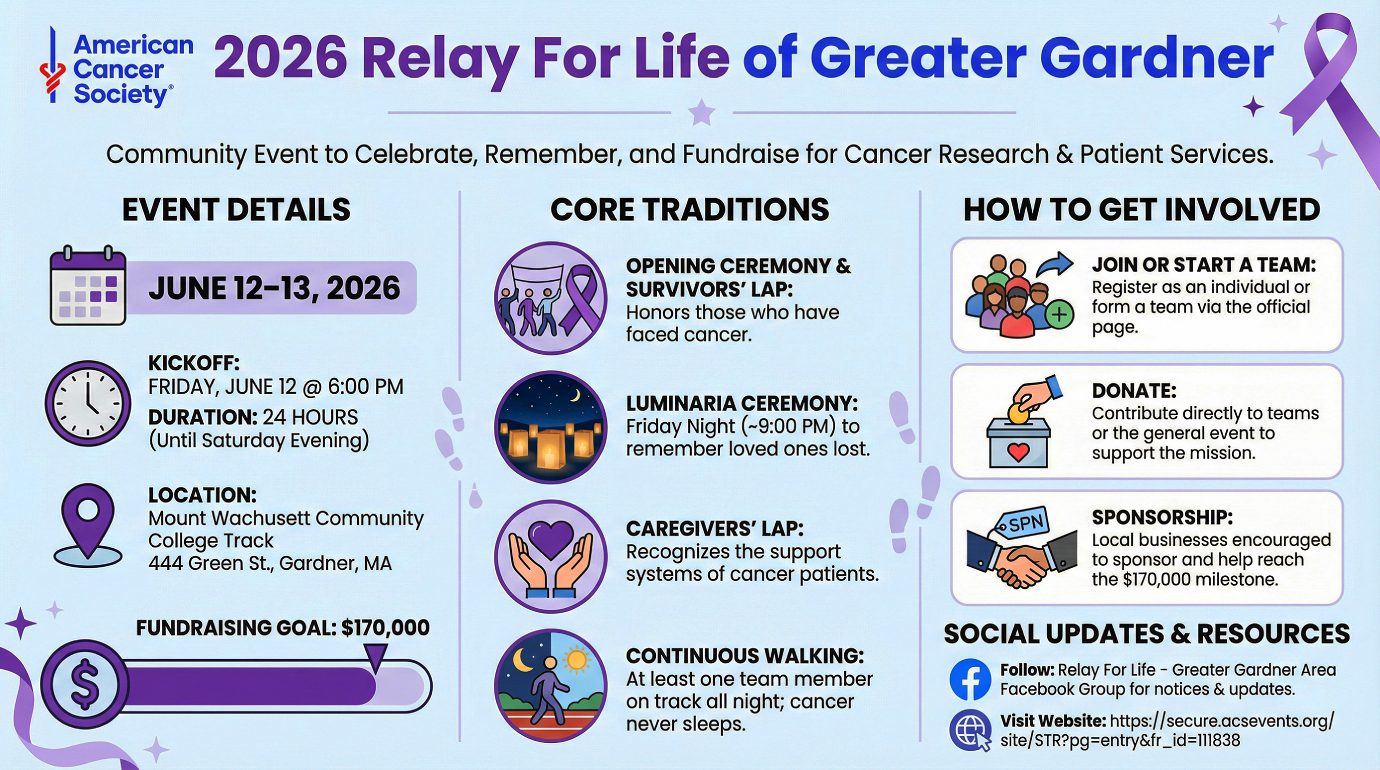
The 2026 Relay For Life of Greater Gardner is scheduled to take place on June 12–13, 2026. This annual American Cancer Society event brings the community together at the Mount Wachusett Community College track to celebrate survivors, remember loved ones, and fundraise for cancer research and patient services. Event Details: Kickoff Date: Friday, June 12, 2026. Time: The main event typically begins at 6:00 PM on Friday and runs for 24 hours until Saturday evening. Location: Mount Wachusett Community College, 444 Green St., Gardner, MA. Fundraising Goal: The 2026 goal is set at $170,000.
The New Face of Cancer: 5 Revelations from a Landmark 2025 Report

The New Face of Cancer: 5 Revelations from a Landmark 2025 Report
For most of us, cancer is a familiar foe—a relentless disease we think we understand. We associate it with aging, specific lifestyle choices, and a slow, hard-fought battle in the lab. But what if the front lines of that battle are shifting faster than we realize, revealing a landscape that is both more complex and more hopeful than ever before?
The American Association for Cancer Research (AACR) has released its “Cancer Progress Report 2025,” a comprehensive review of the state of cancer science and medicine. Buried within its pages are findings that challenge our long-held assumptions. The report uncovers surprising new risks, identifies hidden biological weapons used by tumors, and spotlights technological breakthroughs that are already changing patient care.
This article distills five of the most impactful and counter-intuitive revelations from this landmark report. From the changing demographic of cancer patients to the “undruggable” targets that are finally falling, these takeaways paint a new picture of what it means to fight cancer today.
1. The Alarming Rise of “Early-Onset” Cancer.
For decades, cancer has been predominantly viewed as a disease of aging. However, a troubling new trend is forcing a major rethink. Researchers are documenting a significant rise in “early-onset” cancer, defined as a diagnosis in individuals younger than 50. The data is clear and concerning: between 2010 and 2019, the incidence of 14 different cancers—including colorectal, breast, pancreatic, and uterine cancers—rose among people aged 15 to 49.
Scientists are investigating several surprising potential causes for this surge. One area of focus is the environment, with research linking early-onset colorectal cancer—which is frequently diagnosed at an advanced stage, making it more dangerous—to a significant accumulation of microplastics in the bodies of individuals from Generation X. Another novel line of inquiry points to our own microbiome, with studies suggesting a potential role for a DNA-damaging toxin produced by certain strains of the common bacterium Escherichia coli. This trend is a major public health concern, signaling that the traditional risk factors for cancer are evolving and that younger generations face a different and, in some ways, greater threat than their predecessors.
2. Cancer’s Secret Weapon: Tiny DNA Circles That Drive Super-Aggressive Tumors.
Imagine a cancer cell having a secret cache of weapons it can duplicate and deploy at will. That’s essentially what scientists have found with the discovery of extrachromosomal DNA (ecDNA). These are small, circular fragments of DNA that exist outside of the cell’s normal chromosomes. Unlike chromosomal DNA, which is carefully regulated and passed down evenly during cell division, ecDNA is unevenly distributed to daughter cells. This chaotic inheritance is what makes it so dangerous.
This rogue DNA allows cancer cells to make many extra copies of cancer-promoting genes, known as oncogenes, very quickly. This rapid amplification helps tumors grow aggressively, evolve, and develop resistance to treatment. By being passed on randomly during division, ecDNA rapidly increases tumor heterogeneity—the diversity of cells within a tumor—which enables cancer to quickly adapt and survive therapies. According to the report, ecDNAs are present in approximately 17 percent of human cancers and are frequently associated with a poor prognosis. This discovery isn’t just an interesting biological footnote; it’s a game-changer that has opened up an entirely new vulnerability to exploit, with researchers now developing novel therapies to target this unique feature of some of the most challenging cancers.
3. Cracking the Code: How Science Conquered an “Undruggable” Cancer Driver.
In the world of cancer research, some targets are so notoriously difficult that they earn the label “undruggable.” For nearly 40 years, the prime example was a protein called KRAS. Encoded by one of the most commonly mutated genes in human cancers, KRAS is a key driver in roughly 30 percent of all cases, including notoriously deadly forms like pancreatic and lung cancer. For decades, its smooth, sphere-like structure offered no obvious pockets for a drug to bind to, leaving scientists stumped.
The story of KRAS is a testament to scientific persistence. Through decades of fundamental research, scientists painstakingly uncovered the protein’s three-dimensional shape and identified a hidden pocket on a specific mutant form. This breakthrough in basic science allowed chemists to finally design a molecule that could fit into that pocket and shut the protein down. This led to the landmark FDA approval of sotorasib, the first-ever KRAS inhibitor, which was quickly followed by a second, adagrasib, showing the field is accelerating. The conquest of this once-undruggable target has not only provided new hope for patients but is also just the beginning. Researchers are already developing next-generation approaches, including protein degraders designed to eliminate KRAS entirely and immunotherapies that teach the immune system to attack KRAS-mutated cells.
4. It’s in the Air and Water: The Growing Link Between Environment and Cancer.
While researchers are conquering cancer’s internal drivers like KRAS, the 2025 report also underscores a growing urgency to address the external, environmental threats that initiate the disease in the first place. Our understanding of cancer risk is rapidly expanding beyond individual lifestyle choices like diet and smoking to include unavoidable environmental exposures. The report highlights that where we live and work has a profound, and increasingly measurable, impact on our cancer risk.
One major concern is the growing frequency and severity of wildfires due to climate change. The carcinogenic byproducts released into the air during these events are now linked to an increased risk for multiple cancers, including lung cancer and gliomas (a type of brain cancer). This risk extends not only to firefighters on the front lines but also to anyone living in or near the affected areas.
A second, more insidious threat comes from “forever chemicals,” or per- and poly-fluoroalkyl substances (PFAS). These endocrine-disrupting chemicals are used in countless household products, from food packaging to textiles, and they persist in the environment for extremely long periods. The report states that exposure to PFAS has been linked to an increased risk for cancers of the kidney, liver, and thyroid. This research is broadening the conversation about cancer prevention, shifting some of the focus from personal responsibility to public policy, environmental justice, and climate action.
5. The Future is Now: AI Is Officially Detecting Cancer.
Artificial Intelligence in medicine is no longer a far-off concept from a science fiction movie; it is a present-day reality transforming cancer care. AI tools are now actively helping doctors find cancer earlier and with greater accuracy than ever before. According to the report, in the 12-month period from July 1, 2024, to June 30, 2025, the U.S. Food and Drug Administration (FDA) approved several new medical devices and software programs that use AI to aid in cancer detection. These are not experimental prototypes; they are regulated tools being deployed in clinics today.
This includes revolutionary diagnostic tools like liquid biopsies—simple blood tests that can detect cancer DNA—which are poised to change how we find and monitor the disease. In the report’s section on the future of the field, AACR President, 2025–2026, Lillian L. Siu, MD, FAACR, FRCPC, emphasizes the transformative potential of these technologies.
“I think the field of cancer science and medicine is moving incredibly fast, and we must be at the cutting edge to ensure benefit for our patients. Artificial intelligence [AI] will help us learn from massive amounts of data to recognize patterns more efficiently. Liquid biopsy is a game changer, allowing us to detect cancer at a molecular level and intervene before it returns. And with more targeted, less toxic therapies, we are entering an era where even the most difficult cancers may become manageable.”
From improving the accuracy of diagnostic scans to analyzing complex genomic data, AI is poised to enhance nearly every aspect of the cancer journey. This is not the future of cancer care—it’s the new standard.
The landscape of cancer science and medicine is evolving at a breathtaking pace. The 2025 report presents a stunning duality: even as we discover external threats like microplastics contributing to early-onset cancer and internal genetic weapons like ecDNA, our scientific persistence is conquering “undruggable” targets and harnessing AI to see the enemy more clearly than ever before. This relentless progress is the direct result of decades of investment in research, which has led to a 34 percent decline in the overall cancer death rate between 1991 and 2023, averting more than 4.5 million deaths in the United States.
These advances open the door to once-unthinkable possibilities, such as the development of therapeutic cancer vaccines leveraging mRNA technology to treat some of the most intractable diseases, including pancreatic cancer. As science continues to accelerate, a new question emerges for us all: how can we ensure these breakthroughs and warnings translate into meaningful action and equitable care for everyone?
——————————-
Demystifying the Cancer Journey: From Cell to Survivor

Demystifying the Cancer Journey: From Cell to Survivor
Introduction: A Message of Understanding and Hope
The word “cancer” can be intimidating, often associated with complex science and uncertainty. This document aims to demystify the topic by providing a clear and accessible narrative of the cancer continuum—the complete journey from how cancer develops to the innovative treatments that are helping people live longer, fuller lives.
Understanding this journey is more important than ever. Thanks to decades of transformative medical research, progress against cancer is accelerating. As of January 1, 2025, the number of cancer survivors in the United States reached an incredible 18.6 million, and this community of hope continues to grow, serving as a testament to the power of scientific discovery and resilience.
——————————————————————————–
Part 1: Understanding How Cancer Begins
1.1 What is Cancer? The Body’s Cells Gone Awry
At its core, cancer is not a single disease but a collection of diseases defined by one common principle: the uncontrolled growth and division of the body’s own cells. In a healthy body, cells grow, divide, and die in an orderly fashion. Cancerous cells, however, break these rules, accumulating changes that allow them to multiply without limit and spread to other parts of the body.
Researchers have identified several key characteristics, or “hallmarks,” that distinguish cancer cells from their normal counterparts.
Cancer cells are different from normal cells. They develop the ability to:
• Grow uncontrollably and ignore signals that stop normal cells from dividing.
• Multiply without limit, bypassing normal cellular lifespans.
• Evade the immune system, which normally removes damaged cells.
• Resist natural cell death signals that are part of a healthy cell’s life cycle.
• Accumulate changes in their genetic material (a state known as genome instability).
• Increase blood vessel formation to establish a supply line for growth.
• Increase nutrient and oxygen supply to the tumor to fuel its expansion.
• Spread to other parts of the body through a process called metastasis.
1.2 The Triggers: Influences From Inside and Outside the Cell
The development of cancer is a complex, multistep process influenced by a combination of factors both within our cells and in the environment around them. These factors can disrupt the normal functions that regulate how our cells grow, divide, and survive.
| Influences Inside the Cell | Influences Outside the Cell |
|---|---|
| – Genetic Alterations: These are changes to our DNA. They can be inherited from a parent (germline), accounting for about 10% of cancers, or acquired over a lifetime (somatic) due to errors in cell division or environmental exposures. | – The Circulatory and Immune Systems: Blood and lymphatic vessels can serve as pathways for cancer cells to travel, while the immune system is the body’s defense that cancer cells learn to evade. |
| – RNA and Protein Changes: Errors in the RNA messages that translate DNA instructions, or in the proteins themselves, can disrupt essential cellular functions. | – The Microbiome: The vast community of microorganisms living in and on our body can influence inflammation and immune responses, which may affect cancer risk and development. |
| – Epigenetic Changes: These are “above the gene” modifications that can turn genes on or off without altering the DNA sequence itself, influencing how cells behave. | – The Tumor Microenvironment: This is the local “neighborhood” of cells, blood vessels, and structures surrounding a tumor, which can either support or hinder its growth. |
Learning Narrative: Transition to Prevention
By understanding the internal and external factors that can trigger cancer, we gain the empowering knowledge that we can take meaningful steps to reduce our risk.
——————————————————————————–
Part 2: The Journey of Detection and Treatment
2.1 Taking Control: Reducing the Risk of Cancer
Research shows that approximately 40% of all cancers in the United States are attributable to modifiable causes. This means that by making different choices, people can actively lower their risk of developing cancer. The most significant of these factors include:
• Tobacco Use: Smoking is the leading preventable cause of cancer and cancer-related deaths.
• Excess Body Weight & Physical Inactivity: Maintaining a healthy weight and staying active are linked to a lower risk for many types of cancer.
• Alcohol Consumption: Alcohol is a known risk factor for several cancers, even when consumed in moderate amounts.
• UV Radiation Exposure: Unprotected exposure to ultraviolet (UV) radiation from the sun or tanning beds causes the kind of genetic alterations that are the primary cause of most skin cancers.
• Cancer-Causing Infections: Certain viruses and bacteria can cause cancer, but many of these infections are preventable through vaccination (like HPV) or treatment.
• Environmental Factors: Exposure to cancer-causing substances (carcinogens) in the air, water, or at work can increase risk.
2.2 The Power of Early Detection: What is Cancer Screening?
The goal of cancer screening is to find cancer in people who have no symptoms, when the disease is in its earliest stages. Finding cancer early makes it much easier to treat successfully and dramatically improves outcomes. In fact, public health initiatives like screening programs have averted 4.75 million deaths across five major cancer types.
Experts develop screening guidelines for individuals based on factors like age, family history, and lifestyle. These recommendations help determine when and how often a person should be screened for cancers of the breast, cervix, colon and rectum, and lung, among others.
2.3 A New Era of Treatment: The Pillars of Cancer Care
Cancer treatment has evolved significantly and today rests on five foundational pillars of care. Many of these modern treatments work by directly targeting the “hallmarks” that allow cancer cells to thrive. Each approach works differently to attack cancer, and they are often used in combination to provide the most effective treatment for each patient.
| Treatment Type | How It Works (Simplified) | Primary Benefit |
|---|---|---|
| Surgery | The physical removal of cancerous tumors and surrounding tissue. | Can be completely curative, especially when a cancer is found early and has not spread (is localized). |
| Radiation Therapy (Radiotherapy) | Uses high-energy rays or particles to destroy cancer cells or damage their DNA. | Targets specific areas of the body to kill cancer cells, shrink tumors, and relieve symptoms. |
| Chemotherapy | Uses powerful drugs that circulate throughout the body to kill fast-growing cells. | Effective for treating cancer that has spread to multiple parts of the body (metastasized). |
| Molecularly Targeted Therapy | Drugs designed to attack specific genetic alterations or proteins that drive cancer growth. | A “precision medicine” approach that is often more effective and has fewer side effects than chemotherapy. |
| Immunotherapy | Boosts the body’s own immune system to help it recognize and destroy cancer cells. | Can produce powerful, long-lasting responses by “releasing the brakes” on the immune system to fight cancer. |
Learning Narrative: Transition to Survivorship
This incredible progress in cancer treatment is translating directly into more people living longer, fuller lives after a cancer diagnosis, creating a new and growing chapter in the cancer journey: survivorship.
——————————————————————————–
Part 3: Life Beyond Diagnosis: The Survivor’s Path
3.1 Defining a Survivor
A cancer survivor is defined as any person from the time of their diagnosis through the rest of their life. This growing community is a powerful symbol of medical progress. The number of cancer survivors in the U.S. is projected to grow from 18.6 million in 2025 to over 22 million by 2035.
3.2 Navigating the Challenges of Survivorship
While surviving cancer is a monumental achievement, the journey doesn’t end when treatment does. Survivorship brings its own unique set of challenges that can affect a person’s well-being for years to come.
1. Physical Challenges Survivors may need to manage long-term side effects from treatment, such as fatigue or nerve pain. They also face the ongoing risk of the cancer returning (recurrence) or the development of a completely new cancer.
2. Psychosocial Challenges The emotional and mental toll of a cancer diagnosis can be significant. Many survivors deal with anxiety, stress, or fear of recurrence, which can impact their mental health and quality of life.
3. Financial Challenges Often called “financial toxicity,” the high cost of cancer care—including treatments, follow-up appointments, and time away from work—can create a substantial financial burden for survivors and their families.
3.3 Thriving in Survivorship: Support and Quality of Life
Fortunately, research has identified key, evidence-based strategies that can help survivors improve their quality of life, manage challenges, and improve their long-term health outcomes.
• Participating in Physical Activity: Regular exercise can help reduce fatigue, improve mood, and lower the risk of cancer recurrence.
• Eating a Healthy Diet and Maintaining a Healthy Weight: A balanced diet can support overall health and help manage long-term treatment side effects.
• Eliminating Alcohol and Tobacco Use: Quitting smoking and limiting or avoiding alcohol can significantly improve long-term health and reduce the risk of recurrence or new cancers.
• Integrating Palliative Care: This is specialized medical care focused on providing relief from the symptoms and stress of a serious illness. It is not just for end-of-life care and can be integrated at any stage to improve a patient’s comfort and quality of life.
• Improving Mental Health: Accessing mental health support, counseling, or support groups can help survivors navigate the emotional challenges of their experience.
• Supporting Caregivers: It’s vital to acknowledge the more than four million caregivers who provide essential support to adult cancer patients. The physical, emotional, and financial demands on caregivers are immense, and supporting them is crucial to the well-being of the entire family.
Conclusion: A Future of Continued Progress
The journey through cancer is multifaceted, but it is increasingly a story of hope and progress. Sustained investment in medical research is the engine that drives this progress, transforming our understanding of cancer, fueling the development of new treatments, and turning once-fatal diagnoses into manageable conditions. With every discovery, we move closer to a future where more people can thrive beyond cancer.
“I think the field of cancer science and medicine is moving incredibly fast, and we must be at the cutting edge to ensure benefit for our patients… with more targeted, less toxic therapies, we are entering an era where even the most difficult cancers may become manageable.”
— Lillian L. Siu, MD, FAACR, FRCPC, AACR President, 2025–2026 —————————————
A New Era in Cancer Treatment: Understanding Precision Medicine and Immunotherapy

A New Era in Cancer Treatment: Understanding Precision Medicine and Immunotherapy
1. Introduction: A Revolutionary Shift in Fighting Cancer
For decades, the war on cancer was fought with blunt instruments. Treatments like chemotherapy and radiation functioned like carpet bombing—effective at destroying cancer, but causing significant collateral damage to healthy cells in the process. Today, we are in the midst of a profound transformation in how cancer is treated, driven by two groundbreaking fields: precision medicine and immunotherapy. These strategies represent a move away from a “one-size-fits-all” model toward highly personalized and intelligent therapies.
This document will explain these two revolutionary concepts in simple terms, demystifying the science that is reshaping cancer care and offering new hope to millions of patients.
This revolutionary shift in treatment is necessary because of a fundamental scientific insight: cancer is not one disease, but many, and each person’s cancer is biologically unique.
2. Why We Need a New Approach: Every Cancer Is Unique
At its core, cancer is a collection of diseases driven by disruptions and changes within our body’s cells, particularly alterations in our genes. These genetic changes can cause cells to grow uncontrollably, ignore signals to stop dividing, and spread to other parts of the body. Because these alterations can be different from person to person—even for cancers in the same organ—each tumor has a unique molecular signature.
A simple analogy helps to clarify this concept:
Imagine fighting a fire. A wood fire, an electrical fire, and a grease fire all look like “fire,” but they have different sources and require different tools to be extinguished effectively. Using water on an electrical fire could make it worse. Similarly, treating all cancers as if they were the same can be ineffective and even harmful.
This fundamental understanding—that every cancer is unique at the molecular level—is the foundational insight that has given rise to a more intelligent and targeted strategy. This realization paved the way for a new strategy: first, decode the specific molecular blueprint of a patient’s tumor, and then, deploy a treatment precisely engineered to attack it. This is the core principle of precision medicine.
3. Precision Medicine: Targeting Cancer’s Specific Blueprint
3.1. What is Precision Medicine?
Precision medicine, also known as personalized medicine, is an approach that involves “treating patients based on molecular characteristics that distinguish them from other individuals with the same disease.” Instead of treating “lung cancer,” doctors can now treat a specific subtype of lung cancer defined by its unique genetic mutations.
The mechanism is like having a specific key for a unique lock.
• The Lock: A specific molecule (like a mutated protein) that is driving the cancer’s growth.
• The Key: A molecularly targeted drug designed to fit perfectly into that molecule, blocking its function and stopping the cancer cells from growing.
3.2. A Real-World Breakthrough: The Story of Gleevec
One of the earliest and most dramatic success stories of precision medicine is the drug imatinib (Gleevec). It was developed to treat chronic myelogenous leukemia (CML), a type of blood cancer driven by a specific genetic abnormality.
• Imatinib was designed to block the single protein causing CML cells to grow uncontrollably.
• The results were transformative, catalyzing a “revolution in precision medicine.”
• Before this breakthrough, the 5-year survival rate for CML was just 22% in the mid-1970s. Today, thanks to imatinib and similar targeted therapies, it is over 70%.
Gleevec’s success was the definitive proof that understanding a cancer’s unique molecular blueprint—in this case, the single protein driving CML—could lead to a targeted and life-saving therapy.
While precision medicine targets the cancer cell itself, another powerful strategy works on a completely different principle: empowering our own bodies to join the fight.
4. Immunotherapy: Unleashing the Body’s Own Defenses
4.1. What is Immunotherapy?
Our immune system is our body’s natural defense force, constantly patrolling for and destroying invaders like bacteria and viruses. It can also recognize and eliminate cancerous cells. However, cancer cells are clever and have developed ways to hide from the immune system or turn off its attack signals.
Immunotherapy is a type of cancer treatment that helps the body’s own immune system recognize, target, and kill cancer cells more effectively.
4.2. Three Key Strategies for Activating the Immune System
There are several ways to activate the immune system against cancer. Three of the most important strategies are:
• Releasing the Brakes (Immune Checkpoint Inhibitors) The immune system has natural “brakes,” or checkpoints, to prevent it from attacking healthy cells. Some cancer cells exploit these checkpoints to shut down an immune attack. Immune checkpoint inhibitors are drugs that block these checkpoints.
◦ Analogy: It’s like taking the parking brake off the immune system’s “cancer-fighting car,” allowing it to accelerate and attack the cancer again.
◦ Impact: The number of FDA-approved immune checkpoint inhibitors grew from just 1 in 2011 to 15 by 2025.
• Supercharging the Fighters (Adoptive Cell Therapy) This approach involves taking a patient’s own immune cells (usually T-cells), genetically engineering them in a lab to better recognize cancer, growing them into a large army, and then infusing them back into the patient. The most well-known type is CAR T-cell therapy.
◦ Analogy: It’s like taking a patient’s immune cells, training them in a lab to become “elite cancer-fighting soldiers,” and then returning them to the body to hunt down and destroy the enemy.
◦ Impact: As of 2025, nine of these powerful adoptive cell therapies have been approved by the FDA.
• Tagging the Enemy (T-cell Engagers and Therapeutic Antibodies) Some therapies work by making cancer cells more visible to the immune system. For example, therapies called bispecific T-cell engagers (BiTEs) act like a molecular bridge with two arms: one arm grabs onto a T-cell (the immune fighter), and the other grabs onto a cancer cell. By physically connecting the two, it ensures the T-cell is brought directly to its target to launch a precise attack.
◦ Analogy: This is like painting a bright, unmissable target on cancer cells so the immune system can easily find and destroy them.
These modern strategies offer a starkly different approach compared to the broad-spectrum methods of the past.
5. At a Glance: New Approaches vs. Traditional Treatment
This table summarizes the fundamental differences between traditional chemotherapy and the newer, targeted approaches of precision medicine and immunotherapy.
| Treatment Type | Core Strategy | Primary Target |
|---|---|---|
| Traditional Chemotherapy | Attack rapidly dividing cells. | All fast-growing cells, both cancerous and healthy (e.g., hair follicles, stomach lining), which is why it causes widespread side effects. |
| Precision Medicine | Block specific molecular pathways driving cancer growth. | Cancer cells with a specific genetic mutation or marker. |
| Immunotherapy | Activate the body’s own immune system. | The patient’s immune cells, empowering them to fight cancer. |
The real-world impact of these innovative strategies is perhaps most visible in the treatment of blood cancers, a field that has been completely revolutionized in just one decade.
6. The Impact in Action: A Revolution in Blood Cancer Treatment
Blood cancers, once among the most difficult to treat, are now “increasingly becoming manageable or even curable for many patients” thanks to the rapid development of precision medicine and immunotherapy.
The progress in just a single decade has been astonishing. Between 2015 and 2025:
• The FDA approved 29 new molecularly targeted therapies for blood cancers.
• The FDA approved 21 new immunotherapeutics, including 7 powerful CAR T-cell therapies, for blood cancers.
This wave of innovation has had a transformative impact:
• Precision Medicine’s Foundation: Molecularly targeted therapies like imatinib (Gleevec) for CML laid the groundwork, demonstrating that a deep understanding of a cancer’s biology could lead to highly effective treatments. This revolution continues with newer agents targeting specific mutations in other blood cancers.
• Immunotherapy’s New Frontier: CAR T-cell therapies and other immunotherapies are providing powerful new options for patients with aggressive diseases like acute myeloid leukemia (AML) with specific genetic alterations or acute lymphocytic leukemia (ALL), often offering hope after other treatments have failed.
These advances underscore a broader shift in how we approach cancer, leading to a more hopeful outlook for patients and their families.
7. Conclusion: A Hopeful Horizon in Cancer Care
The fight against cancer is moving from a “one-size-fits-all” model to a new era of highly personalized and powerful strategies. By targeting a cancer’s unique biological blueprint or unleashing the patient’s own immune system, precision medicine and immunotherapy are transforming outcomes for diseases once considered intractable.
These remarkable advances are not accidental; they are the direct result of decades of sustained, foundational scientific research. As our understanding of cancer biology deepens, the future of cancer treatment promises even more precise, effective, and less toxic therapies, offering greater hope for patients everywhere.
A Strategic Vision for the Future of Cancer Research and Care: A Synthesis of the AACR 2025 Cancer Progress Report
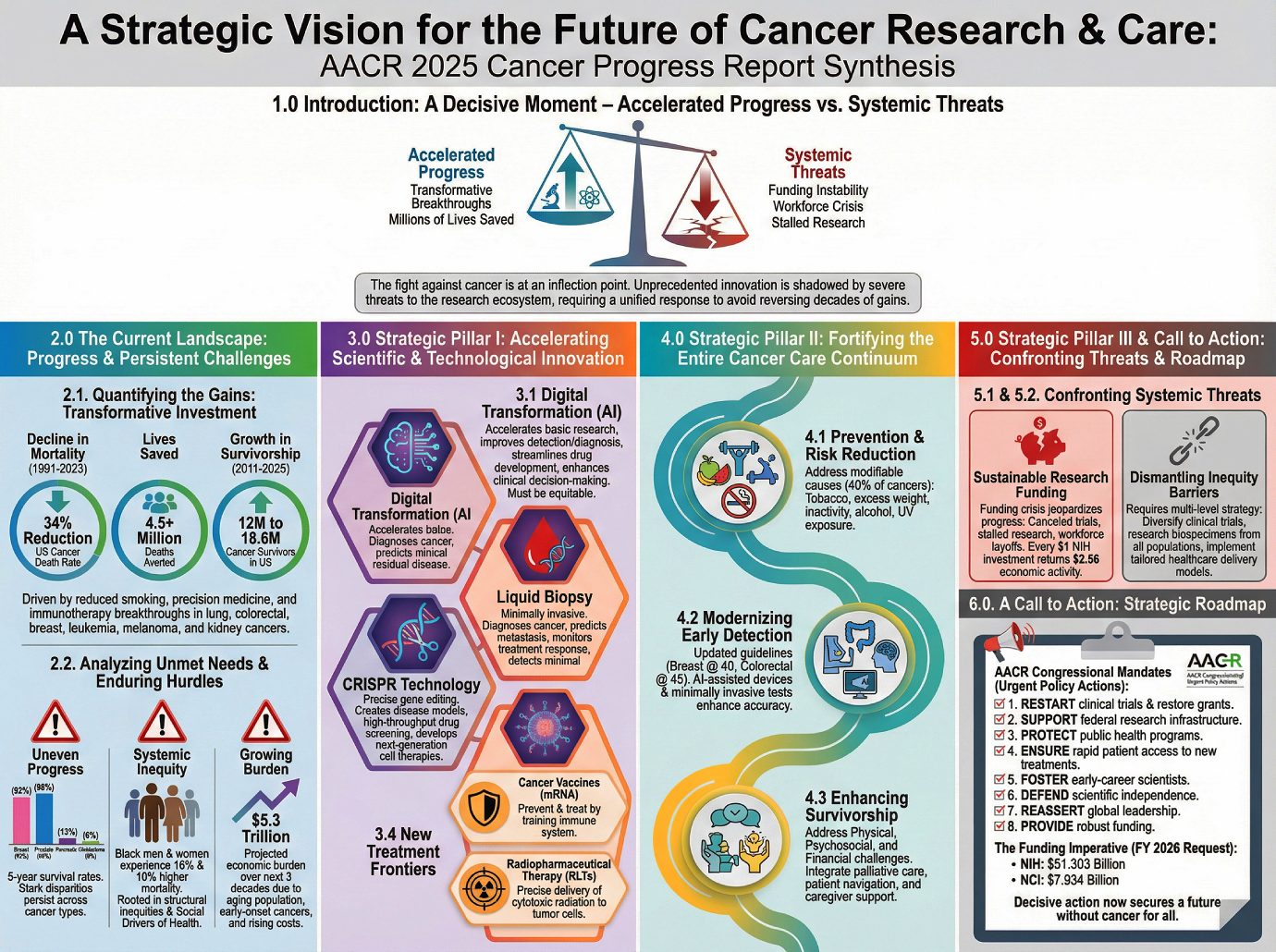
A Strategic Vision for the Future of Cancer Research and Care: A Synthesis of the AACR 2025 Cancer Progress Report
1.0 Introduction: A Decisive Moment for the Fight Against Cancer
The fight against cancer has reached a critical inflection point. The past 15 years, as chronicled by the American Association for Cancer Research (AACR) Cancer Progress Report series, have been defined by an extraordinary acceleration of scientific progress that has delivered transformative breakthroughs and saved millions of lives. Yet, this era of unprecedented innovation is shadowed by severe and emerging threats to the very research ecosystem that makes such progress possible. This strategic plan dissects this duality—the tension between remarkable opportunity and profound risk—to chart a clear and actionable path forward for decision-makers across the healthcare, research, and policy landscapes.
The central thesis of this plan is that while scientific breakthroughs are saving lives at an accelerating rate, these gains are fragile and directly jeopardized by funding instability and systemic challenges. The cancer research and care community is now confronting its “most serious funding crisis in a generation,” marked by canceled clinical trials, stalled research, and mass layoffs in the research workforce. Without a decisive and unified response, we risk reversing decades of hard-won progress against cancer and ceding our nation’s global leadership in medical innovation.
To navigate this pivotal moment, we must first conduct a rigorous, evidence-based assessment of our achievements and the formidable obstacles that remain, thereby establishing the foundation upon which our strategy must be built.
2.0 The Current Landscape: A Synthesis of Progress and Persistent Challenges
Any effective long-term strategy must be built upon an honest appraisal of the current state of cancer research and care. A clear-eyed assessment reveals a landscape of stark contrasts: historic victories in reducing mortality and improving survivorship stand alongside the strategic mandates to address uneven progress across cancer types, persistent systemic inequities, and a growing national burden. Understanding this complex reality is the foundational step in developing a strategy that can both consolidate our gains and overcome our most significant weaknesses.
2.1 Quantifying the Gains: A Legacy of Transformative Investment
Decades of sustained, bipartisan investment in medical research have yielded extraordinary returns, quantifiable in both lives saved and a burgeoning population of survivors. The key metrics of this success are clear:
• Decline in Mortality: Between 1991 and 2023, the overall US cancer death rate fell by a remarkable 34%.
• Lives Saved: This reduction in mortality translates directly into more than 4.5 million deaths averted from cancer.
• Growth in Survivorship: The number of cancer survivors in the United States has grown from 12 million in 2011 to 18.6 million as of January 1, 2025.
This progress represents not only a profound human victory but also a remarkable return on investment, with every dollar dedicated to NIH-funded research yielding significant economic activity for the nation. It has been driven by a combination of successful public health initiatives, most notably reduced smoking rates, and research-driven advancements in the treatment of several key cancers. Breakthroughs in precision medicine and immunotherapy have led to significant declines in death rates for lung cancer, colorectal cancer, female breast cancer, leukemia, melanoma, and kidney cancer, contributing substantially to the overall reduction in cancer mortality.
2.2 Analyzing Unmet Needs and Enduring Hurdles
Despite these significant achievements, our progress has been neither uniform nor universal, defining the strategic battleground for the next decade. Several persistent challenges threaten to undermine national public health goals and require urgent, targeted action.
2.2.1 The Challenge of Uneven Progress
The benefits of modern cancer care are not distributed equally across all disease types. Stark disparities in treatment outcomes persist, creating a clear mandate for targeted research into intractable diseases. For example, while the 5-year relative survival rates for female breast cancer and prostate cancer have reached 92% and 98% respectively, the outlook for patients with other malignancies remains tragically poor. The 5-year relative survival rate for pancreatic cancer is just 13%, and for glioblastoma multiforme, an aggressive brain cancer, it is a dismal 6%. The strategic implication is clear: a concerted effort of targeted research and dedicated funding is critically needed to alter the trajectory for patients with these and other difficult-to-treat cancers.
2.2.2 The Challenge of Systemic Inequity
Cancer disparities remain one of the most pressing public health challenges in the United States, representing a fundamental barrier to achieving national health goals. These inequities are not random; they are driven by a “long history of structural inequities and systemic injustices” and the profound influence of Social Drivers of Health (SDOH). These factors create unequal burdens that disproportionately affect racial and ethnic minority groups and other medically underserved populations.
• As a stark example of these disparities, Black men and women experience 16% and 10% higher cancer mortality, respectively, compared to their White counterparts.
Achieving health equity requires a multi-level strategic approach that addresses these root causes, from diversifying clinical trial participation to implementing healthcare delivery models tailored to the needs of every community.
2.2.3 The Challenge of a Growing Burden
The overall public health and economic burden of cancer is projected to grow significantly in the coming decades. This increase is driven by several key factors, including the aging of the US population, a concerning rise in the incidence of early-onset cancers in individuals under 50, and the escalating economic toll of the disease. In the United States alone, the economic burden of cancer is projected to reach $5.3 trillion over the next three decades, underscoring the urgent need for more effective strategies for prevention, early detection, and treatment.
This clear-eyed assessment reveals a stark reality: our past gains are fragile, and the growing burden of cancer will overwhelm us without a quantum leap in capability. Therefore, our first strategic imperative must be to aggressively accelerate the next wave of scientific and technological innovation that can fundamentally alter this trajectory.
3.0 Strategic Pillar I: Accelerating the Next Wave of Scientific and Technological Innovation
Our first strategic imperative is to decisively invest in the scientific frontiers with the greatest potential to overcome the challenges of intractable cancers and systemic inequities. This portfolio of opportunities represents our greatest leverage to alter the future trajectory of the disease, but these opportunities are directly threatened by the funding crisis that jeopardizes the entire research enterprise. Focused investment, robust policy support, and sustained commitment are required to translate this scientific potential into public health impact.
3.1 The Digital Transformation of Oncology: The Role of Artificial Intelligence (AI)
Artificial intelligence is poised to transform every aspect of cancer research and patient care, enabling faster, more accurate, and more personalized approaches across the entire cancer continuum. However, to fulfill this promise equitably, it is critical that AI models are trained on diverse datasets to avoid perpetuating existing biases and to ensure diagnostic tools are effective for all populations. Strategic focus on AI will be critical for accelerating progress in several key areas:
• Accelerating Basic Research Discoveries: AI can analyze massive datasets to identify novel biological patterns, genomic alterations, and potential drug candidates, dramatically speeding up the discovery process.
• Improving Cancer Detection and Diagnosis: AI-powered tools are already improving the accuracy and efficiency of medical imaging analysis and histopathology, leading to earlier and more precise diagnoses.
• Advancing the Development of New Treatments: AI can streamline and de-risk the drug development pipeline, from identifying new therapeutic targets to optimizing clinical trial design.
• Enhancing Clinical Decision-Making: AI can integrate diverse patient data—from genomics to clinical history—to support clinicians in selecting the most effective and personalized treatment strategies.
3.2 Revolutionizing Diagnostics and Monitoring: The Promise of Liquid Biopsy
Liquid biopsy—the analysis of blood or other body fluids for tumor-derived material—offers a minimally invasive and powerful tool for personalized medicine. Its strategic value lies in its ability to provide real-time molecular information about a patient’s cancer without the need for invasive tissue biopsies. Key applications include:
1. Diagnosing cancer and predicting the likelihood of metastases.
2. Monitoring a patient’s response to treatment and predicting the emergence of drug resistance.
3. Detecting minimal residual disease after initial treatment and identifying early signs of cancer recurrence.
3.3 Rewriting the Code of Cancer: The Impact of CRISPR Technology
CRISPR gene editing tools are revolutionizing cancer research by giving scientists the ability to precisely modify DNA. This technology is a powerful engine for accelerating our understanding of cancer biology and developing next-generation treatments. Its principal applications fall into three strategic areas:
• Basic Research: CRISPR enables the creation of highly accurate disease models by introducing specific cancer-causing mutations, allowing researchers to study how tumors develop and identify their vulnerabilities.
• Drug Development: Through high-throughput screening, CRISPR can be used to test the function of thousands of genes simultaneously, rapidly identifying new and promising targets for drug development.
• Next-Generation Treatments: CRISPR-based systems are being developed as novel therapeutic strategies themselves, designed to correct cancer-driving mutations or engineer immune cells for enhanced anti-tumor activity.
3.4 Expanding the Therapeutic Arsenal: New Frontiers in Treatment
Alongside advances in diagnostics and research tools, two emerging classes of therapeutics are poised to significantly expand treatment options and transform patient care.
3.4.1 Cancer Vaccines
Cancer vaccines represent a paradigm shift in both cancer prevention and treatment. They hold the dual potential to prevent cancer from developing in high-risk individuals and to treat existing disease by training a patient’s own immune system to recognize and attack tumor cells. The development of mRNA platforms, in particular, has opened exciting new possibilities for creating therapeutic vaccines to treat some of the most intractable diseases, including pancreatic cancer and kidney cancer.
3.4.2 Radiopharmaceutical Therapy
Radiopharmaceutical therapies, including Radioligand Therapies (RLTs), offer a highly precise method of delivering cytotoxic radiation directly to cancer cells. These therapies combine a radioactive compound with a targeting agent that binds to specific proteins on the surface of tumor cells. This approach has a significant strategic advantage: it enables the delivery of a potent, localized dose of radiation directly to the tumor while sparing surrounding healthy tissues, offering a highly tumor-specific approach to radiotherapy.
While these technologies hold immense promise, their ultimate public health impact depends entirely on their successful integration into a robust, equitable, and comprehensive cancer care system. Technological potential must be met with strategic investment across the entire patient journey.
4.0 Strategic Pillar II: Fortifying the Entire Cancer Care Continuum
Technological advances, however powerful, cannot realize their full potential in isolation. A truly effective national cancer strategy requires a holistic approach that simultaneously strengthens every stage of the patient journey. Progress must be fortified by a recommitment to foundational public health principles, from preventing cancer before it starts to providing comprehensive support for the growing population of survivors.
4.1 Recommitting to Prevention and Risk Reduction
Our strategy must begin before a diagnosis is ever made; a renewed national commitment to cancer prevention is the single most impactful and cost-effective lever we have to reduce the long-term burden of this disease. Research shows that approximately 40% of all cancers in the United States are attributable to modifiable causes, representing a significant opportunity for intervention. A renewed strategic focus on public health is needed to address the key modifiable risk factors that drive a large portion of the nation’s cancer burden:
• Tobacco use
• Excess body weight
• Physical inactivity
• Alcohol consumption
• Excess ultraviolet (UV) radiation exposure
4.2 Modernizing Early Detection and Screening
Detecting cancer at its earliest, most treatable stages is critical to improving patient outcomes and saving lives. The strategy for early detection must evolve to incorporate both updated clinical guidelines and new technological innovations. Recent strategic shifts in screening protocols, based on new evidence, include the updated USPSTF guidelines recommending that screening for breast and colorectal cancer begin at the earlier ages of 40 and 45, respectively. This progress in evidence-based guidelines is being amplified by technological advancements, including FDA-approved AI-assisted devices that enhance diagnostic accuracy and new minimally invasive blood-based and stool-based tests for colorectal cancer screening.
4.3 Enhancing Survivorship and Quality of Life
With the US cancer survivor population projected to grow to over 22 million by 2035, survivorship has become a central and growing strategic priority. Survivors often face a range of long-term challenges that impact their overall health and well-being. These challenges fall into three primary categories:
• Physical: Including chronic pain, fatigue, and the late effects of treatment.
• Psychosocial: Such as anxiety, depression, and fear of recurrence.
• Financial: Often referred to as “financial toxicity,” stemming from high treatment costs and loss of income.
Evidence-based strategies for improving quality of life must be integrated into standard care. These include early integration of palliative care, promoting physical activity, utilizing patient navigation services to help survivors manage complex care needs, and providing dedicated support for caregivers.
The proper functioning of this entire care continuum, from prevention to survivorship, is directly dependent on the stability of the systems that support it—systems that are now facing unprecedented and foundational threats.
5.0 Strategic Pillar III: Confronting Systemic Threats to Ensure Equitable Progress
Finally, we must confront the foundational threats that could render all other progress moot. Without shoring up our research funding and dismantling barriers to equity, our scientific and clinical gains will be built on sand. The integrity of our national effort against cancer depends on confronting these systemic challenges directly and decisively.
5.1 The Imperative of Sustainable and Predictable Research Funding
The primary strategic threat to future progress against cancer is the current funding crisis. The research community is now facing its “most serious funding crisis in a generation,” jeopardizing decades of momentum. Recent and proposed reductions in federal research funding have direct and devastating consequences, including:
• Canceled clinical trials, denying patients access to potentially lifesaving studies.
• Stalled research projects, delaying the development of high-potential therapies.
• Mass layoffs in the research workforce, leading to an exodus of talent.
• The tangible risk of ceding America’s global leadership in medical innovation.
This erosion of support is not only a threat to public health but also to economic prosperity. The argument for investment is clear and compelling: every $1 invested in NIH funding returns $2.56 in economic activity. Sustainable, predictable, and robust funding is not an expenditure; it is an essential investment in the nation’s health and future.
5.2 Dismantling Barriers to Health Equity
Cancer disparities represent a major public health failure that requires a dedicated, multi-level strategic focus. These inequities are deeply rooted in our society, stemming from “structural inequities,” “systemic injustices,” and the pervasive impact of Social Drivers of Health (SDOH). These factors create profound and persistent barriers to quality care for racial and ethnic minority groups and other medically underserved populations.
Achieving health equity is not a secondary goal; it is a core component of a successful national cancer strategy. It requires a multi-pronged approach that includes diversifying clinical trial participation to ensure new treatments are safe and effective for all, conducting basic research with biospecimens from all populations to understand the biological drivers of disparities, and implementing tailored healthcare delivery models that address the unique needs of every community.
Confronting these profound threats requires a unified, decisive, and immediate response from all stakeholders, particularly federal policymakers, who have the power to secure our nation’s progress.
6.0 A Call to Action: Strategic Roadmap for the Next Decade
This is a decisive moment for the fight against cancer. The chasm between scientific opportunity and systemic risk has never been wider. To secure the historic gains of the past and accelerate future progress, a clear, unified plan of action is required from lawmakers, healthcare leaders, and the research community. The health of our nation, the strength of our innovation economy, and the hopes of millions of patients and families depend on the choices we make now.
The AACR Congressional Mandates
The AACR has translated the findings of its 2025 Cancer Progress Report into a clear set of urgent policy actions required to protect and advance the nation’s progress against cancer. Congress must take immediate action to:
1. RESTART clinical trials and restore canceled research grants, ensuring promising science is not lost and patients are not denied access to potentially lifesaving studies.
2. SUPPORT the federal research infrastructure to repair the damage caused by mass layoffs, frozen contracts, and suspended peer review.
3. PROTECT public health programs that prevent cancer, avoiding the loss of hard-won ground on screening, vaccination, and tobacco cessation.
4. ENSURE that new treatments reach patients without delay, preventing promising therapies from being trapped in bureaucratic limbo.
5. FOSTER early-career and early-stage scientists and stabilize research careers to stop the exodus of talented researchers who are abandoning science or being recruited overseas.
6. DEFEND the independence and integrity of science by ensuring grantmaking, peer review, and public policy are guided by scientific evidence, not ideology.
7. REASSERT America’s global leadership in medical innovation to preserve decades of progress and prevent other nations from overtaking the U.S. in the race for cures.
8. PROVIDE robust and predictable funding for NIH and NCI to sustain the scientific workforce and power new breakthroughs.
The Funding Imperative
The cornerstone of this entire strategic plan is a firm and unwavering commitment to robust federal research funding. To that end, we call on Congress to provide no less than $51.303 billion for the National Institutes of Health (NIH) and $7.934 billion for the National Cancer Institute (NCI) in fiscal year 2026. This is not simply an expenditure; it is the most essential investment our nation can make in its health, its security, and its economic future.
Concluding Vision
Cancer touches every family, every community, and every generation. At this defining moment, we have a profound responsibility to protect the progress we have made. By acting decisively to support the nation’s research enterprise, Congress can deliver on the profound promise of a future without cancer for every patient, every survivor, and every family.
Your Guide to Reducing Cancer Risk: Simple Steps for a Healthier Life
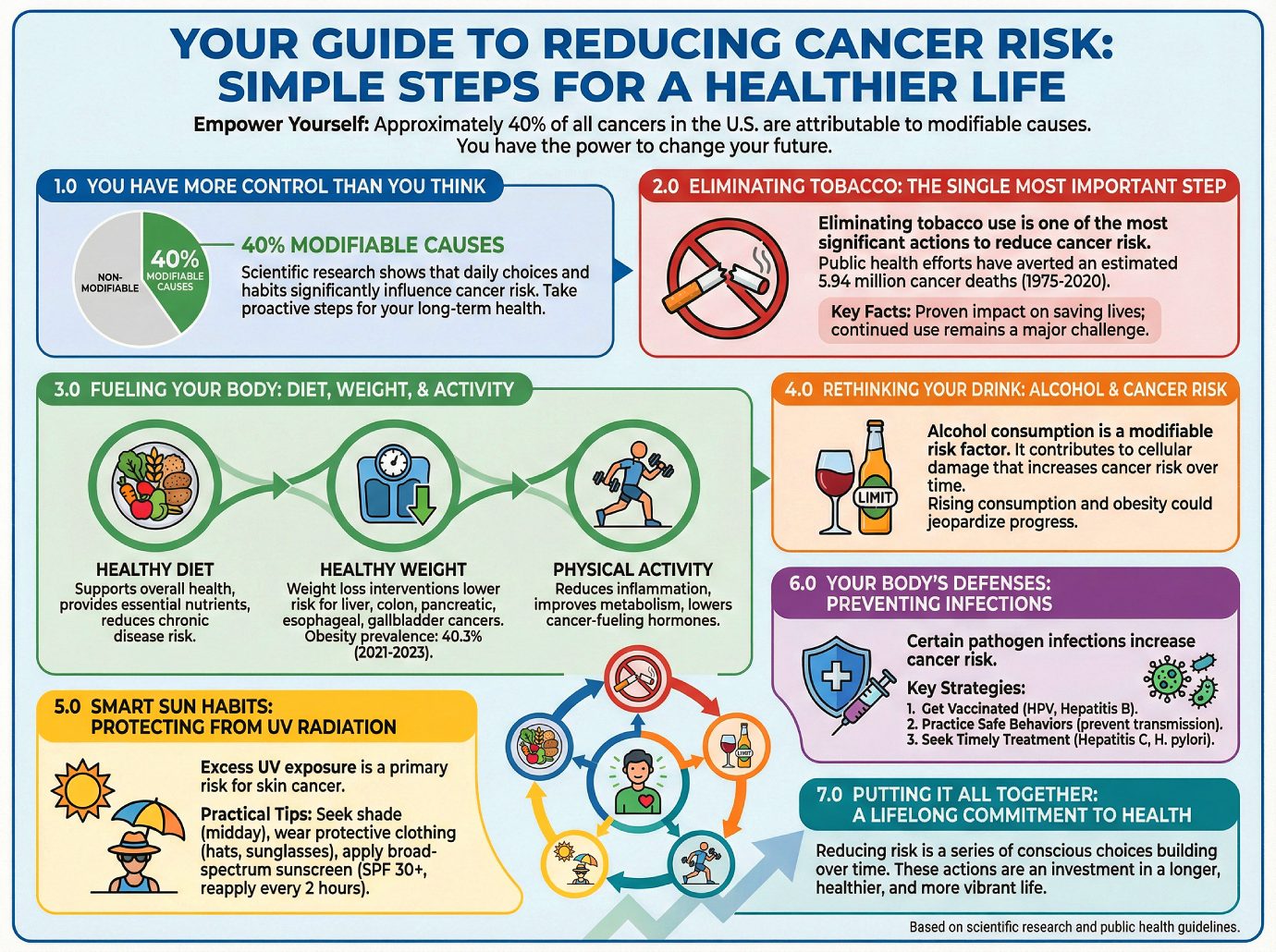
Your Guide to Reducing Cancer Risk: Simple Steps for a Healthier Life
1.0 You Have More Control Than You Think
When it comes to cancer, it’s natural to feel that much is outside of our control. However, scientific research tells a more empowering story. Approximately 40% of all cancers in the United States are attributable to modifiable causes—factors that we have the power to change through our daily choices and habits. This means that you can take meaningful, proactive steps to lower your own risk.
This guide is designed to provide clear, practical knowledge about the most important lifestyle choices that can significantly reduce your cancer risk. By understanding the science behind prevention, you can make informed decisions that support your long-term health and well-being.
Let’s begin by exploring the single most impactful action you can take to protect your health.
2.0 Eliminating Tobacco: The Single Most Important Step
Of all the lifestyle changes one can make, eliminating tobacco use is one of the most significant actions a person can take to reduce their cancer risk. The success of public health efforts to reduce smoking is a primary reason for the steady decline in overall cancer deaths in the United States, a trend that has saved millions of lives.
Key Facts About Tobacco and Cancer
• Proven Impact: Public health interventions focused on tobacco control have been instrumental in averting an estimated 5.94 million cancer deaths between 1975 and 2020.
• Ongoing Challenge: While smoking rates have fallen, continued tobacco use remains a major public health challenge that contributes significantly to the national cancer burden.
Avoiding harmful substances like tobacco is a cornerstone of prevention. Similarly, what we choose to put into our bodies for nourishment also plays a vital role in our health.
3.0 Fueling Your Body: The Role of Diet, Weight, and Activity
Maintaining a healthy weight, eating a nutritious diet, and staying physically active are crucial components of a comprehensive cancer prevention strategy. These three pillars of health work together to keep your body’s systems functioning optimally, reducing the risk of cellular changes that can lead to cancer.
A rising public health concern is the prevalence of obesity, which stood at 40.3% among U.S. adults between 2021 and 2023. Excess body weight is a key modifiable risk factor for several types of cancer, making weight management a critical goal for prevention.
| Lifestyle Factor | Why It Matters for Cancer Prevention |
|---|---|
| Healthy Weight | Interventions that lead to weight loss can significantly lower the risk for several cancers. These include cancers of the liver, colon, pancreatic, esophageal, and gallbladder. |
| Healthy Diet | A balanced, nutritious diet supports overall health and provides the body with essential vitamins and minerals, which helps reduce the risk of chronic diseases, including cancer. |
| Physical Activity | Regular physical activity helps reduce inflammation, improve metabolism, and lower levels of certain hormones and growth factors that can fuel cancer development. |
Just as a healthy diet fuels your body, it is equally important to be mindful of what you drink.
4.0 Rethinking Your Drink: Alcohol and Cancer Risk
It is well-established that alcohol consumption is a modifiable risk factor for developing cancer. While often seen as a normal part of social life, alcohol can contribute to cellular damage that increases cancer risk over time.
The rising prevalence of alcohol consumption, along with obesity, is a significant public health concern that could jeopardize the progress made against cancer over the last 50 years.
Beyond the choices we make about what we consume, protecting ourselves from external and environmental risks is another key part of cancer prevention.
5.0 Smart Sun Habits: Protecting Your Skin from UV Radiation
Excess exposure to ultraviolet (UV) radiation from the sun is a primary modifiable risk factor for developing skin cancer. Protecting your skin is a simple yet highly effective way to reduce your risk of this common cancer.
Here are some practical tips for staying safe in the sun:
• Seek shade, especially during midday hours when the sun’s rays are strongest.
• Wear protective clothing, including long-sleeved shirts, pants, a wide-brimmed hat, and UV-blocking sunglasses.
• Apply broad-spectrum sunscreen with a high SPF regularly and generously, and reapply it every two hours or after swimming or sweating.
Protecting yourself from environmental factors like UV radiation is critical. Likewise, it’s important to defend your body against biological threats, such as certain infections.
6.0 Your Body’s Defenses: Preventing Cancer-Causing Infections
Certain infections caused by pathogens—such as viruses and bacteria—are known to increase the risk of developing specific types of cancer. Taking steps to prevent these infections is another powerful and proactive strategy for cancer risk reduction.
Key strategies for reducing your risk from cancer-causing pathogens include:
1. Get Vaccinated: Follow recommended vaccination schedules. The vaccine for Human Papillomavirus (HPV) prevents the infections that cause most cervical cancers and several other cancers. The Hepatitis B vaccine helps prevent liver cancer.
2. Practice Safe Behaviors: Take precautions to prevent the transmission of infections that can be passed through sexual contact or by sharing needles.
3. Seek Timely Treatment: Get tested and treated for chronic infections known to be associated with cancer, such as Hepatitis C and the bacterium H. pylori, to reduce your long-term risk.
Now, let’s bring these individual strategies together into a cohesive approach for a healthier life.
7.0 Putting It All Together: A Lifelong Commitment to Health
Reducing your cancer risk is not about a single action but a series of conscious, healthy choices that build on each other over time. As this guide has shown, you have significant power to influence your future health.
By making deliberate decisions about eliminating tobacco, maintaining a healthy diet and weight, staying physically active, limiting alcohol, protecting your skin from sun exposure, and preventing cancer-causing infections, you are taking the most effective steps available to lower your risk.
These actions, taken together, are more than just preventative measures; they are an investment in a longer, healthier, and more vibrant life.